
Insight Snapshot
Welcome to Confluence Session Insights, powered by the Infosys Knowledge Institute
Experience the essence of Infosys APAC Confluence 2026 with dynamic, real-time coverage. Get ahead with session previews, standout moments, inspiring quotes, and key takeaways from Days 1 and 2. Whether you’re attending in person or tuning in virtually, our live updates ensure you stay connected to every insight, innovation, and highlight as they unfold. Don’t miss a moment of this year’s most anticipated event!
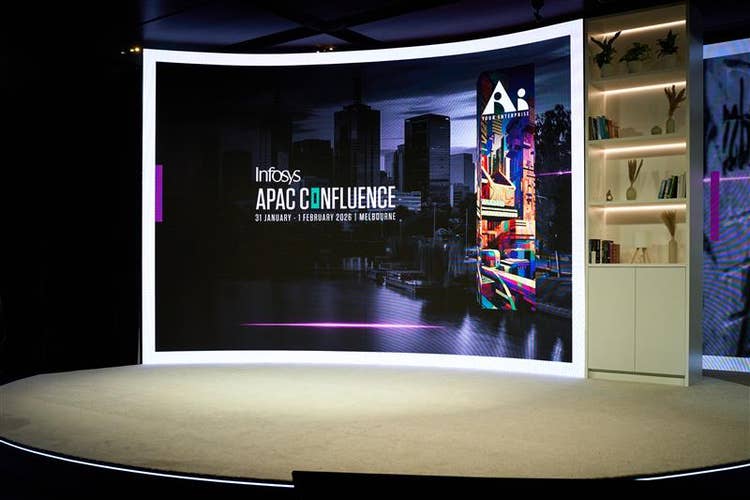
Welcome Address
From AI hype to human + AI amplification
The opening address set the tone for APAC Confluence 2026 by framing enterprise transformation not as a race for speed, but as a journey defined by values, partnerships, and purpose. Speaking from the iconic MCG—long a place of gathering and exchange—Andrew Groth anchored the event in a powerful metaphor: while technology is evolving at unprecedented pace, the real inflection point for enterprises is how they move forward, who they move with, and what they are building toward.
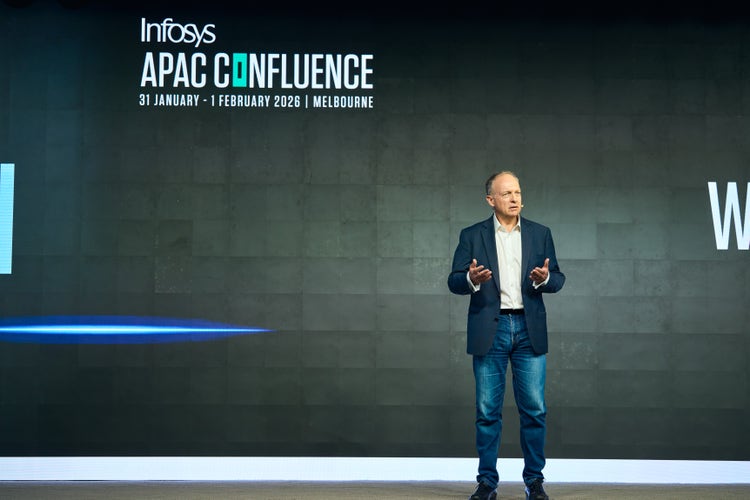
As organizations across APAC confront AI-led disruption amid economic, social, and geopolitical complexity, the focus is shifting decisively from experimentation to enterprise-scale impact.
A central insight was the move from AI hype to AI amplification. Andrew positioned the next phase of enterprise AI around three tightly linked pillars: intelligence, capability, and impact. Intelligence is no longer about isolated models or pilots, but about building a governed, observable, and trustworthy AI ecosystem at scale—enabled through Infosys Topaz Fabric. Crucially, governance and safety are not trade-offs to speed, but enablers of scale. Yet technology alone is insufficient. The session reinforced that human + AI amplification is the real differentiator, requiring large-scale reskilling, new career pathways, and confidence in how people and machines work together. The emphasis on training hundreds of thousands of employees globally underscored that talent readiness is now a board-level AI issue.
The final insight centered on impact as the true measure of progress. AI investments matter only insofar as they drive client outcomes, workforce elevation, and community benefit. From AI-led banking and telecom transformations to healthcare modernization and digital inclusion initiatives across the region, the message was clear: enterprises must align AI strategy to growth, resilience, and societal value. For leaders, the call to action is to move decisively beyond pilots—investing in strong foundations, trusted ecosystems, and human capability—so AI becomes a durable engine of progress, not a series of disconnected experiments.

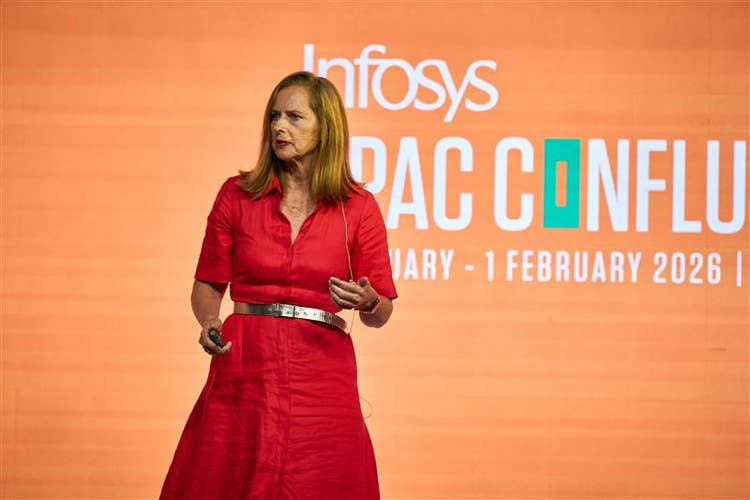
The Al Advantage - Thriving in a Human Led, Al Powered Future
Human-Led, AI-Powered: Turning Disruption into Advantage Through Curiosity, Alignment, and Trust
AI has rapidly moved from “interesting” to urgent, landing at the top of board agendas in nearly every sector. Yet the bigger challenge is not access to technology—it is sustaining identity, purpose, and performance while change accelerates.
Naomi Simson’s session reframed the “AI advantage” as a human-led capability: leaders must harness AI to scale execution and insight, while protecting the relationships, judgment, and culture that differentiate organizations in volatile markets.
A core insight was that disruption is usually born from poor experience, not new technology. AI is the enabler, but competitive breakthroughs come from diagnosing real customer pain points and removing friction—faster, more personalized, and more reliable than incumbents. Naomi illustrated how continuous listening and iteration helped a platform business evolve through cycles of uncertainty, including rapid reinvention during disruption by connecting stranded demand to suppliers in new ways. The second insight: curiosity beats nostalgia. “We’ve always done it this way” is often a proxy for outdated constraints, misaligned incentives, or fear of risk—especially when performance systems reward repetition over experimentation. Third, leaders must confront change fatigue. With organizations running many simultaneous transformation programs, progress depends on ruthless prioritization: define the “one thing” that matters now and make everything else align to it. Finally, AI should be applied to tasks, while leaders double down on what AI can’t replicate: relationships, context, and critical thinking—the human ability to sense what “doesn’t feel right” and challenge outputs with experience and judgment.
For leaders, the call to action is clear: treat AI as a force multiplier, not a replacement. Redesign work so AI removes the “loathe list” tasks, free people for higher-value relationships and decisions, and build alignment through shared accountability and rewards. Most importantly, insist on excellence—asking teams “Is this your best work?”—and remove the barriers that prevent it, so AI-powered change strengthens, rather than erodes, the human core of the enterprise.

Impact Al Session: Building Al Runways for Enterprises: An Infosys Perspective
From Pilots to Performance: Building Enterprise AI Runways That Actually Scale
Enterprises are at a pivotal moment in their AI journey. Model performance is improving dramatically while costs continue to fall—unlocking unprecedented opportunity.
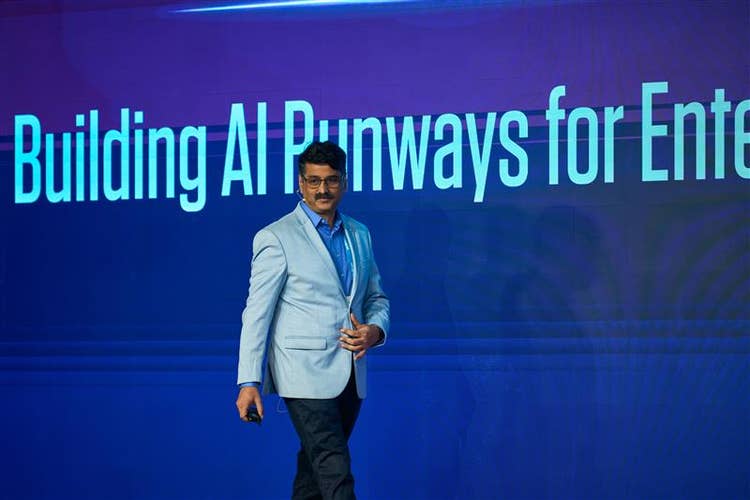
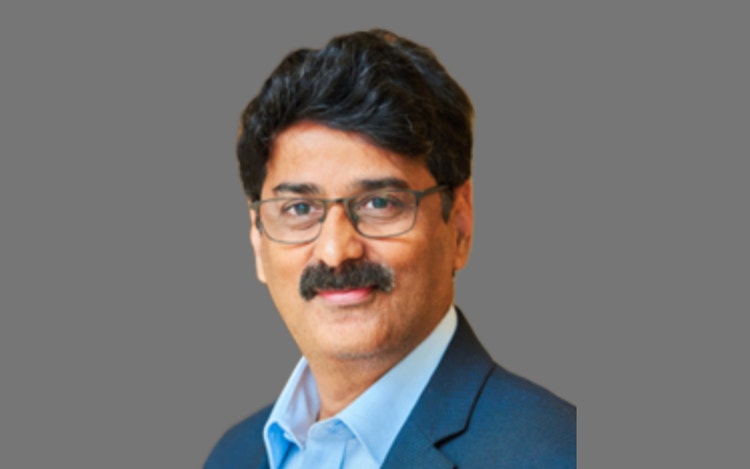
Yet, as Balakrishna D.R., EVP at Infosys, highlighted, most organizations are still struggling to convert this progress into sustained business value. The core challenge is no longer model capability, but enterprise readiness: embedding AI deeply into workflows, operating models, and decision-making at scale.
A key insight from the session was that AI value is constrained by context, not compute. While foundation models can rapidly generate outputs, they lack understanding of enterprise standards, data structures, security policies, and domain nuance—often eroding productivity instead of improving it. Infosys’ experience across hundreds of clients shows that scaled AI leaders invest early in “AI runways”: clear value discovery aligned to industry economics, a well-defined operating model balancing central and federated AI, and robust data foundations. Another critical lesson is the shift from isolated use cases to platform-based AI. Enterprises that scale successfully build AI platforms that orchestrate agents, manage governance, optimize cost, and dynamically route workloads across large and small models—rather than hardwiring AI into point solutions.
The session also underscored the human-in-the-loop imperative, particularly in IT transformation. In areas like legacy modernization and software engineering, AI can compress multi-year programs into months—but only when guided by enterprise context, guardrails, and expert validation. Examples ranging from banking, retail, and audit to large-scale legacy transformation demonstrated that multi-agent architectures, knowledge engineering, and model governance are now table stakes for predictable outcomes.
For leaders, the takeaway is clear: scaling AI requires more than faster models. It demands disciplined investment in platforms, operating models, and talent—so AI becomes an industrial capability that delivers repeatable value, not a collection of impressive but fragile pilots.
Speaker
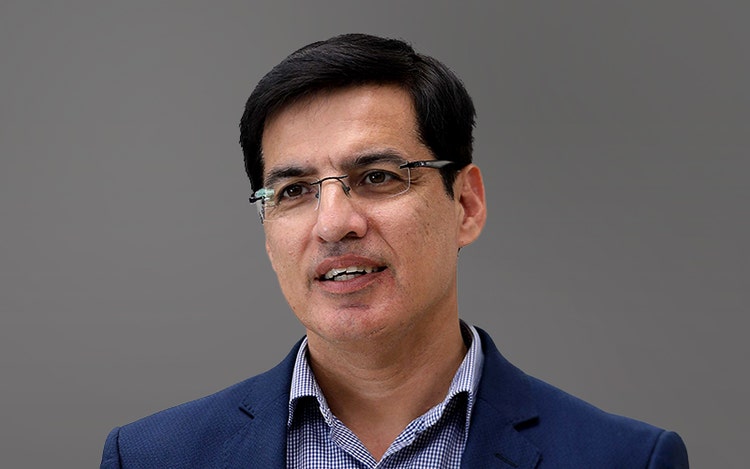
- Balakrishna D.R
- https://www.infosys.com/confluence/2026/apac/media_1534a6920fc3ac43eec072851a895787774736d2f.jpg?width=750&format=jpg&optimize=medium
- EVP, Global Services Head, AI and Industry Verticals, Infosys
- https://www.infosys.com/confluence/2026/apac/speakers.html#balakrishna-d.r
The Next Decade of AO: Building the World's Most Innovative Grand Slam
Innovation as an Attitude: How the Australian Open Is Redefining the Future of Global Sporting Experiences
As global sporting events compete not just for viewership but for attention, relevance, and loyalty, the Australian Open (AO) offers a powerful blueprint for reinvention at scale.
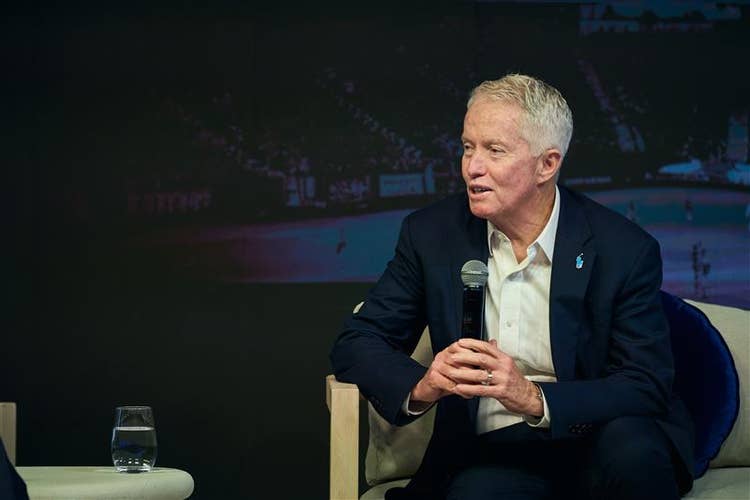
In conversation with Craig Tiley, CEO of Tennis Australia, this session explored how AO is evolving from a world-class tennis tournament into a multi-dimensional, technology-enabled experience platform—one that blends sport, entertainment, inclusion, and innovation to stay ahead over the next decade.
A central insight was that breakthrough innovation often comes from bold simplicity, not incremental change. Initiatives like the One Point Slam—five points for a million-dollar prize—demonstrated how reframing the rules can create global resonance, particularly with younger, digital-native audiences. AO’s innovation agenda is also deeply human-centric.
Technologies such as Match Feel enable fans with low vision to experience live tennis through touch, reinforcing that inclusion is not an add-on but a core design principle. Similarly, robotics and AI-driven fan engagement tools are being introduced not to replace human interaction, but to augment personalization, immersion, and delight across the precinct.
Another key theme was thinking in ecosystems, not events. AO is deliberately expanding into a four-week festival model, integrating sport with music, food, fashion, wellness, and gaming—supported by a future-ready physical and digital precinct. The “four S’s”—more seats, screens, space, and shade—provide a simple yet powerful framework for reimagining large-scale experiences in a climate-aware, digitally connected world. Underpinning all of this is a willingness to take risks, learn fast, and partner deeply, including with Infosys, to translate vision into execution.
For leaders across industries, the lesson is clear: innovation is not a department or a technology choice—it is an attitude. Organizations that embrace change, experiment boldly, and design experiences around human needs will be best positioned to build relevance, resilience, and global impact in the decade ahead.
Moderator


Leadership in the Age of Al: Driving Growth in a Global Landscape
Leading with Trust: How Executives Are Turning AI Uncertainty into Sustainable Growth
AI is rapidly reshaping the global business landscape—but this session made clear that its real test lies not in technology adoption, but in executive leadership. Against a backdrop of geopolitical volatility, regulatory complexity, and economic pressure, leaders discussed how AI is forcing CEOs and boards to rethink accountability, strategy, and stewardship.
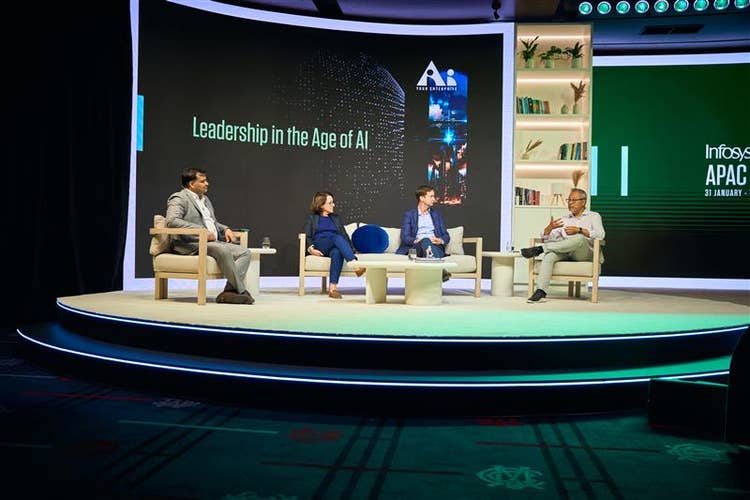
The central question is no longer whether to adopt AI, but how to lead responsibly while scaling its impact.
One core insight was the importance of purpose-led adoption. Across sectors, leaders emphasized that AI must be evaluated through the lens of outcomes that matter most—student flourishing in education, member outcomes in retirement savings, and patient safety in healthcare. Trust built over decades can be lost quickly if AI decisions compromise safety, transparency, or human accountability. As a result, AI is increasingly positioned as a decision-support capability rather than a decision-maker, with humans remaining firmly accountable for outcomes. This human-in-the-loop model is emerging as a foundational leadership principle for scaling AI responsibly.
A second insight was that strategy and governance must move faster than experimentation. In highly regulated environments, leaders stressed the need for clear guardrails—strategic roadmaps, ethical boundaries, and board-level oversight—within which teams can innovate safely. Cross-industry learning also surfaced as a powerful accelerator, with insights from unrelated sectors inspiring new applications of AI at scale. At the same time, workforce transformation emerged as a leadership imperative: scaling AI requires deliberate reskilling, visible senior leadership adoption, and sustained communication to overcome resistance and change fatigue.
For leaders, the takeaway is clear: AI-led growth is a leadership challenge before it is a technology one. Those who succeed will anchor AI in purpose, invest in people, and govern it with the same rigor as capital—turning uncertainty into confidence and innovation into long-term trust.
Moderator
- Anmol Jain

Speakers
- Danielle Di Pilla
- Dr. Edward Simons
- Peter Chun




Never Tell Me Never: Embracing Adversity and Change
The Answer Is in the Climb: Building Resilience and Human-Centered Leadership in an Uncertain Age
In a world defined by disruption—technological, geopolitical, and personal—resilience is no longer a “soft” capability. Janine Shepherd’s story reframed resilience as a learnable leadership skill: not something people either have or lack, but a daily practice that determines how individuals and organizations respond when plans collapse.
Her message landed especially sharply in today’s “in-between” moment, where leaders are expected to drive change at speed while sustaining meaning, trust, and human connection.
A central insight was her “love the hills” principle: progress is not about avoiding difficulty, but expecting it, naming it, and climbing anyway. Once leaders accept that challenges are recurring—not exceptional—they can shift from complaint to action, from anxiety to problem-solving. Shepherd also highlighted a second, practical lesson from her rehabilitation: when external circumstances can’t be changed, leaders can still control the internal environment—mindset, habits, and language. Gratitude and intentional self-talk are not platitudes; they shape attention and behavior, and ultimately performance. Third, she emphasized the power of story: the narrative people tell themselves becomes their operating system. A single conversation, mentor, or idea can rewrite that story—and with it, what feels possible. Responsibility and choice emerged as the “superpower” at the center of transformation: letting go of blame creates the capacity to rebuild.
Finally, Shepherd connected resilience directly to the age of AI through the concept of liminality—the “no longer, not yet” space where rules are shifting faster than certainty can keep up. Her challenge to leaders: don’t ask only how to keep pace; ask how to keep change more human. AI can accelerate tasks, but it cannot replace compassion, presence, and meaning. For leaders, the next step is to build cultures that normalize struggle, elevate agency, and invest in the human qualities that technology cannot replicate—because the answer, inevitably, is in the climb.
Speaker
- Janine Shepherd
- https://www.infosys.com/confluence/2026/apac/media_16901606e022448843f8691ac8f2b442126290daa.jpg?width=750&format=jpg&optimize=medium
- Resilience & Transformation Expert, Former Elite Athlete
- https://www.infosys.com/confluence/2026/apac/speakers.html#janine-shepherd

Winning the Inner Game: Leadership Lessons from Elite Sport
Consistency wins: prepare well, stay simple, back yourself
Leadership under pressure isn’t about having a secret formula—it’s about doing the basics exceptionally well, repeatedly. Glenn McGrath framed elite performance as “simple, not easy”: build a clear plan, execute it with discipline, and learn fast from mistakes so you don’t repeat them.
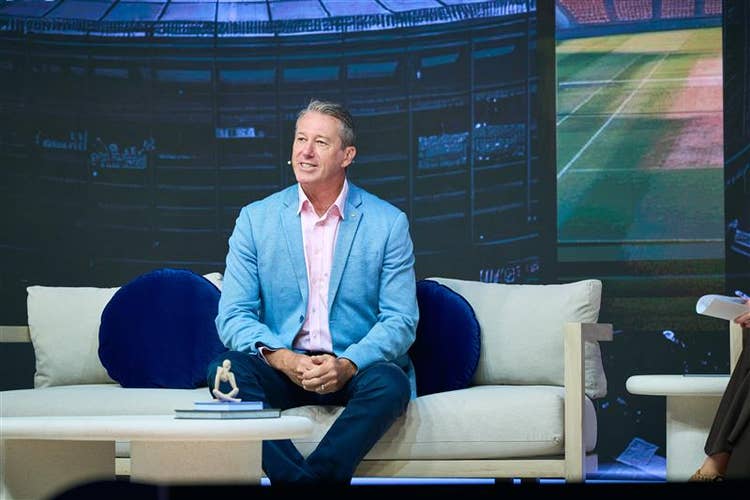
That “metronome” mindset (calm, steady, consistent) becomes a competitive advantage when environments get noisy, uncertain, or emotional.
Three themes stood out. First, resilience is built in reps, not in slogans—his farm upbringing translated into work ethic, routine, and adaptability, the same qualities leaders need to sustain performance through change. Second, pressure is mostly self-generated: the best way to manage it is preparation plus process. In high-stakes moments, he narrowed focus to the next controllable action (“the very next ball”), trusting that results follow good process. Third, self-awareness is a leadership multiplier: know who you are, why you have good and bad days, and build confidence from that clarity—especially important when leading younger talent that may be less practiced at resilience and self-belief.
The closing message was as much about culture as cricket: high-performing teams become exceptional when they care about each other and celebrate others’ success as much as their own—reinforced through rituals, shared memories, and belonging.
What leaders should do next: codify the “simple plan” for your teams (few priorities, clear standards), invest in preparation rituals, coach self-awareness explicitly, and reward learning + execution—not just outcomes.
Speaker
- Glenn McGrath

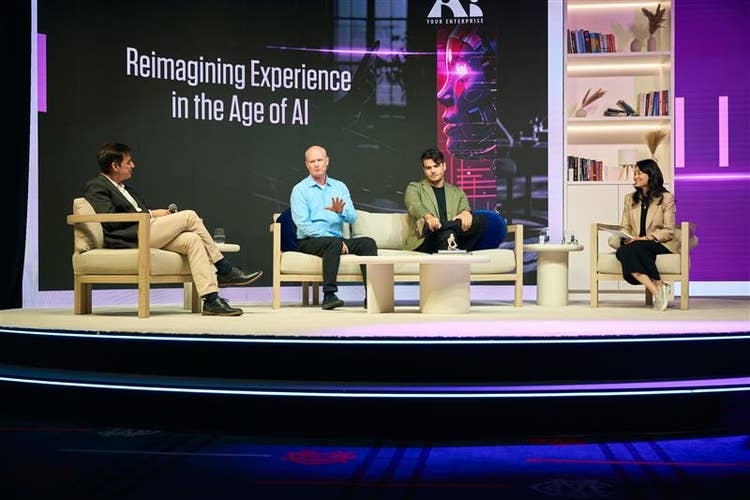
Reimagining Experience in the Age of Al
From Experimentation to Scale: Reimagining Experience in the Age of AI
Experience has become the new growth frontier
Customer experience is no longer shaped by isolated digital touchpoints—it is increasingly defined by how intelligently, responsibly, and consistently organizations apply AI at scale.
As expectations rise and tolerance for friction falls, experience has become both a growth lever and a trust test. This session explored how AI is moving organizations beyond experimentation toward enterprise-wide impact, fundamentally reshaping how brands engage, personalize, and differentiate.
What’s changing in AI-powered experience design
A central theme was the shift from AI pilots to production-grade deployment. Panelists agreed that the real value of AI now lies not just in efficiency gains, but in experience effectiveness—using AI to sense intent, personalize interactions, and orchestrate journeys across channels. Marketing, content, and engagement models are being redesigned to operate in a world where customers increasingly interact through external LLMs, not just owned platforms.
Sumit Virmani, CMO, Infosys, emphasized that while AI may become ambient—much like electricity or the internet—the fundamentals of experience remain timeless: brand promise, purpose, and performance. AI must reinforce these foundations, not replace them. Cultural adoption emerged as a critical success factor, with leadership needed to position AI as an enabler of better outcomes, not a shortcut. Trust, authenticity, and transparency were highlighted as core to experience itself—especially as hyper-personalization blurs the line between relevance and intrusion.
What leaders should do next
To reimagine experience in the age of AI, leaders must tightly align AI strategy with brand intent and customer outcomes. This requires scaling content and journey orchestration responsibly, embedding trust and governance by design, and empowering teams to use AI creatively. Organizations that win will be those that use AI to amplify human imagination, elevate storytelling, and deliver experiences that feel intelligent, ethical, and unmistakably human.
Moderator

Speakers
- Sumit Virmani
- Duncan Egan
- Nathan Gumley


Impact Al Session: What's Next in Banking: Building an Al-first Future at Citizens
From AI Pilots to AI-First Banking: Reimagining the Modern Bank
The AI-first inflection point for banking
As banks move past experimentation, AI is becoming a core operating capability rather than a set of isolated tools.
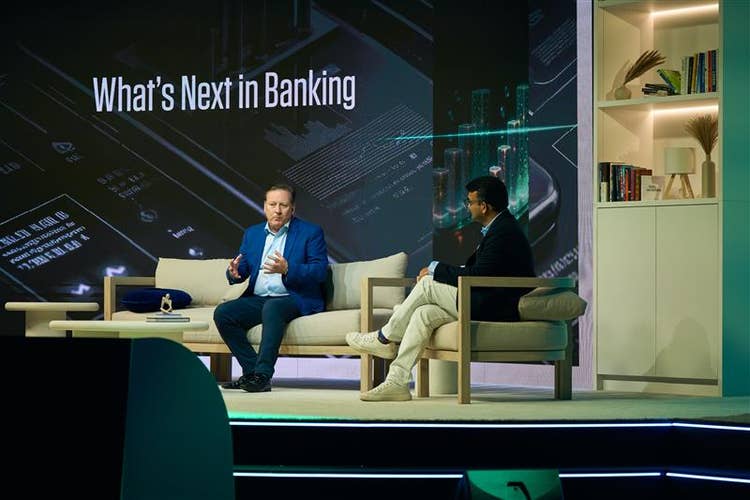
This session explored what it truly means to be AI-first in a highly regulated industry—where customer experience, trust, productivity, and value creation must advance together. The discussion offered a clear view into how disciplined technology foundations, paired with operating model and workforce transformation, are enabling AI to deliver measurable business outcomes at scale.
How AI-first banking is taking shape
A defining theme was the shift from pilots to enterprise-wide execution. AI is now embedded directly into core banking processes—from contact centers and servicing to sales enablement and engineering productivity. This transition has been made possible by years of foundational work across cloud, data platforms, and data quality, allowing generative AI to be deployed with confidence rather than risk.
Equally critical is trust by design. With rising cyber threats and regulatory scrutiny, AI adoption is being governed through standardized architectures, built-in guardrails, and security-first patterns. Rather than slowing innovation, this approach enables faster scaling by ensuring compliance, resilience, and customer data protection are integral—not afterthoughts.
The session also highlighted that AI transformation is as much about people as platforms. Skills are being built through structured academies, hands-on learning, and broad access to AI tools, creating a culture where curiosity and continuous learning drive adoption. AI is becoming part of everyday work—not a specialist capability.
What leaders should do next
To build an AI-first enterprise, leaders must anchor AI initiatives to clear business value—whether cost efficiency, productivity, or experience improvement—while investing equally in data foundations, workforce readiness, and governance. Those that succeed will use AI not just to optimize today’s processes, but to reimagine the institution itself, delivering faster, more intuitive, and more trusted experiences that strengthen loyalty and long-term growth.
Speaker
- Michael Ruttledge
- https://www.infosys.com/confluence/2026/apac/media_156cbce736823eb5f9e5fdc64f5bdf1b88198dbd1.jpg?width=750&format=jpg&optimize=medium
- CIO & Head of Enterprise Technology & Security, EVP, Citizens Financial Group
- https://www.infosys.com/confluence/2026/apac/speakers.html#michael-ruttledge
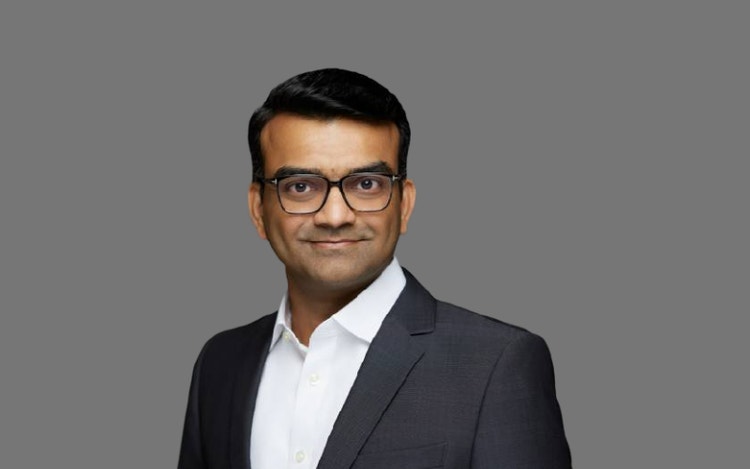
- Dennis Gada
- https://www.infosys.com/confluence/2026/apac/media_1a3fdc5098ff61989091800e8f42fde3b2e5c5d1f.jpg?width=750&format=jpg&optimize=medium
- EVP & Global Head, Banking & Financial Services, Infosys
- https://www.infosys.com/confluence/2026/apac/speakers.html#dennis-gada

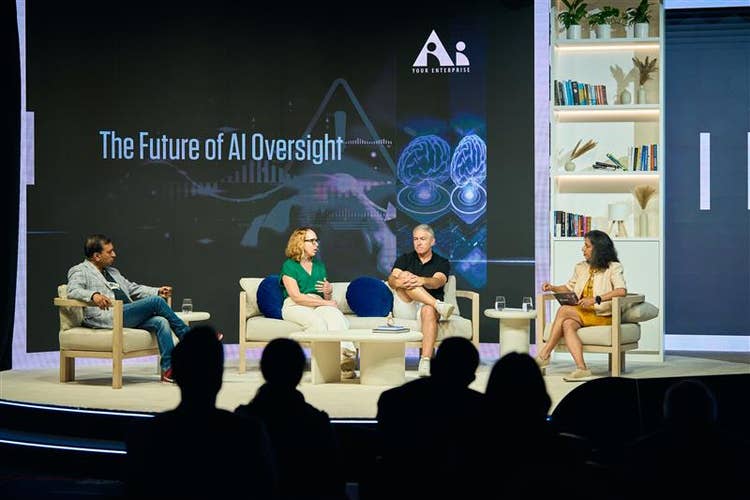
The Future of Al Oversight: Balancing Risk & Innovation
Balancing Speed with Trust: Governing AI Without Slowing It Down
Why this conversation matters now
As AI shifts from research labs into everyday tools at work, the challenge is no longer whether to adopt AI, but how to do so responsibly.
Organizations are under simultaneous pressure to move fast, meet regulatory expectations, protect trust, and still unlock meaningful value. This session explored how leaders are navigating that tension—between innovation and oversight—without letting governance become a bottleneck.
Core insights from the discussion
1. Trust is the multiplier for adoption.
AI adoption follows a reinforcing cycle: trust enables use, use drives value, and value accelerates adoption. Without trust—especially around data, explainability, and security—AI initiatives stall regardless of technical maturity.
2. Guardrails enable speed, not the other way around.
Leading organizations are drawing clear non-negotiable boundaries (customer data, core networks, critical infrastructure). By explicitly defining “no-go zones,” they create freedom to move faster in the rest of the enterprise rather than slowing everything down.
3. Start internal, then move outward.
Many organizations are sequencing AI adoption by first applying it to internal workflows—summarization, testing, automation, and productivity—before extending it to customer-facing or decision-making use cases. This allows teams to learn, fail safely, and build confidence.
4. Governance must live inside existing roles.
Centralized AI control alone doesn’t scale. Effective models embed accountability into business and product teams, making responsible AI part of everyday decision-making rather than an after-the-fact review step.
5. Culture—not technology—is the biggest constraint.
Fear, resistance to change, and uncertainty about roles often slow AI adoption more than technical limitations. Training, experimentation, and explicit leadership endorsement are critical to demystify AI and normalize its use.
What leaders should take away
The future of AI leadership is not about choosing between speed and safety—it’s about designing for both. Organizations that succeed will treat AI as just another enterprise capability: governed like any critical technology, owned by the business, and deeply human-centered. In a world of rapid automation, trust, empathy, and judgment remain the true differentiators.
Moderator
- Inderpreet Sawhney

Speakers
- Jason Paris
- Sanjeev Gupta
- Sabina Janstrom



Seeing Isn't Always Believing
Seeing Isn’t Always Believing: How Perception Shapes Performance in Uncertain Times
Reframing uncertainty through the lens of the human mind
This session explored why people respond so differently to ambiguity, disruption, and rapid change—despite experiencing the same reality. Using live mentalism and cognitive illusions, the speaker demonstrated a powerful idea: it’s not intelligence or experience that determines how we react to uncertainty, but the stories we tell ourselves and how tightly we hold onto them.

In moments of disruption, our brains instinctively simplify, fill gaps, and seek certainty—often leading us to flawed conclusions that nonetheless feel real.
How cognitive bias influences decisions, trust, and change
At the heart of the session was a practical lesson in cognitive bias. Our brains are wired to prioritize speed over accuracy, a survival feature that once kept us safe but now makes us vulnerable to misinformation, overconfidence, and false certainty. The demonstrations showed that even when people are warned about deception, strong experiences can override logic and context. This has direct implications for leaders navigating AI, digital transformation, and organizational change: “seeing” is not always understanding, and belief often precedes evidence rather than the other way around.
Why perspective—not certainty—is the real leadership advantage
The session concluded with a clear takeaway: thriving in complexity requires curiosity, humility, and perspective-shifting—not rigid certainty. Leaders who perform best in volatile environments are not those who eliminate ambiguity, but those who question assumptions, welcome alternative explanations, and stay open to being wrong. In a world shaped by AI, automation, and accelerating change, human judgment still matters—but only when paired with self-awareness. The ability to pause, reframe, and challenge one’s own narrative may be the most critical skill for navigating what comes next.

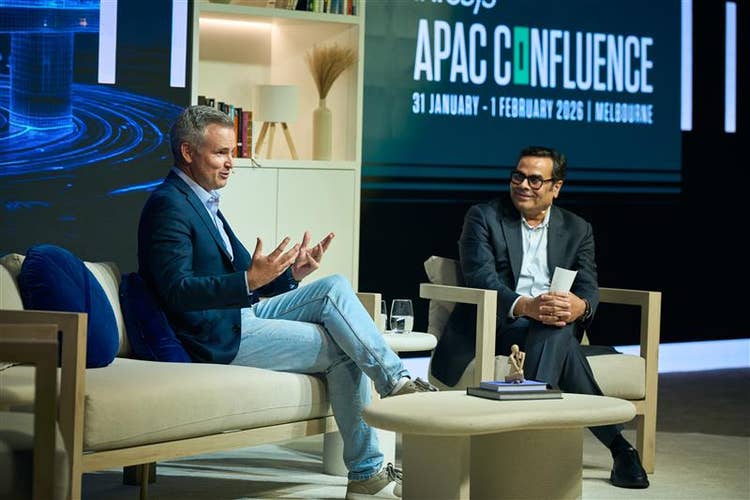
Impact Al Session: Woodside's Journey to Enterprise Al
Engineering Intelligence at Scale: From Smart Assets to Enterprise AI Platforms
AI as an operating lever in asset-intensive industries
This session unpacked how AI is reshaping asset-heavy industries where reliability, safety, and capital efficiency are non-negotiable.
Rather than treating AI as a productivity overlay, the discussion emphasized its role in making physical assets intelligent—from exploration and engineering to operations and maintenance. In environments defined by complex facilities, remote operations, and multi-billion-dollar investment decisions, AI is becoming central to improving safety outcomes, extending asset life, and enabling more informed, real-time decisions at the frontline.
From broad experimentation to value-led scale
A key insight was the deliberate shift from widespread experimentation to focused, enterprise-grade scale. Early efforts prioritized democratizing AI—putting tools into the hands of employees, building fluency, and encouraging teams to create agents and use cases relevant to their work. That broad adoption unlocked momentum, but the next phase is about discipline: concentrating on high-value problems, avoiding duplication, and ensuring AI solutions operate as part of a connected system rather than isolated pilots. Examples such as maintenance intelligence—combining sensor data, knowledge graphs, and AI agents—illustrated how organizations can move from localized gains to repeatable, enterprise-wide impact.
Platforms, partnerships, and responsible enablement
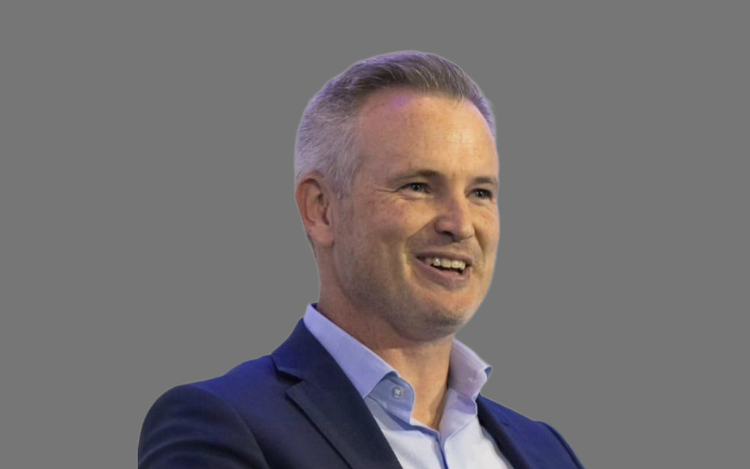
The conversation underscored the importance of a strong AI platform foundation, capable of supporting multiple models, clouds, and use cases while embedding guardrails for safety, reliability, and responsible use. Partnerships play a critical role in accelerating scale—bringing specialized skills, capacity, and cross-industry learnings that would be difficult to build alone. From the Infosys perspective, Ashiss Kumar Dash, EVP & Global Head, SURE, highlighted how embedding AI deeply within Infosys’ own operations has shaped its ability to reimagine services for clients—across asset intelligence, advanced insights, and human-centric experiences. The overarching takeaway: enterprise AI success depends on balancing empowerment with governance, and innovation with long-term architectural intent.
Speakers
- Ashiss Kumar Dash
- Andrew Melouney
Security-First is Business-First: Enabling Digital Transformation with Confidence
Security as a Growth Engine: Building Trust, Resilience, and Speed in a Digital World
Reframing security from protection to performance
This session challenged a common misconception: that security is primarily about compliance and risk avoidance.
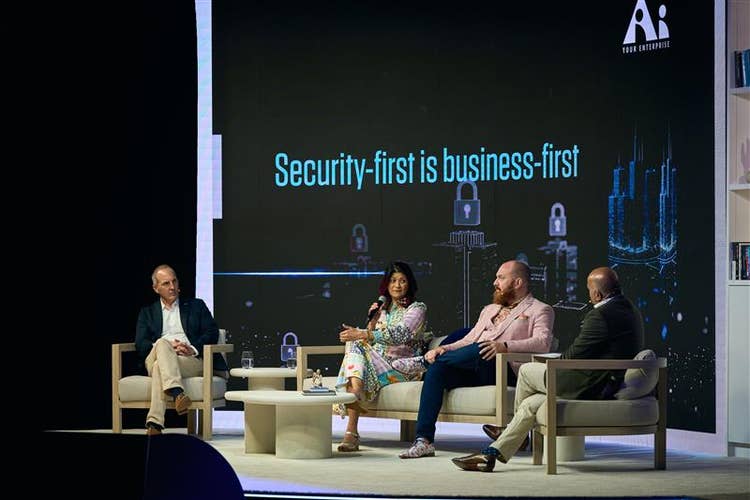
Instead, the discussion positioned security as a foundational business capability—one that protects growth, enables transformation, and builds long-term trust. In an environment shaped by AI adoption, geopolitical volatility, and increasingly sophisticated cyber threats, security can no longer be treated as a back-office control. It must be embedded into how organizations design systems, scale operations, and deliver value to customers.
From theoretical controls to real-world readiness
A key theme was the gap between governance on paper and resilience in practice. Compliance frameworks are necessary, but they are not sufficient. Organizations must continuously test assumptions, think like attackers, and prepare for failure scenarios—not just prevent them. This mindset shift moves security from static checklists to dynamic readiness, where rapid response, business continuity, and decision-making under pressure become core competencies. Practical approaches such as tabletop exercises, red-team testing, and scenario-based simulations were highlighted as critical in bringing leadership teams closer to real-world cyber realities.
Security-by-design in complex, AI-enabled environments
As AI becomes deeply embedded across IT, operational technology (OT), and service models, security must be designed in from the outset. Panelists emphasized that AI risk is no longer confined to cybersecurity alone—it spans legal, data, workforce, safety, and reputational dimensions. This requires tighter collaboration across CIOs, CISOs, legal, HR, and business leaders. The discussion also underscored the importance of knowing what you have—accurate asset visibility, rapid discovery, and automated remediation are becoming decisive advantages as threat velocity increases.
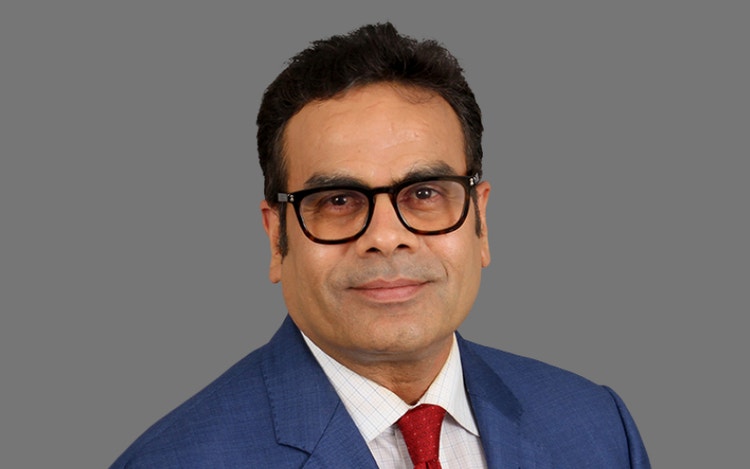
From an Infosys perspective, Anant Adya, EVP, Service Offering Head, CIS & Head – Americas Delivery, reinforced the need for a security-first mindset that scales with innovation. The overarching takeaway was clear: organizations that treat security as a value creator—not a cost—will be better positioned to innovate with confidence, earn trust, and compete in an AI-driven future.
Moderator
- Anant Adya
- https://www.infosys.com/confluence/2026/apac/media_1d959ac5deb5f1dbc960f90737ab3679ad294af75.jpg?width=750&format=jpg&optimize=medium
- EVP, Service Offering Head, CIS & Head - Americas Delivery, Infosys
- https://www.infosys.com/confluence/2026/apac/speakers.html#anant-adya
Speakers
- Aaron Bailey
- Onur Taylor
- Geeta Thakorlal



Impact AI Session: Building AI Runways for Enterprises
AI adoption at scale demands more than isolated pilots — it requires solid runways that connect strategy, technology, and enterprise outcomes. In this video, Allianz Global Investors and Infosys leaders explore how AI, responsible risk frameworks, and resilience are shaping the future of asset management.
On day 2, Michael Ruttledge (CIO & Head of Enterprise Technology & Security, EVP, Citizens Financial Group) and Dennis Gada (EVP & Global Head, Banking & FS, Infosys) will share practical insights on how enterprises can construct AI runways that align with security, governance, and business strategy. Join this session to learn how to scale AI responsibly while accelerating innovation across the enterprise.
Stay tuned for live updates during the event!
From Experimentation to Impact: An Infosys Perspective
AI is moving from isolated use cases to enterprise-scale transformation, but how can organizations create the right foundations to scale AI with confidence? This report explores how agentic AI and industry-specific approaches can help enterprises build strong AI runways that accelerate adoption, enable autonomy, and deliver measurable business value.

On day 1, Balakrishna D.R, EVP and Global Services Head, AI and Industry Verticals at Infosys, will share insights on how enterprises can design and operationalize AI runways to move faster from experimentation to impact. Join this session to understand how a structured, strategic approach to AI can power enterprise-wide transformation.
Stay tuned for live updates during the event!

Leadership in the Age of AI: Driving Growth in a Global Landscape
AI is reshaping how leaders drive growth, compete internationally, and empower their organizations — but success in the AI era demands more than technology; it requires vision, human-centric leadership, and strategic alignment. This video features Jared Spataro, Microsoft AI at Work CMO, and Shashank Gupta of Infosys reflecting on what leaders must do to turn AI from a technology initiative into enterprise-wide change.
On day 1, join Danielle Di Pilla (Board Member, Chemist Warehouse), Dr. Edward Simons (CEO, MACS), and Peter Chun (CEO, Unisuper) as they share real-world perspectives on leading through disruption, fostering innovation, and driving sustainable growth across global markets. Don’t miss this session to learn how today’s leaders are shaping high-performing, AI-enabled organizations.
Stay tuned for live updates during the event!
From Strategy to Execution: Woodside's Journey to Enterprise Al
AI is redefining how energy companies optimize operations, forecast demand, and create competitive advantage across global markets. This article explores how AI is addressing new challenges in energy trading — enhancing decision-making, improving risk management, and unlocking value in complex, data-intensive environments.

On day 2, Ashiss Kumar Dash (EVP & Global Head, SURE, Infosys) and Andrew Melouney (VP Digital, Woodside Energy) will share firsthand insights on Woodside’s enterprise AI journey — from strategy and implementation to real-world outcomes that advance business goals. Join this session to learn how energy leaders are integrating AI to transform operations, elevate performance, and drive sustainable growth.
Stay tuned for live updates during the event!

Security first is business-first: Enabling Digital Transformation with Confidence
As enterprises accelerate digital transformation, prioritizing security isn’t just a technical imperative — it’s a business imperative. This Report explores how responsible AI governance and risk-aware strategies help organizations embrace innovation while safeguarding operations, reputation, and stakeholder trust.
On day 2, Aaron Bailey, CISO at The Missing Link, and Anant Adya, EVP, Service Offering Head, CIS & Head – Americas Delivery at Infosys, will discuss how a security-first mindset can enable confident digital transformation. Join this session to learn how robust security practices and responsible AI frameworks can empower enterprises to balance risk and innovation as they scale AI and other digital initiatives.
Stay tuned for live updates during the event!
The Future of AI Oversight: Balancing Risk and Innovation
As AI adoption accelerates, enterprises must find the right balance between fostering innovation and managing risk, ethics, and accountability. This video highlights why responsible AI and a future-ready workforce are essential to building trust and resilience as organizations scale AI solutions.

On day 2, Inderpreet Sawhney (Chief Legal & Compliance Officer, Infosys) will moderate a compelling discussion with Jason Paris (CEO, One NZ) and Sanjeev Gupta (CIO, HBF) on how leaders can implement robust AI oversight frameworks that protect stakeholders while enabling bold innovation. Join this session to learn how enterprises are aligning governance, policy, and culture to shape a responsible and competitive AI future.
Stay tuned for live updates during the event!

Reimagining Experience in the Age of AI
AI isn’t just transforming operations — it’s redefining how brands engage customers and shape experiences across every touchpoint. This article explores how foundation models are reshaping marketing’s next operating model, enabling more personalized, predictive, and impactful customer journeys in an AI-driven world.
On day 2, Sumit Virmani, EVP & CMO at Infosys, will share insights on how enterprises can leverage AI to reimagine experience strategy, elevate brand relevance, and unlock deeper customer value. Join this session to learn how forward-thinking organizations are integrating AI into experience design to drive growth and customer loyalty.
Stay tuned for live updates during the event!