Climate Positive – Beyond net zero
Go to Environment
In a world that has already warmed by more than 1.2°C compared to pre-industrial levels, carbon neutrality is no longer enough.
The real challenge and opportunity lies in going climate positive.
Even if every company in the world decided to become carbon neutral today, it wouldn’t reverse the cumulative emissions that have built up over the last 200 years.
That’s why restoration, not just reduction, is the new baseline.
Our Scope 1, 2 and 3 emissions reduction targets are aligned to Well Below the 2-Degree Scenario (WB2DS) and validated by the Science Based Targets initiative (SBTi)
We remain carbon neutral across Scope 1, 2 and 3 emissions for the seventh consecutive year.
We are actively aligning our net-zero targets with a 1.5°C pathway and in the process of obtaining SBTi validation.
We decided to raise the bar for ourselves and the world, and committed to becoming climate positive in 2030, just four years from now.
Our climate positive strategy extends over
emissions and water.
Infosys’ continued commitment to a ‘net zero ’ future
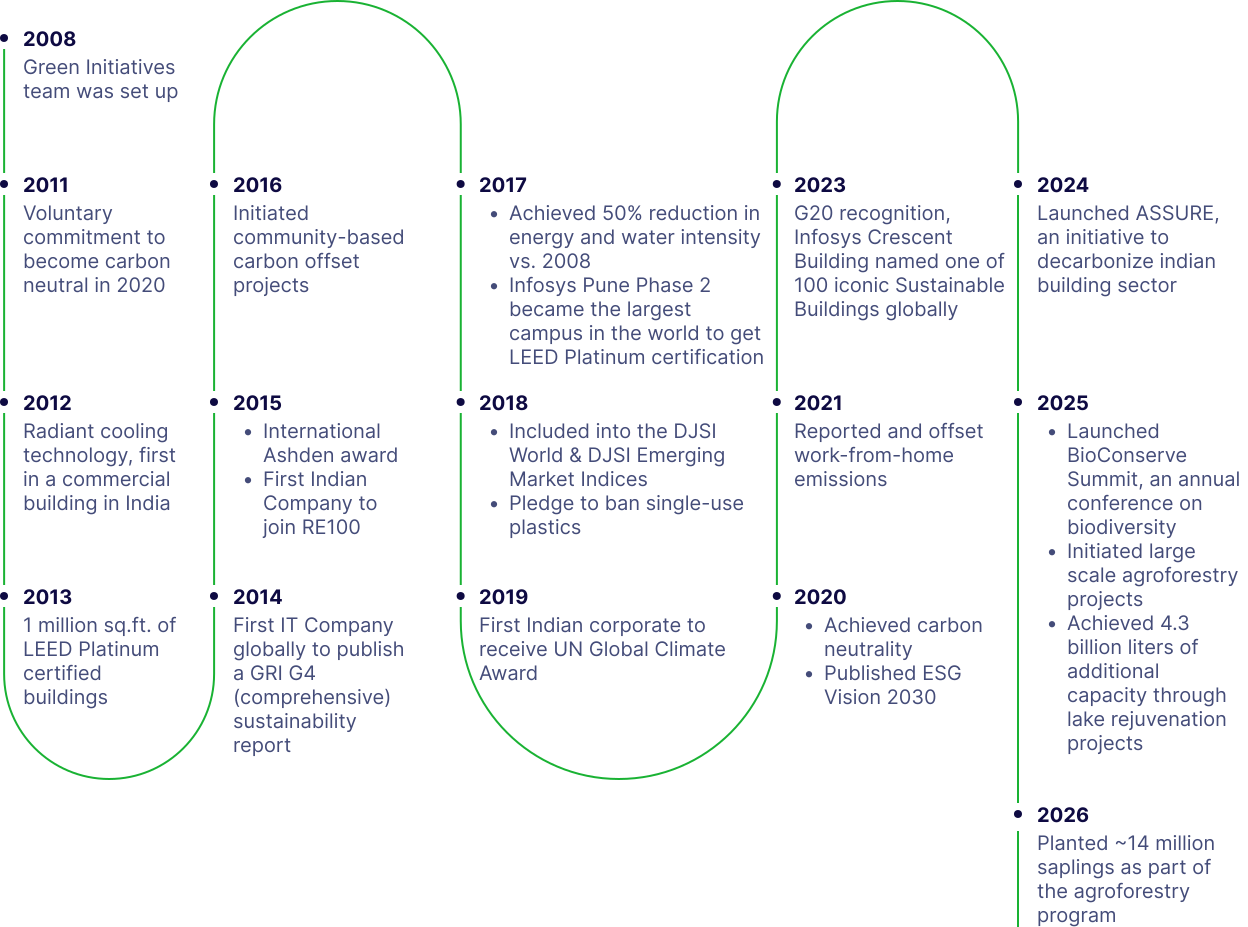
To become climate positive, we have adopted two action pathways:
Efforts to decrease consumption of resources and emissions through initiatives within the Company
Our ambition is to reduce Scope 1 and 2 emissions by 90% and Scope 3 by 40% by 2030.
(Measured against the 2020 baseline)
Scope 1 emissions
Direct emissions – high-speed diesel (HSD), diesel, petrol, piped natural gas (PNG), refrigerant and fire extinguishers.
11,483 tCO2e
Scope 2 emissions
Indirect emissions from purchased energy – Grid electricity
34,351 tCO2e
Scope 3 emissions
Indirect emissions – business travel, purchased goods and services, capital goods, work from home, waste generated in operations, employee commute, fuel-and energy-related activities, upstream leased assets
2,07,374 tCO2e
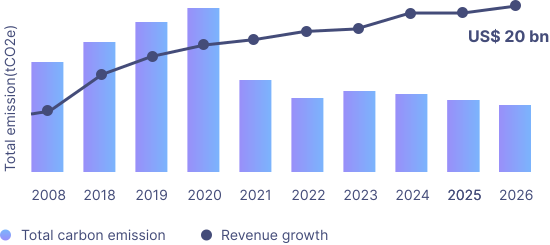
Since we began reporting in 2008, our business has grown fivefold from
USD 4 bn to USD 20 bn
while our emissions trajectory has remained significantly moderated, reflecting our ability to progressively decouple business growth from resource consumption and carbon intensity.
This year,
we reinforced our leadership in climate action
with several milestones.

Scope 1
New cooling equipment with HFO (Hydrofluoroolefin) refrigerant with low global warming potential.

Scope 2
81.8% of electricity for our India operations comes from renewable sources. India accounts for 84% of our global workforce.

Scope 2
84% of our office area is certified with highest level of green building certification.

Scope 3
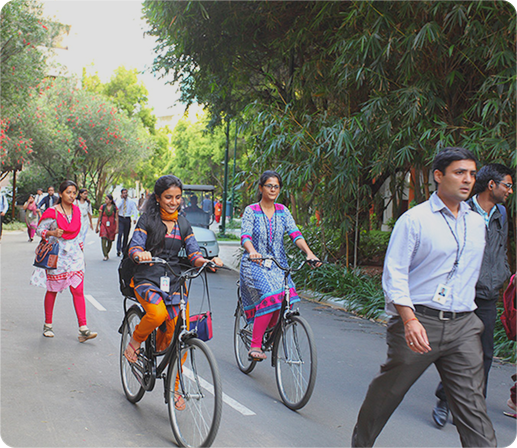
The inauguration of the Bangalore Metro rail line serving the Infosys headquarters and other major IT corridors, catering to more than 2 lakh commuters daily, is estimated to reduce Scope 3 emissions significantly.
Infosys Foundation funded the Infosys Foundation Konappana Agrahara metro station, and continues to encourage and support the use of sustainable urban mobility solutions, including metro rail systems, across major cities in India.

Scope 3
Through a campaign titled 'Watts Up? Save It’, we raised awareness among employees to reduce their electricity consumption at work and home, enabling emissions reduction.

Scope 3
Collaborated closely with suppliers to integrate emissions as a key evaluation criterion in the procurement of IT equipment, strengthening climate-aligned sourcing decisions.
Restore
Interventions that aim to restore more than we consume, outside our boundaries, working closely with communities
We focused on improving livelihoods, enhancing green cover and restoring water bodies through our agroforestry, carbon offset and lake rejuvenation projects.
Agroforestry
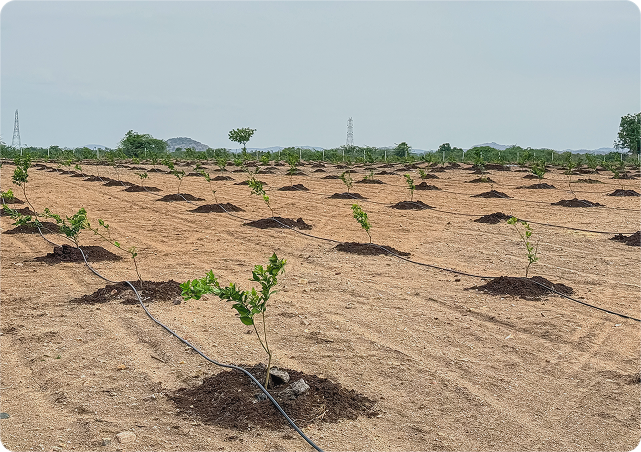
The Infosys Agroforestry Program showcases a strong, data-driven model for creating large-scale social impact, enhancing farmer livelihoods and building climate resilience. The benefits of the agroforestry program go far beyond just increasing green cover.

~14 mn
saplings planted in FY26

~30,000
hectares covered across 8 states

~30,000
farmer families engaged
The program:
- Accelerates climate mitigation and ecosystem restoration: By directly sequestering atmospheric CO₂ while enhancing soil fertility and restoring ecological balance across landscapes.
- Strengthens climate-resilient livelihoods: By promoting sustainable agricultural practices and climate-proofing farm systems.
- Enhances farmer prosperity and food security: By creating multiple income streams, improving economic resilience while supporting local food security.

Carbon offset programs
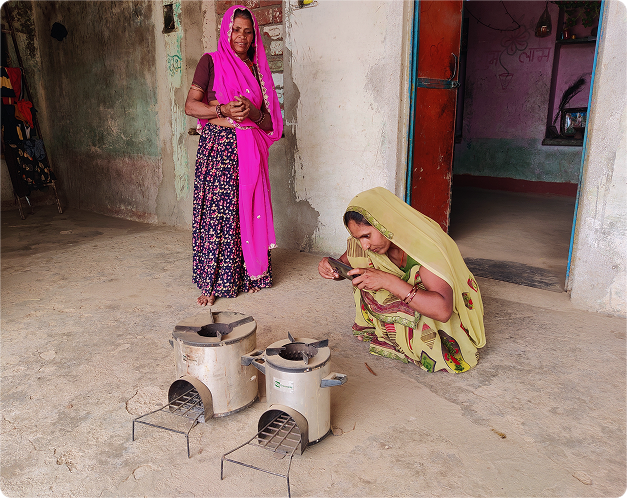
Since 2016, Infosys has actively pursued carbon reduction projects across India, with a focus on expanding energy access for rural communities. Key benefits include:
- Replacing traditional methods such as firewood use with biogas and improved cookstoves
- Enhancing health and well-being of communities through the transition to cleaner fuels
- Promoting digital literacy and employment among women from rural communities
10
projects across 5 states
2,72,000+
families benefited
349
women monitors employed
Lake rejuvenation projects
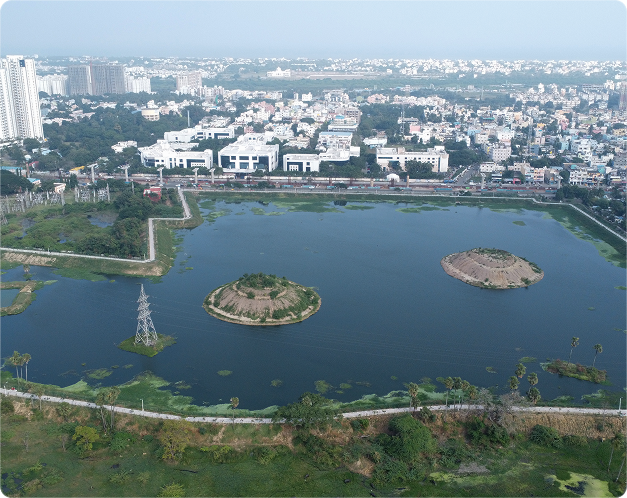
As part of its long-term vision for sustainable water management, Infosys continues to drive lake rejuvenation initiatives across India. In the past three years, these projects have added 4.3 billion liters of water capacity across multiple states, contributing to aquifer recharge, flood risk mitigation, and the revival of degraded water bodies into thriving community ecosystems.
The lake rejuvenation projects:
- Serve as a strong symbol of community engagement
- Foster a sense of shared responsibility for the environment
- Spark conversations amongst residents about the importance of environmental issues and the power of local action
- Support local flora and fauna
11
lake rejuvenation projects
4.3 bn liters
additional capacity created
Our efforts don’t stop here…
Did you know that 55% of the global population already live in urban centers?
What’s more, 75% of the infrastructure that will exist in 2050 has not been built yet.
We are using the learnings from our large-scale green initiatives to drive
Advocacy measures
that promote sustainable solutions, particularly in urban areas.

ASSURE
A program to achieve 100 million sq.ft. of high performance commercial buildings by 2030, by providing technical assistance to real estate developers in India.
15 mn
sq.ft. onboarded in FY26
1,250+
people upskilled
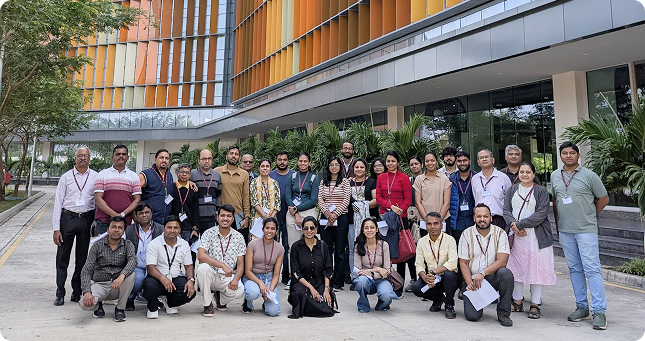

Solar Decathlon India (SDI)
World’s largest net zero building challenge for students – finals hosted in May 2025 at Infosys Mysuru.
850
attendees including students, faculty, industry representatives, startups and investors
40
solutions developed over nine months for real buildings
50
organizations connected with students

Biodiversity
Today, almost 35% of India's population lives in urban areas, and it is projected to increase to 40% by 2030. With large-scale constructions taking over urban landscapes, there is both a need and opportunity to explore biodiversity in cities. To encourage conversations around biodiversity, especially in urban areas, we hosted the second edition of the BioConserve Summit, in association with the Indian Institute for Human Settlements (IIHS), on January 30, 2026. A defining milestone of the summit was the launch of the BioConserve Platform, to build a conservation network and continue knowledge sharing.
200+
people
100+
companies
Participated in BioConserve Summit 2026
Climate solutions
We have taken our sustainability expertise to deliver impactful solutions for our clients. These include solutions for ESG strategy, data and reporting; green buildings and sustainable operations; sustainable value chain; green IT and digital sustainability. We deployed our patented Radiflux Radiant Baffles for an IT client, leading to 40% energy savings.
36%
sustainability revenues in FY26
Our climate action maps to these UN Sustainable Development Goals (SDGs)