

ESG overview
This report outlines our progress towards ESG Vision 2030 and serves as our annual Communication on Progress (CoP) to the UN Global Compact.

Approach to reporting
About this report
This report reflects the maturity of our sustainability practices and responds to the evolving expectations of our global stakeholders across environmental, social, and governance areas. Unless specified otherwise, all disclosures cover the operations of Infosys Limited and its subsidiaries.
Frameworks, guidelines, and standards


The disclosures in this Report (including ESG databook) are in accordance with the GRI Standards, 2021 and SASB standards, and include our response to the Task Force on Climate Financial Disclosures (TCFD). We have also mapped our contribution to the Sustainable Development Goals (SDGs).
Approach to materiality
The universe of our material topics on Environmental, Social, and Governance (ESG) is complex and multi-layered, one that is deeply intertwined with the value we seek to create through our business for our stakeholders.
See our double materiality assessment matrix in the Strategy and priorities section.Assurance statement
Our ESG disclosures are reviewed and verified internally by the Corporate Certifications and Assessments Team (CCAT).
Our carbon neutrality is certified against ISO 14068-1, an international standard that provides Principles, Requirements, and Guidance for achieving and demonstrating carbon neutrality.
Select non-financial sustainability disclosures are assured by Deloitte Haskins and Sells LLP. The Independent Assurance Statement is available as part of the ESG Data Book.
The ESG Databook
The ESG Databook, an integral part of our annual ESG Report, provides a comprehensive collection of quantitative data and metrics that support the disclosures made in the main report. It serves as a transparent and accessible resource for stakeholders, facilitating benchmarking and comparisons across reporting periods. The ESG Databook annexure also contains the GRI, SASB content index, and the Independent Assurance statement.
Read here.
Our ESG priorities
Every view matters
Infosys has a presence across multiple geographies, industries, services and products. The universe of our material concerns is complex and multi-layered, one that is deeply intertwined with the decisions we implement and the value we seek to create through our business. Within the domains of E, S and G, we are constantly thinking about the most important issues and preparing for them.
In 2020, we undertook a review of the progress we made over the past decade on our sustainability goals and developed the lens further in a more practical and comprehensive manner, to broaden our ESG focus and rank our priorities in order of their importance to our business and our stakeholders.
Our approach
We determined our most material issues through a data-driven and consultative exercise. Material topics were shortlisted and prioritized based on their impact on our stakeholders and our business.

External stakeholder consultations, global frameworks, mega trends, and peer benchmarking
Investor priorities through investor
surveys
Global indices reporting and assessment frameworks, thought
papers1 , and partnerships with global organization2
Peer benchmarking in the IT industry
Media and public opinion, using AI tools for insights
Regulatory landscape in
jurisdictions relevant for Infosys
Broader stakeholder consultations
Specific ESG impact areas in geographical and service line
contexts in relation to mega trends
Benchmarking against best practices among peers in IT and other industries

Internal stakeholder alignment
'Belief audits' with the Management to understand priorities
Employee engagement surveys, focus group discussions and interactions
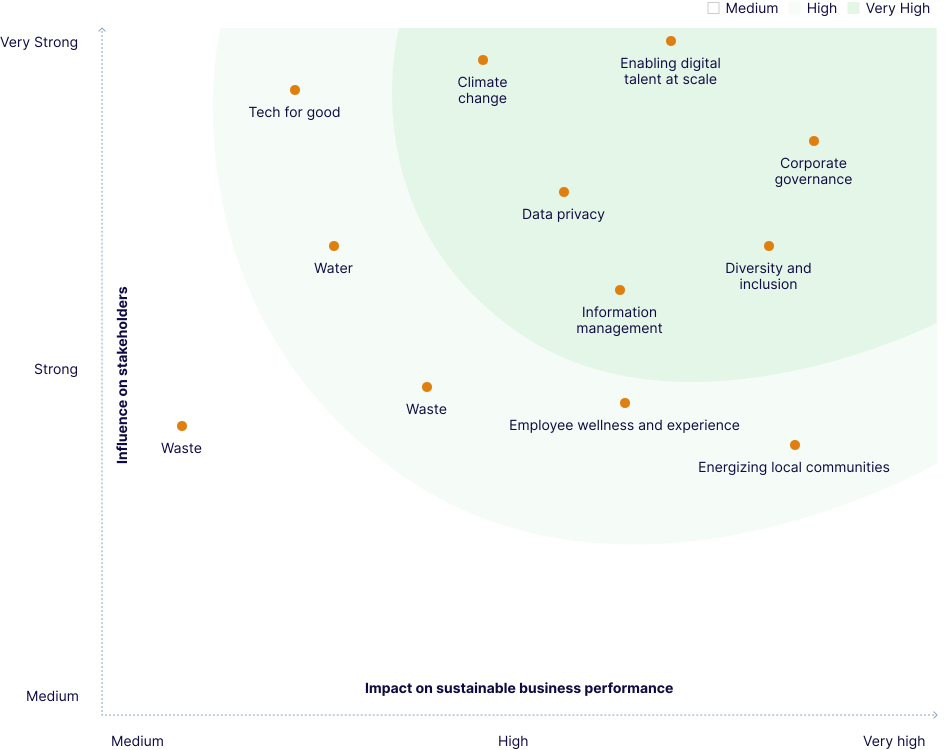
Materiality matrix
The ESG committee of the Board also approves the continued relevance of material matters encompassing the views of our stakeholders on an annual basis.
Stakeholder engagement
We identify and prioritize our stakeholders based on the impact of the Company on the stakeholders and the ability of the stakeholder groups to influence the functioning of the Company.
Refer to Business Responsibility and Sustainability Report for more information on stakeholder engagement.
As part of the materiality assessment, we have identified six key stakeholder groups: Investors / shareholders, clients, employees and sub-contractors, suppliers / partners, government / regulators, and the community.
Double Materiality Assessment
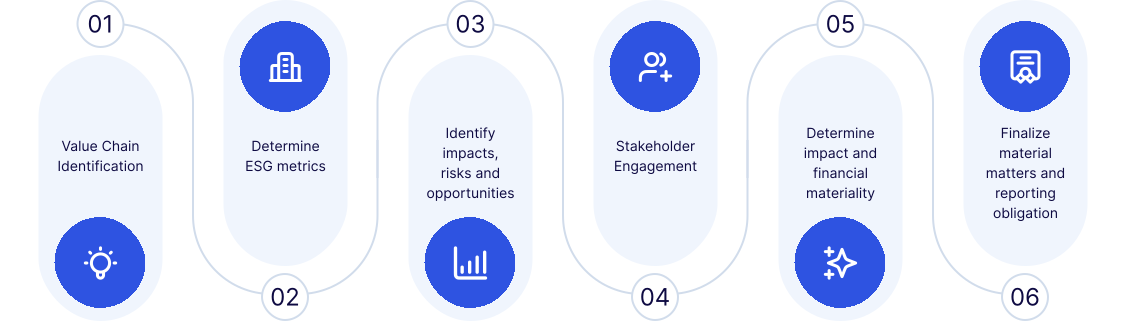
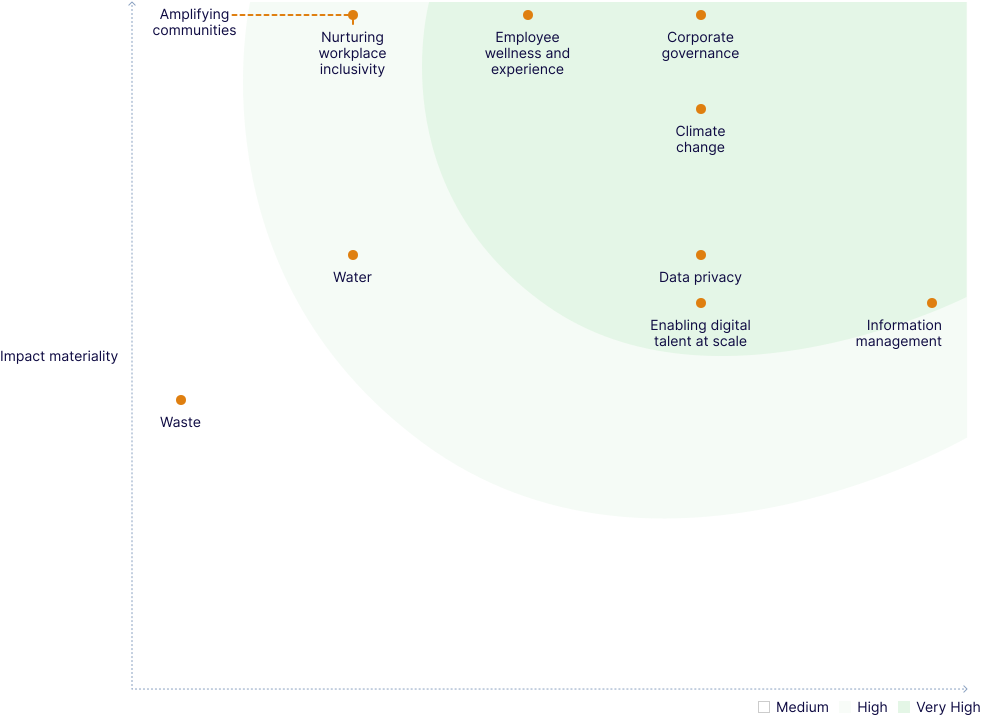
In 2024-25, we undertook a double materiality assessment (DMA) in advance of our reporting commitment to the Corporate Sustainability Reporting Directive (CSRD).
We leveraged our Global Reporting Initiative (GRI)-based material topics to identify material sustainability-related matters using the double materiality framework guided by recommendations of the European Financial Reporting Advisory Group (EFRAG). The DMA identified ESG matters that are material to Infosys based on potential and actual Impacts, Risks and Opportunities (IROs).
Our approach to DMA
Materiality matrix based on DMA

ESG governance
ESG is a core tenet of our strategy and central to every decision we make at Infosys. ESG governance at Infosys, therefore, is a responsibility of the Board. The Board oversees our ESG strategy, ambitions, progress, practices, risks and disclosures.

Chitra Nayak
Independent Director and Chairperson,
ESG Committee
In October 2020, we launched our ESG Vision 2030. Our Board instituted an ESG Committee on April 14, 2021, to assist the Board and the Company in fulfilling the ambitions. An ESG Council, comprising senior company leaders, is responsible for executing the programs and plans set forth by the ESG Committee.
As on March 31, 2026, the ESG Committee comprised: 1. Chitra Nayak, Chairperson 2. Govind Iyer 3. Helene Auriol Potier
The ESG Council reports to the ESG Committee on a regular basis and the purpose of the Council is to execute the programs and plans of the ESG Committee to achieve the ambitions outlined in the ESG Vision 2030. The Council nominates sponsors from the executive leadership team, who work closely with the ESG ambition leads to ensure progress on the goals. The Council has the overall responsibility for ESG governance, reporting, communication, branding, and taking stock of ESG performance and discussing programs and plans, as appropriate.
ESG Committee charter
The purpose of the ESG Committee is to assist the Board and the Company in fulfilling the ambitions committed in the ESG vision of the Company. Read here.
Interaction with other committees
The ESG Committee works closely with other Board committees to further our ESG ambitions. It informs ESG risks and challenges to the Risk Management Committee and seeks its support to address the risks.
It engages with the Stakeholders’ Relationship Committee to discuss performance on ESG assessments and actions from the shareholder’s perspective. It collaborates with the CSR Committee to align CSR initiatives with ESG ambitions, and coordinates with the Cybersecurity Risk Subcommittee to monitor progress on information security and data privacy.
ESG performance evaluation
ESG goals are a part of the corporate scorecard and the ESG performance parameters of leaders are cascaded to various levels in the organization. The ESG performance of the Company is linked to the compensation of the CEO & MD and other leaders.
Read more in the Corporate Governance Report.Overall responsibility of ESG in the Company
Discharge the Board’s responsibility to oversee matters related to Infosys group-wide ESG initiatives, priorities, and leading ESG practices. The ESG Committee reports to the Board and meets every quarter.
The Council, consisting of senior leaders led by the CFO, nominates sponsors from the executive leadership team, who work closely with the ESG ambition leads to ensure progress on the goals. The Council has the overall responsibility for ESG governance, reporting, communication, branding, and taking stock of the performance and discussing programs and plans, as appropriate.


