

Insights
- Cell and gene therapy (CGT) access is limited by delivery barriers, not by science.
- Patient-specific therapies leave zero room for logistical or coordination-related errors.
- Fragmented, manual coordination breaks down quickly as CGT volumes increase.
- An end-to-end delivery model is needed to close the execution gap for CGT treatments. Medical distributors are the best fit to achieve this goal since they already operate across the delivery network.

Beyond the science: solving the cell and gene therapy distribution challenge
Srinivas Chilukuri, Infosys, discusses how end-to-end orchestration can overcome distribution challenges in cell and gene therapy, helping expand patient access and improve outcomes.
Cell and gene therapies (CGTs) have delivered important clinical advances, offering the potential to treat and, in some cases, cure serious medical conditions. This includes blood cancers, hematological and inherited genetic disorders, and certain neurodevelopmental disorders.
However, access remains limited, with only a small group of patients able to benefit.
In the US, only one in 10 clinically eligible patients covered under traditional Medicare receive chimeric antigen receptor T-cell therapy or CAR T-cell therapy, according to the Pharmaceutical Research and Manufacturers of America. CAR T-cell therapy, the most widely adopted CGT in oncology, is approved for the treatment of several blood cancers, including multiple myeloma, follicular lymphoma, and high-grade B-cell lymphoma.
High costs and limited treatment center capacity are among the reasons CGTs are not more widely available. But these are symptoms of a deeper crisis: CGT manufacturers’ inability to deliver patient-specific products at scale.
To develop CGTs, biotech companies collect a patient’s cells, transport them to manufacturing facilities at extremely low temperatures for genetic modification, and then ship them back for infusion at a certified medical center. Each step is irreversible, time-critical, and clinically consequential.
Most biotech companies that manufacture CGTs manage end-to-end delivery through a heterogeneous operating model. Specialized couriers with expertise in cryogenic handling manage transportation. Other teams throughout the chain coordinate manufacturing schedules, planning, and treatment center readiness through manual processes and therapy-specific portals.
This fragmented delivery model breaks down as volumes increase; manual coordination cannot reliably align manufacturing, logistics, and treatment site readiness. As a result, therapy is available only at a few medical centers that can support the specialized infrastructure and coordination required. This shortage leaves many clinically eligible patients unable to access CGTs, even when the cost is borne by government-funded health insurance programs, such as the US Medicare system.
CGT manufacturers face their own challenges: failure to deliver therapies at high volumes can lead to stranded innovation. This means that therapies can achieve clinical success and regulatory approval but reach only a small fraction of eligible patients due to delivery, coordination, and infrastructure constraints.
This can limit revenue, increase cost per patient, and weaken returns on research and development.
Large medical distributors with closed-loop supply chain capabilities can remove much of this complexity and, in that process, improve access to CGTs.
Limits of the current CGT delivery model
Unlike traditional medicines, CGTs are patient-specific treatments that require precise coordination. The current delivery model lacks an overarching platform. This leads to structural complications that limit reliability and access, even as CGT adoption grows.
The following are ways that biotech companies struggle to keep up with demand for CGTs.
Disconnected workflows
Manufacturing, transportation, site readiness, patient services, and reimbursement are managed via disconnected tools and manual processes, with no end-to-end visibility. At low volumes, companies can mask this gap through manual coordination. But as volumes increase significantly, it becomes a structural weakness. Misalignments in manufacturing, transport, and treatment center readiness can cascade into delays, missed treatment slots, and patient-readiness failures, resulting in significant costs for both the company and the patient.
No margin for error
Since CGTs are patient-specific, there is no opportunity for substitution or rework if an error occurs. Errors in labeling, chain of identity (COI), chain of custody (COC), documentation, or scheduling can lead to delayed treatments, wasted therapies, and in some cases, denial of care. All these outcomes can harm patients medically and harm companies financially — given the multimillion-dollar cost of each dose.
Temperature sensitivity constraints
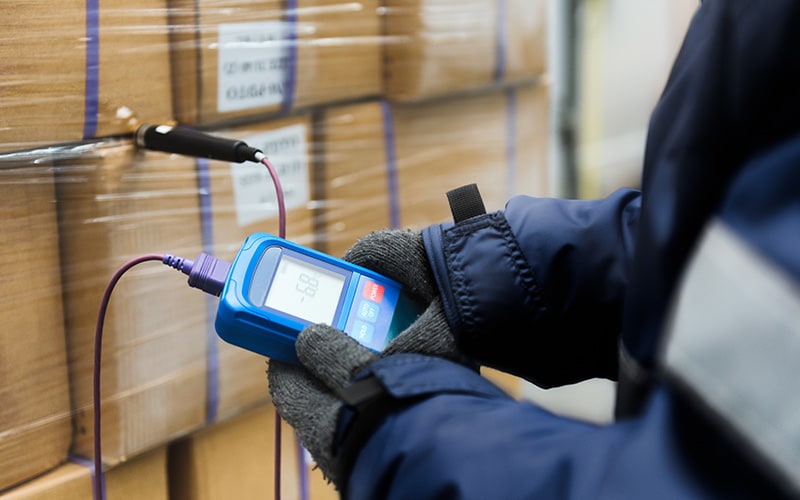
CGTs require uninterrupted cryogenic conditions — typically around minus 150 °C — throughout the process, from collection to reinfusion. Even brief temperature changes can irreversibly compromise cell viability, potency, or safety, rendering the therapy unusable. While this risk can be managed at low volumes through specialized handling and personalized oversight, scaling CGT delivery multiplies the number of handoffs, shipments, and storage points.
As volumes grow, maintaining consistent cryogenic integrity places extraordinary demands on packaging, monitoring, and logistics of quality systems, which make temperature control a structural limiter on reliable CGT access.
Care site strain
Fragmented CGT delivery places disproportionate strain on clinical sites by forcing them to manage execution uncertainty and clinically unstable patients while awaiting therapy delivery. Unpredictable manufacturing and logistics timelines require sites to reserve ICU capacity, maintain standby teams, and care for deteriorating patients over extended periods. Only large, well-resourced centers can absorb this risk, making clinical site capacity a structural bottleneck to CGT expansion and geographic access. From 2024 to 2025, the number of qualified centers in the US did not change.
Distributor opportunity: From running the network to connecting it
The disconnected workflows that constrain CGT delivery today can be addressed by the organizations that already sit at the center of the distribution networks. Large medical distributors routinely manage specialty logistics, ultra-low-temperature handling, site delivery, documentation, and compliance, while also coordinating with hospitals, providers, and regulators.
But today, they are mostly focused on individual tasks rather than weaving together all elements of the network.
Patient-specific therapies require continuous alignment across manufacturing, logistics, patient-readiness, and treatment site capacity. These advanced therapies have reached a point where distributors need to evolve from moving and managing products to designing, governing and executing end-to-end delivery systems.
To achieve this critical next step, the industry needs to improve across these three dimensions.
Design the end-to-end process
Today, distributors coordinate shipping, site delivery, and documentation. For CGTs to scale effectively, they must orchestrate the entire patient journey, ensuring that manufacturing schedules, logistics execution, and treatment site readiness are continuously aligned.
To start, distributors should design an operating model that lays out the workflow: COI and COC checkpoints, readiness gates for manufacturing and treatment centers, and rules for managing issues when things go wrong. This ensures any inconsistency can be dealt with quickly and effectively, materially reducing the risk of therapy loss due to misidentification, delay, or temperature fluctuations.
Improve supply chain orchestration
Once the operating model is defined, distributors must implement a supply chain orchestration system or digital execution platform to enforce the processes and replace manual coordination with system driven controls. This might require the adoption of off-the-shelf solutions, such as SAP Cell and Gene Therapy Orchestration. Its standard capabilities are sufficient, but distributors can also selectively build custom solutions for differentiated or patient-critical needs.
Design and build a patient portal
Next, distributors should develop a patient portal to enable scheduling, benefits verification, prior authorization, documentation management, and readiness verification. It should have strict privacy controls so that patient identities are appropriately masked from execution systems, while still enabling secure coordination across stakeholders. This will reduce operational burden on treatment centers, support faster site activation, and improve consistency and reliability across the network.

Distributor roadmap to scale CGT access
The shift from traditional wholesale distribution to CGT orchestration must be deliberate and phased, grounded first in execution credibility before expanding to broader coordination and accountability. This process will allow distributors to enter the CGT delivery business early, learn with controlled risk, and progressively move up the value stack, from logistics execution to full end-to-end orchestration.
Get the basics right
Execution credibility should be the entry point. CGT manufacturers will not rely on downstream orchestration unless basic logistics perform flawlessly. Distributors, therefore, need to focus first on ultracold chain integrity, validated handoffs, and rigorous identity controls — first to reduce immediate execution risk and to establish trust with manufacturers and treatment centers.
Broaden support services
Distributor services should also cover non-clinical support. Patient hub services for benefits verification, prior authorization, scheduling, and financial navigation can close persistent access gaps. Standardized workflows reduce the operational burden on hospitals and embed distributors more deeply into the CGT delivery ecosystem.
Full orchestration
Only after mastering execution and coordination should distributors step into full orchestration. Here, the distributor connects and governs the ecosystem — integrating data from manufacturers, apheresis centers, manufacturing sites, and treatment centers into a unified control tower with real-time visibility across physical and digital flows.
This phased journey allows distributors to move from volume to value, from transactional margins to service ecosystems, and from being distributors to trusted orchestrators of patient outcomes.
The way forward
As CGTs move beyond early adoption into broader clinical use, structural limitations in the distribution of patient-specific therapies are emerging as a key impediment, alongside treatment center capacity and high therapy costs. The current fragmented and manual delivery model cannot absorb rising volumes without compromising reliability, patient access, or the cost efficiency of delivering each successful treatment.
Solving this challenge requires a different operating model, centered on end-to-end orchestration, execution certainty, and patient-level accountability.
Large medical distributors are the most natural candidates to lead this shift. By evolving from transactional distributors to integrated orchestrators of the vein-to-vein journey, they can close the execution gap that constrains CGT access. In doing so, they unlock a structurally more resilient delivery system, and a higher value economic model aligned to risk reduction, access expansion, and better outcomes.
The transition will not happen overnight. It requires disciplined progress, starting with the establishment of a unified supply chain that connects all key stakeholders, extending into coordinated management of benefits verification, prior authorization, scheduling, and patient financial navigation. This new approach culminates in a shared system of record that supports regulatory compliance, auditability, and end-to-end execution at the scale needed to make CGTs reach more eligible patients.


The semiconductor industry is navigating rising volatility as AI demand accelerates and supply constraints persist, making integrated, real-time operations on platforms such as SAP S/4HANA critical to aligning planning, manufacturing, and supply chains.
- 24 Jun, 2026
- 8 min read

Mergers and acquisitions deliver significant value when done well. Yet, frequent exclusion of IT from the core processes leads to substandard business outcomes.
- 23 Nov, 2023
- 7 min read

Organizations need to better understand the benefits of green IT and how it can be applied to more demanding technologies and increasing numbers of devices.
- 03 Oct, 2023
