Proximus on Scaling AI: From Enthusiasm to P&L Impact
Proximus leaders explain how they are moving AI from enthusiasm to measurable impact, and why accountability, trust, and the right partner decide whether it scales.
AI is now foundational to modern marketing, improving efficiency and performance across functions such as content creation, analytics, and campaign execution. Yet most organizations have not realized its full transformational potential. Future value is expected to come from deeper integration of AI into marketing workflows, operating models, governance, and decision-making to enhance business performance and growth.
Video
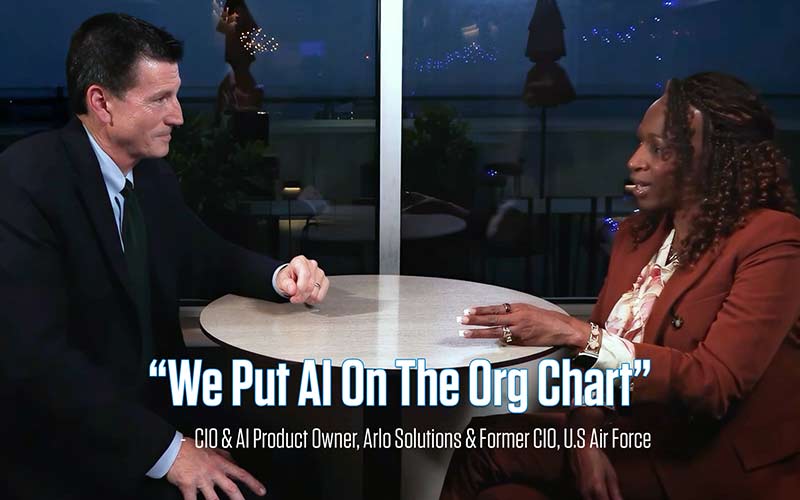
AI and the Future of Aerospace & Defense
Venice Goodwine of Arlo Solutions draws on her tenure as CIO of the U.S. Air Force and Space Force to explain how workforce readiness, data strategy, and governance got AI to production across 183 installations.
Video
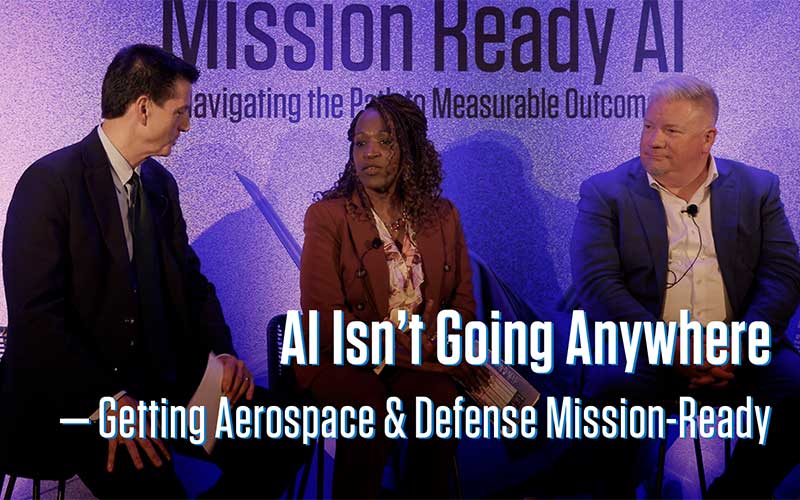
Mission Ready AI: From Strategy to Scale
Leaders from Arlo Solutions and Dassault Systèmes argue that scaling AI in aerospace and defense is blocked less by technology than by talent gaps, unresolved data governance, and legal frameworks that were not written with AI in mind.
Article
Postcards from the Future 5: How we shifted to the sovereign clouds
This postcard from the future looks back from 2031 and describes how countries and regions shifted to sovereign clouds that function smoothly and connect across borders.
Podcast
When the System Works at Scale: Alyssa Alvarado on Real Jobs Rhode Island
Alyssa Alvarado of the Rhode Island Governor's Workforce Board makes the case that a sector-based workforce system can reach real state scale. Real Jobs proves it in the numbers, running thousands of demand-driven programs on a data system solid enough that employers build their hiring around it.
Article
Fast-fashion supply chains: From challenges to a responsive model
In fashion, speed may set the pace, but responsiveness wins the race.
Video
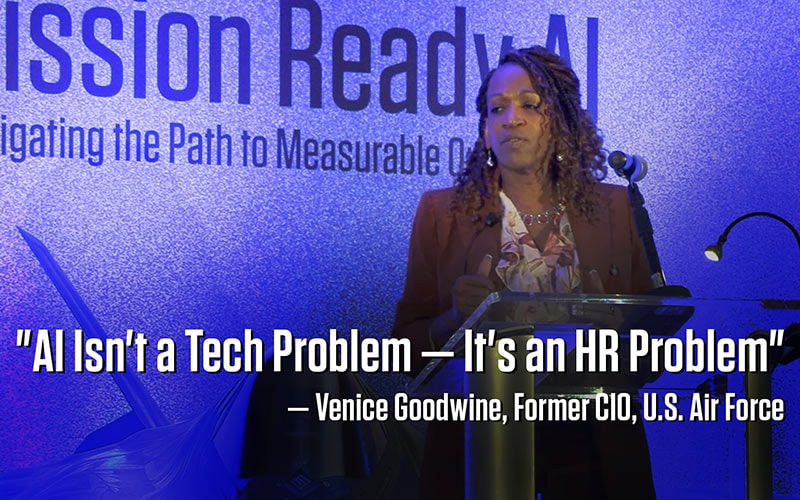
Venice Goodwine on Workforce, Urgency, and the Human Side of AI
Venice Goodwine of Arlo Solutions, drawing on her tenure as CIO of the U.S. Air Force and Space Force, explains why AI adoption in defense is an HR problem first, and what it takes to build a workforce that trusts its AI agents enough to act on them.
Article
Beyond personalization: The shift to outcome orchestration in telecom
Telecom companies are becoming good at predicting the next-best action. But what customers want is the outcome, delivered seamlessly and without having to ask.
Report
Infosys GCC journal: From cost center to AI advantage
How the world's leading GCCs are transforming AI ambition into measurable business advantage.
Article
How to accelerate enterprise transformation with a transformation management office
Effective TMOs align people, processes, technology, and data around value realization.
Podcast
Designing for Every Constituent: WongDoody's Erica Schenk and Phil Golub on Public Sector Design
Erica Schenk and Phil Golub of WongDoody make the case that accessible, human-centered design isn't a nice-to-have in government work. It's the difference between a solution that gets adopted and one that gathers dust.
Article
Sovereign AI: How much control does your organization really need?
Advanced AI depends on a small number of governments and businesses that could stop access at any moment. Businesses need a fail-safe sovereignty posture that’s managed as an architectural and risk-management discipline.
Article
How telcos can harmonize service desk operations using ServiceNow
With a strong platform foundation and disciplined execution, telecom companies can unify fragmented service desks into an integrated, measurable service operation.
Article
Beyond copilots: The agentic enterprise
Why most enterprises aren’t ready to let AI agents act on their behalf, and the four-stage roadmap that gets them there.
Report
AI and the Future of Work: CPG
CPG employees’ strong appetite for AI offers a solid base to close generational gaps and scale adoption enterprise wide.
Article
How to scale AI: Why business value depends on rewiring the operating model
Many enterprises are investing heavily in AI but seeing little return because they are not focusing on how the business is organized. The technology is important, but the operating model around it is even more so. Organizations that build a product-centric, platform-driven operating model can scale AI and foster measurable business value.

Report
Agentic AI playbook for healthcare payers
Healthcare payers can use agentic AI to coordinate complex workflows, improve operational efficiency, and maintain human accountability.
Podcast
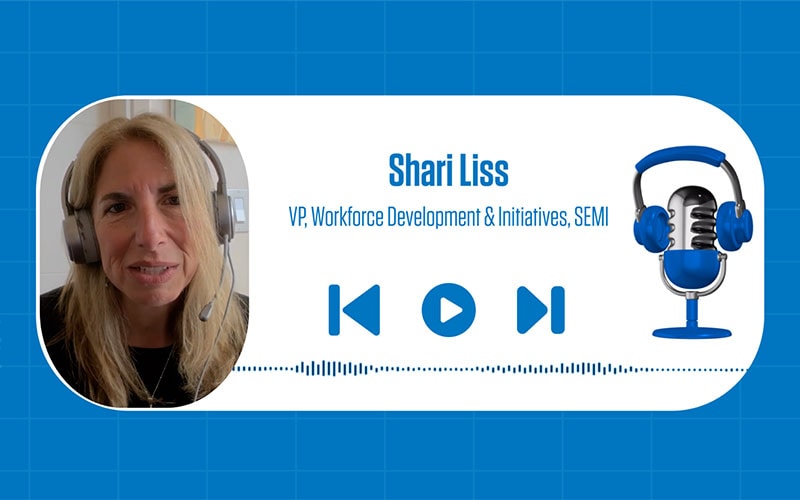
Building a National Microelectronics Workforce: Shari Liss on the CHIPS-Era Crunch
Shari Liss of SEMI makes the case that the semiconductor industry's growth now hinges on people, with hundreds of thousands of new workers needed in the US alone. Her answer is to stop rebuilding regional programs in isolation and knit them into one national system that shares what works across the country.
Video
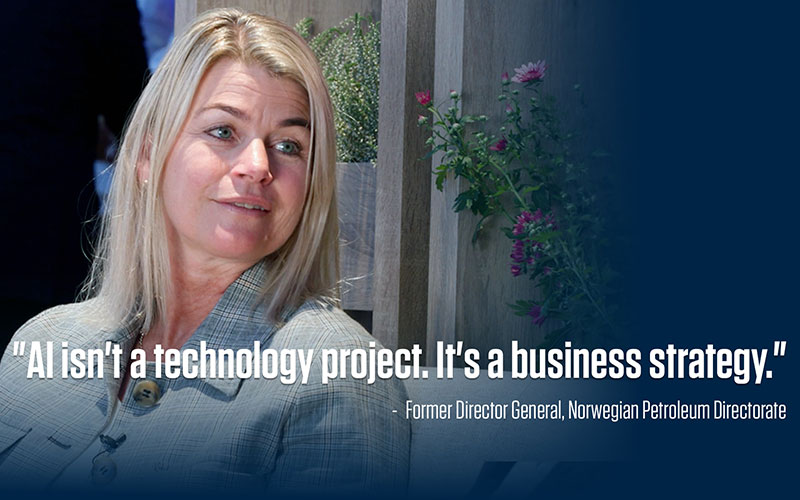
Why AI Adoption in Energy Is a Board Problem
Ingrid Solvberg, former Director General of the Norwegian Petroleum Directorate, makes the case that board leadership and governance, more than the technology itself, decide whether AI adoption in energy succeeds.
Podcast
Norm or Policy: Susie Forbath on Building Public-Sector Software That Serves Everyone
Susie Forbath of Carina makes the case that building software for the public good and building it well are one discipline. As AI makes prototypes cheap to produce, the edge belongs to the people who know which problem to solve and will stand behind the answer.
Video
Microsoft on Closing Energy's AI Pilot Gap
Jon Olav Åbeland of Microsoft makes the case that the gap between AI pilots and production has widened in energy, and the work to close it begins before the first project launches.
Video
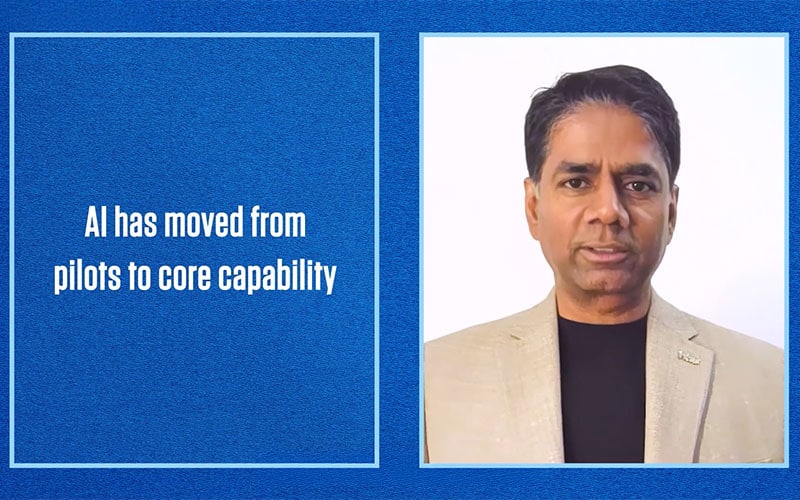
How Can Insurers Turn AI Adoption into Measurable Value?
Kannan Amaresh, Global Head of Insurance at Infosys, explains how insurers can move AI from promising pilots to measurable, enterprise-wide value.
Article
AI capability maturity model: When scaling needs a game plan
Organizations must assess their current maturity and define their desired state to determine where to invest, before scaling.
Video
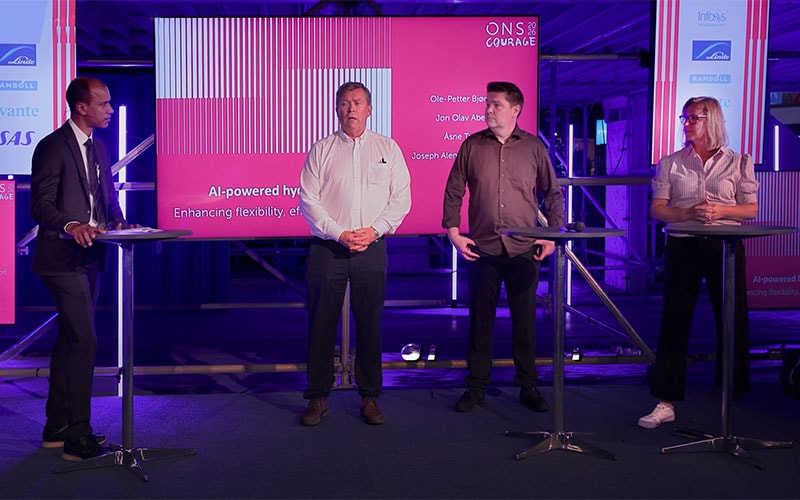
AI-Powered Hydropower: Enhancing Flexibility, Efficiency and Value
Leaders from Å Energi, Tinfos, Microsoft, and Infosys explain why hydropower's safety-first operating culture has left the industry without the failure data its AI models need.
Podcast
Jason Ballard of Toyota Motor North America explains how the automaker moves AI from isolated pilots to enterprise scale without losing sight of its people, and why betting on a single model would be a mistake.
Podcast
Don't Repeat Green Jobs: Eric Seleznow on Apprenticeship in the AI Moment
Eric Seleznow, the architect behind the Obama-era apprenticeship push, explains why apprenticeship still outperforms every other workforce strategy, and why the AI moment risks repeating the same mistake the green jobs boom made.
Article
Why AI needs context before it can act
Enterprise context helps AI understand how a business works, enabling it to act within real-world processes, policies, and decisions rather than simply analyze data.
Article
How AIOps and AI-powered observability transform enterprise IT operations
AI-powered observability and AIOps help manufacturers turn fragmented OT and IT signals into earlier warnings, faster decisions, and more resilient operations.

Report
Infosys Bank Tech Index: Capital markets institutions
This edition draws on 102 capital markets institutions respondents. They form part of Volume 6 of the Infosys Bank tech Index edition's larger base of 400 largest banks by total assets. This edition compares how capital markets institutions leaders view AI spend, their stage of AI implementation, and the functions where AI generates the most value and optimizes cost the most. These views are benchmarked against the full survey group.
Podcast
Learn the Words: Abby McQuade on How Vendors Earn Government Trust
Abby McQuade of Infosys Public Services makes the case that the vendor-government relationship works as a partnership. The vendors who lose the room are the ones who arrive with a finished product and a story about the problems it solves.
Video
Don't Repeat Green Jobs: Eric Seleznow on Apprenticeship in the AI Moment
Eric Seleznow, the architect behind the Obama-era apprenticeship push, explains why apprenticeship still outperforms every other workforce strategy, and why the AI moment risks repeating the same mistake the green jobs boom made.
Video
Anne Conroy-Baiter on the Space Coast at a Tipping Point
Space Coast Chamber of Commerce CEO Anne Conroy-Baiter on why a historic launch boom is only the beginning for Florida’s innovation corridor.
Article
How AI can transform telecom billing
What's holding back revenue management in telecom, and how AI and ontology can finally make billing predictable.
Report
Logistics Industry Outlook 2026
The technology for business resilience already exists. The advantage lies in how effectively logistics companies embed it into daily operations.
Article
AI token optimization: How to build cost-efficient AI
Token efficiency, or tokenomics, is now a primary design concern in AI deployments. To get ahead, organizations should build a framework of four composable levers, or thinking modes, applied across the agent stack to cut token expenditure without degrading output quality.
Video
Norm or Policy: Susie Forbath on Building Public-Sector Software That Serves Everyone
Susie Forbath of Carina makes the case that building software for the public good and building it well are one discipline. As AI makes prototypes cheap to produce, the edge belongs to the people who know which problem to solve and will stand behind the answer.
Video
Designing for Every Constituent: WongDoody's Erica Schenk and Phil Golub on Public Sector Design
Erica Schenk and Phil Golub of WongDoody make the case that accessible, human-centered design isn't a nice-to-have in government work. It's the difference between a solution that gets adopted and one that gathers dust.
Video
When the System Works at Scale: Alyssa Alvarado on Real Jobs Rhode Island
Alyssa Alvarado of the Rhode Island Governor's Workforce Board makes the case that a sector-based workforce system can reach real state scale. Real Jobs proves it in the numbers, running thousands of demand-driven programs on a data system solid enough that employers build their hiring around it.
Video
Building a National Microelectronics Workforce: Shari Liss on the CHIPS-Era Crunch
Shari Liss of SEMI makes the case that the semiconductor industry's growth now hinges on people, with hundreds of thousands of new workers needed in the US alone. Her answer is to stop rebuilding regional programs in isolation and knit them into one national system that shares what works across the country.
Video
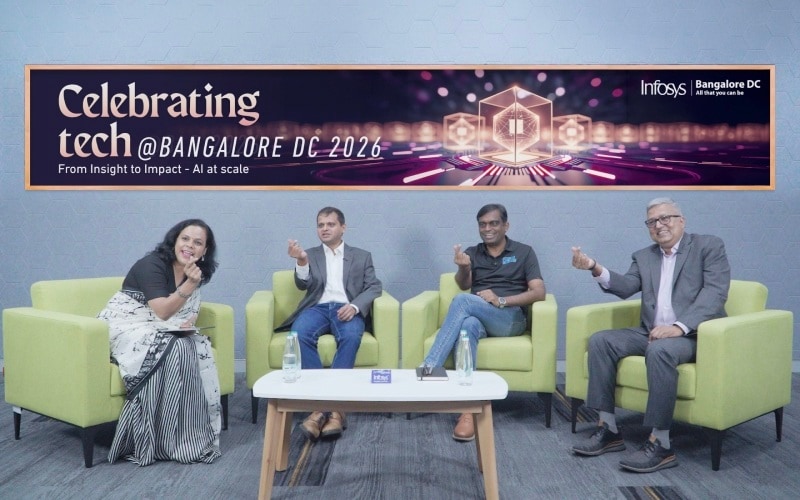
Celebrating Tech @ BLR DC 2026 - From Insight to Impact - AI at Scale
Watch the Fireside Chat: Celebrating Tech @ BLR DC 2026 - From Insight to Impact - AI at Scale
Article
How to build continuous, board-ready risk assurance
Regulatory change is accelerating and breach costs are rising, yet most institutions still rely on periodic, manual risk assurance. Three structural gaps, spanning visibility, third-party oversight, and governance, leave institutions unable to keep pace. Building risk assurance as a continuous, AI-augmented capability closes these gaps. A four-phase roadmap helps institutions get there.
Article
The missing operating discipline behind enterprise AI
The difference between AI work and AI that works lies in the discipline to scale adoption, governance, and value realization
Video
Learn the Words: Abby McQuade on How Vendors Earn Government Trust
Abby McQuade of Infosys Public Services makes the case that the vendor-government relationship works as a partnership. The vendors who lose the room are the ones who arrive with a finished product and a story about the problems it solves.
Report
AI and the future of work: Retail
For retailers, the AI advantage will come from building the organizational muscle that lets employees use AI confidently.
Podcast
Boom, Bust, Rebuild: Harvard’s Rachel Lipson on Frontier Jobs
Rachel Lipson of Harvard's Project on Workforce makes the case that America has trained workers for the jobs we already have, while the fastest-growing industries are inventing roles nobody has trained for yet.
Article
CRM's next evolution: From application to infrastructure
As AI agents become part of customer-facing operations, Headless CRM is emerging as the architectural bridge between the SaaS and AI-first eras.
Article
How enterprises can control AI agent sprawl
Learn how automated integrity checks and human oversight can help enterprises control AI agent sprawl, reduce duplication, and manage risk at scale.
Report
Retailers must prioritize AI-powered supply chain intelligence, seamless omnichannel experiences, and personalization to drive growth and resilience.
Article
Trust, context, and control: The foundations of SAP's Autonomous Enterprise
As AI moves from assisting employees to participating in business execution, organizations must build the trust, context, and control needed to enable agent-led execution at scale.