

Insights
- AI is shifting from being a productivity tool to becoming the operating logic of telcos, requiring a full redesign of how work, decisions, and value are orchestrated.
- Incremental AI creates pockets of improvement but reinforces legacy operating models. The Frontier Telco framework solves this by preserving business intent end to end.
- Frontier Telco is an autonomous enterprise framework that brings together intelligent operations, customer value orchestration, and strategic stewardship — balancing autonomy with human judgment.
- Leaders must shift to a transformational mindset to realign the enterprise around AI-native ways of working.
- The inflection point is now: telcos that do not rearchitect for autonomy risk becoming structurally unfit for the next era of competition.
Artificial intelligence (AI) is rapidly evolving from a useful tool into a core capability that can reshape how enterprises operate. In this environment, telcos face a once-in-a-generation choice: continue with current operating models and make incremental improvements or reimagine themselves as autonomous enterprises.
Frontier Telco is Infosys’s framework for reimagining an autonomous enterprise. It moves telcos beyond isolated AI experiments toward AI-first operating models that deliver autonomy, transparency, and accountable performance at scale.
It extends the idea of the frontier firm into a telco setting, reframing AI not as another technology layer, but as the enterprise’s intelligence distribution grid for enabling services, experiences, networks, operations, and partner ecosystems.

Why the old playbook breaks: Incremental AI as a strategic trap
Over the past decade, telcos invested heavily in digital transformation, cloud platforms, and data modernization. AI was often added to cut costs or streamline operations, creating pockets of value while largely preserving the existing operating model — task-based workflows, siloed decision-making, and rigid handoffs.
That approach no longer works. Traditional transformations deconstruct business intent into a sequence of tasks and automate each step separately. In doing so, organizations lose sight of the bigger goal. AI may accelerate individual tasks, but the enterprise still struggles to adapt in real time. What’s needed is a shift from task thinking to intent thinking driving business outcomes — where AI understands goals, context, and trade-offs, and orchestrates actions dynamically. That is the foundation of the Frontier Telco model.
A three-layer autonomous enterprise framework
Frontier Telco is not a technology stack. It is a business architecture that redesigns how a telco operates in an AI-first world.
It resolves the trap of incremental AI by preserving intent end-to-end. The model rests on three interconnected layers built around outcome-oriented teams that elevate human-customer interactions while transforming internal operations.
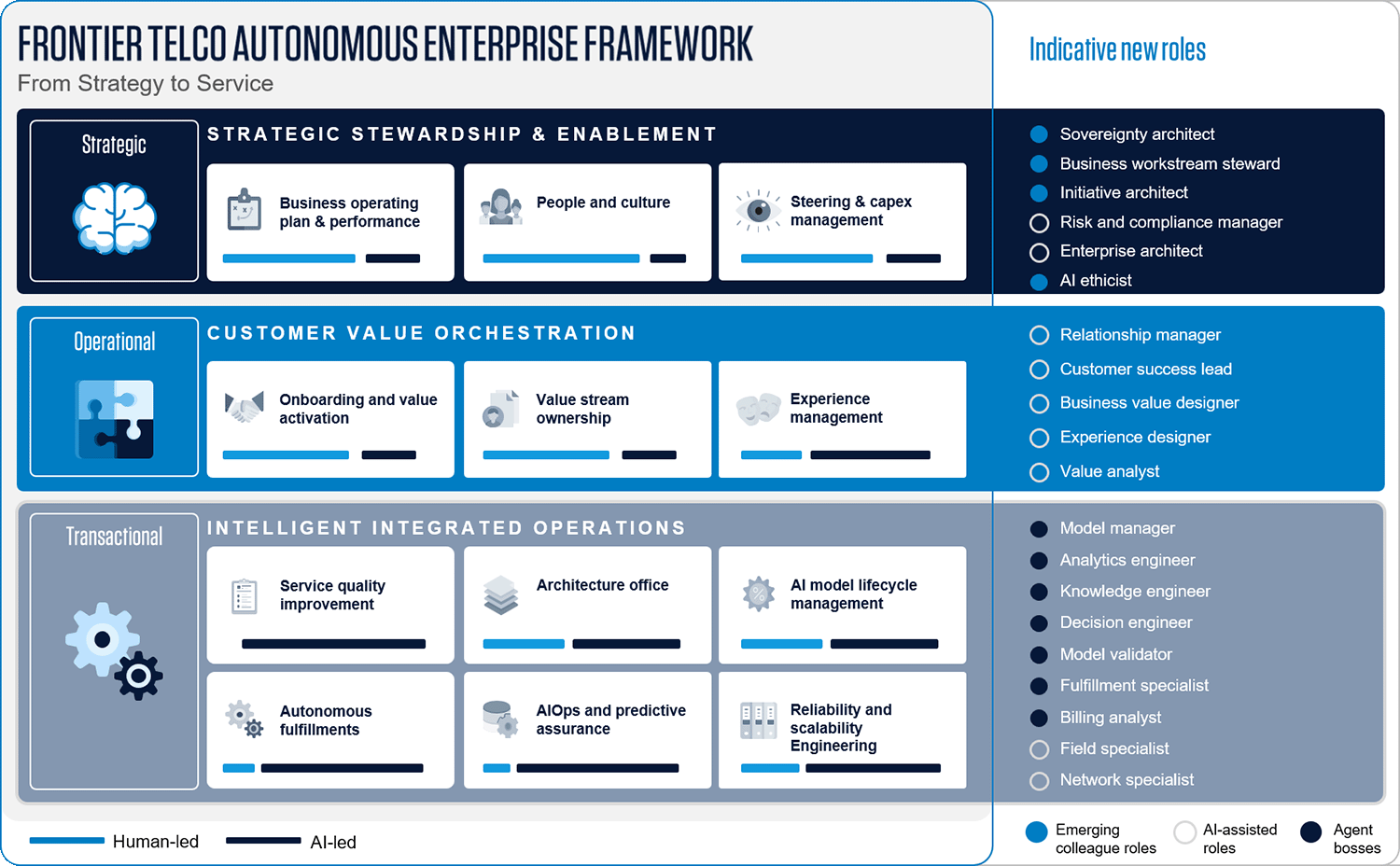
Figure 1. Frontier Telco autonomous enterprise framework
Source: Infosys
- The intelligent integrated operations layer — the engine: Here work becomes faster, smarter, and largely automated, and where human roles shift from doing tasks to designing systems, supervising outcomes, and stepping in only when needed. In this layer, automated service fulfillment teams run zero-touch workflows, with AI handling most routine orders. AI operations (AIOps) and assurance teams oversee predictive systems that resolve incidents before customers even notice them. Unified data and application programming interface (API) teams act as the enterprise’s nervous system, with AI continuously curating, cleaning, and enriching data. As this layer matures, human effort shifts to higher value oversight. Roles evolve into agent bosses who guide and govern AI agents, alongside AI-assisted roles that partner with systems to deliver faster, more accurate outcomes.
- The customer value orchestration layer — the front: This layer brings all customer-facing roles together into stable customer value stream teams. Instead of handling work across multiple departments, these teams own the customer journey end to end. Value stream owners manage commercial relationships, value designers use AI insights to shape tailored solutions, and pricing analysts build dynamic pricing models that respond to real-time conditions. Because these teams operate against shared metrics, such as uptime, adoption, and time to revenue, they eliminate handoffs and operate with real-time intelligence and decision rights that were impossible in legacy models.
- The strategic stewardship and enablement layer — the steering: This is where the enterprise sets direction. AI provides real-time intelligence, but human judgment anchors the decisions that carry strategic, ethical, or financial weight. In this layer, finance teams build dynamic models to improve capital efficiency, people teams run reskilling programs to support new roles, and strategy teams use live data to set priorities. Emerging new roles, such as business workstream stewards, sovereignty architects, and AI ethicists, reflect a shift toward higher-value, more strategic work.
Together, these layers create an enterprise where intent is preserved, data flows seamlessly, and autonomy grows without losing control.
Five shifts leaders must make to build future-ready telcos
Transitioning to this Frontier Telco architecture demands five fundamental shifts in how organizations think and operate.
1. From task-based operations to intent-driven orchestration: Intent-driven orchestration keeps the focus on outcomes, allowing AI to determine the optimal path to achieving them. This shift requires leaders to reframe how work is designed, measured, and governed.
Leadership question: Which outcomes do we protect at all costs?
2. From siloed handoffs to human-agent collaboration: Humans and AI agents collaborate fluidly across functional boundaries, eliminating friction and creating seamless workflows. This shift eliminates handoffs and creates seamless, accountable workflows.
Leadership question: Where do humans retain final authority, and why?
3. From reactive monitoring to self-healing networks: AIOps platforms predict, detect, and remediate issues autonomously, often before customers notice. This shift transforms network reliability from a cost center into a competitive differentiator.
Leadership question: Which reliability metrics become customer-visible differentiators, and who owns them?
4. From data silos to agent-first, context-rich platforms: Data is treated as a strategic asset. It becomes the nervous system of the enterprise, not a bottleneck. Context is prioritized over raw data, enabling more intelligent, adaptive decision-making.
Leadership question: What context signals must all agents share to make higher order decisions?
5. From static products to adaptive, API-enabled enterprise solutions: API-enabled platforms allow services to be dynamically composed, tailored, and delivered in response to real-time customer needs. This shift moves telcos from product vendors to platform orchestrators.
Leadership question: Which control layers will we own, and which will we intentionally partner for?
The AI inflection point for telcos
The telecommunications industry stands at a defining moment, witnessing a shift far deeper than previous cycles of network upgrades or digital transformation. As connectivity commoditizes and margins tighten, telcos can no longer rely on traditional levers of scale or network optimization alone. AI has moved from trimming costs at the edges to becoming the operating logic of the telco itself, reshaping networks, operating models, and value creation end-to-end.
The question has shifted from whether AI can improve efficiency to how quickly telcos can rearchitect themselves for an AI native world. Incremental pilots and bolt-on automation cannot keep pace with the speed and complexity of the market. AI must move from experimentation to enterprise-wide autonomy, or organizations risk being structurally unfit for what comes next. There is no Plan B.

Call to identity: The next era of telecommunications
For telcos ready to make this shift, Infosys offers a practical blueprint:
- Make the five strategic shifts that reorient the organization around intent, not tasks.
- Build the roles and capabilities required to operate in an AI-driven world.
- Use the three-layered enterprise architecture to balance autonomy with human judgment.
This is not a distant vision. The technology exists today. Competitive pressure is intensifying. The window for leadership is narrowing. The telcos that move now will navigate disruption, capture new value, and define the next era of telecommunications.
Infosys helps global telcos transform into frontier enterprises — building AI-first operating models that deliver autonomy at scale, measurable performance gains, and superior customer outcomes.


Regulatory change is accelerating and breach costs are rising, yet most institutions still rely on periodic, manual risk assurance. Three structural gaps, spanning visibility, third-party oversight, and governance, leave institutions unable to keep pace. Building risk assurance as a continuous, AI-augmented capability closes these gaps. A four-phase roadmap helps institutions get there.
- 11 Sep, 2026
- 15 min read

The difference between AI work and AI that works lies in the discipline to scale adoption, governance, and value realization
- 10 Sep, 2026

Learn how automated integrity checks and human oversight can help enterprises control AI agent sprawl, reduce duplication, and manage risk at scale.
- 08 Sep, 2026
