

Insights
- Current operating models can’t keep pace with rising complexity and shrinking margins, leaving most operators stuck in isolated automation pockets.
- As a result, many are now aiming for higher autonomy levels but face several structural and operational challenges.
- The right entry point for L4 depends on business priorities, impact, and data readiness — which, for most telcos, typically points to the assurance domain.
- Defining RoI and building strong, real-time data foundations remain major hurdles.
- Progress toward L4 requires disciplined, evidence-based execution and staged scaling.
Telecom operators face mounting pressure to deliver high-quality, resilient services as connectivity becomes increasingly commoditized, networks grow more complex, and margins shrink. Traditional operating models can no longer absorb this strain. As a result, many operators are turning to higher levels of autonomous network operations — systems capable of self-optimization and self-healing to boost efficiency, reduce operating costs, and keep pace with accelerating demand.
Our previous article, “How telcos can boost efficiency by moving toward autonomous operations,” introduces TM Forum’s six-level autonomous network maturity model. This article examines what operators must put in place to progress toward higher autonomy levels.
The spectrum runs from Level 0 (L0), where every action is manual, to L5, where the network is fully self-managing. The realistic and desired goal for telcos today is L4: a highly autonomous, AI-led system, where networks and operations function with minimal human intervention. This aligns with the Infosys Frontier Telco framework, which describes how a modern telco should be structured to operate as highly autonomous and AI-native organization. Current tooling makes this shift achievable: operators now have better visibility in their networks, safer ways to automate change, and AI that can interpret context and act under guardrails. Yet, most operators remain stuck with isolated pockets of automation that create fragmentation and technical debt. Tasks are automated, but cross-domain visibility, reasoning, and safe execution are missing, limiting autonomy at scale.
This article outlines the key challenges to initiating an L4 journey, presents corresponding solutions and offers critical imperatives needed to get the L4 journey right. This helps organizations shape and execute a practical strategy and roadmap.

Challenges and solutions on the path to L4
1) Clarity of business goals: Where do we start?
Preparing for L4 can feel overwhelming. Decisions cut across network operations — from planning and fulfillment to assurance and the full-service life cycle — and require rethinking operating models, processes, and the underlying technology stack. With so many potential entry points, operators often struggle to choose where to begin.
The answer is: it depends on the business goal.
Most operators pursue assurance as a starting point, because it has the richest, most continuous operational data, and the clearest performance signals.
That foundation makes it the domain with the highest automation potential and the most visible impact — which is why it becomes the natural first step toward L4. However, a key consideration to make here is alignment with the operator’s own priorities — objectives and key results, key performance indicators (KPIs), and specific pain points they want autonomy to address.
Below is a three-pronged approach to tackle this first challenge:
Step 1: Select the operating domain
Choosing the initial focus area starts with understanding the business goal. The 3E-prioritization framework helps clarify the operator’s objectives and accordingly identify the most suitable entry point for L4. The intent is to prioritize the starting domain in business outcomes, not organizational boundaries or domain size.
- E1 - Customer experience: Optimize end-to-end service quality by using autonomy to predict issues, prevent outages, and deliver consistently superior customer performance.
- E2 - OpEx economics: Reduce the cost to operate by automating high-volume tasks, shrinking incident cycles, and improving workforce productivity through AI-led closed loops.
- E3 - Technology evolution: Accelerate transformation by enabling safer, faster, and lower risk adoption of new technologies through standardized automation and real-time intelligence.
Step 2: Select the process flow
Each operating domain consists of multiple process flows. The assurance domain, for instance, includes fault management, performance management, and change management. Operators may choose to transform all or start with a subset. Fault and performance management are typically first because they directly enable proactive and predictive assurance.
Step 3: Select the technology domain
Telecom networks are built on a mix of technologies spanning access, transport, and core layers, including 5G, 4G/LTE, fiber, cable, and satellite, supporting a wide range of services from voice, video, data, and broadband internet to transport offerings. Selecting the right technology domain to begin the L4 journey is pivotal. 5G is inherently aligned with autonomous design principles because it is built on software-based, cloud-native architecture allowing real-time observability — elements essential for closed-loop automation and L4 operations. In contrast, legacy domains often require substantial upgrades before they can progress toward L4.
2) Certainty of value: Why is tangible ROI hard to define?
Even when L4 is the right destination, many struggle to justify the investment. Executives encounter familiar hurdles:
- Return on investment (ROI) is hard to calculate across uneven domains. Data quality, tooling maturity, and operational baselines differ widely, undermining a single value model.
- Benefits often show up as indirect gains. Fewer outages, faster restoration, reduced risk, and greater agility often show up as cost avoidance — not direct savings — making cross-functional buy-in harder.
- Financial models become complex very quickly. Autonomy spans assurance, fulfillment, planning, and field operations, each with different cost structures and interdependencies, making C-suite communication harder.
Given the shift to higher autonomy levels requires meaningful investment, a clear value narrative is critical.
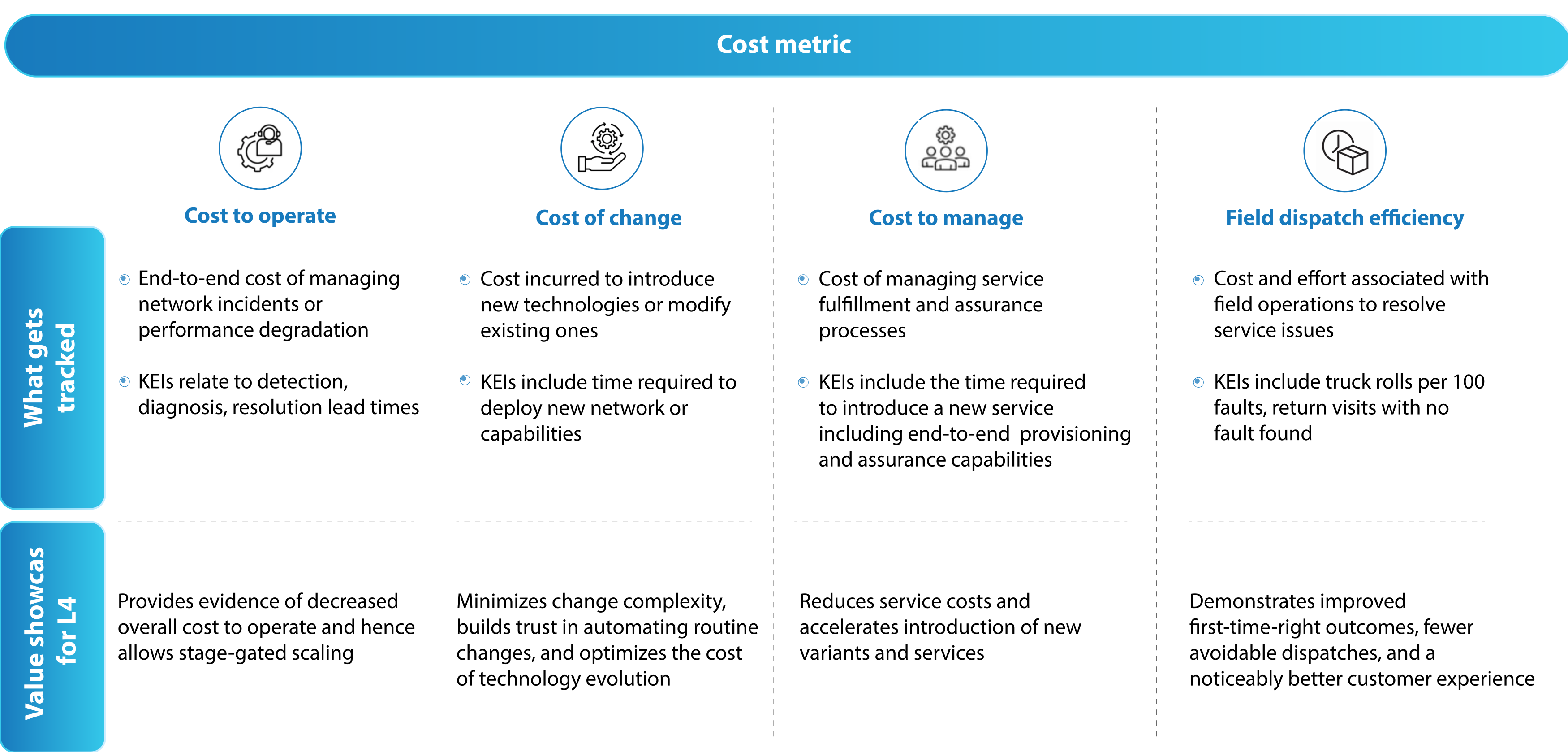
A cost-based value framework helps articulate the business case in terms that resonate with senior leaders, especially chief financial officers (Figure 1). This framework is anchored in four cost metrics, estimated using activity volumes and effort, and progress tracked through key effective indicators (KEIs).
Figure 1. Cost-based value framework
Source: Infosys Consulting
3) Data foundations: Why is live and accessible data essential for L4?
One pattern is consistent: the single biggest predictor of progress toward autonomy is the strength of the data foundation. L4 operations depend on the network’s ability to observe, reason, decide, and act across domains. None of that is possible if operational data is fragmented, untrusted, or inaccessible. Autonomy only scales when data is governed and accessible in near real time.
A practical data foundation for L4 includes five essentials:
- Standardized data models for resources and services to reduce proprietary lock-in and improve interoperability.
- Reliable inventory and federated topology, evolving toward relationship-aware models that reveal impact and causation across domains.
- Unified observability, bringing alarms, telemetry, logs, probes, and environmental signals into a single operational view.
- Streaming and subscription‑based telemetry pipelines that support near real‑time decisioning and deep diagnostics.
- Codified operational knowledge including standard operating procedures, known errors, and remediation patterns captured as reusable, machine‑readable assets.
Imperatives for a successful L4 journey
These foundations determine how quickly and safely autonomy can scale. But most operators start with an uneven reality across divisions: fragmented telemetry, legacy systems that limit real-time control, and multi-vendor environments that complicate closed loops. Under these conditions, aiming for L4 everywhere at the onset is counterproductive.
Instead, operators must begin where data readiness, business priority and impact intersect, expanding through a staged, evidence-based model. China Mobile — a leader in advancing toward L4 — illustrates this path well using a disciplined, metrics-led rollout of AI-enabled automation. This approach proves safety, reduces false positives, and strengthens decisioning before autonomy touches broader domains. These are the imperatives that shape a successful path toward L4:
- Define clear strategic outcomes: Ensure early alignment on the business results L4 must deliver and define a realistic scope of ambition. Discovery sessions using the 3E prioritization framework discussed earlier, help in this step. It is important to avoid broad, unfocused autonomy programs. In addition, early priorities must be selective and tied to tangible value.
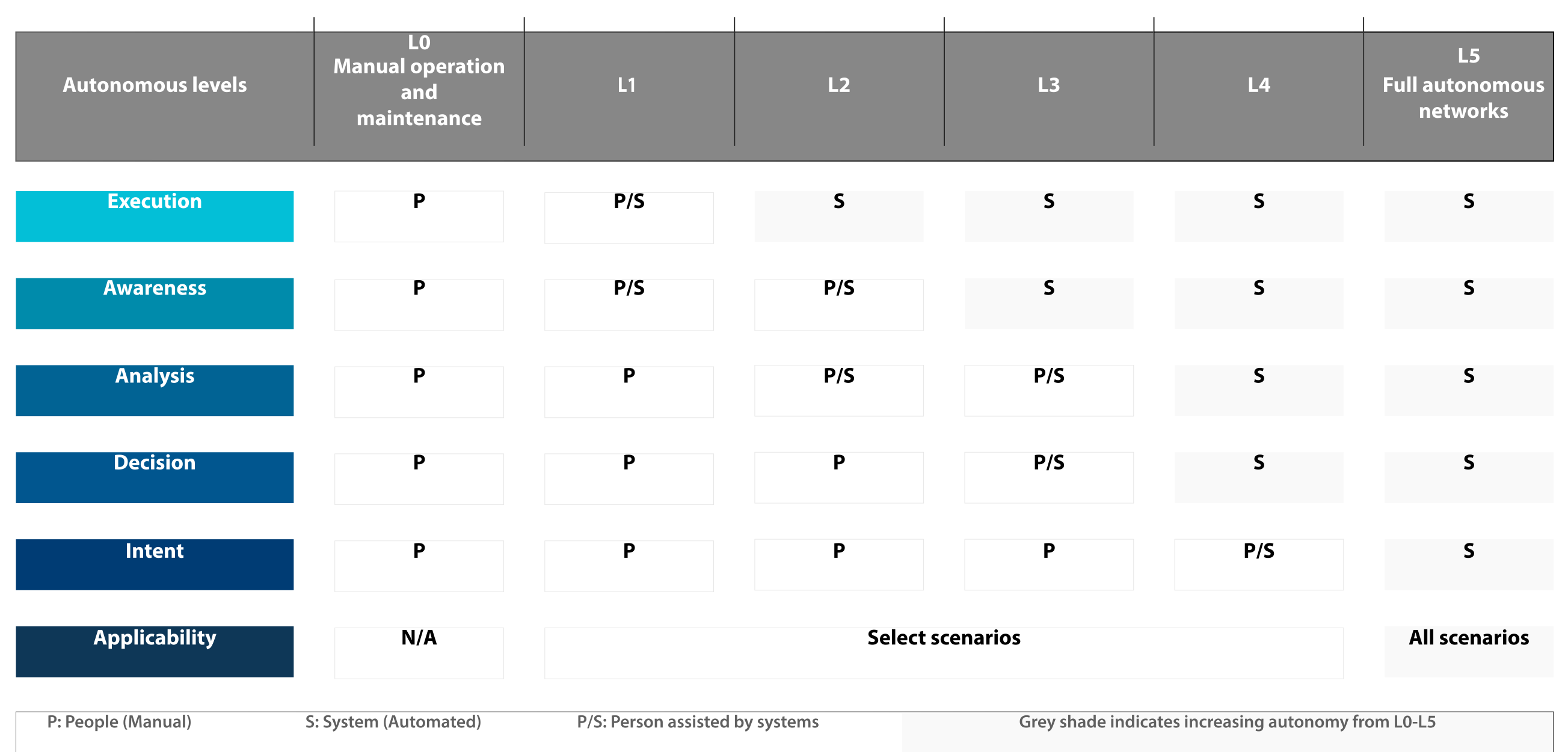
- Define measurable indicators of progress: Establish KPIs, KEIs, and domain-specific metrics that will demonstrate improvement. Map these to the cost metrics introduced earlier in the cost-based value framework, and, where helpful, map to autonomy dimensions (execution, awareness, analysis, decision, intent, applicability) to give leaders a clear maturity trajectory (Figure 2).
Figure 2. Alignment of autonomy dimensions with maturity levels
Source: Adapted from TM Forum’s autonomous network project
- Define current capabilities with evidence, not assumptions: Assess data readiness, observability, automation’s ability to self-execute, tooling maturity, architecture, and skills. Use conservative fractional scoring to avoid inflated maturity levels, and benchmark against recognized frameworks such as TM Forum to create a common language across functions.
- Define the future-state operating model and guardrails: Articulate the target state for operations, data foundations, control loops, safety requirements, and AI-assisted workflows. Keep this adaptable — advances in agentic AI, telemetry, and vendor capabilities will shift which domains become viable for L4 over time.
- Quantify the uplift required and where investment is justified: Conduct capability-to-gap analysis across technology, processes, integration, and skills. This exposes the true cost drivers — integration complexity, inventory and topology quality, streaming readiness, and safety constraints — helping determine where L4 delivers strong returns and where incremental autonomy is more pragmatic.
- Prioritize and execute the right high-value use cases: Select use cases that deliver meaningful impact and can be proven safely. Convert each into an actionable blueprint with reference architectures, functional workflows, and pilot-ready designs. Sequence execution through stage gates to validate accuracy, safety, and decision transparency before scaling across domains.
L4 autonomy marks a pivotal shift: it is where stronger resilience, long-term cost optimization, and superior customer experience converge.
The barriers to L4 are less about technology and more about intent, clarity, and disciplined preparation.
A pragmatic maturity assessment, TM Forum-aligned scoring, cost-based value modeling, and a staged roadmap help operators move beyond isolated automation and invest where autonomy creates measurable outcomes.
Operators that build these foundations now will scale autonomy safely and confidently. The journey to L4 is ultimately an evolution of the operating model, not just tooling. Those who advance with evidence and guardrails will differentiate on network quality, agility, and economics. Infosys supports this transformation with an industrialized approach spanning maturity assessment, capability and gap analyses, reference architectures, value modeling, and staged execution to operationalize autonomy at scale.


Token efficiency, or tokenomics, is now a primary design concern in AI deployments. To get ahead, organizations should build a framework of four composable levers, or thinking modes, applied across the agent stack to cut token expenditure without degrading output quality.
- 17 Sep, 2026
- 7 min read

Regulatory change is accelerating and breach costs are rising, yet most institutions still rely on periodic, manual risk assurance. Three structural gaps, spanning visibility, third-party oversight, and governance, leave institutions unable to keep pace. Building risk assurance as a continuous, AI-augmented capability closes these gaps. A four-phase roadmap helps institutions get there.
- 11 Sep, 2026
- 15 min read

The difference between AI work and AI that works lies in the discipline to scale adoption, governance, and value realization
- 10 Sep, 2026
