

Insights
- Telecom M&A deal sizes are rising sharply, but technology integration remains the primary driver of unrealized synergies.
- Compounding challenges across networks, legacy systems, data, security, and always‑on operations delay integration and erode value.
- Winning operators execute a single, integrated technology strategy, starting with comprehensive due diligence.
- In telecom M&A, technology integration is a board‑level imperative that defines value creation.
Mergers and acquisitions (M&As) remain central to telecom strategy as operators pursue consolidation, fiber reach, spectrum positioning, AI-native capabilities, and next-generation digital infrastructure. Global telecom M&A has regained momentum: while deal volumes have remained broadly stable over the last few years at between 650 and 800 transactions in a year, deal value more than doubled from $166 billion in 2023 to around $367 billion in 2025. This has been driven by a wave of large deals, signaling that operators are making fewer but bigger strategic moves. With AI investment cycles accelerating and portfolio transformation underway across various geographies, telecom M&A is well-positioned to sustain momentum and grow in value through 2026 and beyond.
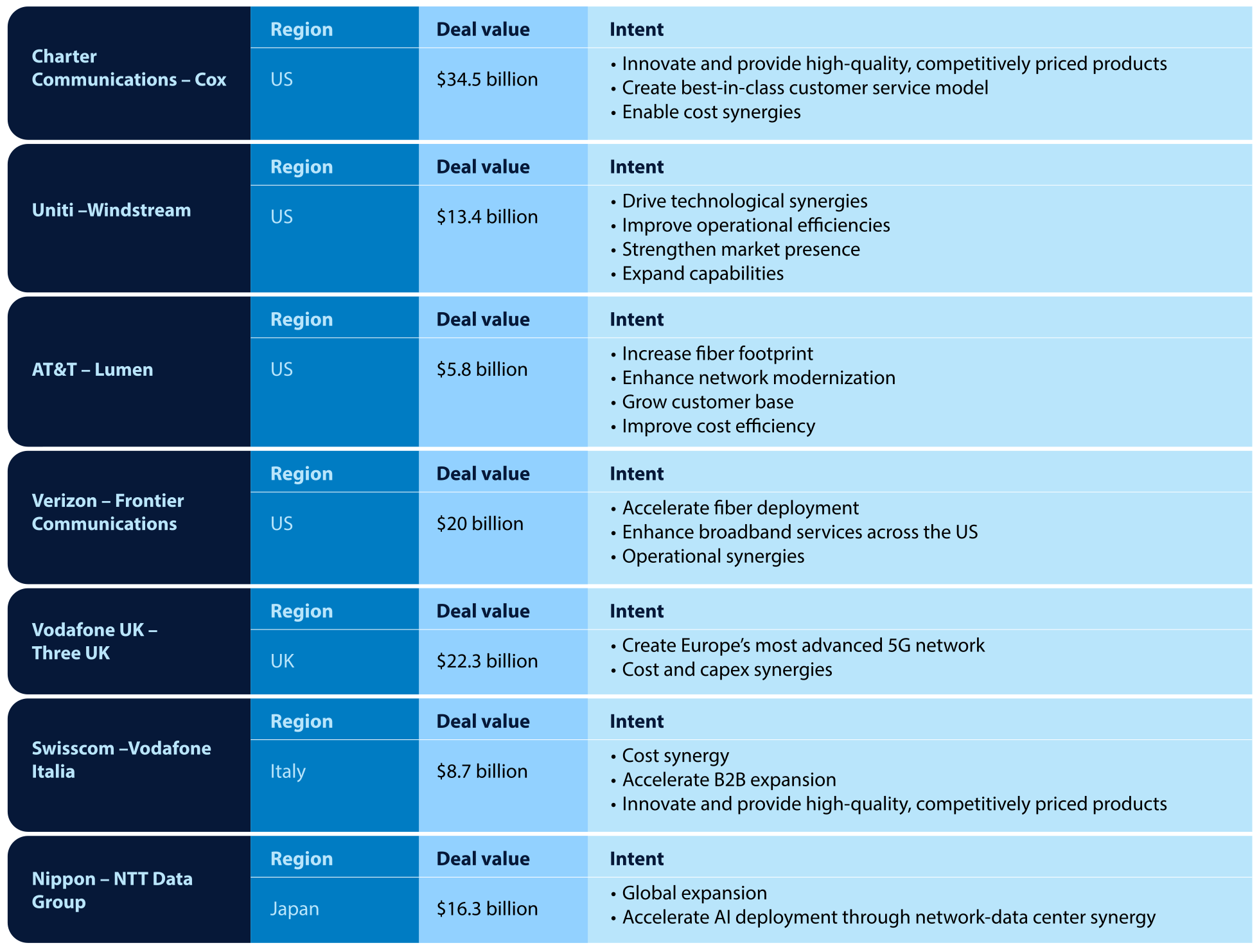
Recent high-profile deals — Charter’s $34.5 billion bid for Cox, Verizon’s $20 billion acquisition of Frontier Communications, and the merger of Vodafone UK and Three UK worth £16.5 billion ($22.3 billion) — highlight ongoing industry consolidation focused on long-term value creation.
Alongside core objectives such as expanding fiber footprint, consolidating customer bases, and extending geographic reach, artificial intelligence (AI) is the latest driver of deal activity. Companies are increasingly pursuing M&A to gain AI enabled platforms, specialized talent, and proprietary data assets to accelerate digital transformation and build competitive advantage in automation and analytics.
Figure 1. Recent large telecom deals
Source: Infosys Knowledge Institute
However, many large telecom M&A transactions fail to realize their intended synergies because execution planning is often underestimated. Telecom integrations are uniquely complex: they attempt to unite vast distributed networks, hundreds of interdependent IT systems, billions of customer records, and deeply embedded operational cultures, all while keeping always-on services running without interruption.
The companies that win, therefore, are not necessarily the biggest or those with the deepest pockets. They are the ones that recognize a fundamental truth: a successful telecom M&A depends on having a single, integrated technology strategy from day one.
Every telecom M&A has a technology integration story buried beneath the financial narrative. The challenge isn't just connecting two networks — it's reconciling two decades of architectural decisions, vendor relationships, and digital debt into a single coherent platform that can compete in the 5G and AI era.
The top five challenges in telecom M&A
Telecom M&A presents technological challenges that are orders of magnitude more complex than in most other industries. The scale of infrastructure, the real-time nature of services, and the regulatory requirements create significant integration difficulties.
These challenges don't operate in silos, they amplify each other. Failure in data integration can delay network cutovers and disrupt service continuity. Gaps in cybersecurity during system consolidation can expose both legacy and new platforms. Treating these areas as isolated workstreams, rather than a unified integration problem, is a primary reason telecom M&A programs fall short of their synergy targets.
1. Network infrastructure integration
When two telecom companies merge, they typically bring together networks built on different technologies, vendors, and architectures. Incompatible management systems create operational blind spots, leaving teams without a unified view of network performance, prolonging outages, and inflating integration costs. In practice, large‑scale network integration programs span two to three years. During this period, operators often carry between 30 to 50% redundancy in combined network and infrastructure spend, as overlapping assets must be maintained in parallel until consolidation is complete. AI-driven operations add further complexity, as mismatched compute infrastructure can disrupt model training and delay automation rollouts across the merged entity.
2. System compatibility and legacy technology debt
Large telcos often run hundreds of operations and business support systems, accumulated over decades of vendor additions and customization. Between 60% and 80% of IT spend is typically tied up in keeping these legacy platforms running. In a merger, this baseline complexity is in effect doubled, as operators inherit two parallel stacks of systems that run the business and operate the network, including billing, provisioning, inventory, and fraud management. Maintaining overlapping platforms inflates operating costs and delays synergy capture.
3. Data integration and customer information management
Reconciling customer databases, billing histories, and service entitlements across conflicting schemas turns simple migrations into months-long remediation projects, increasing exposure to data protection violations. For example, Europe’s General Data Protection Regulation (GDPR) fines can reach up to 4% of global annual revenue. According to the GDPR Enforcement Tracker (March 2025), over 2,245 GDPR fines, totaling approximately $6.5 billion, have been issued globally. Telecom-related sectors, including media and broadcasting, account for 14% of enforcement actions, with an average fine of $15 million, the highest across industries.
4. Cybersecurity vulnerabilities during transition
Integration windows are prime attack surfaces. Unsurprisingly, 62% of organizations identify cybersecurity as their single biggest concern postmerger, reflecting the risks introduced by new trust relationships, access expansions, and incomplete visibility across environments. These risks are often exacerbated by execution gaps rather than sophisticated attacks: 51% of organizations attribute heightened exposure during integration to human error and configuration weaknesses, particularly during system consolidation and access reprovisioning. For telcos operating critical infrastructure and handling vast volumes of personal data, even brief security lapses can trigger regulatory action, customer distrust, and long‑lasting reputational damage, making sustained, end‑to‑end security engineering essential throughout the integration life cycle.

5. Operational disruption and service continuity
Telecom services are always on. Integration must run in parallel with live operations across hundreds of cutover events, such as the controlled switching of live customer traffic, network control, or system ownership from one environment to another without service interruption. A single failed cutover cascades into widespread outages and regulatory fines across affected markets. Regulators across major markets increasingly impose penalties for service outages and quality‑of‑service failures, particularly where emergency services or large customer populations are affected, compounding risk for multicountry operators.
The solution: An integrated technology strategy
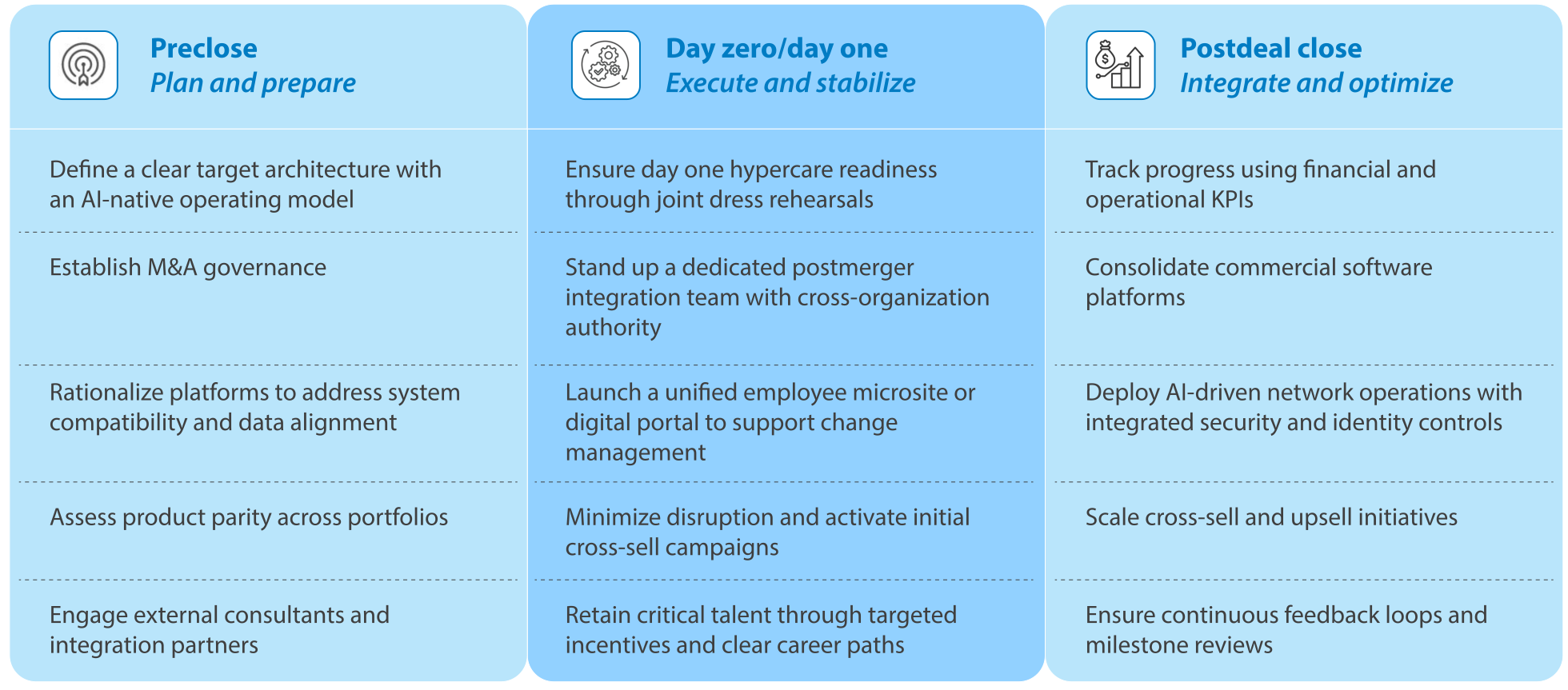
Success requires a strategy that spans the full deal life cycle from predeal diligence through day zero and day one execution to postdeal integration. This structured approach, anchored in AI-first thinking, digital-native operations, and commercial alignment, accelerates synergy capture, reduces operational disruption, and ensures continuity across networks, systems, and customer‑facing operations. This strategy must be defined early, ideally during due diligence, and owned jointly by business and technology leadership at the board level from both entities.
Figure 2. Structured integration timeline:
Source: Infosys
Key takeaways
For telecom operators navigating M&A, the following five essential recommendations can shape a more effective integration strategy:
1. Start diligence before deal closure
Technology assessment must begin during due diligence, not after signing. Operators should use the preclose window to map the target's systems landscape, including key interfaces and data flows; assess integration complexity across all five challenge areas; identify software rationalization opportunities; and define clear day one readiness criteria.
Completing these activities early, ideally within the first 30 days of signing, reduces execution risk, shortens integration timelines, and prevents downstream surprises that delay synergy realization.
2. Lead with an AI-first and digital-first integration mindset
AI and digital capabilities should be embedded from day one to actively manage integration risk and protect value. Operators can deploy AI assisted tools early, preferably within the first 30 days, to support cutover risk scoring, validate data migrations, and identify churn risk across the combined customer base. In parallel, standing up digital-native customer portals and unified digital workflows reduces operational friction, limits pressure on call centers, and accelerates self service adoption during transition.
3. Consolidate commercial off-the-shelf and third-party software
Postmerger integration creates an opportunity to reduce cost and complexity by rationalizing overlapping commercial software platforms and third‑party tools. Operators should apply a disciplined retain, consolidate, or replace framework across commercial software and vendor agreements, informed by a comprehensive audit completed within the first 60 days. This enables early contract renegotiation at scale and clear platform decisions by the end of the third month. When executed decisively, this approach can unlock license cost savings of between 20% and 35% within 18 months while simplifying the technology estate and accelerating downstream integration.
4. Align business and technology for cross-sell revenue
Realizing revenue synergies requires early alignment between commercial strategy and the underlying technology stack. Operators should prioritize building a unified product catalog within the first 90 days, creating a single view of offerings, pricing, and entitlements across the merged portfolio. This foundation enables rapid launch of converged offers for enterprise and consumer segments while competitive momentum is still in play. Moving quickly to activate bundled propositions ensures that cross-sell opportunities are captured rather than deferred until after full system consolidation, when customer attention and market advantage might have eroded.
5. Establish governance that drives data-led decisions
Effective postmerger integration requires governance structures that enable fast, evidence-based decision making jointly owned by business and technology leadership. Operators should define and track a focused set of KPIs that go beyond cost synergies — such as net promoter score, customer satisfaction score, cross-sell revenue, and security incidents — and embed them into regular management and escalation forums. To sustain momentum and accountability, integration progress and risks should be reviewed at the board level monthly for at least the first 24 months following deal closure.
M&A will continue to reshape the telecom landscape as operators pursue scale, spectrum, and capabilities. The difference between deals that create lasting value and those that fail to realize synergies comes down to well-planned, executed technological integration.
By establishing a clear architectural vision, making decisive platform choices, unifying data environments, strengthening security, and planning for realistic timelines, telecom companies can transform postmerger chaos into durable competitive advantage. Technology integration is not a back-office concern; it is the strategic game.


Regulatory change is accelerating and breach costs are rising, yet most institutions still rely on periodic, manual risk assurance. Three structural gaps, spanning visibility, third-party oversight, and governance, leave institutions unable to keep pace. Building risk assurance as a continuous, AI-augmented capability closes these gaps. A four-phase roadmap helps institutions get there.
- 11 Sep, 2026
- 15 min read

The difference between AI work and AI that works lies in the discipline to scale adoption, governance, and value realization
- 10 Sep, 2026

Learn how automated integrity checks and human oversight can help enterprises control AI agent sprawl, reduce duplication, and manage risk at scale.
- 08 Sep, 2026
