
Insights
- AI-driven technologies such as predictive analytics, agentic commerce, and retail media enable hyperpersonalized journeys but are hindered by legacy systems, data silos, and inventory blind spots.
- To overcome these barriers, retailers must adopt an AI-first, real-time, and unified experience architecture that integrates customer insights, inventory, and omnichannel operations.
- With gradual modernization, unified platforms, and continuous optimization, retailers can deliver consistent, anticipatory experiences that drive loyalty and growth.
Today’s customers expect shopping experiences that feel instantly intuitive, personalized, and free of friction. Whether browsing in a physical store, scrolling through a mobile app, or interacting with emerging commerce channels such as voice assistants or social commerce platforms, shoppers anticipate seamless transitions and consistent engagement. This elevated expectation is driven by the rise of advanced technologies that enable retailers to deliver hyperpersonalized journeys at scale.

One bad experience is enough for one in three customers to stop supporting a brand they previously loved, and brands delivering exceptional customer experiences generate revenue 5.7 times greater than those that don’t. Over three-quarters of consumer product marketers view artificial intelligence (AI) as essential to winning new customers.
Agentic commerce protocols introduce automated, intelligent buying experiences, and synthetic survey large language models (LLMs) unlock deeper customer insights faster than ever before. Retail media networks offer retailers the ability to tailor promotions in real time, while predictive analytics anticipates what customers want before they even search for it. Retail giants including Lowe’s and CVS have applied AI to enable predictive maintenance and strengthen their mobile app offerings, resulting in smoother operations, better customer engagement, and higher sales. Retailers use recommerce to expand their brand ecosystem by launching circular resale programs that let customers return and resell gently used items for store credit, mirroring successful models from Lululemon and IKEA. Collectively, these innovations create an environment where retailers design effortless shopping journeys that meet customers exactly where they are – proactively, smoothly, and with contextual relevance across all touchpoints. However, the journey requires overcoming the technology obstacles ahead.
What’s holding retailers back
Despite the abundance of opportunities provided by emerging retail technologies, many retailers remain far from delivering frictionless experiences. More than half of North American retailers admit they struggle to match the pace of technology change. A core challenge lies in limited technology maturity across existing systems. Many retailers still rely on legacy infrastructure that cannot easily support advanced personalization, real-time analytics, or automation-driven commerce flows.
Many retailers still rely on legacy infrastructure that cannot easily support advanced personalization, real-time analytics, or automation-driven commerce flows.
Budget constraints further complicate progress, as modernization efforts often require significant investment not only in technology but also in talent, governance, and operational change. Inventory blind spots represent another significant barrier.
Without accurate visibility into stock levels across warehouses, stores, and last-mile networks, retailers struggle to provide dependable availability information or enable services such as same-day delivery, click-and-collect, or smart replenishment. This inconsistency directly undermines the customer promise of frictionless shopping.
Additionally, fragmented channels contribute to disjointed customer journeys. When in-store systems become disconnected from digital commerce platforms, loyalty engines, and marketing systems, retailers fail to deliver cohesive experiences. A customer might browse online, visit a store, engage with a call center, and receive entirely inconsistent interactions. Each disconnected touchpoint introduces friction, erodes trust, and diminishes loyalty.
Finally, organizational silos and slow decision-making prevent retailers from capitalizing on modern tools such as retail media networks or predictive analytics. Even when data exists, it is often spread across isolated platforms, making it difficult to unify insights or activate personalization in real time.
Blueprint for an AI-first, real-time retail experience
To build frictionless commerce, retailers must transition to an AI-first, real-time, and interoperable experience architecture. This approach starts with unifying customer insight engines to ensure that behavioral data, preference signals, and contextual triggers are continuously consolidated, interpreted, and activated across the organization. When insights flow smoothly between systems, retailers can personalize engagement at every stage of the journey.
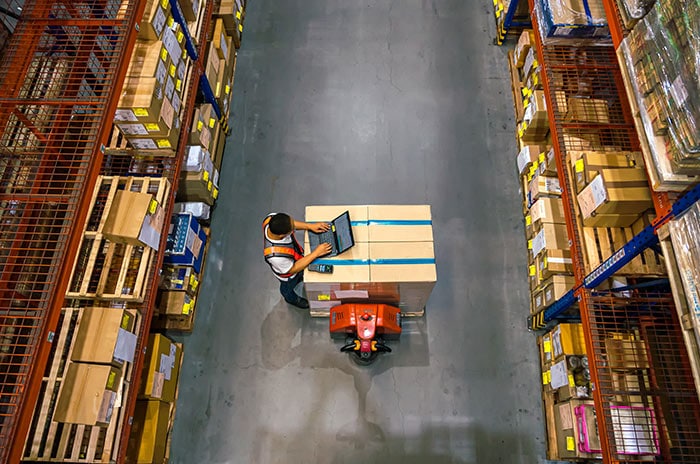
Next, retailers must modernize inventory platforms to ensure real-time accuracy across stores, warehouses, and fulfillment centers. By integrating predictive demand models, sensor-driven stock tracking, and automated replenishment, retailers reduce operational friction and improve reliability for customers.
Retailers must modernize inventory platforms to ensure real-time accuracy across stores, warehouses, and fulfillment centers.
Agentic commerce readiness is another essential pillar. By 2030, the US business-to-consumer (B2C) retail sector is expected to generate almost $1 trillion in orchestrated revenue from agentic commerce, while global markets may reach as much as $3 trillion to $5 trillion. Preparing systems to support autonomous, AI-driven buying experiences enables retailers to power intelligent interactions, whether triggered by customer intent, sensor data, or predictive patterns.
Omnichannel commerce capabilities must be fully integrated and not operate as isolated units. A unified experience architecture ensures that digital platforms, physical stores, last-mile networks, retail media engines, and service channels share the same data and decisioning frameworks. This eliminates inconsistencies and empowers retailers to deliver the seamless, personalized, and efficient experiences customers expect.
When implemented effectively, this architecture becomes the foundation for next-generation retail that is adaptive, anticipatory, and continuously optimized.

Practical steps to achieve frictionless commerce
To achieve frictionless commerce at scale, retailers should take a simultaneously pragmatic and strategic approach to transformation.
- Gradual path to modernization: Modernizing core systems does not need to be a disruptive, all-at-once effort. Instead of pursuing expensive big-bang transformations, retailers should gradually and incrementally replace legacy components with modular, cloud-native capabilities. This incremental strategy reduces risk, spreads investment over time, and allows teams to adapt processes progressively without overwhelming operations.
- Unify platforms to cut costs: Retailers must reduce the number of disconnected tools across the technology landscape. Many retailers have accumulated multiple point solutions over the years, each addressing isolated needs but collectively creating fragmentation, high maintenance overhead, and inconsistent data flows. By consolidating technologies into unified platforms and interoperable suites, retailers lower their IT maintenance burden, improve system reliability, strengthen governance, and significantly reduce total cost of ownership. This consolidation also accelerates integration efforts, making it easier to activate real-time insights.
- Build a single source of truth: Retailers should invest in unified data hubs that integrate signals from point of sale, enterprise resource planning, warehouse management system, order management system, and last-mile delivery platforms. These hubs create a single source of truth across the value chain, enabling accurate demand forecasting, real-time personalization, and dynamic inventory orchestration. Research shows that 73% of high-growth retail companies plan to use a single app that gives employees access to all necessary tools, as part of modernizing their tech. It’s equally important to invest in systems that ensure real-time inventory accuracy, such as radio frequency identification, computer vision, internet of things sensors, and advanced reconciliation engines. Accurate inventory is foundational to frictionless experiences, powering reliable fulfillment, consistent promotions, and proactive stock management.
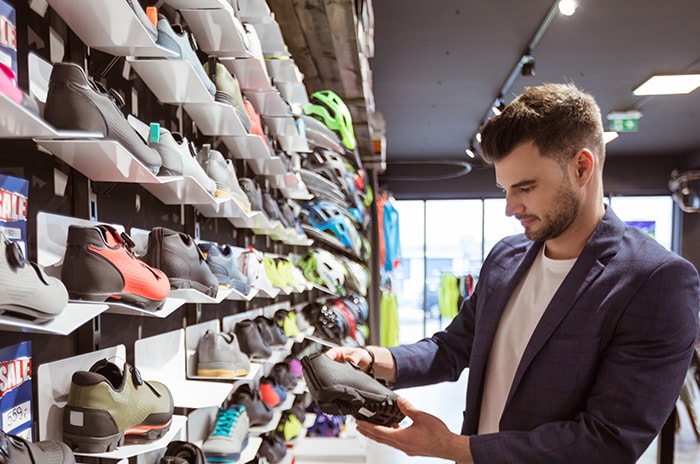
A leading European sports lifestyle brand rolled out an endless aisle solution across more than 800 global stores to improve in-store customer experience. The brand’s legacy, monolithic system was too rigid to support new digital touchpoints, such as kiosks, tablets, and store-associate apps, needed for a seamless omnichannel journey and the shopper’s ability to access endless aisle inventory from any device. Using Infosys Equinox’s MACH-X platform architecture, they launched enterprise-grade digital apps for kiosks and tablets, enabling store associates (and customers) to browse full inventory, place orders, and self-checkout. The solution allowed digital shoppers to check real-time store inventory and use click-and-collect, while enabling seamless global deployment — supporting 14 languages across 65 countries. As a result, the brand captured previously lost sales, delivered a more flexible and unified omnichannel experience, and significantly strengthened its direct-to-consumer offering.
- Optimize product data for generative engine visibility: Retail sites in the US experienced a 693.4% year-over-year increase in e-commerce traffic driven by generative AI tools in 2025. This makes it crucial for retailers to enrich product content with structured attributes, detailed metadata, and generative AI-friendly formats. This is essential for optimizing product visibility and performance within generative engine optimization environments, where customers increasingly rely on AI assistants to discover, compare, and evaluate products. Structured content ensures that generative models surface products accurately and contextually, improving conversion and reducing decision friction.
- Build a culture of continuous refinement: Finally, retailers must embed continuous experimentation, a product-centric value delivery mindset, and AI-driven performance measurement into their operating model. Frictionless commerce is not a one-time initiative: it requires ongoing refinement. By fostering collaboration across marketing, supply chain, store operations, technology, and merchandising, retailers can ensure that insights and innovations flow freely throughout the organization.
By following these recommendations, retailers can progressively shape a resilient, intelligent, and fully unified commerce ecosystem that becomes frictionless and consistently delivers the hassle-free, personalized experiences customers expect.

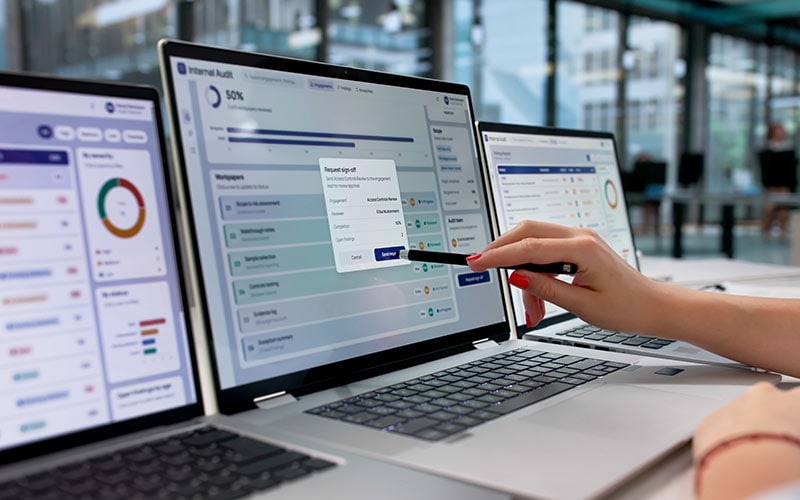
Regulatory change is accelerating and breach costs are rising, yet most institutions still rely on periodic, manual risk assurance. Three structural gaps, spanning visibility, third-party oversight, and governance, leave institutions unable to keep pace. Building risk assurance as a continuous, AI-augmented capability closes these gaps. A four-phase roadmap helps institutions get there.
- 11 Sep, 2026
- 15 min read

The difference between AI work and AI that works lies in the discipline to scale adoption, governance, and value realization
- 10 Sep, 2026

Learn how automated integrity checks and human oversight can help enterprises control AI agent sprawl, reduce duplication, and manage risk at scale.
- 08 Sep, 2026
