Insights
- The maritime industry is growing on the back of e-commerce, digitalization, and green shipping, but remains exposed to geopolitical, regulatory, cyber, and operational risks.
- Persistent headwinds include route disruptions, port congestion, decarbonization costs, cyberthreats, aging fleets, and workforce skill gaps, all putting pressure on margins and reliability.
- Advanced technologies such as AI, IoT, digital twins, automation, and analytics combined with pragmatic decarbonization, cybersecurity, and workforce transformation are critical to long-term resilience and competitiveness.
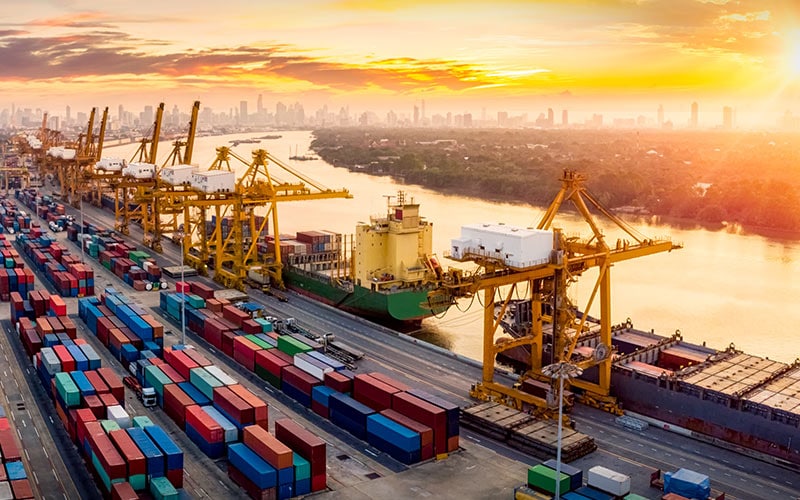
Over 80% of global goods by volume are moved by sea. The market is growing, fueled by e-commerce momentum, wider digital adoption, and a shift toward greener shipping. However, the maritime industry faces challenges that range from trade policy volatility to energy efficiency expectations, and cyberthreats, driving the need for smarter technologies, and making advanced technology adoption essential.
Core growth enablers
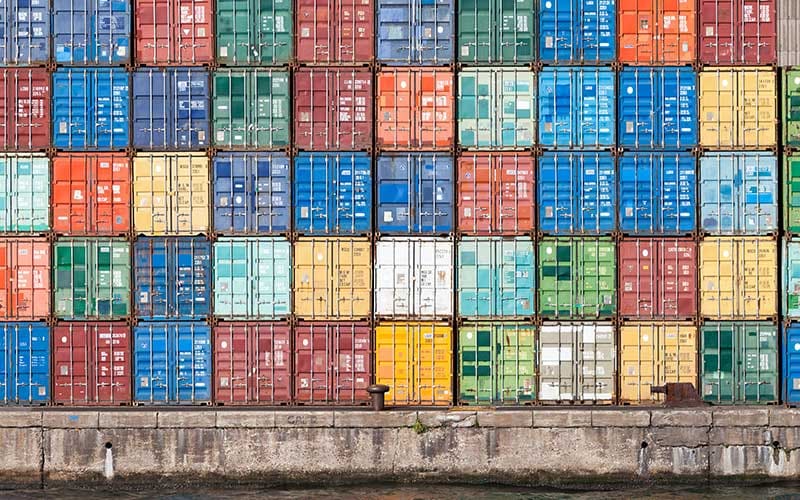
Regionally, Asia-Pacific commanded close to 60% of revenue in the containers market in 2024, with China as the leader of container trade, reflecting deep manufacturing bases and diversified export routes. Europe and North America remain influential demand centers but are more exposed to tariff cycles, labor disruptions, and chokepoint vulnerabilities.
On the supply side, the industry structure is consolidated: global container lines such as Mediterranean Shipping Company, Maersk, CMA CGM, and COSCO are leading the pack in terms of their twenty-foot equivalent unit (TEU) capacity, while carriers such as Hapag-Lloyd, ONE, Evergreen, HMM, ZIM, and Yang Ming round out capacity and regional coverage. Overall, the state of the industry can be described as stable but exposed: operationally efficient and dominated by global leaders, yet increasingly sensitive to geopolitical, regulatory, and systemic disruptions.
That said, multiple converging economic, technological, and regulatory forces are driving the growth of the maritime industry. The cross-border e-commerce boom is aiding growth by reshaping demand patterns: a shift from large, seasonal shipments toward smaller, more frequent flows to support direct-to-consumer and marketplace-driven replenishment, and service expectations such as faster delivery times and end-to-end visibility of shipments, across global trade. This has led to a 5% rise in seaborne trade compared to 2023, expanding point-to-point flows, compressing cycle times, and elevating expectations for door-to-door visibility.
The digital evolution of the maritime sector is another factor contributing, structurally improving efficiency, safety, and service quality, and directly strengthening demand and profitability. The emergence of green shipping solutions is also driving demand for new technologies in alternative fuels, energy-efficient vessel designs, and infrastructure. This shift is spurring new investments, and financing opportunities such as green bonds, which are bonds that raise investment for projects that reduce climate impact and allow investors to contribute to climate action. This necessitates that the entire industry upgrades and opens up new areas for innovation and trade.
These are all examples of how the maritime industry is transitioning into a more technology-driven, sustainability-focused, and service-oriented growth phase, where innovation, digital capability, and environmental performance are becoming key drivers of competitiveness, investment, and long-term expansion in global trade.
However, despite strong growth prospects, the industry faces persistent challenges that could constrain long-term performance, and require targeted strategic intervention.
Critical headwinds
Beneath the industry’s growth outlook lies a series of core challenges that are reshaping risk, cost structures, and operating models.
Geopolitics and route risk
Red Sea crisis has rippled across global schedules — rerouting ships around Africa’s Cape of Good Hope adds almost 12 days, which is equivalent to a roughly 30% increase in transit times, implying an approximate 9% reduction in effective global container shipping capacity and raising the cost of shipping by 350% on the APAC-Europe route. Strategic straits such as Hormuz, Panama, and other choke points continue to present single-point-of-failure risks. To combat this, container carriers are adopting divergent strategies regarding a possible resumption of Red Sea and Suez Canal transits, as shifting regional security dynamics drive careful reassessment.
Maersk has begun limited trial sailings, CMA CGM is moving toward reinstating regular Suez services, while Hapag-Lloyd continues to take a cautious approach until stability is firmly established.
The rise of “shadow” or “dark” fleets operating outside mainstream regulatory regimes compounds environmental, insurance, and safety exposure in sensitive seas.
Trade policy volatility and bunker economics
A wave of protectionism and tariffs – including US measures reaching up to 145% on certain China-origin categories – has dampened volumes and forced logistics redesigns. Simultaneously, declining bunker margins and uneven fuel pricing have led suppliers to pare back their bunker fleets, constraining refueling options, causing localized delays, and reducing asset productivity.
Operational and environmental risk
The industry faces a range of cyber-risks in addition to the issues discussed above: ports and vessels are frequent targets of ransomware, GPS spoofing, and IT infiltration. Weather volatility in the form of storms continues to disrupt schedules and drives unplanned downtime and insurance premiums higher. Climate change has increased the frequency of extreme and unpredictable weather events. A structural headwind is the aging global fleet, which raises maintenance intensity, curtails energy efficiency, and complicates emissions compliance.
Port congestion
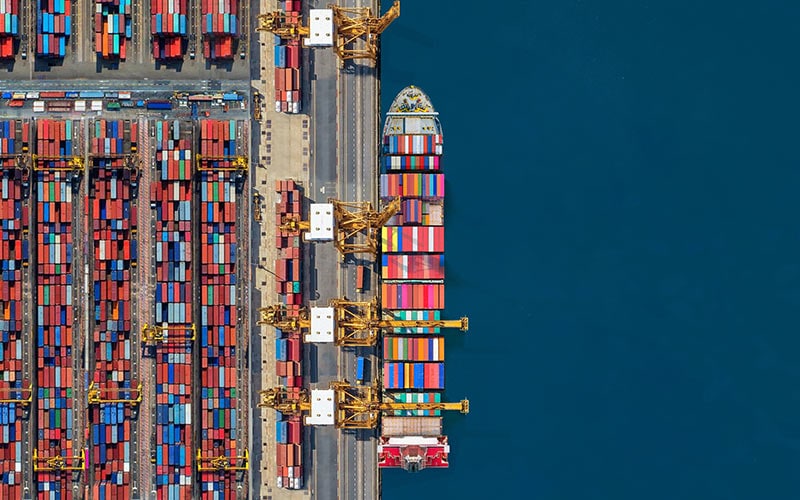
Major container shipping hubs such as Rotterdam, Singapore, and Ningbo experienced an average of between seven and 10 days of delays in vessel waiting time in 2025, driven by strikes, labor shortages, and severe weather. Equipment inefficiencies including aged gantry cranes and limited yard space constrain throughput. Customs clearance variability including differences in regulatory regimes, random inspections, and extended audits adds friction to cycle times.
Decarbonization pressure and capital demands
The International Maritime Organization’s (IMO) decarbonization agenda targets a 40% reduction in carbon intensity by 2030 and net zero by 2050. Meeting the IMO’s ambitions requires annual investment of between $8 billion and $28 billion across fuels, propulsion technologies, monitoring systems, and retrofits, from major industry players. With the tightening of the carbon intensity indicator (CII) and energy efficiency existing ship index (EEXI) reporting and performance thresholds, businesses are finding it challenging to retool their fleets and rethink network design to keep their energy usage in check.
Workforce and skills gap
While digitalization and alternative fuels demand new crew competencies in systems operations, safety, and analytics, the industry is facing a skilled workforce shortage. Crew expenses represent between 30% and 35% of total operating costs, and industry data suggests wages are rising at an annual rate of between 5% and 8%. Collectively, these dynamics point to a structural escalation in crew costs, driven by skills shortages, technological complexity, and rising welfare expectations, placing sustained pressure on margins unless they are offset by productivity, automation, or new operating models.

Technology as a solution
Technology-driven interventions can help businesses address and mitigate many of these challenges. Implementing these solutions, however, also demands capital strategies and changes to operating models.
AI and analytics
Leveraging AI and analytics can help with route and speed optimization. By analyzing real-time weather, ocean conditions, and vessel performance data, AI models can dynamically adjust routes and speeds to minimize fuel burn. Predictive analytics enable proactive avoidance of adverse weather, reducing delays, safety risks, and unplanned fuel consumption. Together, these capabilities improve voyage reliability, lower operating costs, and support emissions reduction targets.
Predictive maintenance in shipping uses sensor data and analytics to identify early signs of wear or failure across hulls, engines, and reefer units. This enables timely maintenance interventions, reducing unplanned downtime, preventing cargo loss, and improving asset availability.
Demand forecasting leverages historical data, market signals, and real-time booking trends to anticipate volume fluctuations. This allows carriers to better align capacity and manage blank sailings, improving utilization during market swings.
Emissions analytics consolidate fuel, voyage, and vessel performance data to measure carbon intensity across fleets and individual voyages. This enables accurate emissions monitoring and reporting, regulatory compliance, and targeted actions to reduce environmental impact.
Internet of things and smart telemetry
The internet of things (IoT) and the telemetry data they supply enable real-time visibility across cargo, vessels, and equipment. Smart containers provide location tracking, condition monitoring, and stock-keeping-unit level traceability with instant exception alerts. Vessel and equipment sensors optimize energy consumption and machinery performance. Together, these capabilities enhance safety, reliability, and operational efficiency. They also support predictive decision-making, faster disruption response, and tighter integration across the logistics value chain, strengthening service quality.
Digital twins and simulation
Creating virtual replicas of vessels and port operations tests scenarios such as weather rerouting, dredging plans, and crane scheduling. These simulations enable data-driven planning and risk mitigation before real-world execution. Twin-driven insights support just-in-time arrivals, optimized yard management, and smarter berth allocation. As a result, ports and carriers reduce demurrage, idle time, and operational inefficiencies.
Automation and robotics
These technologies can enhance productivity across ports and vessels by streamlining cargo handling and operations. Automated cranes, yard systems, and robotic handling increase lifts per hour and stabilize throughput amid labor variability. Onboard task automation reduces human error and strengthens safety outcomes, backed by robust policy frameworks and cybersecurity controls.
Strategic enablers for implementation
To stay competitive and resilient, maritime sector businesses should invest in IoT, and AI for end-to-end visibility and operational efficiency, along with focusing on specific actions, including:
Accelerate digitalization and control tower orchestration
Businesses should deploy IoT in maritime at scale across containers, vessels, and port equipment to create a network that provides real-time data across all assets and surroundings. They should prioritize reefer containers — refrigerated containers engineered to maintain controlled temperatures for transport of temperature-sensitive and perishable goods — before expanding to dry containers. Once the technology, processes, and return on investment are proven, scaling IoT to dry containers becomes more cost-effective and smoother operationally.
They should implement a cloud-native analytics platform that unifies data lakes with streaming ingestion from electronic data interchange (EDI), application program interface (API), automatic identification system (AIS), weather sources, and partner systems related to logistics, weather services, crew handling, and procurement. This helps integrate scattered data and aids in speedy exchange of data, along with providing insights into how to reduce fuel consumption, make route adjustments to avoid hazards, and predict equipment failure. The microservices aspect of cloud-native architecture helps businesses decompose large, complex applications into modular services that operate independently, improving scalability, flexibility, and deployment speed.
Infosys Consulting partnered with a logistics leader offering end-to-end solutions across sea, land, and air to develop a single portal for freight allocation to enhance the brand’s operational efficiency. The solution improved processes for allocating ports for loading and unloading shipping containers during voyages or route legs, incorporating customized business rules based on customer requirements. This transformation resulted in better control over shipping trade and business operations, positively impacting overall operational performance.
Infosys Consulting built a unified freight allocation platform for an end-to-end logistics provider across sea, land, and air, improving overall operational efficiency for the client.
Businesses should operationalize digital twin technology for vessels and terminals to test scenarios related to reroutes, berth allocation, and dredging impacts, before committing resources. This helps minimize costly errors, optimize efficiency, ensure safety, reduce delays, and lower operational costs by predicting outcomes of changes like fuel use, congestion, and turnaround times before deploying infrastructure or resources in complex operations, and leads to better resource management and quicker adaptation to disruptions.
Build a maritime control tower with predictive estimated time of arrival, dynamic rerouting, exception management, and customer-facing visibility, which helps businesses move from reactive problem-solving to a proactive, data-driven approach and planning.
It’s important to institutionalize key performance indicator governance, including fuel per TEU mile, dwell time, on-time in-full, container cranes’ lifts per hour, and forecast accuracy, with role-based business intelligence dashboards to align decisions from the bridge to the back office. Doing so embeds a single source of truth that drives operational discipline, improves performance outcomes, and enables more confident decisions at every level.

Commit to decarbonization with pragmatic transitions
Businesses must retrofit vessels with proven energy-efficiency upgrades such as advanced hull coatings, air lubrication, and optimized engine management, prioritizing measures with quick payback. They should adopt bridging fuels – transitional fuels that meet current energy demands while supporting the move toward cleaner, renewable sources – such as liquefied natural gas and advanced biofuels where bunkering and regulations allow. They should also plan dual-fuel new builds compatible with methanol or ammonia to reduce future risk of upgrading or modifying existing ships.
They should set up systems to accurately measure and report vessel emissions so ships comply with regulatory requirements such as CII and EEXI. They should use this emissions data in customer-facing tools, such as emissions calculators, to show the carbon footprint of shipments, and enable green contracts and services, allowing customers to choose lower-emission shipping options and meet their own sustainability goals. Infosys Consulting helped a global shipping company implement annual efficiency ratio to track the performance of its entire fleet, including its own ships and chartered ships, for environmentally-related measures. The dashboard supported decisions to drive strategy for biofuels and track targets for green bond finance agreements.
Infosys Consulting supported a global shipping company in implementing an annual efficiency ratio to monitor environmental performance across its entire fleet, including both owned and chartered vessels.
Businesses should develop green shipping corridors with ports, fuel providers, and shippers to secure supply, incentives, and premium services, framing a clear business case for green financing. These corridors enable close collaboration across ports, fuel providers, shipowners, and the wider ecosystem to support global climate goals.
Fortify cybersecurity
Businesses must adopt a zero-trust architecture with microsegmentation for vessel and terminal networks, secure remote access, and enforce multi-factor authentication to create a secure operational environment that safeguards critical infrastructure, ensures regulatory compliance, and maintains business continuity.
They should harden operating systems for cranes, sensors, and programmable logic controllers by implementing continuous monitoring, structured patch governance, and well-defined incident response playbooks. This helps achieve minimized operational downtime, rapid incident recovery, regulatory and legal compliance, enhanced situational awareness, and safer cargo operations.
They should regularly train crew and staff in maintaining cyber hygiene and addressing cyberthreats. Staff performance should be continuously measured, with remediation actions taken based on identified risk levels. This ensures that human-related vulnerabilities are systematically reduced and cyber resilience is stronger across operations.
Businesses should also partner with specialized maritime cybersecurity providers to evaluate cybersecurity readiness and ensure compliance with IMO 2021 mandates and emerging national requirements. This helps strengthen resilience against evolving cyberthreats while building regulatory confidence and operational trust.

Elevate workforce resilience and safety
Business should launch competency academies to train staff in alternative fuel handling and analytics-driven operations. They should upskill crews on the use of digital systems and alternative fuels, and improve welfare programs to increase workforce resilience. They must modernize training to include virtual reality and augmented reality, simulation, and remote learning, to scale capability without sacrificing safety and to reduce training time. This works particularly well for high-risk tasks and emergency scenarios.
It is also imperative to design comprehensive crew welfare programs focused on connectivity, mental health support, and rotation planning to sustain workforce retention and operational performance. Digitizing admin workflows, such as electronic proof of delivery, electronic bill of lading, and crew scheduling, can help reduce paperwork burden and free up time for operational priorities.
It is essential to develop holistic crew welfare programs that emphasize connectivity, mental health support, and effective rotation planning to maintain workforce retention and operational effectiveness.
Sustained growth in the maritime industry will increasingly depend on its ability to adapt to structural, environmental, and geopolitical complexity. Advanced technologies are foundational to improving efficiency, resilience, and sustainability. When paired with phased decarbonization pathways, robust cybersecurity, and workforce transformation, these solutions can materially reduce risk and help face challenges.
Maritime industry leaders that move decisively toward data-first, integrated operating models will be best positioned to combat volatility and meet rising customer and regulatory expectations.

Regulatory change is accelerating and breach costs are rising, yet most institutions still rely on periodic, manual risk assurance. Three structural gaps, spanning visibility, third-party oversight, and governance, leave institutions unable to keep pace. Building risk assurance as a continuous, AI-augmented capability closes these gaps. A four-phase roadmap helps institutions get there.
- 11 Sep, 2026
- 15 min read

The difference between AI work and AI that works lies in the discipline to scale adoption, governance, and value realization
- 10 Sep, 2026

Learn how automated integrity checks and human oversight can help enterprises control AI agent sprawl, reduce duplication, and manage risk at scale.
- 08 Sep, 2026
