
-
Boom, Bust, Rebuild: Harvard’s Rachel Lipson on Frontier Jobs
September 09, 2026
Insights
- The US has organized workforce development around helping disadvantaged individuals. That focus has come at the expense of building the talent pipelines industries actually need, leaving the system underfunded and disconnected from employer demand.
- Frontier jobs are occupations that didn't exist before a new technology made them possible, and they require entirely new training approaches. Retool jobs keep the same job title but need employers to retrain workers in new skills.
- Regions that build emerging-industry workforces on existing skill bases are better positioned than those starting from scratch. Colorado's optics and photonics programs feeding into quantum computing are one example.
- Massachusetts' biotech training pipeline shows the risk of building for a boom. Post-COVID lab shortages and record venture capital drove rapid program expansion, then federal research cuts and a pulled-back VC market left providers retraining for jobs that no longer existed.
- Public policy funding formulas often penalize training providers when market conditions shift. A better approach builds in flexibility, letting providers redirect graduates, such as into hospital systems, when the original target industry cools.
- AI is taking over resume writing, so professional networks and interview presence are becoming the deciding factor in job searches. Few workforce programs currently teach those skills.

Scott Jensen: Hi, my name is Scott Jensen and in my time in state government and the federal government, I've had the opportunity to get to know a lot of people who, like me, are committed to figuring out some of our nation's workforce challenges. Now, I'm running a practice called the Future of Work at Infosys Public Services and in this podcast, we're going to get to meet people who I've run across who I think are really insightful about some of our nation's problems. So welcome to the podcast. Excited about it. And I'm particularly excited because today we're going to talk with Rachel Lipson. You are the co-founder and inaugural director of the Project on Workforce at Harvard University. But you are also a scholar in residence at said project, right?

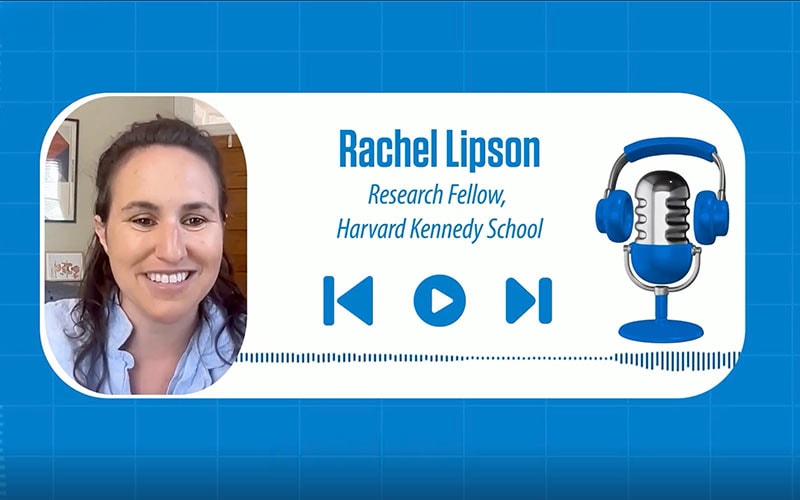
Rachel Lipson: That's right, yeah. I'm a research fellow at the Center for Business and Government at the Kennedy School.
Scott Jensen: You're also a resident scholar for the Aspen Institute's Economic Strategy Group. That's remarkable. And a non-resident senior fellow at Brookings. That's fantastic. And you're doing research for an upcoming book called The New American Frontier, and that will be out in the coming months.
Rachel Lipson: Coming out this fall, yes.
Scott Jensen: Rachel, for a long time, I think all of us have approached workforce development from the perspective of the worker. And I think it's a really good thing. Everybody wants to help folks get a job. It's a ticket to the American dream. But you can't help somebody get a job without really concentrating on the job itself. So this makes kind of a business and economic development aspect to workforce development that I think we're all still wrestling with. That's what you and I were doing at the CHIPS program office when we worked together. And your research has been around places that are wrestling with this connection and also doing it pretty well. Is workforce development economic development? How do you think about the relationship between the two?
Rachel Lipson: I think you and I are kind of like-minded souls on this. So in my mind, the answer is yes. I think some folks would say that that's obvious, but if you look at the way we've treated workforce development in the US public policy context, it doesn't actually reflect that. So, I mean, you referenced this. I wrote a paper back last fall with the Aspen Institute that was positioning workforce development as a key lever for US productivity growth, which is ultimately the source of wage growth and most of our economic growth as well. And in that paper, I argued to your point, look, we’ve had all these like very challenging and important social problems in this country that workforce development has often been asked to be the solution to. So, you know, we have people lose their job due to trade and are trying to make a shift. And we say, okay, job training is going to fix that problem. Or we say someone's been unemployed for a really long time. Let's put workforce development out there as the solution to that problem. Or we have young people who are out of school or out of work. Workforce development is the solution. And we organize most of our funding streams in that way too, as you know, we have like all of these complex eligibility criteria that's thinking about different people and different groups that have been targeted. And there's like really good reasons for that. And I totally understand why we want to help all of these people who really are deserving of help. But the argument I've been making is by doing that, we've kind of positioned workforce development very squarely as this like social policy anti-poverty thing about helping people who are disadvantaged. And I think the net effect of that is that we've built this system that's kind of like over here. It's not a first-choice option. People in power don't see it as a feasible option for their kids. It's something for disadvantaged folks. And I think the net effect of that has been, and I steal this term from labor economist Harry Holter, who I have heard throw it out a lot. We got stuck in this kind of low resource, low efficacy equilibrium, because people, they're like, oh, it's a social program. It's not for me. They put very little money into it. It's not well resourced. Then we look at the results and a lot of what we have to show for the system doesn't look like it's worked that well. And you get stuck in this cycle that's like very little money, not a lot to show. And so I think this, whole strategic rethinking of putting it as a core part of our economic growth strategy is in part to counter that. It's not just an idea that we’ll bring more people on board. I actually think it's true. Like the reality of, if you look at key industries in this country that underlie all of our economic growth, like if we don't have enough electricians in the next 10 years to hook up power lines and expand the grid, that's going to slow down growth for the rest of the economy. So workforce becomes like this integral piece that can unlock economic growth for all. And I think that kind of mindset of positioning it as a core input into what we do for our entire economic strategy, both will unlock more resources, but also result in better outcomes for people. Because precisely to your point, if we design around industries and the jobs first, we're actually more likely to have what people want when they go through job training.
Scott Jensen: What's a frontier job? And how does a frontier job address that sort of objection?
Rachel Lipson: Actually, I have come at it first from the concept of a frontier region. Look, there's a lot of questions right now in this moment with AI about like, there's clearly a lot of areas where folks are concerned about where job loss might occur. I am trying to be someone who's focused on the other side of that question, which is like, okay, well, where might jobs grow? And how should we think about where the opportunity spaces are, where we might want to be putting more resources? And there's a lot of kind of art of prediction science out there. Right formulas to figure out exactly what jobs might be coming. My approach with this has been, why don't we look at places that have been early to different technologies and try to understand in those places, what are the actual jobs that are coming online and which ones are sort of like net new. So the frontier jobs concept, I borrow from David Autor, who's talked about this, which is the idea that new technologies also ultimately create new occupations that didn't exist in the past and weren't possible without that technology itself. So these are like brand new jobs that couldn't have existed in the past. Whether it be like someone who's going to be a quantum technician who is operating quantum technologies or building them out. Before there was quantum, you couldn't have that job, is the concept of it. And so I kind of am looking at these different places and trying to understand like, yes, those net new jobs, I almost think the bigger opportunity space is going to be in what I've been calling like retool jobs, which is like, the occupation name is the same, but the mix of the skills that are required look different. And then there's a whole set of jobs that are not changing nearly as fast, but are still really important that deserve attention. But the point that I've made in prior papers is that for those different types of jobs, we might need different types of approaches. Like you could imagine that for frontier jobs, we might actually need some brand new approaches or net new curriculum or totally new ways of doing things. For retooled, it's a lot about the employer’s role and how they're going to like rescale and retrain folks who are already in the workforce. There's a lot more about sort of like adapting what we have already versus necessarily starting new things from scratch.
Scott Jensen: If you were a local web director or something like that in a region, or something like that in a region, how would you approach companies?
Rachel Lipson: I think the first thing I would say is what my approach wouldn't be, would to be like, hey, look at this amazing program that I have. It's already complete and totally done and pre-packaged and it's really great. I promise you. And you should hire everyone that comes out of it. But unfortunately, I kind of think that's often a lot of what kind of happens in the education and workforce development ecosystem, it to be like, you build something that is basically divorced from what the employer needs. And then you say, well, why aren't you hiring people from my program? Trust me, I'm an expert. It's beautiful and perfect. It's exactly what you need. So I do feel like, I mean, this isn’t rocket science, but it's much harder as you know, to do in practice then it is for me to say it, but like, how do you bring in more of that kind of like co-ownership and co-design from the onset? And the willingness to not just be like, well, I'm the education expert and look at my beautiful educational program, but instead really bringing the employer into that. And I do think there's a lot that we can do on the public policy side to make that, to incent that more. I'm a little bit frustrated. I'm curious what you think about this, Scott, I feel like unfortunately we're often not that creative. It's like check a box on a grant application and say that you've worked with an employer. Or like someone like is going to sit in the commerce department and read your application and decide that you really know what employers want versus like there's ways that you can design money as you know and it really have thought through to incent that, so that the employer is there at day one. We did a lot of that in CHIPS. I've seen it at the state level as well. For instance, like one program I've been really interested in in Texas that I feature in the book. It's been a big part of Austin Community College's success working with Tesla. And then with some of the flagship semiconductor employers in their region is something called the Skills Development Fund, where the state will provide dollars for those companies specific training. But the key condition is that they have to work with the community college as part of it. And so if they want to access those money, they kind of like brings them to the table in a different way at the onset. And then that starts that kind of like building of trust and partnership that is ultimately what we want us to see. But sometimes I feel like we're like flipping it and trying to start at the end and be like, oh yes, like show me that you have that partnership.
Scott Jensen: So Rachel, this is a blast. I want to end by, you know, there's got to be tens of people listening to us. What message do you have that you want to explain about workforce development?
Rachel Lipson: I'll tell you just like a little bit of anecdotes about the book. When I started it, I wanted to tell what I thought was a very like optimistic story about these critical and emerging technologies and the jobs, how there is going to be these opportunities. And it's very exciting. And all we need to do is sort of like shift the incentives for the education and workforce system to actually get in the game and train for them. And like, here, look at these places, this is possible. When I got deep in these places though, I realized that it’s really challenging. And I think one thing that I think is helpful for folks to hear is just like preparing for resilience of boom and bust. And like the idea that just because something looks like it's taken off today doesn't mean that it's always going to be in a straight upward trajectory and so what does it mean to like build something that can be prepared for that and adjust flexibly. I'll give you one example. In Harvard's backyard in Massachusetts looking at the biotech industry and all of the jobs in bio manufacturing and inside of these labs doing operations helping pharma companies build the next generation of drugs for Massachusetts made a big bet on this industry for decades. Those jobs have been growing. In the post-COVID period, there was zero lab space available in greater Boston. There was record levels of venture capital coming and flowing in. All these companies were like, we can't find people, please, education and training system, like help produce more and expand. But it takes time to do that. How do you get more infrastructure? How do you get more instructors? You can't like snap your hands and say that overnight. And in the meantime, the market conditions have wound up changing quite a bit. We have seen all these federal cuts to life sciences research, VC has pulled back given the changing interest rate environment. And like suddenly what looked like a boom is in a bit of a retrenchment. And now you have all these education and training programs that have scaled and are trying to figure it out. The last thing that you want to do is train people and then there's no job on the other side. I've been really kind of inspired though by a lot of what I've seen going on in around that ecosystem in Massachusetts of the kind of agility and flexibility that both the public sector and the providers are showing as they try to figure this out. For instance, like what does it look like to take someone who trained for what they thought was a biotech job but has really adjacent skills to go into the hospital system. And help them land there instead of in what was originally designed to be biotech. Or like what kind of flexibility do we need from a public policy perspective for providers that are doing a really good job, actually, but the conditions have just changed. Should they be penalized in a funding formula because the kind of success metrics that they thought were possible a few years ago when they put in an application are just no longer possible? I think we should be encouraging the flexibility for them to change course and figure out what they need to do differently in a new environment instead of sort of like saying like, hit them with a hammer. You didn't do what you said in 2022 you thought was going to be possible. And then I think there's a lot that I think is inspiring in this moment about just the importance of sort of like the professional network and interview prep and the human parts of the job search that we're going to need all of our programs across the country to do more of right now. It's not necessarily building a resume like AI can do that, but like so much more of finding a job today is actually like, who do you know and how do you present personally because the stuff on paper is is getting equalized out by the technology. And so the places that have kind of been early to realizing that I think will actually be better positioned to help people sort of see through this next kind of turbulent phase. I feel very encouraged looking at these regions around the country. Actually how much of a shared like foundational core there is around these jobs and how transferable the skills can be. So like for instance, in Northern Virginia, where I looked at the, who's been early to data centers and I looked at what their experience has been over the last 10 years. A lot of the folks who have been early to hiring in data centers, they're finding folks who had like experience in nuclear or started in the skilled trades and then came on to help maintain facilities because of their expertise with the cooling technologies. Or in Colorado where I looked at quantum technologies. You know, we have this concept that like, and you need to start the brand new flashy program. I mean, I was talking about that with the frontier job, but actually quantum is, leverages a lot of laser and optics technologies. And so the community college that's at the center of the work in Colorado is building off of what they already have, which is like a really strong optics and photonics program. And they're like adding onto that for quantum and to be ready, which is great. But if it turns out that they're like ahead of the curve here and like there's not a bajillion quantum jobs tomorrow, all those folks are going to graduate and get a job because they have a hundred percent placement with the companies that are already there. So I found that part of this really encouraging, which is to say that like, there's a lot of different places that you can land with these shared foundational skill sets. We saw it in Arizona too with CHIPS, like there's battery factories, there's semiconductor, there's data centers, like there's a lot that's shared around that. And so that means that the opportunity space is pretty big and you don't have to be worried with those that if tomorrow one of them goes down, you're going to be screwed and not able to get a job.
Scott Jensen: Well, I think it's the optimistic part is a good old fashioned American spit grit know how of people working together to make these changes and get these things done. And I bet we can do it.
Rachel Lipson: I agree.
Scott Jensen: Well, thank you so much. Now you can find more details and show notes and transcripts of this podcast at Infosys.com/IKI, the Infosys Knowledge Institute. Thanks to our producers, Christine Calhoun and Yulia De Bari and our audio engineer, Dode Bigley. Thank you guys.
About Scott Jensen
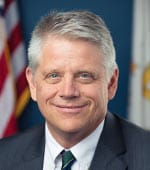
Scott Jensen is Head of the Future of Work Practice at Infosys Public Services, bringing a wealth of experience in workforce and economic development, government modernization, and public-private collaboration. Most recently, he led workforce strategy for the U.S. Commerce Department's CHIPS and Science Act, working closely with the world's largest semiconductor manufacturers to ensure they had the talent necessary to thrive on U.S. shores.
A veteran leader in government and the nonprofit sector, Scott was CEO of civic tech organization RIPL; served on then-governor Gina M. Raimondo's cabinet as Rhode Island's Director of Labor and Training; and was Maryland's Deputy Secretary of Labor. He held political affairs positions at a university, state agency, and two unions in Maryland.
Scott holds a degree in history from Illinois State University, a master's degree in Great Books from St. John's College in Annapolis, Maryland, and is ABD in 20th Century German philosophy from the New School for Social Research. He also taught at Salisbury University in Maryland, and the University of Rhode Island. He has a college-aged daughter and lives with his wife Andrea in Easton on Maryland's Eastern Shore.
About Rachel Lipson

Rachel Lipson is Co-founder and Scholar in Residence at Harvard's Project on Workforce and a Research Fellow at the Mossavar-Rahmani Center for Business and Government. She is also a Resident Scholar at the Aspen Institute's Economic Strategy Group and a Nonresident Senior Fellow at Brookings Metro. Her research focuses on a new generation of technical jobs that don't require a four-year degree, many of them fueled by AI and other emerging technologies. She studies frontier regions building industries like AI data centers, chips, quantum technologies, and biomanufacturing. From 2023 to 2025, she served as a Senior Policy Advisor at the U.S. Department of Commerce's CHIPS Program Office, where she helped launch the workforce strategy behind the $50 billion federal investment in domestic semiconductor manufacturing. She previously spent four years as the inaugural director of the Project on Workforce at Harvard. She is also co-editor of America's Hidden Economic Engines, a volume that has helped drive community college reform nationwide. Her writing has appeared in The Boston Globe, Washington Post, and Newsweek, and her research has been featured by C-SPAN, NPR, Bloomberg, and The Economist.
Mentioned in the podcast
- About the Infosys Knowledge Institute
- The New American Frontier - Rachel Lipson's forthcoming book, out this fall
- David Autor - economist whose research introduced the "frontier jobs" concept
- Harry Holzer - labor economist referenced for the "low resource, low efficacy equilibrium"
- Austin Community College and Tesla - Texas's Skills Development Fund, which ties state training dollars to employer partnerships with community colleges
- AI and the Future of Work - Infosys Knowledge Institute research report
