
Insights
- Legacy distributed digital systems, reactive monitoring, and manual oversight at factories can no longer keep pace with production, quality, and delivery demands.
- Standalone analytics and dashboards do little unless they actively guide operators, engineers, and planners toward concrete actions.
- Observability only creates value when it connects early signals across OT and IT and makes them actionable.
- AIOps reduces the time between detection, diagnosis, and response by redesigning how operational data is interpreted and acted upon.
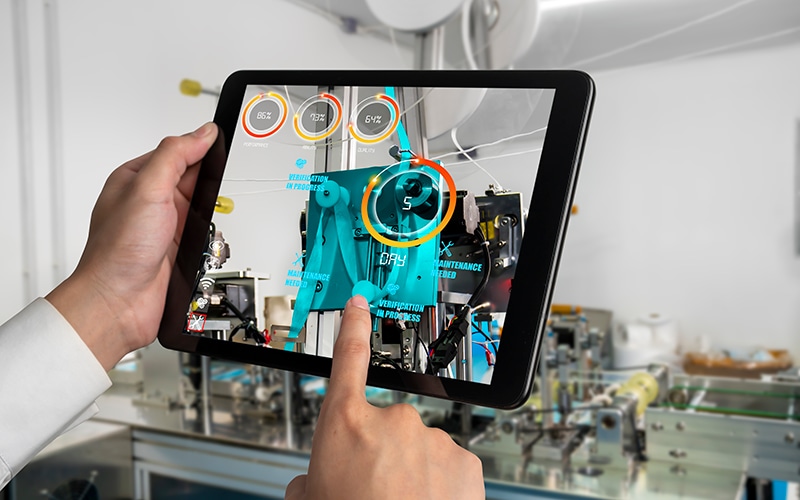
Manufacturing has digitized faster than its operating model. Production lines, plants, and supply chains generate continuous streams of data across operational technology (OT) and enterprise IT systems. Yet, many organizations still rely on reactive monitoring and manual issue handling.
This results in unplanned downtime, slow root cause analysis, and a widening gap between technical signals and business impact. Industry studies routinely highlight how costly disruptions can be; one widely cited analysis reports that over 80% of manufacturers have experience at least one outage in the last three years, with weekly losses running into hundreds of millions of dollars.
AI-powered observability combined with AI for IT operations (AIOps) addresses these gaps. AI-led observability applies machine learning (ML) to predict issues, understand their operational impact, and automate remediation, such as shifting responses from reactive firefighting to predictive and, in some cases, autonomous control.
The shift to AI-led observability is a new operating model for manufacturing. It connects machine logs, applications, and networks to key performance indicators that factory leadership cares about, such as overall equipment effectiveness (OEE), first-pass yield, schedule adherence, energy per unit, and on-time-in-full (OTIF).
Why manufacturing operating models are under strain
Modern factories increasingly function as distributed systems. A single production line may depend on programmable logic controllers, computer numerical control machines, manufacturing execution system (MES), laboratory information management system, robotics, warehouse systems, and cloud‑based planning and analytics tools. These components span shop floor edge environment, on-premises data centers, and the cloud.
Manufacturers often operate a mix of legacy facilities and newer, digitally native sites. This creates an uneven operational landscape, where some plants produce rich, real‑time telemetry and others expose only partial or delayed signals. When something goes wrong, teams often see different slices of the same event, through different tools, with different definitions of severity. OT teams see machine signals; IT teams see application and infrastructure symptoms; and business leaders see missed targets only after the fact. In that environment, time is lost to diagnosis and alignment: deciding what matters, who owns it, and which action is safest and most effective.
The transition from Industry 4.0 to Industry 5.0 is driven less by ideology than by practical limits. As automation accelerates, rule-based systems struggle with exceptions and variability, making human judgment essential to keep operations resilient. AI-driven observability enables a robust model: machines surface insights, recommend actions, and learn from outcomes, while humans retain oversight and intent. The result is not full autonomy, but a more resilient partnership between people and systems.
The need for an AI‑first observability layer
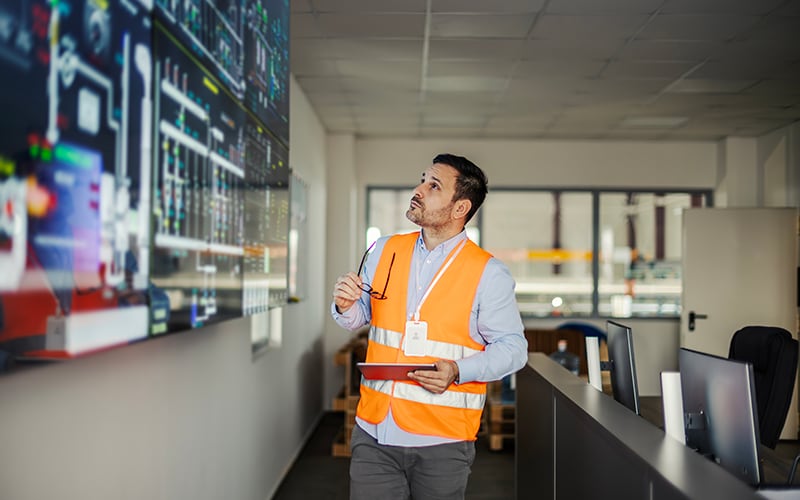
Organizations have various monitoring, analytics, and dashboards to store and analyze data they produce, but they struggle to turn that into actionable insights. Traditional application performance monitoring (APM) tools are siloed and optimized for specific domains, leaving data fragmented across MES dashboards, ticketing systems, logbooks, and vendor-specific systems. This fragmentation slows cross-system correlation and makes it difficult to identify what matters most.
The result is predictable failure modes. Detection of symptoms is often late because threshold-based alerts identify extreme failures but miss early warning signs. Subtle changes in vibration, temperature drift, network jitter, and data processing delays accumulate over time before triggering an alarm. By then the impact is already visible on the shop floor. Diagnosis then depends heavily on a small group of specialists who can query logs or traces to perform root cause analysis, while the rest of the workforce waits for answers and instructions.
These challenges compound in hybrid environments. Edge, on-premises, and cloud services often reveal problems differently and on different timelines, even when they are part of the same operational chain. A small disruption at the edge can surface upstream as something that looks like application latency or a cloud performance issue, when the real cause is packet loss, clock drift, or a data ingestion delay closer to the line.
Without a unified view and understanding of dependencies, teams tend to troubleshoot within their own silo, treating downstream symptoms as the problem. This results in addressing the wrong cause, which consumes time, increases escalations, and prolongs disruption instead of restoring stable performance.
This is where an AI-first observability layer becomes relevant. It changes both architecture and intent by normalizing and interpreting data across uneven operational terrain. It also enables insights and learning from newer environments to improve operations in older ones without requiring wholesale replacement.
What modern observability platforms look like
A modern observability platform represents a shift in how operational systems are understood and managed. Instead of collecting data for isolated dashboards, observability creates a shared operational layer across machines, applications, networks, and business processes. This layer relies on open data collection built on standards such as OpenTelemetry and industrial protocols such as OPC UA and MQTT Sparkplug, to avoid constraints of vendor-specific tools and ensure that both legacy and modern systems can be observed alongside one another. More importantly, it preserves context. Assets, applications, networks, and business processes that connect across a factory are mapped together so that when performance degrades, teams can understand how failures propagate across production, quality, and delivery and where intervention will be the most effective.
ML models analyze these patterns across time and systems to detect anomalies that would be invisible to rule-based monitoring. As the environment matures, these models move beyond detection to explanation and prediction, learning which combinations of conditions typically precede failures, and which responses lead to the best outcomes. In advanced environments, reinforcement learning techniques allow remediation policies to evolve over time, guided by clearly defined guardrails, compliance constraints, and human oversight. These learnings help build intelligence to create an impact in manufacturing.
In a modern observability platform, these insights are no longer confined to specialists. A natural language interface allows supervisors, site reliability engineers, and operations managers to question the system directly in simple English, asking why performance changed or what is likely to happen next, and receive explanations supported by evidence rather than a wall of raw logs. The technical telemetry is bundled into services, due to which the answers are framed in operations terms, such as lost units, delayed orders, missed OEE targets, or increased energy consumption, making it easier to act with confidence.
This is where the narrative shifts from “platform” to “operating model”. The point is not a smarter dashboard. The point is reducing the time between signal and decision across OT and IT, so the enterprise can intervene early and consistently.
How AIOps change daily operations
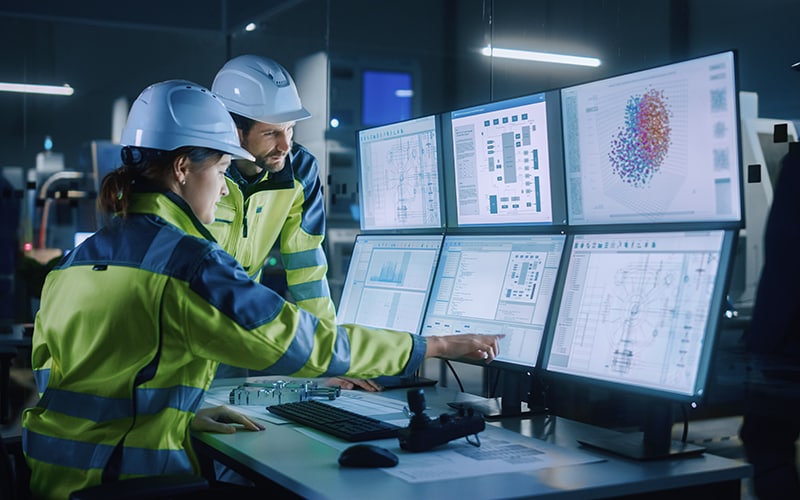
To understand the impact of AIOps, consider a common situation in a multiplant enterprise where a line begins to slow during a high‑priority run. In a traditional model, this can trigger a cascade of alerts across different tools, such as network jitter, application latency, scan failures, and data delays. Each alert may be correct, but none is useful on its own. Teams spend time reconciling symptoms, debating ownership, and escalating while performance continues to deteriorate.
In an AI‑first observability model, the system evaluates signals together and in context. It can identify whether scan events started arriving late after an edge gateway began dropping packets, or whether a configuration change preceded the slowdown, and how likely the issue is to affect throughput, quality checkpoints, or the delivery window. It helps with faster detection and alignment around a shared narrative of cause and impact, which reduces wasted effort and shortens time to stabilization.
As patterns recur, AIOps enables more consistent responses. Instead of relying on tribal knowledge and ad hoc escalation, the enterprise builds repeatable, policy-controlled playbooks. In early stages, the system recommends actions and provides evidence. As confidence grows, the organization can allow preapproved actions to execute automatically within defined guardrails, including resetting a service, rerouting workload, adjusting thresholds, or opening the right ticket with the right context, while preserving auditability and accountability.
As the nature of work evolves over time, specialists remain critical, but they are no longer bottlenecks for basic diagnosis. Frontline teams get fewer, higher quality signals prioritized by potential impact on the business. Leaders get earlier visibility into operational risk and a clearer line of sight from system behavior to outcomes the enterprise already manages to: yield, OEE, energy per unit, and OTIF.
Deploy AIOps as an enterprise capability
Most AIOps programs stumble when treated as a pilot. Successful organizations approach AIOps as an operating model shift, adopted gradually but deliberately and scaled only when the foundations are in place. This aligns with Infosys AI Business Value Radar 2025: AI delivers the most value when programs move beyond ad hoc experimentation and are executed as planned initiatives supported by operating model change.
The starting point is data trust. If telemetry is inconsistent, incomplete, or poorly governed, AI will not fix the problem. Leading programs begin by normalizing data collection, aligning on naming and context conventions, and ensuring that critical systems emit reliable signals.
With that foundation, momentum comes from choosing a small number of high‑value use cases that matter to both OT and IT leaders. Predictive maintenance for bottleneck assets, alert noise reduction for incident management, and capacity forecasting for constrained systems are common starting points as they deliver visible benefits and create confidence.
Next comes governance: clarifying how decisions and automation will work in practice. Mixed executive audiences care about this for good reasons. Automation must be bounded by policy, not enthusiasm. Enterprises need explicit rules for when automation can act, when humans must approve, how exceptions are handled, and how auditability is maintained across safety, compliance, and cybersecurity expectations.
Finally, scaling depends on institutionalizing learning. AIOps improves over time only if feedback loops are real: post-incident reviews that capture what mattered, model retraining that reflects actual operating conditions, and policy refinement that strengthens guardrails while expanding the scope of safe automation.
From technical discipline to operational intelligence
As digital, automated, and AI‑native manufacturing becomes the norm, observability evolves from a technical function to a strategic enabler. By unifying telemetry, embedding AI, enabling natural‑language insights, and tying operations to business outcomes, organizations gain a clearer view of how their systems perform.
The result is a factory with fewer surprises. One that can anticipate issues, respond intelligently, and improve continuously. In that environment, the observability platform becomes the operating system for decision-making, guiding modern factories to think, act, and improve.

Token efficiency, or tokenomics, is now a primary design concern in AI deployments. To get ahead, organizations should build a framework of four composable levers, or thinking modes, applied across the agent stack to cut token expenditure without degrading output quality.
- 17 Sep, 2026
- 7 min read
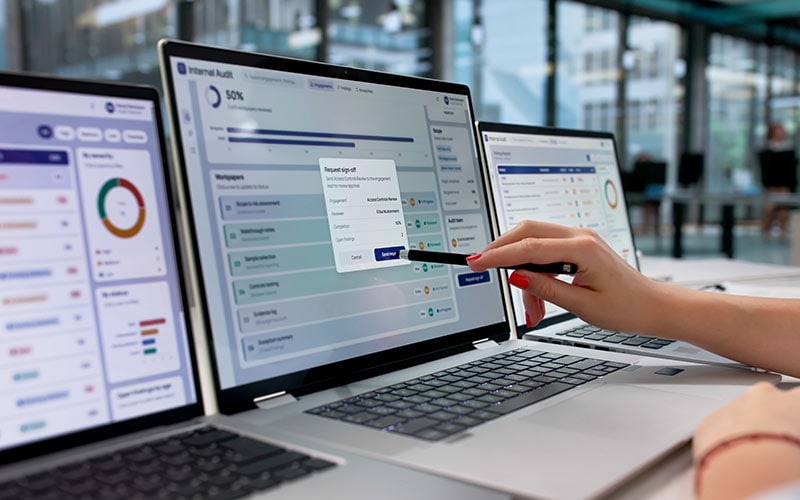
Regulatory change is accelerating and breach costs are rising, yet most institutions still rely on periodic, manual risk assurance. Three structural gaps, spanning visibility, third-party oversight, and governance, leave institutions unable to keep pace. Building risk assurance as a continuous, AI-augmented capability closes these gaps. A four-phase roadmap helps institutions get there.
- 11 Sep, 2026
- 15 min read

The difference between AI work and AI that works lies in the discipline to scale adoption, governance, and value realization
- 10 Sep, 2026
