

Insights
- AI value is strongest when use cases connect directly to operational outcomes that teams already measure, such as cost, throughput, downtime, safety, and cycle time.
- Operational optimization stands out for measurable gains, particularly where inventory, production, and warehouse decisions map directly to cost and throughput.
- Resilience-related use cases in cybersecurity and operational technology (OT) and supplier risk show clear value potential, but scaling them depends on stronger governance, security, and data readiness.
- Commercial and service functions show measurable traction when AI is embedded in frontline workflows and outcomes are easier to observe.
Manufacturers have moved beyond contemplating whether AI belongs in the enterprise. They are now navigating how to convert AI ambition into measurable business impact. In the Infosys Manufacturing Tech Index: AI Pulse, 75% of manufacturers report embedding AI into enterprise strategy. But only one in five AI initiatives meet business objectives, highlighting a persistent gap between intent and realized value. The challenge for leaders is to turn AI deployment into better decisions, stronger execution, and real business impact.
This article highlights where respondents see AI delivering value today. It maps AI use cases across the manufacturing value chain to the outcomes organizations measure, such as cost, cycle time, quality, risk, and customer experience. It then identifies the strongest use case-outcome pairings based on a combined signal of measurement frequency and outcome improvement (see the methodology at the end).
Top signals across the manufacturing value chain
Across the manufacturing value chain, AI delivers the clearest value when it shapes everyday operational decisions. It is most visible in areas such as inventory, production, and service, where performance is tracked continuously.
Our data shows that AI value is not evenly distributed across functions.
- Core operational use cases such as inventory management, production scheduling, warehouse operations, and service workflows stand out because they are already managed against daily metrics. AI fits into existing measurement practices, making value visible quickly and with less disruption to the business.
- Assistant-led use cases are also gaining traction, particularly in procurement, service, and commercial functions. These AI tools help teams respond faster, reduce cycle times, and improve consistency in execution.
- Resilience and risk use cases in cybersecurity, supplier risk, and compliance show strong potential but scale more slowly. The common bottlenecks are governance frameworks, cross-system data integration, and organizational appetite for acting on AI-generated risk signals.
Functional area deep dives
Product design
AI delivers measurable value in product design when it reduces the time and cost of testing ideas before physical builds. The strongest signals appear around digital twins for product simulation, rapid prototyping AI automation, and design optimization (Figure 1). These use cases align with compliance and quality, time to market, and prototyping and testing costs — areas that are already well understood and measured in product development.
Figure 1. Product design use case-outcome scores
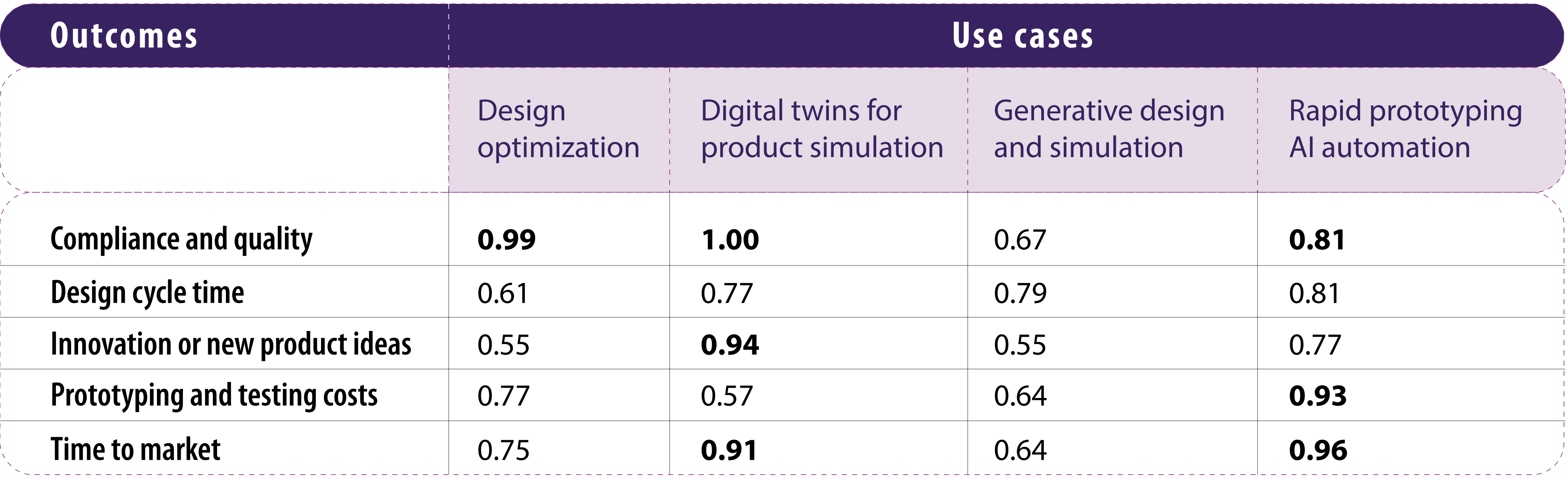
Scores equal to or closer to 1.0 indicate stronger combinations of popularity and impact; lower scores indicate weaker combinations.
Source: Infosys Knowledge Institute
Digital twins allow manufacturers to simulate alternative component designs before physical builds, reducing redesign cycles and improving compliance confidence. AI-enabled prototyping helps shorten testing cycles by identifying viable design paths earlier, accelerating development timelines.
Supply chain
AI’s use in the supply chain is valuable when it informs decisions that leaders can directly act on, such as how much to stock, where to source, and how quickly to procure. Figure 2 shows that inventory optimization has the strongest link with inventory costs, supplier risk intelligence with supply risk visibility, and procurement assistants with procurement cycles.
Figure 2. Supply chain use case-outcome scores
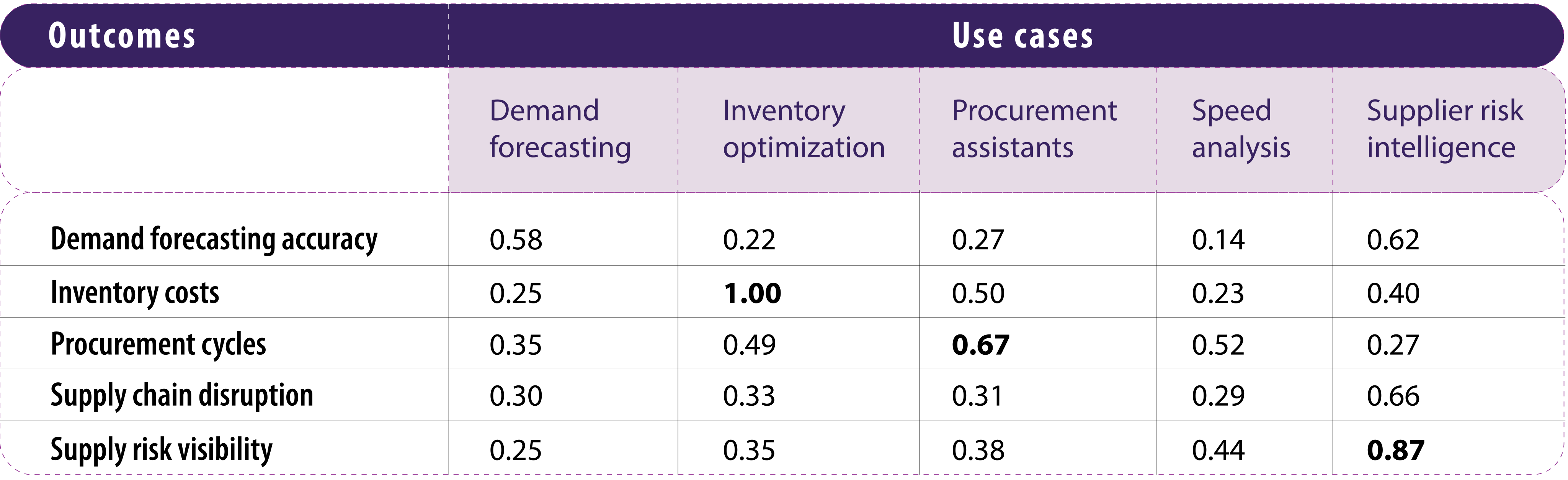
Scores equal to or closer to 1.0 indicate stronger combinations of popularity and impact; lower scores indicate weaker combinations.
Source: Infosys Knowledge Institute
AI helps organizations rebalance inventory across locations, anticipate supplier risks earlier, and streamline sourcing decisions, all of which are closely linked to measurable financial and operational improvements.
Production and quality
In production and quality, AI is most effective when it helps maintain consistent output and reduce variation. Use cases such as production scheduling optimization, material handling optimization, and computer vision for quality inspection align with outcomes such as production throughput and defect rate (Figure 3).
Figure 3. Production and quality use case-outcome scores
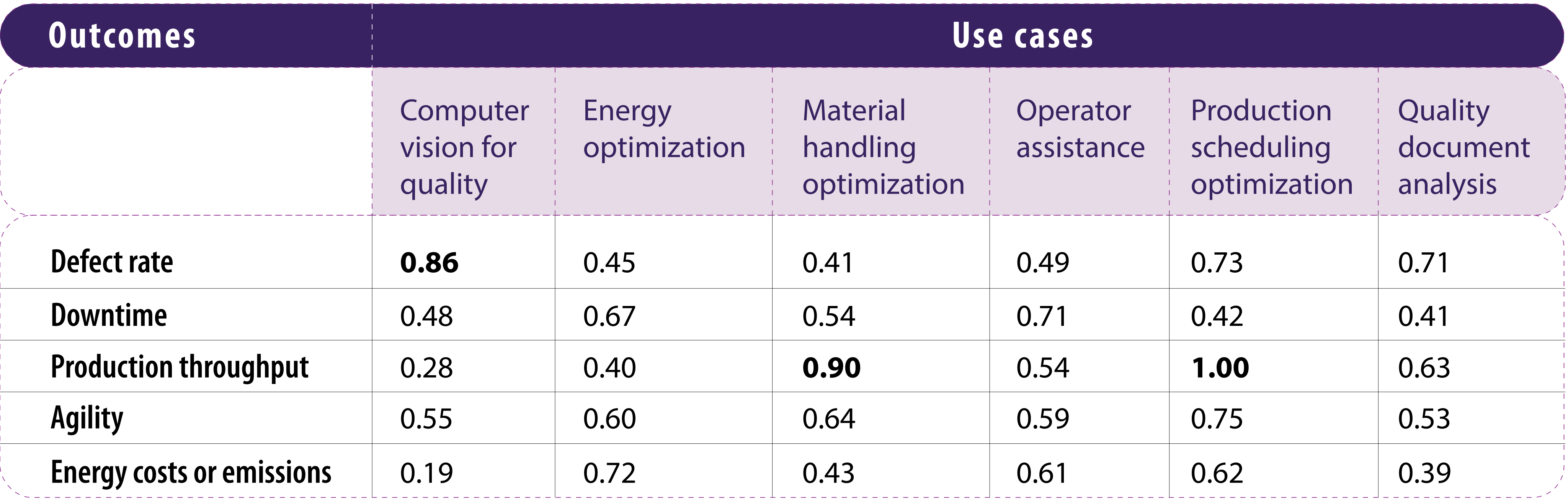
Scores equal to or closer to 1.0 indicate stronger combinations of popularity and impact; lower scores indicate weaker combinations.
Source: Infosys Knowledge Institute
AI-powered scheduling systems can dynamically sequence jobs based on machine availability, material constraints, and production priorities, improving throughput without additional capital investment. Similarly, computer vision systems can identify defects earlier in the production line, reducing rework and improving yield.
Maintenance and safety
Maintenance and safety use cases show AI’s value in helping organizations move from reactive responses to proactive interventions. The data shows that anomaly detection and predictive maintenance align with maintenance cost, while remote safety inspections align with worker safety outcomes (Figure 4).
Figure 4. Maintenance and safety use case-outcome scores
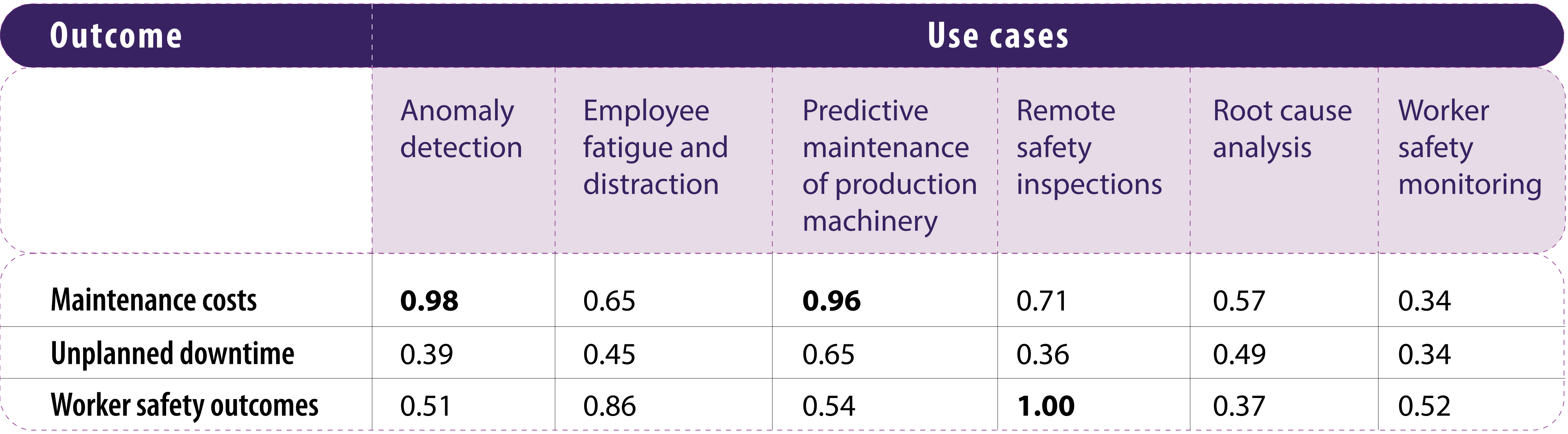
Scores equal to or closer to 1.0 indicate stronger combinations of popularity and impact; lower scores indicate weaker combinations.
Source: Infosys Knowledge Institute
AI-based predictive maintenance models can detect early signs of equipment degradation, allowing maintenance teams to intervene before breakdowns occur. Similarly, fatigue or distraction detection systems can trigger alerts before safety incidents escalate.
Sales
Sales teams see stronger AI value when tools are embedded directly into frontline selling workflows, helping shape decisions at the point of sale. AI sales assistants for proposal drafting and AI-powered product configuration tools align with sales forecast accuracy, conversion rates, and order fulfillment efficiency (Figure 5).
Figure 5. Sales use case-outcome scores
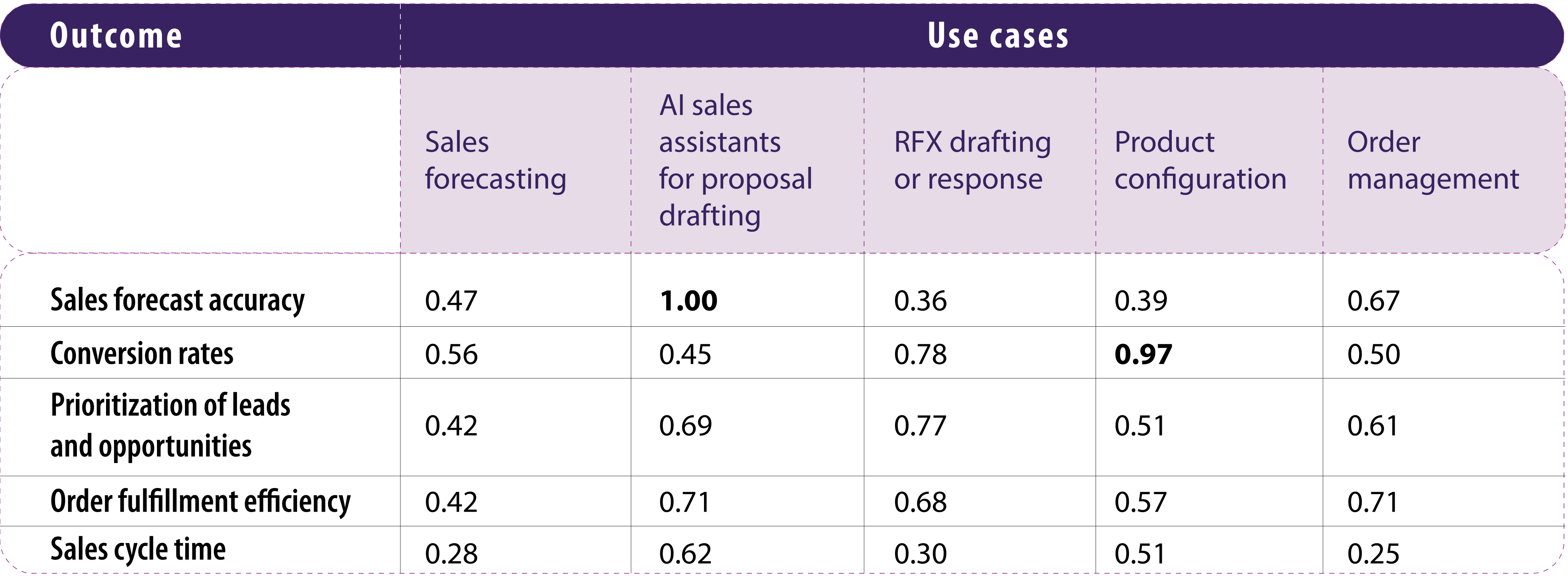
Scores equal to or closer to 1.0 indicate stronger combinations of popularity and impact; lower scores indicate weaker combinations.
Source: Infosys Knowledge Institute
AI helps sales teams prioritize high-value opportunities, refine pricing strategies, draft tailored proposals, and guide customers toward viable product combinations. These improvements can shorten sales cycles, improve conversion, and reduce downstream order errors.
Marketing
Marketing benefits from relatively short feedback loops, which make AI-driven improvements easier to measure. Marketing content and campaign generation show the broadest relationship with engagement outcomes, while brand visibility is prominent across several other use cases. Marketing mix and budget optimization has the strongest relationship with spending efficiency (Figure 6).
Figure 6. Marketing use case-outcome scores
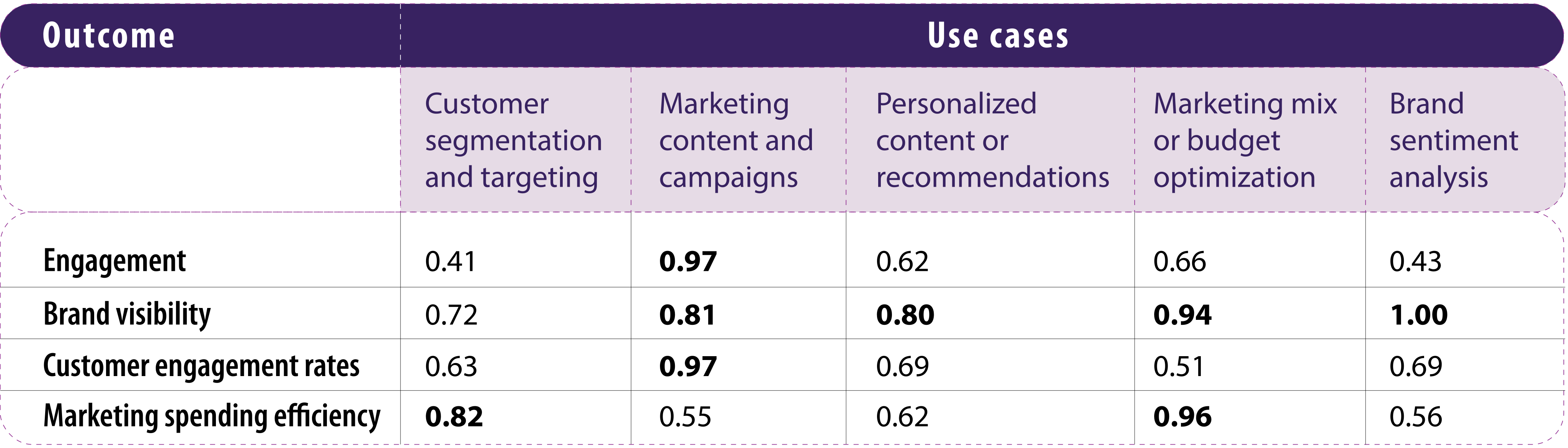
Scores equal to or closer to 1.0 indicate stronger combinations of popularity and impact; lower scores indicate weaker combinations.
Source: Infosys Knowledge Institute
AI-powered tools help marketing teams target the right audiences, personalize messages, test campaign ideas, and reallocate budget toward higher-performing campaigns. These capabilities make AI’s impact more visible because campaign performance is already measured frequently.
Cybersecurity and OT systems
AI shows strong potential in cybersecurity when organizations connect it directly to measurable outcomes such as uptime and resilience. Real-time threat response and automated incident reporting align across cybersecurity outcomes (Figure 7). Attack interruption systems show alignment with IT and operational downtime due to cybersecurity breaches.
Figure 7. Cybersecurity and OT systems use case-outcome scores
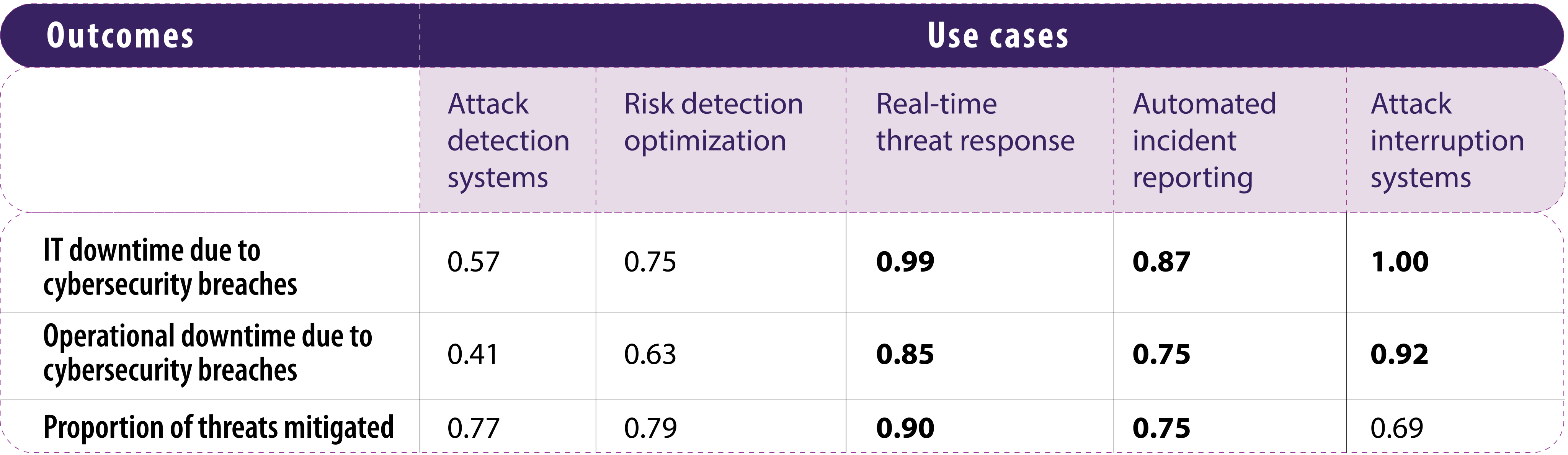
Scores equal to or closer to 1.0 indicate stronger combinations of popularity and impact; lower scores indicate weaker combinations.
Source: Infosys Knowledge Institute
AI-driven threat response systems can isolate affected assets or trigger automated containment actions, reducing both IT downtime and the risk of operational disruption in connected environments. However, scaling these capabilities depends on strong data integration, governance, and security controls across IT and OT environments.
Warehousing and inventory
AI creates value in warehousing and inventory when recommendations translate into operational execution. The data shows alignment for warehouse automation and transportation optimization with labor cost, space utilization, and order fulfillment (Figure 8).
Figure 8. Warehousing and inventory use case-outcome scores
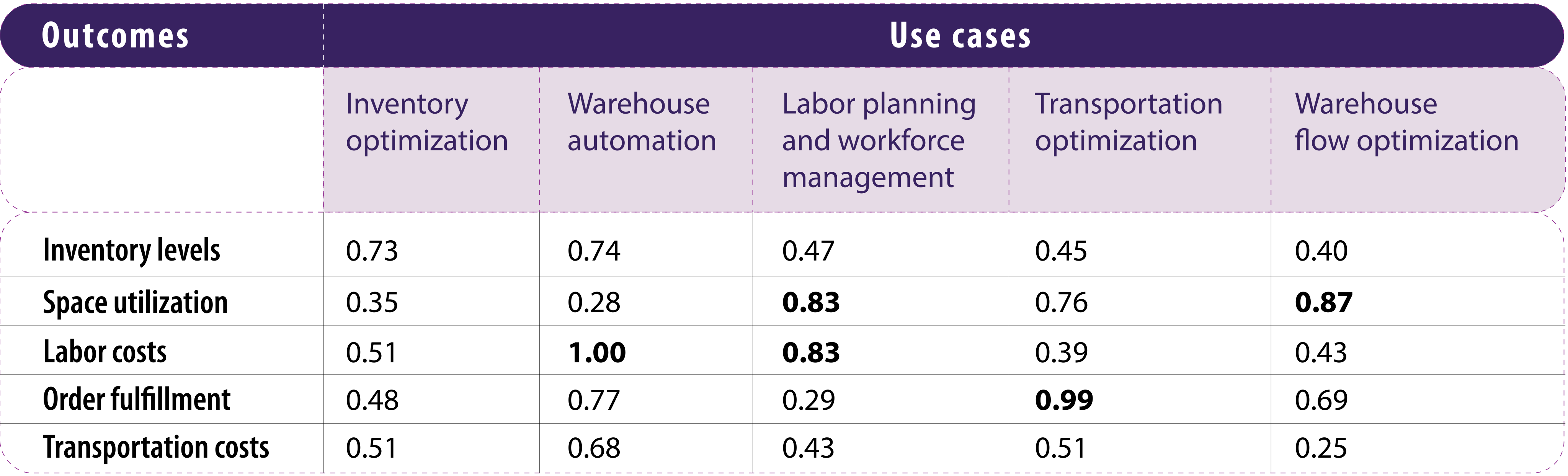
Scores equal to or closer to 1.0 indicate stronger combinations of popularity and impact; lower scores indicate weaker combinations.
Source: Infosys Knowledge Institute
AI can optimize picking routes, transportation schedules, labor allocation, and warehouse flow. The improvements help manufacturers increase order fulfillment speed, improve space utilization, and make better use of available warehouse labor.
Service and aftermarket
AI delivers the most value in service when it improves responsiveness and reduces downtime for customers. Field service assistants, warranty analytics, and authoring and search of technical publications align with service resolution speed, customer satisfaction, and warranty-related costs (Figure 9).
Figure 9. Service and aftermarket use case-outcome scores
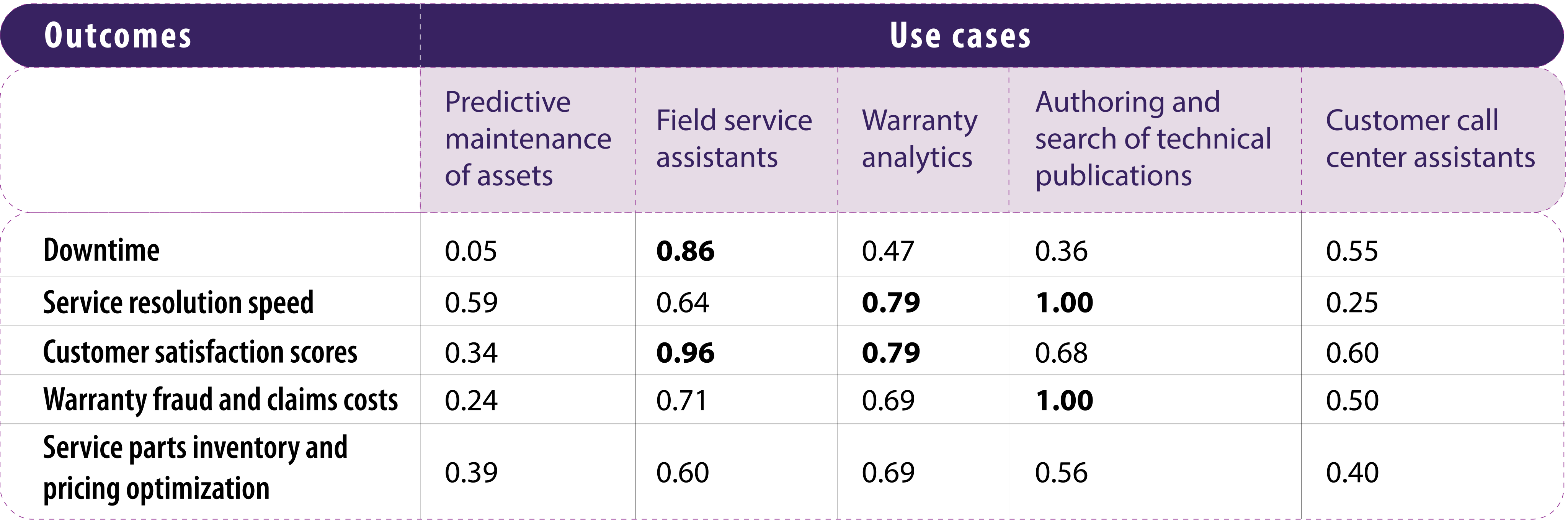
Scores equal to or closer to 1.0 indicate stronger combinations of popularity and impact; lower scores indicate weaker combinations.
Source: Infosys Knowledge Institute
AI tools help service teams find the right technical information during a call, diagnose issues faster, and identify recurring problems in warranty claims. This results in proactive customer service, improving both operational efficiency and customer experience.
What does this mean for leaders?
Scale where measurement and impact are both strong
The strongest use case-outcome pairings to scale are the ones where respondents are measuring outcomes consistently and seeing improvements. For these pairings, manufacturers can move beyond pilots and invest in standardization, shared data products, common key performance indicators, and governance.
Redesign work around assistant-led use cases
Manufacturers should redesign workflows around assistant-led use cases that show the strongest signals. In procurement, service, and commercial functions, these tools can improve speed, consistency, and productivity. Sustaining those gains requires workflow adoption, clear ownership, training, and human-in-the-loop controls.
Invest in the foundations that unlock scale
The broader findings of the index underscore that cybersecurity and data readiness remain top constraints to scaling AI. Strong signals in cybersecurity and OT and supply risk outcomes further increase the urgency for responsible AI governance, secure IT-OT integration, and data foundations that can support enterprisewide adoption.
Together, these findings show where manufacturers can focus AI investments to generate measurable impact. The clearest opportunities are use cases with strong measured signals, supported by the data, security, and governance foundations needed to scale AI deeper into operations.
Methodology
This analysis evaluates how manufacturers connect AI use cases to business outcomes and where AI is associated with measurable improvements. Each score represents a specific use case-outcome pairing and is built from two components:
Popularity: How frequently manufacturers measured a given outcome for a given use case.
Impact: Measured on a five-point scale (significantly worse, slightly worse, no improvement, slightly improved, significantly improved) for each outcome against each use case.
The popularity and impact scores are multiplied, which means a pairing must be both widely measured and associated with strong improvement to receive a high score. Scores are then normalized within each functional area, with the highest scoring pairing set to 1.0. A score of 1.0 represents the strongest combination of popularity and impact within that functional area. Scores close to 1.0 indicate pairings that are widely measured and strongly associated with improvement, while lower scores indicate weaker measurement, weaker improvement, or both.


Regulatory change is accelerating and breach costs are rising, yet most institutions still rely on periodic, manual risk assurance. Three structural gaps, spanning visibility, third-party oversight, and governance, leave institutions unable to keep pace. Building risk assurance as a continuous, AI-augmented capability closes these gaps. A four-phase roadmap helps institutions get there.
- 11 Sep, 2026
- 15 min read

The difference between AI work and AI that works lies in the discipline to scale adoption, governance, and value realization
- 10 Sep, 2026

Learn how automated integrity checks and human oversight can help enterprises control AI agent sprawl, reduce duplication, and manage risk at scale.
- 08 Sep, 2026
