

Insights
- Public sector organizations continue to advance cautiously in their AI journey, influenced by heightened expectations around trust, fairness, and accountability.
- Governance complexity, regulatory compliance, and public scrutiny are barriers that slow adoption and reduce the pace of AI initiatives.
- Despite these constraints, AI adoption is increasing across cybersecurity, IT operations, infrastructure management, and other low‑risk, high‑viability domains.
- Organizations must pair responsible AI principles with clear strategic prioritization, strong data foundations, and rigorous use case selection aligned with mission outcomes.
Executive summary

Artificial intelligence (AI) adoption across industries is moving from experimentation to scaled deployment and presents a significant opportunity for public sector transformation. It has the potential to modernize citizen services, streamline internal operations, and enhance essential government capabilities, such as urban planning, law enforcement, and infrastructure management. Public sector organizations, however, remain cautious in their approach to AI, resulting in slower adoption and lower realized value compared to their private sector counterparts. This caution is shaped by operating constraints around trust, ethics, explainability, regulatory compliance, and public scrutiny, which influence the pace and scope of AI deployment.
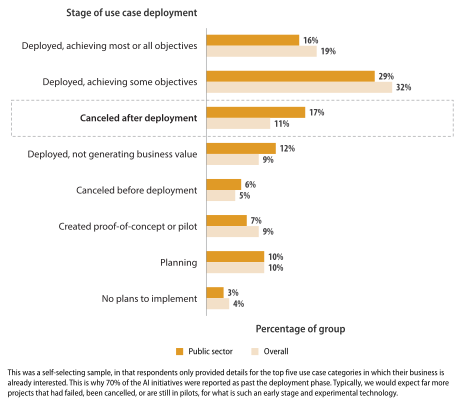
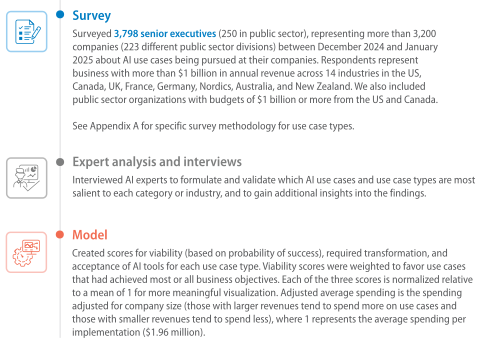
The Infosys AI Business Value Radar highlights the scale of this challenge. For this research, Infosys surveyed 3,798 business leaders across 3,200 companies, including 250 executives representing 223 different public sector divisions. The data reveals that only 45% of AI use cases in the public sector currently deliver tangible objectives, compared with 51% across all industries. At the same time, 35% of initiatives are either canceled or not delivering public value (Figure 1), reflecting structural and governance scrutiny that limits value realization.
Figure 1. AI in the public sector is canceled more often after deployment versus other industries
Source: Infosys
Even as momentum builds, only 2% of organizations were ready for AI at the beginning of 2025, according to the Infosys AI readiness research. This readiness gap spanning technology, data maturity, and governance underscores the urgency for the public sector to adopt AI responsibly and at scale.
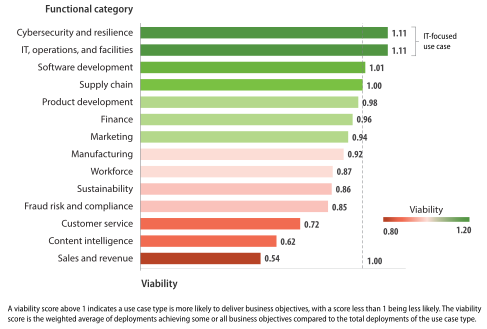
As per the research, public sector organizations are pursuing AI in cybersecurity and resilience along with IT, operations, and facilities management. AI is proving instrumental in detecting cyberthreats, analyzing legacy data for predictive maintenance, automating routine tasks, and optimizing operational workflows. Conversely, customer service, content intelligence, and sales and revenue workflows show muted adoption due to concerns around AI bias, explainability, underdeveloped governance frameworks, and the high scrutiny attached to government decisions (Figure 2).
Figure 2. IT use cases in public sector are more viable
Source: Infosys
The potential for AI transformation in the public sector is undeniable. AI can enable real-time traffic management, healthcare analytics, and infrastructure oversight, and deliver services at scale and speed. As governments warm up to AI and global policy frameworks, such as those published by the Organisation for Economic Co-operation and Development (OECD), the moment to scale AI responsibly has arrived. By building robust governance, upskilling their workforces, prioritizing viable use cases, and investing in strong data foundations, public sector organizations can unlock AI’s potential and deliver smarter, more inclusive, and more responsive public services.
Where AI works
There is a lot of potential for AI to deliver value in the public sector, but implementation varies across departments due to uneven levels of data readiness, process maturity, leadership support, and workforce gaps.
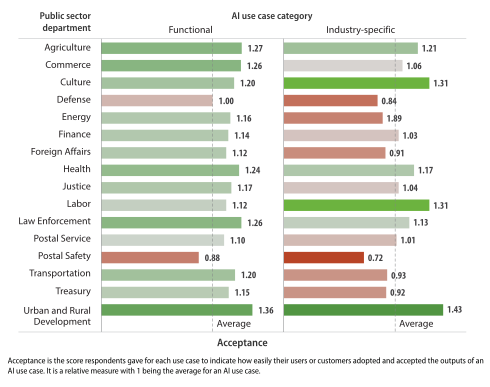
Research shows that functional use cases in urban and rural development, agriculture, and law enforcement show comparatively higher acceptance (Figure 3) because of clearer workflows, strong data foundations, and standardized processes that deliver quick wins. Conversely, industry-specific use cases face slower adoption as they demand deeper transformation, more complex governance, higher scrutiny, and greater legal and ethical accountability.
Figure 3. Relative acceptance of functional versus public sector-specific use cases
Source: Infosys
Healthcare
Public health administration uses AI to run large programs, such as Medicaid or the Children's Health Insurance Program, and child welfare more efficiently, focusing on eligibility, compliance, and program integrity. AI‑driven analytics help cut improper payments and target audits, complementing federal integrity strategies. States are deploying AI assistants to guide residents through applications and verifications. For example, Indiana’s Ask Indiana and Colorado’s PEAK chatbot for case status and ID cards. In child welfare, the Allegheny Family Screening Tool improved screening accuracy and reduced disparities with human oversight.
Finance
Public sector organizations benefit from functional applications, such as automated financial reporting, accounts reconciliation, and real-time expenditure monitoring, which reduce manual efforts and errors. AI-driven anomaly detection in tax filings and payment systems helps identify fraud and non-compliance in real time, which lowers revenue leakage, and strengthens fiscal discipline. These capabilities also support revenue forecasting, cash flow management, and budget monitoring, leading to more informed and transparent policy decisions.
Law enforcement
AI supports law enforcement agencies through industry-specific use cases, such as crime data analysis, pattern identification, and operational planning. Predictive crime-pattern analysis helps agencies deploy units based on historical data and emerging hotspots. However, adoption requires strong responsible AI frameworks that safeguard civil liberties, address bias risks, and ensure transparent use of AI as a tool to support decisions, not a decision‑making tool.
Agriculture
AI strengthens national agricultural systems facing climate variability and resource constraints. Industry-specific applications, such as AI‑based crop‑health monitoring use satellite imagery and soil data to identify early signs of pest attacks or nutrient deficiencies. In addition, weather forecasting systems help governments predict irregular climate events and plan accordingly.
Challenges and bottlenecks
While AI can modernize operations and elevate citizen services, public sector AI programs often face structural constraints, such as legacy systems and data debt; regulatory friction, such as privacy, security, and accountability requirements; and organizational bottlenecks, such as skills gaps and change resistance, which slow scaling and value realization.
Divided adoption
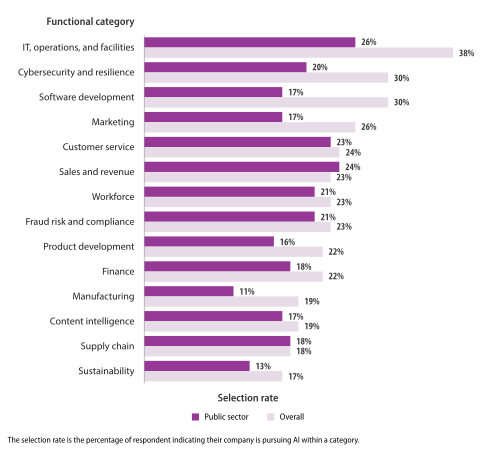
The research (Figure 4) highlights disparity in the types of use cases gaining traction in the public sector. IT-centric use cases, such as cybersecurity and IT operations, demonstrate high selection rate and strong viability, largely because they deliver measurable value early, carry lower public-facing risk, and align closely with government priorities around cyber resilience and operational reliability. Conversely, human-centric use cases, such as customer service, marketing, and sales and revenue are being adopted more slowly due to increased risks of bias, explainability challenges, and the possibility of small errors causing disproportionate impact in public environments.
Figure 4. Public sector lags other industries in AI use case adoption
Source: Infosys
High transformation efforts, mixed results
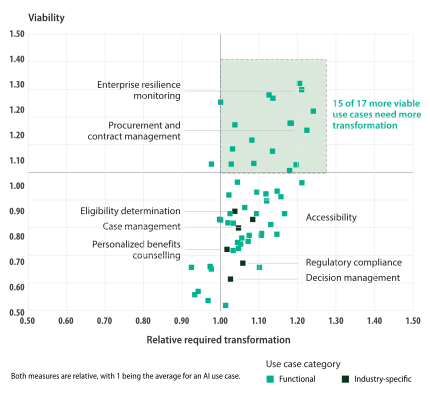
Public sector use cases, whether functional or industry‑specific, demand high levels of transformation (Figure 5). While functional use cases with high transformation needs are more viable (the segment on the top right of the graph), industry‑specific use cases tend to be less viable despite requiring above‑average levels of transformation.
Figure 5. Functional use cases that generate value require higher transformation
Source: Infosys
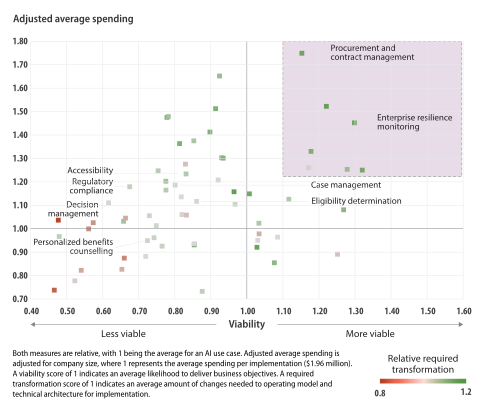
This transformation involves process reengineering, data modernization, and workforce reskilling to achieve meaningful outcomes, which in turn requires substantial capital investment. As per the research, the most viable and transformative use cases — enterprise resilience monitoring and procurement and contract management — are highly viable but require extensive transformation and capital outflow (Figure 6).
Figure 6. Transformation-heavy use cases require median spending
Source: Infosys
However, budget constraints, procurement complexity, risk aversion, legacy systems, and public scrutiny dampen the AI efforts.
Caution drives slow adoption
Public sector organizations pursue fewer AI use cases compared to their private-sector counterparts (Figure 4). This contributes directly to the lag in value realization and the higher incidence of underperforming or canceled projects. The caution stems from regulatory complexity, multi-stakeholder involvement, and high scrutiny around mission‑critical decisions.
Workforce readiness
Infosys research identified workforce readiness as one of the most significant determinants of successful AI adoption. For the research, we grouped the respondents into four archetypes based on which of the following definitions matched their employee engagement with AI:
- Watchers: Organizations with minimal engagement with employees on AI, and limited or no training, education, or change management initiatives.
- Explorers: Companies taking initial steps to address AI with limited change management practices; employees have minimal involvement or support in understanding AI’s role.
- Pathfinders: Organizations with regular training and educational programs on AI and growing employee engagement.
- Trailblazers: Companies fully engaged in continuous AI training, education, and change management, with employees fully supported in understanding and adapting to AI.
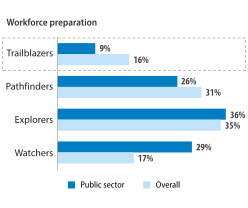
The research (Figure 8) shows that public sector organizations are lagging other sectors, with fewer trailblazers than other industries; nearly two‑thirds of public sector organizations fall into the watcher and explorer categories, indicating early‑stage AI experimentation with limited strategic scaling. However, these organizations have the potential to progress to pathfinder and trailblazer levels by focusing on building specialized workforces, governance capabilities, and cross‑functional operating models.
Figure 8. There are very less trailblazers in public sector
Source: Infosys
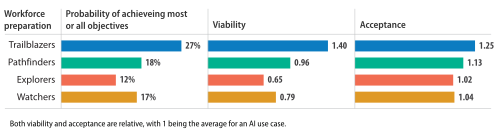
Trailblazers demonstrate higher AI viability and acceptance (Figure 9). They are 15 percentage points more likely than explorers to derive measurable value from their AI initiatives, highlighting the value of strong leadership commitment and targeted capability development. These higher‑maturity organizations invest proactively in skill building, responsible AI practices, and integrated operating models that enable teams to design, deploy, and manage AI responsibly and confidently.
Figure 9. Trailblazers in workforce preparation have the highest viability and acceptance
Source: Infosys
Solutions and opportunities
Public sector organizations face higher transformation requirements and lower workforce preparedness compared to other industries. To progress along the maturity curve, they must strengthen capabilities across these areas:
Learn from other industries
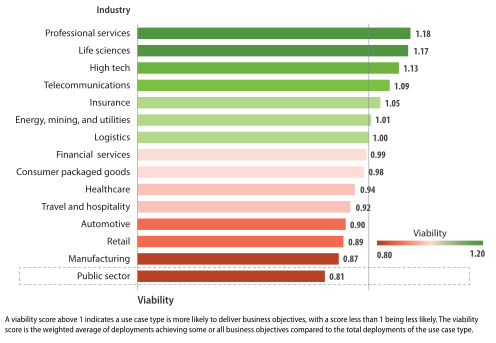
The research (Figure 10) highlights that public sector AI use cases have low viability, which is defined by public scrutiny and the cautious approach of public sector organizations. These organizations can accelerate AI maturity by adopting best practices from industries that are ahead on the AI curve, such as professional services, life sciences, high tech, and telecommunications.
Figure 10. AI use cases for the public sector have low success rates
Source: Infosys
Proven approaches:
- Large language model‑driven productivity and workflow automation from professional services, enabling smarter decision support and content generation.
- Personalization and automated service delivery models from retail, relevant for citizen engagement and benefits counseling.
- Robust data governance frameworks from banking and insurance, essential for ensuring compliance, traceability, and auditability.
- Predictive maintenance and process optimization from logistics, useful for infrastructure and facilities management.
- Participate in cross‑industry forums, such as engaging with retail leaders to study digital modernization to strengthen AI adoption playbooks.
Build a responsible AI framework
Scaling AI in the public sector starts with a clear and practical responsible AI framework. Built‑in safety protocols, traceability, auditability, and accountability ensure systems remain transparent, ethical, and trusted by citizens, particularly important given the heightened scrutiny public sector organizations face.
Public sector organizations are also well placed to lead AI governance by working with industry, citizen groups, and academia to define shared rules and safeguards. Many can anchor their approach in established models, such as the OECD’s AI principles and the National Institute of Standards and Technology AI Risk Management Framework, and localize them through policy instruments like Australia’s national framework for the assurance of AI in government and Singapore’s model AI governance framework for generative AI.
Focus on the achievable
Instead of pursuing large‑scale transformation upfront, public sector organizations should focus on low‑investment, high‑viability functional use cases, such as cybersecurity, IT operations, and finance. In addition, industry-specific use cases, such as personalized benefits counseling, eligibility determination, and case management can deliver measurable returns without requiring high capital outlays or extensive transformation.
Strengthen data infrastructure
AI’s performance is directly tied to the quality, structure, and governance of data. Fragmented datasets, poor quality, and lack of historical data tracking slow down value realization. Infosys’ AI Readiness Radar also identifies data maturity as one of the key pillars for an organization’s AI readiness. To address this, public sector organizations should clean and integrate datasets across departments, define clear data ownership, and implement data quality, lineage, and governance tools.
Create ecosystems, not siloes
Siloed operations slow down transformation and increase rework. Public sector organizations should establish cross‑functional teams that include policymakers, technologists, legal experts, and operations specialists. This product‑centric, integrated cross-functional model enhances alignment between mission goals and compliance requirements.
Increase automation of services
AI-powered automation across departments not only reduces operational effort but also accelerates citizen‑facing outcomes. Public sector organizations should embrace agile approaches that enable rapid experimentation and iterative deployment. Minimum viable products, such as intelligent virtual assistants and automated processing engines, quickly demonstrate value while improving service delivery.
The road ahead
The public sector faces real structural, regulatory, and workforce challenges. Even so, the potential value of AI is both significant and within reach. Progress will depend on moving deliberately yet decisively, strengthening core data capabilities, and putting responsible AI governance frameworks in place that uphold trust, transparency, and accountability.
The next phase of public sector transformation will be defined by both technology and leadership choices. Organizations that invest in workforce readiness, adopt cross-functional operating models, and drive a culture of safe experimentation will transition from early exploration to scaled AI impact. These trailblazers will set new standards for operational excellence, citizen experience, and policy agility.
The path is clear: apply responsible AI principles, build the right foundations, support the workforce, and use AI with clear purpose. With the right strategy, the public sector can realize AI’s full potential and deliver services that are smarter, safer, and more responsive to citizens.
Appendix A: Use cases
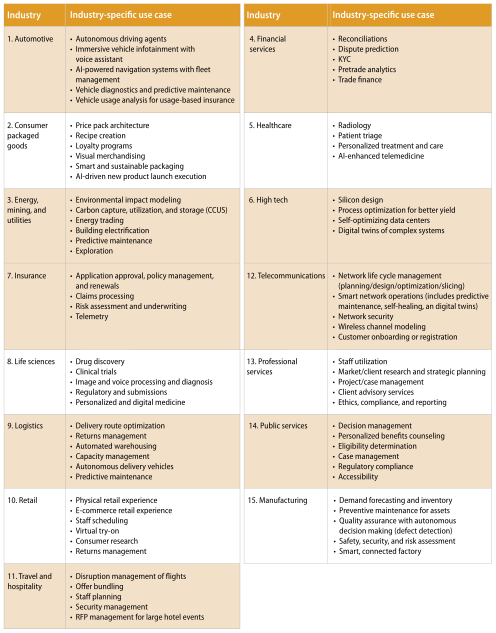
Based on interviews with subject matter experts and desk research, we collated 55 use case types across 14 categories (Figure A1). We similarly collated 77 industry-specific use case types across 15 industry sectors (Figure A2). All these use case types are themselves at a level of abstraction higher than a specific use case, to make the survey manageable — but they are also relevant for all respondents. The survey asked respondents to select up to five functional categories out of 14 (Figure A1) where their companies are pursuing AI.
Figure A1. Functional categories and their use case types
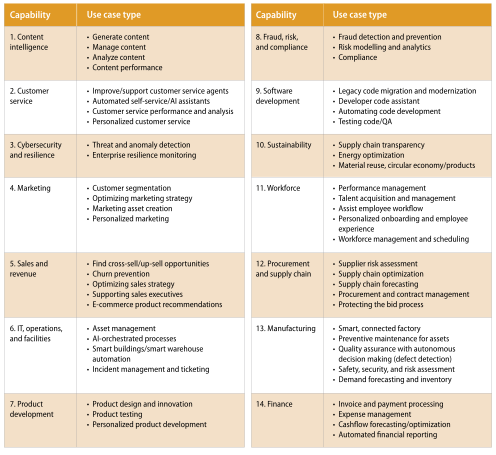
Respondents provided details on these categories, which were the top five that their company is already interested in. As such, this is a self-selecting sample. In Figure 1, for example, we would typically expect far more projects that had failed, been canceled, or been in pilots for what is an early stage and experimental technology. Each category had between two and six common use case types (for example, product recommendation use cases in the sales and retail category). For each use case type within a category, respondents were asked about the stage of implementation of their initiative(s). Options for this question were: No plans to implement; planning; created proof of concept or pilot; canceled before deployment; deployed, not generating business value; canceled after deployment; deployed, generating some business value; deployed, achieving most or all objectives. Respondents were then asked about the amount of spending for that use case type to date (from any start date). This was followed by questions about the amount of operational or business model change as well as the amount of change in data structures and technical architecture needed for each use case type.
Finally, respondents were asked about the proportion of their user base that accepted and used the AI tool deployed (if any) for each use case type. The same series of questions was asked for industry-specific use case types for the industry of the respondent (Figure A2).
Figure A2. Industry-specific use case types
Appendix B: Research approach


For retailers, the AI advantage will come from building the organizational muscle that lets employees use AI confidently.
- 09 Sep, 2026
- 6 min read

Retailers must prioritize AI-powered supply chain intelligence, seamless omnichannel experiences, and personalization to drive growth and resilience.
- 08 Sep, 2026
- 15 min read

Companies that tailor their offerings and messaging to evolving consumer priorities will be better equipped to sustain demand as spending becomes more selective.
- 30 Jul, 2026
- 12 min read
