
Postcards from the future
Postcards from the future of cloud is a series of articles that explores how enterprise technology infrastructure might evolve in the next five years. It draws on tools and frameworks already in development, recognizes pitfalls to avoid, and identifies tasks to take on now to build the infrastructure for the future. These postcards aim to guide companies in a world where technology and business requirements shift quickly.
Insights
- Digital services will grow into a more personalized and proactive cognitive engine, tuned to provide actionable insights and the right tools to support decisions. Business logic in this engine will play a larger role alongside the technical requirements of IT service management.
- There will be a shift from systems of engagement to a system of cognitive works.
- Under the hood, the cognitive engine uses control towers, AI agents, and emerging techniques to unify platforms, manage AI processes, orchestrate disparate systems, and deliver seamless experience.
- Under-the-hood knowledge of the cognitive engine is not required.
Dear 2026,
This might strike you as strange, but we here in the future have forgotten the names and abbreviations of the tools and technologies that run the business. I had forgotten about this until I sat down to write to you. The thing is, our systems just work. The only abbreviation we still use is ROI.
Here’s how the boss starts her day. She asks her digital assistant for her morning briefing. It has three parts. First, a summary of events that have happened since her last check-in at work. Second, a review of actions taken automatically by cognitive agents. Finally, she receives a list of possible tasks and interventions, based on a balance of big-picture corporate strategy and emergent issues.
As she takes on a task, relevant context and insights appear in her view, and she’s equipped to make good, efficient use of her time.
This is not just a premium tool reserved for the C-suite. Everyone in the business has their own version of this assistance. We are all immediately up to speed, naturally understand the context, and have insights at hand as we act.
The work we do in the cloud is way beyond IT (hey, I remembered one!) – it’s about the business itself.
You know how you don’t need to know the parts of a car in order to drive it? Our digital work runs like that. In five years’ time, top companies run on a cognitive engine tuned for business. Our engine is a good one. Every day the boss, me, and everyone in the org gets the right tools at the right time, and nothing else.
An engine tuned for business
The cloud-based managed services of tomorrow won't idle in the background waiting for a trouble ticket. Like a race engine built for the track, they will be custom configured to convert every cycle of compute power into forward motion for the business.
This is the natural evolution from enterprise service management – but it is not a straight line. Where enterprise service management was built around systems of record and systems of engagement, the cognitive engine in the cloud is built around systems of action. It doesn't just remember what happened or facilitate what's happening. It thinks, decides, and drives what happens next, applying intelligence across business workflows that extend far beyond the walls of the IT department.
This is what’s required from business systems. The cognitive questions that businesses now face don’t wait for answers from a service desk. How to serve customers, how to sense and respond to market shifts, and how to deploy talent all require quick responses. They require a cloud architecture that is tuned to business pace, not IT metrics. Uptime and ticket closure rates are not the key metrics. The business needs an engine on the track, running hard, calibrated to the demands of the race.
That shift is what makes this postcard different from its predecessors in the series. The data center of tomorrow provides the physical and computational foundation. The thinking network carries intelligence to every corner of the enterprise. The future fabric of IT operations weaves it all into seamless, ambient performance. The cognitive engine in the cloud takes that foundation, network, and fabric and puts them in service of business transformation, running at full throttle.
What’s under the hood
The cognitive engine in the cloud uses tools you can access today. Under the hood is an assembly of AI agents, control towers, and modernized business processes built for seamless performance without asking the driver to become a mechanic.
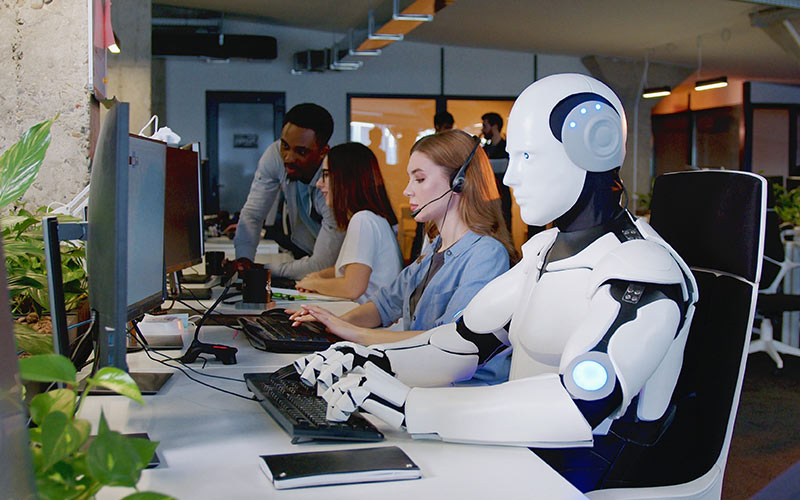
This starts with AI agents trained for collaboration across business functions and platforms. These are more advanced than the narrow, single-task bots that have recently proliferated across enterprises. These agents can inform by uncovering patterns in data, predict future trends, execute tasks at scale, and even orchestrate the efforts of multiple specialized AI agents to solve complex, interconnected problems.
In the cognitive engine, AI agents operate in concert. Here’s an example from customer experience. A sales insight agent flags a customer at risk, coordinates with the scheduling agent, the account history agent, and the communications agent to build a response. Depending on predetermined levels of automation and risk, the agent swarm can respond directly or formulate a recommended reply for the human agent engaged on the work.
This orchestration of intelligence has the potential to enable true, organization-wide transformation.
Alongside the agents sit the control towers that give leaders what the moment requires and nothing else. Control towers are evidence of a shift away from passive reporting and the tired dashboards that cluttered enterprise screens in the 2020s. The old dashboard model accumulated metrics the way a garage accumulates tools: more and more of them, increasingly hard to find the right one when you need it.
Even in 2026, companies are deploying platforms intelligent enough to surface the right signal conversationally, on demand. AI assistants and workplace agents are playing a pivotal role in this shift, enabling the cognitive engine to determine what you need to see and when to steer critical business decisions. Done properly, the result is clear evidence of productivity and optimization, rather than a second layer of noise requiring its own interpretation.
The third component under the hood is the transformation of business processes themselves. The workplace is evolving from basic digital tools to smarter, human-centric experiences, focused on harmonizing work, workforce, and workspace. This is where the cognitive engine departs most sharply from its IT service management (ITSM) predecessor. Where the old model modernized processes to fit the technology, the cognitive engine reorients the technology to fit how the business actually works and how people actually think.
Multiagent collaboration enables agent-to-agent and agent-to-human coordination to automate enterprise tasks and speed decision-making, but the goal is never automation for its own sake. It is the liberation of human attention for the decisions that machines cannot and should not make.
Everyone gets their own hot rod
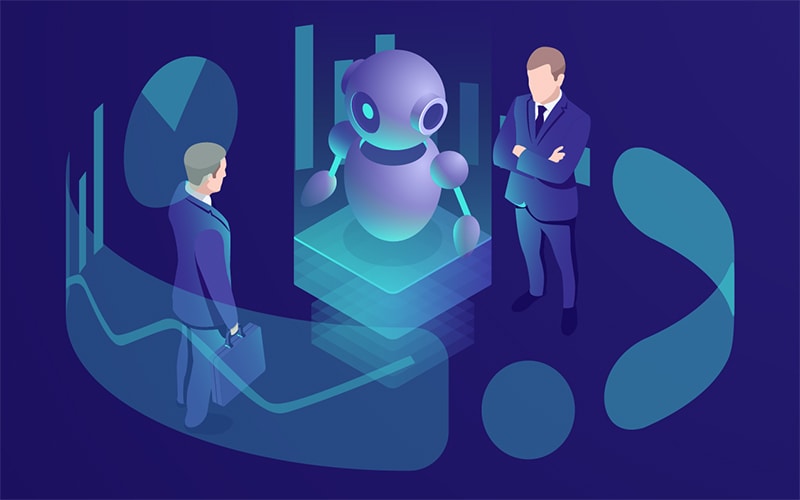
In the future, the boss is not the only one with a context-aware, action-oriented, custom morning briefing. In the cognitive enterprise, everyone has their own version. The account manager, the logistics coordinator, and the field technician, each receives the right tools at the right time, shaped to their role, their context, and their current task. This is the potential of industry specialization that the cognitive engine unlocks.
Many enterprises are exploring AI agents, but efforts remain fragmented, limited to individual functions and low in sophistication. The next evolution moves from one-to-one problem-solving (one agent managing one issue in one department) to industry-specific, proactive frameworks informed of the rhythms, the risks, and the regulatory environment of a particular sector. A cognitive engine tuned for healthcare knows that a patient-scheduling anomaly is also a compliance signal. One tuned for financial services knows that a shift in client inquiry patterns may be an early indicator of portfolio concern. These are not generic insights surfaced from generic data. They are the product of an engine built from the ground up based on domain expertise and human engagement.
Agentic AI for autonomous resolutions, real-time multilingual support, and AI-powered endpoint management that can self-heal before a user notices a problem are already moving from roadmap to reality. Layering in enterprise-specific knowledge and industry lore will build a modified business engine like no one has seen before. This custom hot rod is an engineering project, and it is under way.
Start your engine
Understanding the cognitive engine is one thing. Building one is another.
The shift from isolated experiments to intelligent systems that learn and act across business functions requires a maturity journey across three dimensions: expanding agent use across functions, increasing sophistication and autonomy, and ensuring seamless coordination. For enterprise leaders looking at 2026 and beyond, the question is how to start without stalling.
Begin by auditing where business logic lives today. In most organizations, the rules that govern decisions are encoded in human habits and institutional memory, not in systems that can learn from them. Examples include how to escalate a customer complaint, how to prioritize a production delay, and how to route a procurement exception.
Surfacing that logic is the first act of engine tuning. It is also the hardest, because it requires business leaders and technologists to speak the same language about what drives outcomes, not what the organizational chart says should drive them.
Next, replace dashboard accumulation with conversational intelligence. What stands in the way of better decisions is often a combination of fragmented systems, inefficient manual processes, and overwhelming volumes of data. The solution is to create a system that understands the context of its user and delivers relevant information proactively.
Third, move from automating tasks to orchestrating outcomes. The distinction matters. Automating a task removes a human step. Orchestrating an outcome connects agents, data, and decisions across functions in service of a business result. Agentic AI integrates individual agents into a connected, strategy-aligned system enriched with sector-specific knowledge.
Enterprises that start building those connections now will have a meaningful head start when broader orchestration capabilities develop.
Finally, watch for two pitfalls.
The first is mistaking speed for tuning. A cognitive engine that automates broken processes faster is not building a better engine. It’s doing the wrong thing faster. The work of understanding what the business needs from its systems must come before hitting the accelerator.
The second is treating the cognitive engine as just an IT project. The cognitive era is one where technology is not just a tool, but an active participant in decision-making, which means business leaders and not just CIOs must be at the wheel. And the IT experts must have a seat in the boardroom and a voice at the strategic level. The engine belongs to the enterprise. The tuning is everyone's job.

A strategic and coherent hybrid cloud environment can deliver competitive advantages to an enterprise.
- 28 Apr, 2025

Many organizations want to reap the benefits of generative AI but are held back by an outdated IT landscape. Fortunately, generative AI can also be used to speed up application modernization.
- 20 Mar, 2025
- 7 min read

Financial institutions face numerous challenges with their legacy core systems. With four innovative design patterns, financial institutions can move to a “coreless” strategy that reduces costs, improves speed, enables scale and enhances digital capabilities without impacting the core systems.
- 18 Mar, 2025
- 15 min read
