
AI ADOPTION IN INDIAN GCCS: EXECUTIVE SUMMARY AND KEY INSIGHTS
This section provides an overview of AI adoption across Global Capability Centers (GCCs) in India. It highlights how GCCs are evolving from cost-focused delivery centers into innovation-led hubs, while also examining the gap between widespread AI adoption and measurable business outcomes.
The GCC transformation imperative
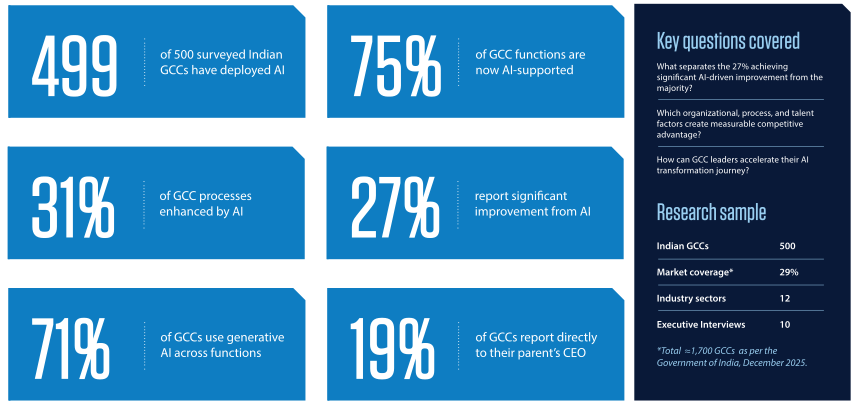
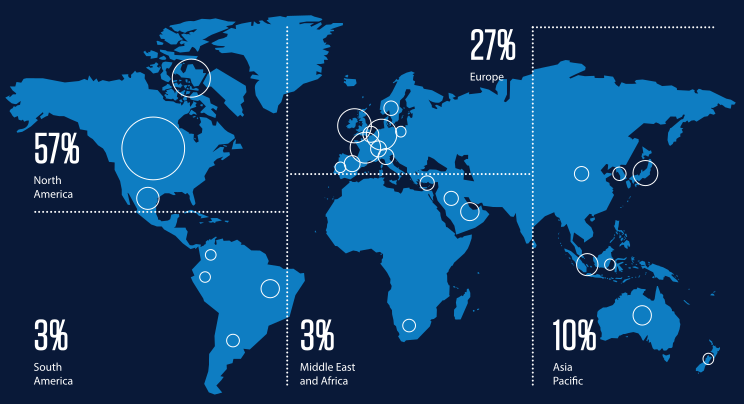
India's 1,700+ GCCs are at an inflection point. What began as cost optimization centers have evolved into strategic innovation engines driving enterprise transformation. Yet the path to AI-first excellence remains uneven. Our comprehensive research, surveying 500 GCCs representing 29% of India’s ecosystem, combined with in-depth executive interviews, reveals that while AI adoption is ubiquitous, meaningful business impact remains elusive for two-thirds of the industry.
Survey sample and statistical methodology
This report uses one of the largest samples of AI-first Indian GCCs to date. At a confidence interval of 95%, this sample of 500 from a population of 1,700 yields a maximum margin of error of 3.7%.
Data was gathered through a double-blind survey that was run from mid-January 2026 to mid-February 2026. The analysis employs logistic regressions to identify factors that link to GCCs reporting significant AI-driven outcomes, while controlling for background characteristics.
GCC size, structure, and services
GCC parent HQ location
AI ADOPTION TRENDS IN GCCs
AI adoption is widespread across GCCs, but the depth of implementation and value realization varies significantly. This section explores investment trends, adoption across functions, and the evolving role of AI in the workforce.
AI Investment and Strategic Focus in GCCs
GCCs are increasingly investing in AI to drive speed, efficiency, and innovation. These investments reflect a shift away from traditional cost-focused priorities toward broader business transformation goals.
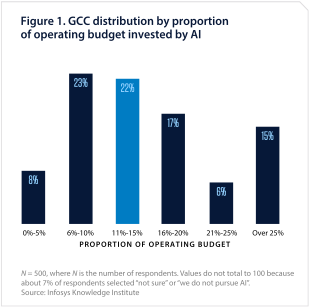
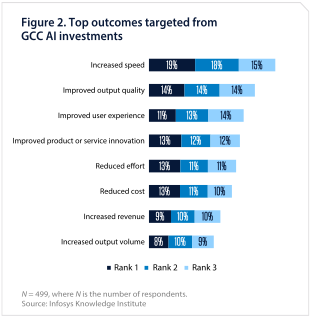
A typical GCC spends 15% of its operating budget on AI (Figure 1). The most common target for these investments is increasing speed, followed by improving the quality of outputs from processes (Figure 2). Improved user experience and product or service innovation are the next most common – though user experience is rarely the primary goal. Despite GCCs’ traditional cost and volume focus, increased output volume and reduced cost are two of the least targeted outcomes. Though equally, it is also clear that few GCCs see AI as a revenue generating tool currently either.
AI Adoption Across Business Functions
AI is embedded across a wide range of enterprise functions, demonstrating its role as a core capability within GCCs. Adoption patterns vary by function and technology type.
AI is used by almost all GCCs. Only one GCC in our sample of 500 does not use AI today. More than three-quarters of GCCs use AI to support IT delivery, AI product engineering, customer service, cybersecurity, and data analytics (Figure 3). Generative AI dominates among tool types, with agentic AI also widely adopted, particularly in sales. However, predictive AI is the preferred choice for finance, analytics, and engineering.
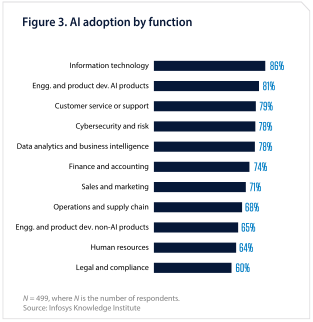
In terms of adoption by AI technology, generative AI leads with 71%. Within generative AI, the most adoption is in IT (84%), sales and marketing (76%), and AI product development (74%) functions. Predictive analytics / machine learning follows with a 61% adoption rate, with strong usage in finance (70%), data analytics (72%), and engineering functions (66%). AI embedded in software has a 57% adoption rate, and is widely adopted across IT (66%), legal (62%), and HR (58%). Agentic AI sees a 54% adoption rate, with highest adoption in sales and marketing (61%), customer service (58%), and engineering functions (58%).
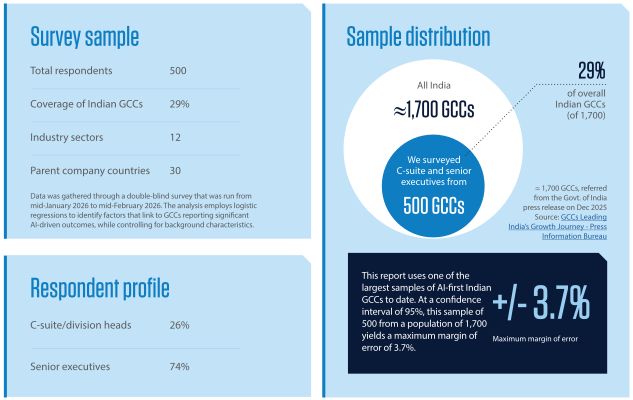
GCCs use AI in between 70% and 80% of the functions they provide to their parents, regardless of the size of their operations. As such, large GCCs (>10,000 headcount) have more AI across more functions, delivering an average eight functions, with six of these typically being supported by AI.
AI-Driven Process Automation in GCCs
While AI adoption is widespread, process-level automation remains relatively limited, indicating significant potential for scaling efficiency and performance improvements.
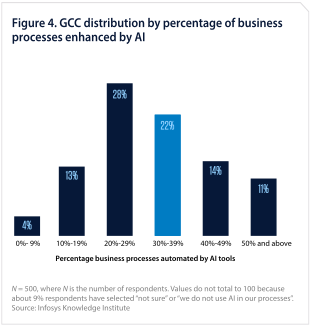
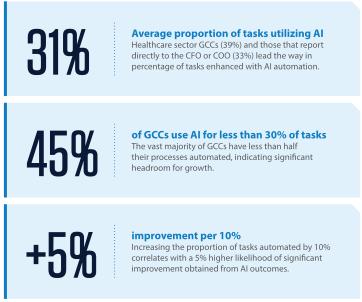
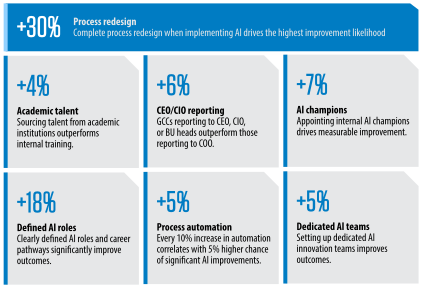
AI still enhances only a third of tasks. While all GCCs use AI in most areas, on average only 31% of tasks within a process are enhanced or automated. This is higher than in most enterprises, thanks to the business process focus that GCCs excel in. However, more can be done. Our analysis reveals that for every 10% increase in the proportion of tasks automated, there is a 5% improvement in AI outcomes cited by GCCs.
Human and AI Collaboration in GCC workforces
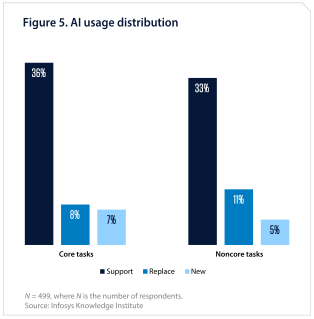
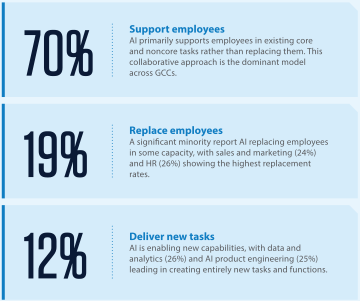
AI is primarily used to augment human capabilities rather than replace them, highlighting a collaborative operating model across GCCs. AI is used mainly to augment humans in GCCs. Almost 70% of AI deployments in GCCs are to support employees, whether they are active in core or noncore tasks. Only a fifth of AI deployments are used to replace human tasks, but more often in a noncore activity (Figure 5). In fact, it’s almost as common to use AI for a net new core activity as it is to use it to replace an employee’s tasks.
AI Talent Strategy and Career Pathways
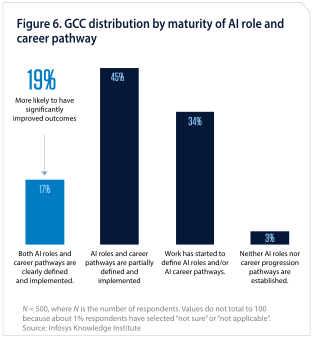
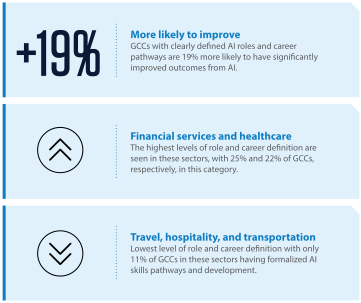
Clearly defined AI roles and career pathways are emerging as critical enablers of AI success in GCCs. Most GCCs have only partially defined AI roles or clarified career pathways for employees who choose to engage with AI (Figure 6). Indeed, a third of GCCs have only just started to do this. While we find no evidence that not defining roles holds AI performance back, it is clear from our regressions that those GCCs that have defined roles and pathways can expect a significant improvement in AI outcomes.
BUSINESS IMPACT OF AI IN GCCS: RESULTS BY INDUSTRY AND SCALE
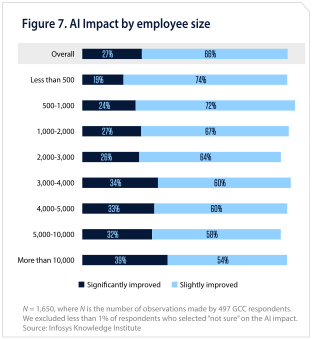
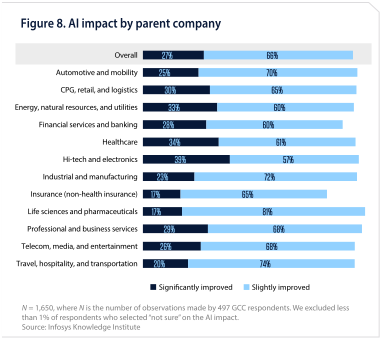
AI is delivering measurable business impact across GCCs, with outcomes influenced by organization size and industry sector. GCCs cite a high rate of AI success within their operations, with 27% describing “significant” improvements through their use of AI. But there is a clear scale advantage, with GCCs employing over 3,000 staff experiencing significant AI improvements a third of the time – and those with over 10,000 staff seeing this happen almost 40% of the time (Figure 7). Some industries also fare much better, notably hi-tech and electronics (39%), healthcare (34%), and energy, natural resources and utilities (33%) sectors (Figure 8).
CRITICAL SUCCESS FACTORS FOR AI-FIRST GCC TRANSFORMATION
Successful AI transformation depends on organizational, operational, and strategic factors beyond technology adoption.
Process Redesign and AI Transformation
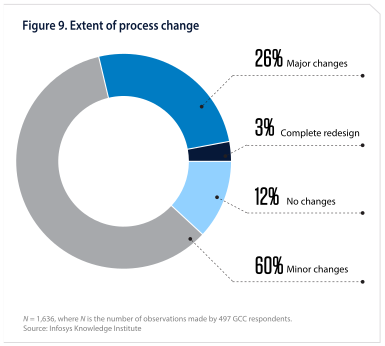
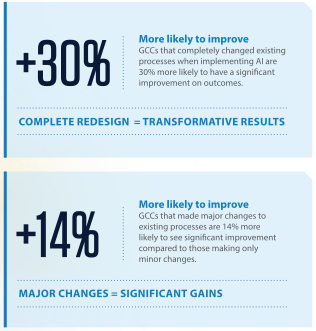
Process redesign is one of the strongest drivers of AI success. Big process change delivers better AI outcomes. GCCs that make only minor changes (or none at all) when implementing AI, miss significant benefits. Regression analysis reveals a strong link between process change and AI success.
Responsible AI Governance and Compliance
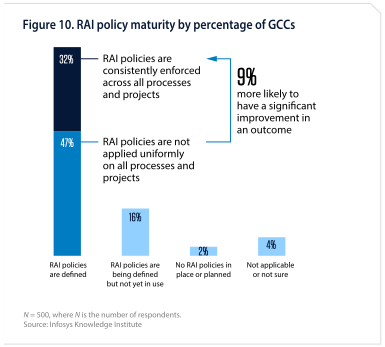
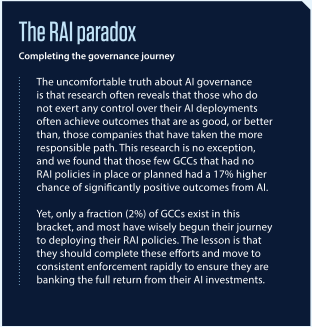
Responsible AI governance is essential for scaling AI sustainably. But, responsible AI (RAI) enforcement is often lacking. Almost 80% of GCCs have RAI policies defined, but less than a third consistently enforce RAI across all processes and projects (Figure 9). Those that do can expect a 9% uplift in their likelihood to deliver significant improvements from AI.
Leadership and AI Governance Models
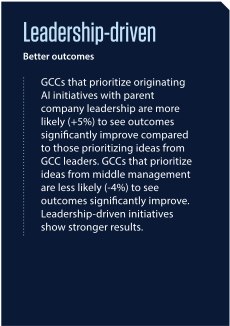
Leadership alignment significantly impacts AI outcomes. GCCs that report to CEOs, business unit heads, or CIOs are statistically more likely to achieve between a 5% and a 10% uplift in their AI outcomes as compared to those that report to the COO.
In-House AI Development vs External Capabilities
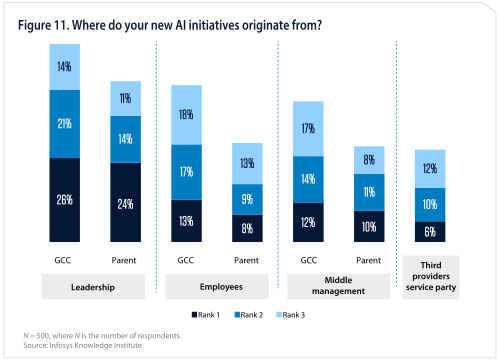
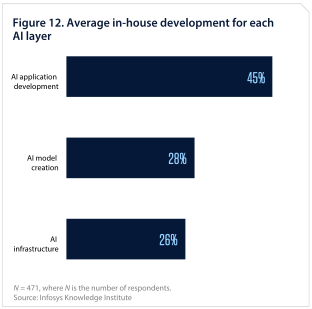
Building AI applications internally delivers better results than building models. A quarter of GCCs are developing AI models and infrastructure in-house, whether for competitive or regulatory reasons (Figure 11). Yet our regression analysis reveals that there are only benefits to developing AI applications in-house.
Strategic AI Partnerships in GCCs
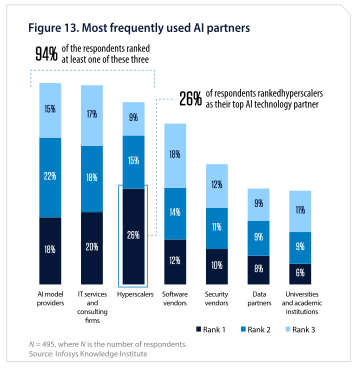
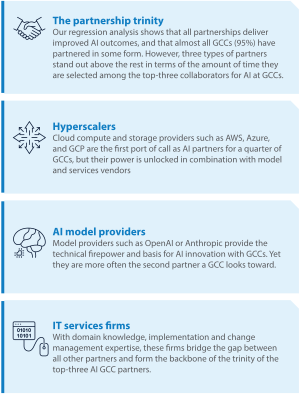
Partnerships accelerate AI success.
AI Talent Sourcing and Workforce Strategy
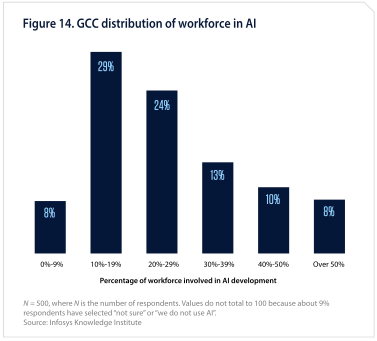
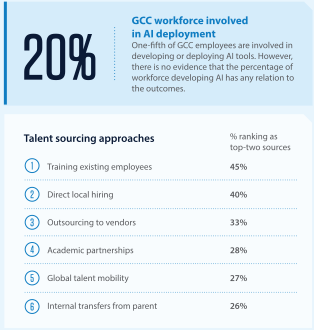
Talent sourcing strategies influence AI outcomes. Sourcing talent from academic institutions gives a 6% higher likelihood of significant improvement from AI, compared to internal transfers from the parent company, which tend to make it 5% less likely.
AI Enablement Initiatives
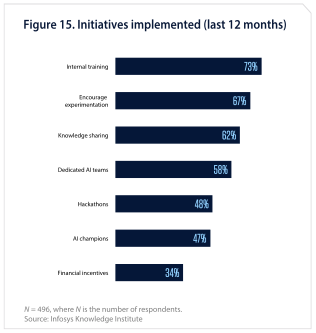
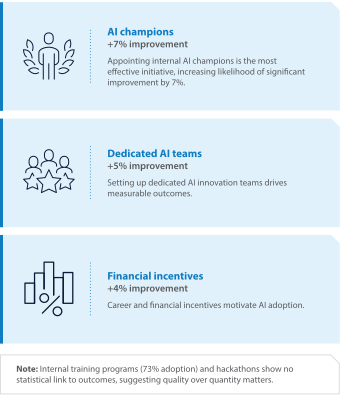
Focused initiatives outperform broad training programs.
AI STRATEGY RECOMMENDATIONS FOR GCC LEADERS
This section translates research insights into actionable strategies for building AI-first GCCs.
Key Findings
Process redesign, talent strategy, and leadership alignment drive AI success.
Six Steps to Build an AI-First GCC
- Redesign processes fundamentally
Don’t just layer AI on top of existing processes. Complete redesign delivers 30% improvement in AI outcomes. - Define AI roles and career pathways
Clearly defined AI roles and career pathways increase improvement likelihood by 18%. Only 17% of GCCs have achieved this clarity. - Leverage external partnerships
GCCs using external partners show dramatically better outcomes. Prioritize hyperscalers, AI model providers, and IT services firms. - Source talent from academia
Academic partnerships outperform internal training by 4%. Build relationships with universities and academic institutions. - Enforce responsible AI
Go beyond defining RAI practices and ensure they are enforced consistently. Poor RAI application hurts outcomes. - Align with strategic leadership
GCCs reporting to CEO, CIO, or business unit heads are more likely to improve. An AI driven by the parent links to better outcomes.


For retailers, the AI advantage will come from building the organizational muscle that lets employees use AI confidently.
- 09 Sep, 2026
- 6 min read

Retailers must prioritize AI-powered supply chain intelligence, seamless omnichannel experiences, and personalization to drive growth and resilience.
- 08 Sep, 2026
- 15 min read

Companies that tailor their offerings and messaging to evolving consumer priorities will be better equipped to sustain demand as spending becomes more selective.
- 30 Jul, 2026
- 12 min read
