Skip to main content Skip to footer
Skip to footer
Corporate Governance

Corporate governance

Our corporate governance reflects our values, culture, policies and relationship with our stakeholders. Integrity, compliance and transparency form the foundation of our corporate governance and helps to ensure fairness and excellence in all our transactions. These, in turn, help us gain and retain the trust of our stakeholders.

Diverse, inclusive Board

We practice the highest standards of corporate governance across all our business functions. A strong, independent, and diverse Board nurtures and sustains effective corporate governance throughout the corporation. Independent Board committees review and formulate industry-leading governance practices.

Read more in the Corporate governance report that is part of the Infosys Integrated Annual Report. (opens in new window)

Board diversity

Infosys Limited recognizes and embraces the importance of a diverse Board in its success. We believe that a truly diverse Board will leverage differences in thought, perspective, regional and industry experience, cultural and geographical background, age, ethnicity, race, gender, knowledge and skills, including expertise in financial, diversity, global business, leadership, information technology, mergers and acquisitions, Board service and governance, sales and marketing, Environmental, Social and Governance (ESG), risk management and cybersecurity and other domains, which will ensure that Infosys retains its competitive advantage.

The Board Diversity Policy adopted by the Board sets out its approach to diversity.

Read the Board Diversity Policy here. (opens in new window)

Additional details on Board diversity are available in the Corporate governance report that forms part of Infosys Integrated Annual Report.

Board structure

Infosys Limited is governed by a Board of Directors, in line with leading corporate governance practices followed in India and globally. The primary role of the Board is that of trusteeship – to protect and enhance shareholder value.

The Board comprises a balanced mix of executive and non-executive directors, with a strong majority of independent directors, ensuring objective oversight, effective decision-making, and protection of long-term shareholder interests. ndependent directors chair key Board committees, reinforcing robust oversight of audit, risk, remuneration, and sustainability matters.

Board composition

The Board comprises:

  • Executive director: Responsible for the day-to-day management of the Company and for executing the approved strategy
  • Independent directors: Meet the prescribed independence criteria and provide objective and unbiased judgment on Board matters
  • Non-executive, non-independent director: Does not hold executive responsibilities and is not designated as independent under the applicable governance criteria

This composition ensures a clear separation between management and oversight, strengthens checks and balances, and aligns with global governance best practices.

Board leadership and independent oversight

Infosys Limited follows internationally recognized best practices in corporate governance by maintaining a clear separation between the roles of Chairman and Chief Executive Officer & Managing Director to create a more balanced governance structure.

The Board Committees are chaired by a Non-Executive and Independent Chairperson, ensuring independent leadership, effective oversight of the Management, and robust checks and balances at the Board level.

Size and composition of the Board
as on March 31, 2026
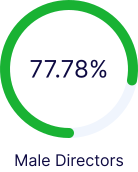
Circular chart showing 77.78% male directors

Male Directors: 77.78%

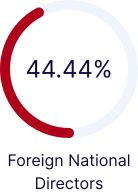
Circular chart showing 44.44% foreign national directors

Foreign National Directors: 44.44%

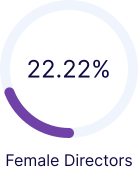
Circular chart showing 22.22% female directors

Female Directors: 22.22%

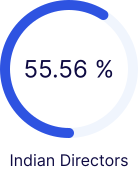
Circular chart showing 55.56% Indian directors

Indian Directors: 55.56%

Average tenure (in years)
8.6

Non-executive and non-independent director

8.2

Executive director

5.8

The Board

5.1

Independent directors

Tenure of the directors

> 4 years

2 - 4 years

Non-executive and non-independent director

Nandan M. Nilekani

Executive director

Salil Parekh

Independent directors

  • D. Sundaram
  • Michael Gibbs
  • Bobby Parikh
  • Chitra Nayak
  • Govind Iyer
  • Helene Auriol Potier
  • Nitin Paranjpe
Size and composition of the Board
as on April 23, 2026
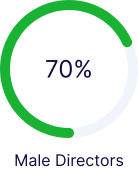
Circular chart showing 70% male directors

Male Directors: 70%

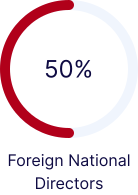
Circular chart showing 50% foreign national directors

Foreign National Directors: 50%

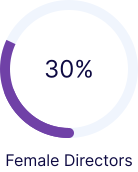
Circular chart showing 30% female directors

Female Directors: 30%

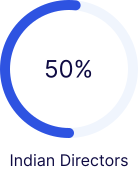
Circular chart showing 50% Indian directors

Indian Directors: 50%

Average tenure (in years)
8.7

Non-executive and non-independent director

8.3

Executive director

5.3

The Board

4.5

Independent directors

Tenure of the directors

> 4 years

2 - 4 years

< 2 years

Non-executive and non-independent director

Nandan M. Nilekani

Executive director

Salil Parekh

Independent directors

  • D. Sundaram
  • Michael Gibbs
  • Bobby Parikh
  • Chitra Nayak
  • Govind Iyer
  • Helene Auriol Potier
  • Nitin Paranjpe
  • Diane Enberg Jurgens

Chairman

The Chairman leads the Board and is responsible for fostering and promoting the integrity of the Board while nurturing a culture in which the Board works harmoniously for the long-term benefit of the Company and all its stakeholders.

He presides over all meetings of the Board and of the shareholders of the Company. The Chairman takes a lead role in managing the Board and facilitates effective communication among directors. He is responsible for overseeing matters pertaining to governance, including the organization, composition and effectiveness of the Board and its committees, and performance of individual directors.

Non-executive, Independent Vice Chairman

Nitin Paranjpe, who has been an independent director since January 1, 2024, has been appointed as non executive vice chairman and independent director effective April 30, 2026.

CEO & MD

The CEO & MD is responsible for executing corporate strategy in consultation with the Board, as well as for brand equity, planning, building external contacts and all matters related to the management of the Company.

He is responsible for achieving annual and long-term business targets. The CEO & MD also monitors the external and internal competitive landscape and new industry developments and standards, identifies opportunities for expansion and acquisition, and builds relationships with customers and markets to enhance shareholder value and implementing the organization’s vision, mission, and overall direction.

Lead Independent Director

The Lead Independent Director was appointed by the Board to ensure robust independent leadership of the Board.

The general authority and responsibilities of the Lead Independent Director are decided by the group of independent directors. The Lead Independent Director also performs additional duties as determined by the Board, such as providing leadership to the independent directors, liaising on behalf of the independent directors and ensuring the Board’s effectiveness in maintaining high quality governance of the organization and effective functioning of the Board.

Board size

The size of the Board is calibrated to enable effective deliberation, diverse perspectives, and timely decision making, while avoiding the inefficiencies associated with oversized boards. The Board periodically reviews its composition to ensure an optimal balance of skills, experience, and independence in line with the Company’s evolving strategy.

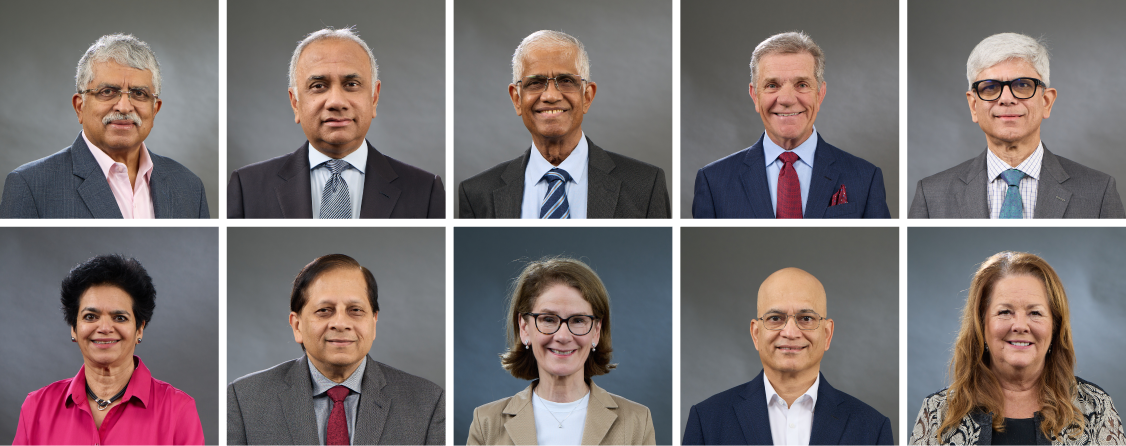
The Board of Directors, as on April 23, 2026

The Board of Directors, as on April 23, 2026. From L-R: (Above) Nandan M. Nilekani, Chairman; Salil Parekh, Chief Executive Officer and Managing Director; D. Sundaram, Lead Independent Director; Michael Gibbs, Independent Director; Bobby Parikh, Independent Director; (Below) Chitra Nayak, Independent Director; Govind Iyer, Independent Director; Helene Auriol Potier, Independent Director; Nitin Paranjpe, Independent Director; Diana Enberg Jurgens, Independent Director.

As of March 31, 2026, the Board comprised nine members, including (i) one Non-executive and Non-independent Chairman, (ii) one Chief Executive Officer and Managing Director, and (iii) seven Independent Directors. Independent directors constitute 70% of the Board – more than the requirements of the Indian Companies Act, 2013 and the Listing Regulations and as defined by Rule 303A.02 of the NYSE Listed Company Manual. Two out of the nine directors on our Board are independent woman directors, making up 30% of the Board’s strength. The Board periodically evaluates the need for change in its size and composition.

Independence and objectivity

The Company abides by the definitions of an independent director, as laid down under relevant rules and regulations.

Disclosure of interest

In accordance with the provisions of Section 184(1) of the Companies Act, 2013, read with the rules made thereunder, and Regulation 26 of the SEBI (Listing Obligations and Disclosure Requirements) Regulations, 2015, all Directors of the Company have disclosed their concern or interest, direct or indirect, in other entities, including shareholding, by furnishing the declarations in the prescribed format.

Such disclosures are obtained annually at the start of each financial year and whenever there is a change and are placed before the Board for its noting. The Company ensures maintenance of these disclosures as part of its robust corporate governance and transparency practices.

Board evaluation and continuous improvement

One of the key functions of the Board is to monitor and review the Board evaluation framework. The Board works with the Nomination and Remuneration Committee to lay down the evaluation criteria for the performance of the Chairman, the Board, Board committees, and executive / non-executive / independent directors through peer evaluation, excluding the director being evaluated.

Independent directors have three key roles – governance, control and guidance. Some performance indicators, based on which the independent directors are evaluated, include:

  • The ability to contribute to and monitor our corporate governance practices
  • The ability to contribute by introducing international best practices to address business challenges and risks
  • Active participation in long-term strategic planning
  • Commitment to the fulfillment of a director’s obligations and fiduciary responsibilities; these include participation in Board and committee meetings.

To improve the effectiveness of the Board and its committees, as well as that of each individual director, a formal and rigorous Board review is internally undertaken on an annual basis.

Additional details on Board Evaluation are available in the Corporate governance report that forms part of the Infosys Integrated Annual Report.

Board accountability

Infosys Limited reinforces Board accountability through defined governance practices, including minimum attendance requirements and periodic Board performance evaluations. In line with Section 167(1)(b) of the Companies Act, 2013, directors are required to attend at least one Board meeting annually.

The Company does not limit directors’ liabilities beyond what is permitted under Sections 197 and 149(12) of the Act.

Infosys’ Board governance framework ensures strong accountability through a balanced mix of tenure structure and shareholder oversight. Independent directors are appointed for a fixed term of up to five consecutive years in accordance with applicable regulations and are not subject to retirement by rotation, reinforcing independence in Board decision making. Executive and non-independent, non-executive directors are liable to retire by rotation and seek reappointment at the Company’s Annual General Meetings, enabling continued shareholder oversight of Board composition and performance.

Board industry experience

Infosys Limited’s Board comprises a diverse group of independent and non-executive directors with extensive professional experience across technology, financial services, consulting, and consumer sectors.

In line with the S&P Global Corporate Sustainability Assessment (CSA), the Company has assessed Board members’ industry experience based on the Global Industry Classification Standard (GICS) Level 1 sector – Information Technology, which represents the Company’s primary sector

As of FY2026 (including recent Board appointments): 5 out of 9 independent / non-executive directors possess relevant practical work experience in the Information Technology (IT) sector, acquired through executive leadership roles in technology, digital transformation, consulting, or research.

Directors with relevant IT industry experience

The following independent / non executive directors have relevant practical work experience in the IT sector:

  • Nandan M. Nilekani (Non-Executive Chairman) – Co-founder of Infosys with extensive executive leadership experience in global IT services and digital transformation
  • D. Sundaram (Lead Independent Director) – Prior senior leadership experience in technology-enabled enterprises and oversight of IT-driven business operations
  • Chitra Nayak (Independent Director) – Extensive experience in enterprise technology, digital platforms, and product management, including leadership roles in global technology organizations
  • Michael Gibbs (Independent Director) – Experience in technology-focused advisory and investment roles supporting IT-led businesses
  • Diane Enberg Jurgens (Independent Director) – Extensive global experience in enterprise technology leadership, including roles as Chief Information Officer at The Walt Disney Company and Chief Technology Officer at BHP, overseeing global IT systems, cybersecurity, advanced analytics, and digital transformation initiatives

Directors with strong cross-sector expertise

The following independent / non- executive directors bring strong cross- sector expertise:

  • Bobby Parikh – Financial services and investment banking
  • Govind Iyer – Financial strategy and corporate advisory
  • Nitin Paranjpe – Global consumer goods and FMCG leadership
  • Helene Auriol Potier – Financial services, telecommunications, and governance
Read more

Management ownership

The Company has been a pioneer in India by rewarding its employees through stock ownership programs starting in 1994. The Company grants share-based benefits to eligible employees with a view to attracting and retaining the best talent, encouraging employees to align individual performances with the Company’s objectives, and promoting their increased participation in the growth of the Company.

In continuation with the Company’s philosophy of aligning employee interests with shareholder value creation and in line with global practices, the Company has instituted the Infosys Expanded Stock Ownership Program (“the 2019 Plan”), where the Restricted Stock Units (RSUs) granted under the 2019 Plan shall vest based on the achievement of defined annual performance parameters. The performance parameters will be based on a combination of relative Total Shareholder Return (TSR) against selected industry peers and certain broader market domestic and global indices, and operating performance metrics of the Company as decided by the administrator.

The Company has also granted share based incentives under the 2015 Stock Incentive Compensation Plan (“the 2015 Plan”) where the RSUs granted under this plan will vest generally over a period of four years and are time-based.

The Company’s executive pay programs support our executive compensation philosophy which aims to:

  • Attract and retain the best executive talent in order to achieve superior results;
  • Create a performance-oriented culture by rewarding performance on comprehensive goals, which include financial, strategic and operational goals; and
  • Emphasize sustainable, long-term shareholder value creation through allocation of performance-oriented stock-based incentives.

Stock or equity-based incentives are a substantial part of the total rewards of senior leadership and are determined by the desired pay mix standards for that level. Equity grants are generally granted or vested based on achievement against Company and /or individual performance parameters, however some equity grants could be purely time-based. These plans also help retain employees through multi-year vesting of stock incentives.

The Company’s CEO & MD and other senior executives build ownership primarily through RSUs granted under the 2015 Plan and 2019 Plan. A significant portion of the CEO & MD’s remuneration is performance-based and equity-linked, reinforcing alignment with shareholder interests and the Company’s long term strategy. The Nomination and Remuneration Committee periodically reviews the structure and quantum of equity awards, considering business performance, market practices, and long term sustainability priorities.

The details of shareholding of the senior management and other executives are provided in the Infosys Integrated Annual Report 2025-26.

The details of CEO compensation are provided in the CEO Executive Employment Agreement (opens in new window).

As on March 31, 2026:

  • Salil Parekh, Chief Executive Officer & Managing Director, held 13,89,633 equity shares of Infosys, representing 21.79 times his annual base salary.
  • Jayesh Sanghrajka, Chief Financial Officer, held 1,14,482 equity shares, representing 6.37 times his annual base salary.
  • A.G.S. Manikantha, Company Secretary & Compliance Officer, held 18,567 equity shares, representing 4.04 times his annual base salary.

Other members of the Executive Committee and KMPs similarly build equity ownership over time through long-term stock-based incentives aligned with Company performance.

Government ownership

Infosys Limited does not have any golden shares held by governmental institutions, nor does any government entity enjoy special privileges in the Company’s corporate governance or decision making processes.

As of March 31, 2026, Life Insurance Corporation of India (LIC) holds a 10.14% equity stake in Infosys Limited. While LIC is a publicly held listed entity in which the Government of India holds a majority shareholding, LIC’s investment in the Company has been made entirely through secondary market purchases and comprises only ordinary equity shares. Such shareholding does not confer any special rights, control, or influence beyond standard shareholder voting rights applicable to all equity shareholders.

Transparency and public disclosure

As a listed company, Infosys provides comprehensive public disclosure on its Board structure, composition, independence, and governance practices through:

  • Infosys Integrated Annual Report
  • Form 20F filed with U.S. Securities and Exchange Commission
  • Infosys ESG Report and Data book
  • Management profiles on the Infosys website

Clawback

Infosys Limited has instituted a Compensation Recovery Policy as part of its commitment to robust governance, ethical conduct, and responsible executive remuneration practices. The policy reinforces the Company’s pay for-performance philosophy and to comply with applicable law, provides rules related to the reasonably prompt recovery of certain compensation awarded to executive officers in the event of an accounting restatement.

The application of this Policy to certain covered executives is not discretionary and applies without regard to whether a covered executive was at fault or not, thereby strengthening accountability and ensuring alignment between executive compensation outcomes and the Company’s reported financial performance. Through this policy, Infosys seeks to enhance transparency, safeguard stakeholder interests, and uphold high standards of governance. The Compensation Recovery Policy forms an integral part of Infosys’ broader governance framework supporting ethical leadership and sustainable business practices.

Read the Compensation Recovery Policy here. (opens in new window)

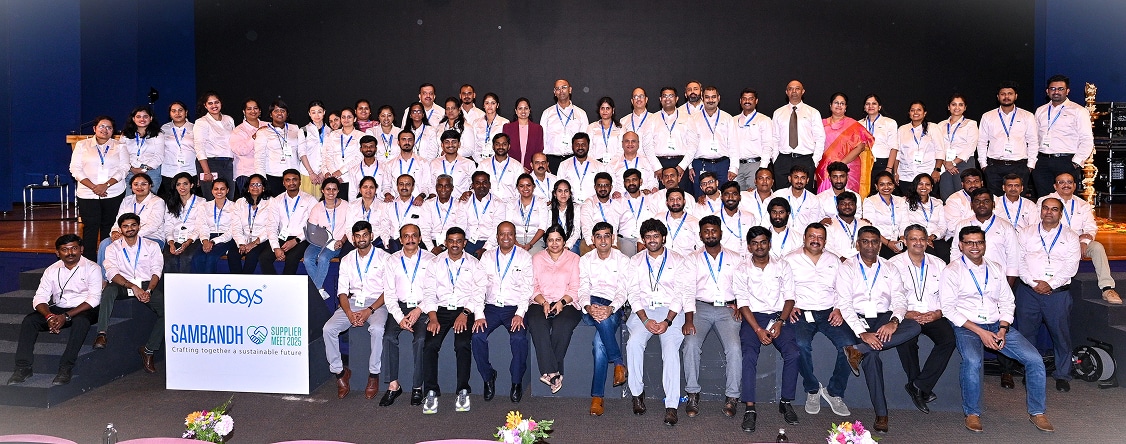
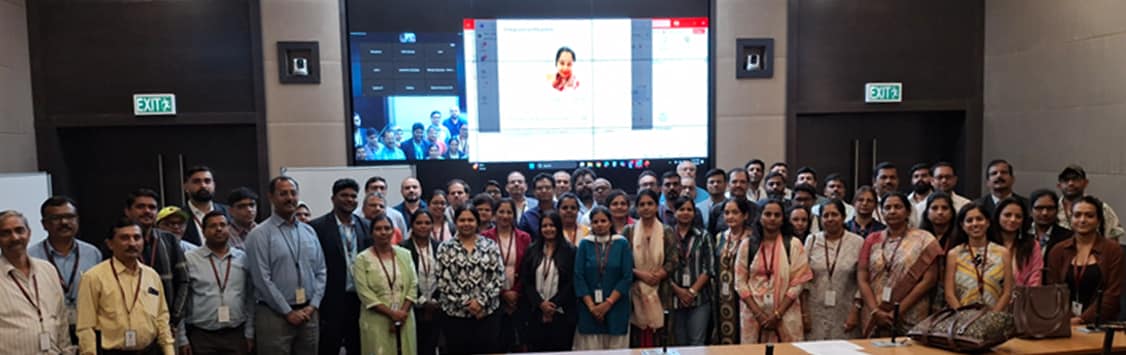
Sambandh, our biennial supplier meet, was held across different locations in India

Sambandh, our biennial supplier meet, was held across different locations in India.

Infosys is committed to partnering with high-quality suppliers to deliver best in-class business and IT solutions to its clients. As a signatory to the United Nations Global Compact (UNGC), the Company aligns its supply chain practices with the UNGC principles on human rights, labor, environment, and anti corruption, using them as a foundation for continuous improvement.

The Responsible Supply Chain and Supplier Diversity Policy reflects Infosys’ commitment to embedding these principles across its supply chain relationships, while fostering long-term environmental, social, and economic value for diverse businesses. This commitment is evident in both internal processes and external engagements. Supplier partnerships are guided by integrity and ethical practices, alongside a focus on supporting and enabling the growth of diverse enterprises.

Infosys’ upstream value chain includes over 9,000 suppliers spanning three categories: suppliers of people, products, and services. These relationships range from long-term and short-term engagements to contractual and project based associations.

Downstream, Infosys serves a diverse client base across multiple industries, including aerospace, automotive, financial services, healthcare, life sciences, utilities, and others.

Infosys Supplier Code of Conduct

We strive to build mutually beneficial relationships with our suppliers and partners with organizations that uphold fairness, integrity, and compliance with applicable laws. We expect our suppliers to act responsibly toward all stakeholders and operate with high ethical standards.

The Supplier Code of Conduct (SCoC), inspired by the Infosys Code of Conduct and the UNGC principles, sets clear expectations for our suppliers. These include environmental sustainability, respecting and protecting internationally recognized human rights, treating all individuals with dignity, eliminating forced and compulsory labor, prohibiting child labor, and promoting strong governance practices such as anti corruption, anti-bribery, and fair business conduct across the supply chain.

100%*

suppliers accepted the Infosys Supplier Code of Conduct

* As part of our commitment to responsible supply chains, we also review and accept supplier codes that are aligned with our SCoC. Any violations of the Supplier Code can be reported through the Infosys Helpline at whistleblower@infosys.com or vendorincident@infosys.com.

91.64%

suppliers underwent ESG assessments.

ESG assessments

Infosys has conducted over 1,160 assessments (virtual / onsite) across its supply chain partners to evaluate ESG performance and strengthen responsible sourcing. These assessments are aligned with globally recognized frameworks such as the Sustainability Accounting Standards Board (SASB), Global Reporting Initiative (GRI), and the United Nations Principles for Responsible Investment (UN PRI), among others.

The assessment framework also incorporates key expectations from the Infosys Supplier Code of Conduct, covering the following areas:

Labor practices: Evaluation of supplier policies on wages and benefits, prevention of child labor, and commitments to eliminate human trafficking, forced, and compulsory labor.

Human capital and incident reporting: Assessment of practices related to workplace incidents, including reporting mechanisms, work-related illnesses, fatalities, as well as employee well-being and satisfaction.

Environment and community practices: Review of supplier commitments on environmental stewardship, including resource utilization, water and energy management, Scope 1, 2, and 3 emissions disclosures, and waste and hazardous material management.

Certifications and management systems:Suppliers are expected to demonstrate maturity through relevant certifications and systems across 13 themes, including ISO certifications and supporting evidence of validity and implementation.

Ethics and integrity: Evaluation of governance practices such as the presence of independent codes of conduct, adherence to regulatory and statutory requirements, and overall ethical business conduct.

These assessments are designed to evaluate supplier maturity in ESG adoption, ensure alignment with Infosys’ sustainability goals, and establish a consistent framework for measuring and improving supplier ESG performance.

1,100+

upstream suppliers were assessed for ESG in FY26

During the assessment, no actual or potential negative environmental or social impacts were identified in the supply chain.

Screening before empanelment

All new suppliers are required to undergo an online ESG due diligence, through a globally renowned third party risk assessment platform as part of the pre-contracting process. This assessment evaluates publicly available information within the governance dimension, including exposure to sanctions, corruption, financial crimes, and litigation.

Upon successful completion of this assessment, and in the absence of any adverse findings, suppliers are required to complete an ESG questionnaire. In this questionnaire, they indicate whether their organizations have established ESG practices related to social and environmental aspects. Suppliers who confirm the presence of such practices are subsequently invited to provide detailed information on their social and environmental initiatives for further evaluation.

1,500+

new suppliers were onboarded in FY26

79% of our new suppliers have responded to the ESG questionnaire on social and environmental practices as part of the onboarding process. The remaining 21% have been invited to access our ESG learning channel on the external platform, Infosys Wingspan, where they can leverage curated learning resources to strengthen their ESG capabilities.

Annual assessment and improvement plans

In line with statutory reporting requirements, ESG assessments are conducted annually for suppliers representing the top 75% of our procurement spend i.e. 91.64% of suppliers by spend through a reputed third-party provider. Suppliers with lower scores are supported through structured improvement plans aimed at enhancing their ESG performance. This includes sharing best practices and facilitating engagement with identified ESG specialists.

In line with statutory reporting requirements, these assessments are conducted annually for suppliers representing the top 75% of our procurement spend.

Buyer training

We have introduced a comprehensive Buyer Guide to strengthen responsible procurement practices across the organization. This guide serves as a practical resource to bring together stakeholders and support them in adopting responsible procurement approaches.

It includes clearly defined best practices and easy-to-use checklists that enable consistent application, encourage shared learning among peers, and help scale responsible practices across the procurement ecosystem.

Sustainable procurement objectives are integrated into performance reviews of procurement team members.

Supplier engagement
A workshop held for women entrepreneurs in Bengaluru

A workshop was held for women entrepreneurs in Bengaluru.

Supplier engagement

At Sambandh 2025, our theme – Sustainable Procurement – focused on strengthening collaboration with our supplier ecosystem. Over 1,130 suppliers participated in Sambandh engagements across various locations in India.

We have established a dedicated learning channel with access provided to 9,000+ suppliers on Infosys Wingspan, offering curated ESG resources and best practices. The platform also enables learners to collaborate, exchange ideas, and actively engage on ESG-related topics.

In addition, we conducted focused group training in the form of workshops for MSMEs and women business entrepreneurs, covering key principles outlined in the Business Responsibility and Sustainability Report (BRSR), the Anti-Bribery and Anti-Corruption policy and risks of adverse sustainability impacts. A total of four workshops were conducted for MSMEs and two for women entrepreneurs, engaging 500+ suppliers.

Vendor satisfaction surveys (VenSat)

We conduct vendor satisfaction surveys to gather structured feedback on supplier experiences and strengthen our procurement practices. These surveys help us assess key aspects such as engagement effectiveness, transparency, fairness, communication, and overall satisfaction with Infosys processes.

Insights from these surveys are used to identify improvement areas, enhance collaboration, and drive continuous improvement in our supplier relationships. This feedback driven approach enables us to build stronger, more transparent, and mutually beneficial partnerships across our supplier ecosystem.

82%

suppliers participated in the survey had high satisfaction Index

Local procurement

Our centralized procurement function operates from India, while we actively engage local suppliers across geographies to address region specific needs. We track and report diverse supplier spend and make this information available to clients upon request, reinforcing our commitment to transparency.

29.10%

spending on local suppliers (India) in FY26

39.38%

of the local procurement is through MSME segment

ISO 20400: Sustainable Procurement Certification

As part of our efforts to empower and equip buyers within our ecosystem, we provide the necessary information, training, and tools to enable responsible decision-making across the supply chain. In this regard, we have enabled ISO 20400 training for our procurement teams, equipping them with guidance on integrating sustainability into procurement processes.
ISO 20400 serves as a global standard for sustainable procurement, helping drive responsible sourcing practices aligned with our organizational objectives.

For more details on our initiatives to reduce supply chain emissions, please refer to the Climate Change section.

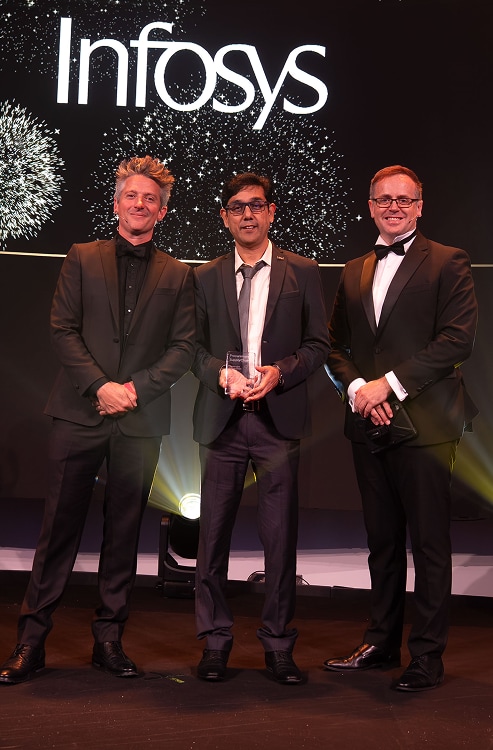
Dhiraj Sethi, Group Head – Procurement, receives the Sustainable Supply Chain Award at the Global Procurement & Supply Chain Awards 2025

Dhiraj Sethi, Group Head – Procurement, receives the Sustainable Supply Chain Award at the Global Procurement & Supply Chain Awards 2025.

The Ethics and Compliance Program at Infosys has two key objectives: to uphold and foster the values of integrity and transparency, and to ensure enterprise-wide regulatory compliance.

Integrity is key to nurturing a responsible business. Beyond regulation and stakeholder attention, there is a growing recognition that good behavior is good for business. Our values are the principles we use to run the Company daily and are the source of our Code of Conduct and Ethics. Our values are the foundation of everything we do and are encapsulated in the acronym CLIFE (Client value, Leadership by example, Integrity and transparency, Fairness and Excellence).

Code of Conduct and Ethics

We firmly believe that following the highest standards of business conduct and ethics helps us run our business responsibly. Our Code of Conduct and Ethics (“the Code”) sets out expectations for all employees and helps us maintain the highest ethical standards in everything we do.

It also requires adherence to applicable legal and regulatory requirements, including but not limited to, anti bribery and anti-corruption laws, and ethical handling of conflicts of interest, fraud and money laundering. The Code is approved by the Board, and the Office of Integrity and Compliance is the custodian of the Code. Our business partners acknowledge and comply with the Supplier Code of Conduct (opens in new window).

Core principles

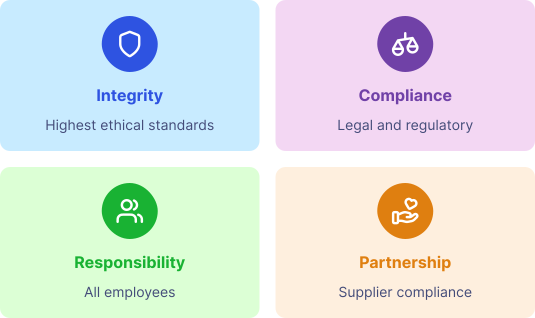
Core Principles

Recognized among 2026 World’s Most Ethical Companies® by Ethisphere for six years in a row

Reinforcing a culture of compliance

1

Digital version of the Code

We also have a digital version of the Code. It offers a user-friendly and easy to-navigate audio-visual experience that also allows access to specific topics in an interactive manner. The Code can be accessed on mobile devices as well. The digital version of the Code aims to help every employee understand the behavior we expect and the principles and values we uphold. We aim to continue to build a culture of compliance, where everyone feels they can do the right thing and prioritize legal and ethical choices.

2

Training on the Code

Our employees, sub-contractors, and the Board members are trained on the Code. We have a Smart Awareness Quiz (SAQ), which includes training modules that employees are mandatorily required to undertake every year to renew their commitment to the Code. Our employees are trained in various aspects of ESG, including Anti-Bribery and Anti Corruption (ABAC) and Whistleblower awareness in accordance with the training and communications calendar. Our vendor partners are also trained on the Supplier Code of Conduct and ABAC through live sessions during the vendor/ third party meet called Sambandh. We also have a detailed communication plan that uses multiple channels of communication such as emails, video messages, blogs, gamified assessments, and storyboards to spread awareness about various policies.

3

#SwipeRightforIntegrity

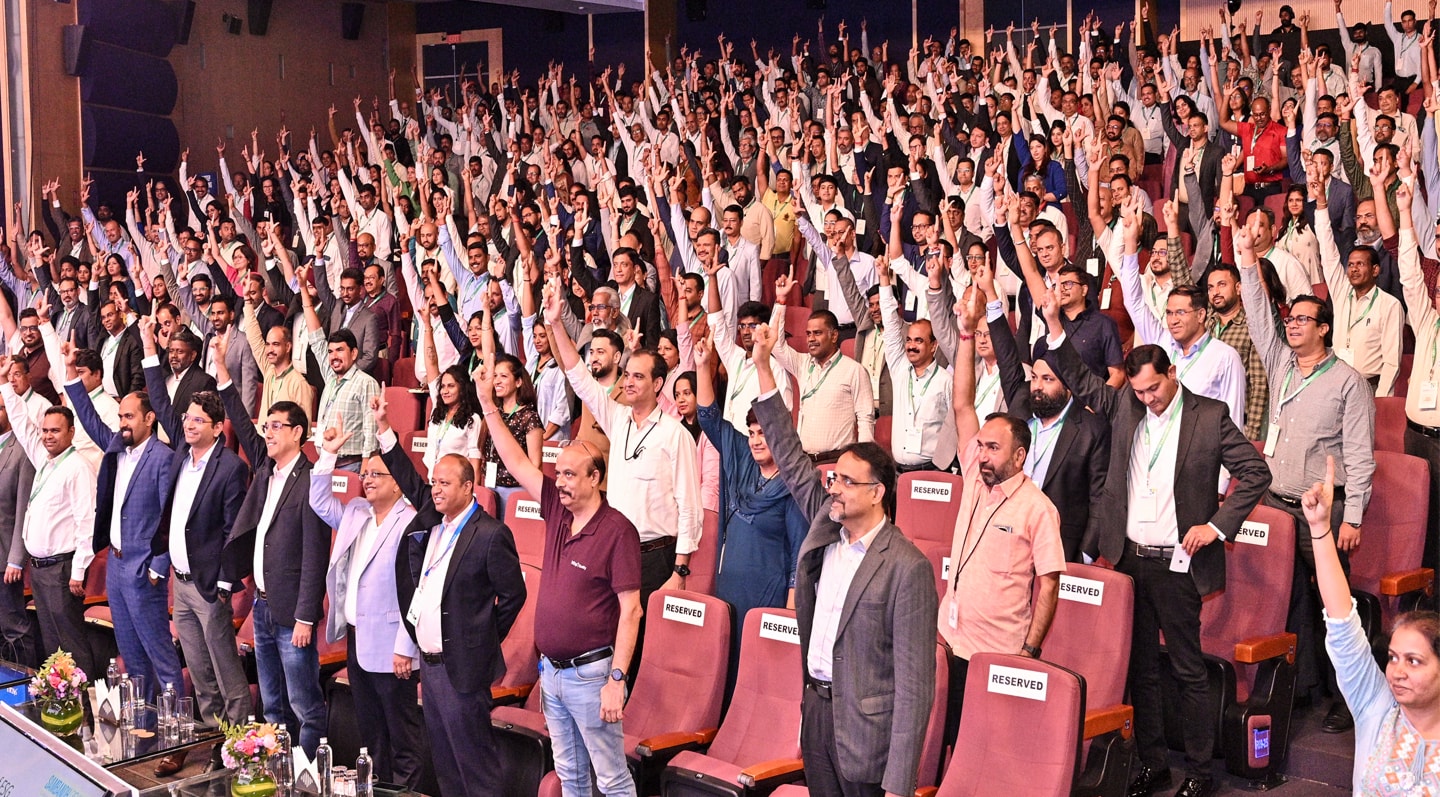
#SwipeRightforIntegrity is an annual legal and compliance event organized by Infosys. The event brings together our leaders to reinforce our values of integrity, transparency, and good governance, helping us build enduring relationships with our clients, employees, and partners. It has become a platform to create awareness and engage in meaningful dialogue with stakeholders, influence behavior, and showcase the Infosys culture.

4

Local Compliance Officer program

To further raise awareness among our employees about ethical aspects globally, a Local Compliance Officer (LCO) network has also been created across the Infosys Group in collaboration with the Office of Integrity and Compliance. The LCO network plays a crucial role in promoting an organizational culture that encourages ethical conduct and a commitment to compliance with the law, regulations, and policies and helps in maximizing the impact of ethics-related compliance training.

5

Ethics & Culture Survey

The Office of Integrity and Compliance (OIC) conduct an Ethics and Culture survey to gather the ethical pulse of the organization, foster a stronger ethical culture. Ethical culture matters – to employees, investors, and all stakeholders. Companies that have strong value-based cultures are better places to work and are well-poised for long-term success.

This survey helps in understanding the perspective of Infoscions on ethical practices, organizational values and cultural alignment. This also provides the team with vital data points for targeting our training and communication program, risk assessment and determining the overall emphasis of the ethics and compliance program.

Our survey reveals employees are willing to report any observed misconduct, showcasing confidence in organizational justice.

Statutory and regulatory compliance

Regulatory and statutory compliance practice

We have an established compliance program; the framework integrates both horizontal and vertical compliance structures to ensure holistic oversight of statutory, regulatory, and client-specific obligations.

Where regulatory requirements intersect with human rights–related considerations, such requirements are also added into the applicable regulatory compliance program in the form of obligations which is mapped to the relevant respective functions.

The horizontal statutory compliance framework ensures that the Infosys group adheres to applicable laws across geographies in which the Company operates. Obligations are mapped across 14 business enabling functions and tracking of compliance is monitored on a central tool.

Complementing this, Infosys also has a structured vertical regulatory compliance program designed to centralize, track, and monitor compliance requirements arising from client engagements and sector-specific regulations. As of today, the vertical compliance program has compliance libraries across 19 verticals and nine countries for Infosys Limited.

Infosys Responsible AI

Vision and purpose

Infosys has instituted a Responsible AI vision and purpose to ensure ethical, transparent, and accountable use of AI across its lifecycle, aligned with global regulatory and societal expectations. The framework is anchored in defined guiding pillars that promote fairness, inclusivity, human rights, and trust, enabling responsible innovation and sustainable business impact.

The key aspects of our AI vision and purpose include:

  • Commitment to ethical AI governance: Infosys embeds Responsible AI as a core organizational commitment, ensuring that AI systems are developed and deployed in alignment with fairness, transparency, and accountability principles.
  • Respect for data privacy and human rights: The policy explicitly emphasizes safeguarding personal data and protecting human rights (including privacy and copyrights) across the AI lifecycle.
  • Bias mitigation and fairness assurance: Infosys prioritizes eliminating bias, supported by rigorous testing, auditing, and continuous refinement to prevent discrimination across demographic attributes.
  • Transparency and explainability: The Company commits to demystifying AI systems by clearly communicating how models work, what data is used, and how decisions are made, thereby ensuring stakeholder trust.
  • Accountability for AI outcomes: Infosys embeds clear accountability within its AI initiatives, ensuring responsibility for decisions, outcomes, and impacts produced by AI systems.
  • Inclusivity and equal access: AI systems are designed to be inclusive, with efforts to incorporate diverse inputs and to bridge digital divides, ensuring equitable access to the benefits of AI.
  • Safeguards against harmful use: Infosys incorporates safeguards to prevent misuse of AI and mitigate risks of physical, societal, or psychological harm, reinforcing responsible deployment.
  • Alignment with societal and environmental responsibility: The policy reflects a broader ESG commitment by positioning AI as a force for positive societal transformation while avoiding adverse impacts.
  • Trust-centric AI deployment: Building and maintaining stakeholder trust is emphasized as a central goal, achieved through transparent practices and ethical AI governance.
  • Enterprise-level strategic commitment: The Responsible AI vision is positioned as an enterprise wide guiding framework, indicating executive-level endorsement and integration into organizational strategy.
Read more

Responsible and trustworthy AI

Infosys is committed to advancing Responsible and Trustworthy Artificial Intelligence as a core dimension of its ESG agenda, embedding ethics, accountability, and sustainability into every stage of the AI lifecycle. Governed by the Infosys AI Policy and its 'Responsible by Design' philosophy, Infosys operationalizes Responsible AI through a robust Artificial Intelligence Management System (AIMS), enabling systematic risk assessment, monitoring, and continuous improvement of AI systems.

Infosys, among the first organizations to be certified under ISO/IEC 42001, helps enterprises assess readiness and strengthen governance for their responsible AI initiatives. Through its dedicated Responsible AI Office, Infosys conducts AI risk and maturity assessments, deploys technical and governance controls, and supports audits across high-impact AI use cases.

Beyond internal adoption, Infosys plays a leadership role in advocacy – engaging with governments, industry bodies, academia, and standards organizations to co-develop policies, frameworks, and harmonized standards for ethical AI. By open-sourcing its Responsible AI Toolkit and contributing insights to global forums, Infosys advances transparency, trust, and inclusive innovation – demonstrating that scalable AI progress and societal responsibility must evolve together.

Strengthening responsible AI implementation

Infosys complements its responsible AI governance with specific operational safeguards and practices, including:

  • Controlled access to sensitive AI applications, with defined authorization protocols and oversight mechanisms for high-risk use cases
  • Transparency measures, including clear identification of AI-generated content and disclosure of AI-assisted decision-making processes
  • Continuous monitoring of AI models to detect performance drift, with defined retraining and validation protocols
  • Regular fairness and bias assessments, supported by model validation frameworks and audit mechanisms
  • Employee training programs on ethical AI usage, data privacy, and AI security practices
  • Grievance and escalation mechanisms, enabling stakeholders to raise concerns or contest AI-driven outcomes
  • Sustainable AI initiatives, including efforts to optimize compute efficiency and reduce the environmental impact of AI models and infrastructure
  • Measurement of AI’s contribution to ESG outcomes, including efficiency gains, resource optimization, and societal impact use cases

Anti-competitive practices policy

Our Anti-Trust Policy clearly sets out the organization’s objectives, scope, applicability, and the regulatory consequences associated with Anti-Trust and Anti-Competitive Compliance.

Export Control Policy

The export control policy describes Infosys’ export control program and is reviewed periodically by the Management. The export control program protects the Company and its employees from potential risk of violation of sanctions prescribed under export control regulations and facilitates business expansion in accordance with these regulations.

All our third parties are screened against various sanctions lists to ensure that we are compliant. As part of the program, training modules, and awareness campaigns are rolled out to relevant employees to create awareness and equip our team to identify export control and sanctions-related red flags. We have a self-assessment and certification program in place for anti bribery and anti-corruption, antitrust / anti-competition, and export control.

Whistleblower Policy

Our Whistleblower Policy is a comprehensive and well-designed mechanism that encourages employees, vendors, customers, and any other stakeholders to report any unethical conduct, violation of applicable laws or the Company’s Code of Conduct and Ethics occurring within the Company.

With strict confidentiality measures and multiple reporting channels, the policy ensures that whistleblowers are protected from any retaliation. The Company reviews all complaints impartially and takes appropriate action, as applicable, while providing regular communication to ensure awareness about the policy. The Infosys Whistleblower Policy is a testament to the Company’s commitment to transparency, accountability, and responsible corporate citizenship.

AI and technology implementation

We have leveraged Artificial Intelligence (AI) and Machine Learning (ML) technologies to proactively monitor Compliance and ABAC controls, enabling the identification of potential exceptions and risks in a more efficient and data-driven manner.

In addition, Infosys has implemented an in-house Compliance Chatbot to enhance accessibility to compliance guidance. This initiative has significantly reduced the resolution time for routine compliance-related queries, from several days to a matter of minutes, thereby empowering employees to seek timely clarifications, improving awareness, and strengthening the overall compliance culture across the organization.

At Infosys, Integrity guides our approach to conducting business. Read our Anti Bribery and Anti Corruption (“ABAC”) Policy here. The policy applies to employees, subsidiaries, and third parties, and aligns with global regulations to ensure transparency, accountability, and responsible conduct.

Anti-Bribery and Anti-Corruption (ABAC) program

Infosys has a strong Anti-Bribery and Anti-Corruption (ABAC) risk management framework. The Company regularly assesses bribery and corruption risks to support its growth strategy and promote an ethical, risk-aware culture.

Our robust ABAC Policy prohibits bribery, facilitation payments, improper gifts, and all forms of corrupt practices, and provides operating guidelines addressing record keeping, approval procedures and appropriate disciplinary actions in case of breach. This framework underscores Infosys’ commitment to ethical conduct and maintaining integrity across its global operations.

Our ABAC policy and procedures are reviewed by the Management at regular intervals. Furthermore, the procedures are audited from time to time. In addition to the policy, training is provided for better awareness.

We have clear guidelines covering gifts, hospitality, sponsorships, charitable contributions and interactions with intermediaries. Additionally, a framework is in place to enable employees to reach out to the compliance team to obtain clarifications and approvals relating to sensitive transactions. All requests are evaluated in accordance with the ABAC Policy to ensure compliance with ethical and legal requirements. Based on this assessment, the compliance function may approve or reject the request or recommend additional safeguards.

Furthermore, any vendor or third party onboarded by Infosys undergoes comprehensive due-diligence screening and continuous monitoring and are required to abide by the Supplier Code of Conduct.

For vendors operating in high-risk functions, Infosys has implemented controls in procure-to-pay process to ensure appropriate proof of service by vendors is submitted, reviewed, and approved before payments are released. The process ensures traceability of high risk transactions involving third parties at the initial stages using user declarations and OCR technology. Potential redflag indicators are tracked, and an escalation matrix is available to ensure timely review and resolution.

In addition, digitized self-assessment and certification is also rolled out as part of monitoring and controls. This approach reinforces the governance framework and supports a culture of ethical and responsible business conduct across the organization.

Political contributions

Infosys’ Code of Conduct and Ethics prohibits the use of Company funds or assets for political campaigns or political practices without the prior written approval of the Board of Directors. For FY26, no such Board approval was sought or granted, and Infosys made zero corporate political contributions globally, whether in cash or in kind, to political parties, political organizations, political campaigns or political candidates in any country where it operates.

The Company does not operate or participate in a political action committee. Any political contributions made by individual employees are personal, voluntary, and are neither directed, endorsed, nor reimbursed by the Company. All actions are guided by the principles set out in Infosys’ Code of Conduct and Ethics and its Anti-Bribery and Anti-Corruption framework. Robust governance mechanisms and internal controls are in place to ensure compliance with applicable regulations and to uphold the highest standards of integrity and transparency in all interactions involving public policy matters.

Public policy engagement

Infosys engages in public policy activities in a responsible, transparent, and ethical manner, aligned with its ESG commitments. The company participates in policy discussions that support sustainable economic growth, digital innovation, workforce development, and inclusive opportunities across the markets in which it operates.

To support this engagement, Infosys works with external advisors in key jurisdictions. These engagements are conducted in compliance with applicable laws, regulations, and disclosure requirements. While Infosys does not directly lobby government officials on legislation through its external advisors, where required, such advisors are registered under relevant transparency and lobbying frameworks, and all mandated filings are made with appropriate authorities.

Grievance redressal

We have established comprehensive grievance redressal mechanisms, articulated in our Code of Conduct and Ethics, including a Whistleblower reporting channel. These mechanisms are easily accessible through multiple platforms such as an independent third-party managed web portal and 24x7 toll-free helplines, and a dedicated internal email inbox, across multiple global jurisdictions and local languages. Stakeholders may report concerns anonymously, and all reports are protected by strict non-retaliation provisions and treated with the utmost confidentiality.

In addition, employees and contractual staff have access to robust grievance resolution hubs designed to address workplace concerns in a timely and effective manner. Suppliers are informed of grievance redressal mechanisms through the Supplier Code of Conduct, which they are required to mandatorily acknowledge and sign. Employees, as key stakeholders, are encouraged to share feedback on workplace engagement and grievance mechanisms through periodic pulse surveys, providing valuable input into the design, review, and continuous improvement of these processes.

Infosys remains committed to fostering a safe, inclusive, and positive work environment. Employees also have access to designated forums and structured resolution mechanisms where they can raise workplace concerns, reinforcing a culture of transparency, trust, and accountability. Read more

Engaging with stakeholders and earning trust through transparent communication

Infosys has proudly maintained a strategic partnership with the World Economic Forum (WEF) for a remarkable 26 years, working together on crucial Environmental, Social, and Governance (ESG) initiatives. Our collaboration encompasses several key engagements:

As a founding business partner of the WEF’s Reskilling Revolution, Infosys actively contributes to the ambitious goal of equipping one billion individuals with better education, skills, and employment opportunities by 2030. This is demonstrated through our integration of the Pathfinders Online Institute into the program.

In 2025, Infosys participated in the Advisory Process for professional services partners for the first time, and was awarded the RFP on Mobilizing Investment for Clean Energy in Africa (part of WEF’s Centre for Energy and Materials).

Infosys is a committed member of the WEF's Alliance of CEO Climate Leaders, a coalition of business leaders dedicated to accelerating the transition to a net-zero economy. Our involvement includes setting science-based targets, transparently disclosing emissions, and fostering decarbonization and collaborative partnerships throughout global value chains.

Read more about Infosys's participation at WEF

WEF forum centres

Infosys is formally engaged with multiple forum centres like Centre of AI Excellence, Centre for Advanced Manufacturing and Supply Chains, Centre for Cybersecurity, Centre for Financial and Monetary Systems, Centre for Frontier Technology and Innovation and Centre for the New Economy and Society.

These engagements underscore Infosys’ unwavering commitment to driving positive change and building a sustainable, inclusive future for everyone. The most recent effort along these lines is participating in the AI and Energy Impact track at the World Economic Forum.

At the WEF annual meeting 2026

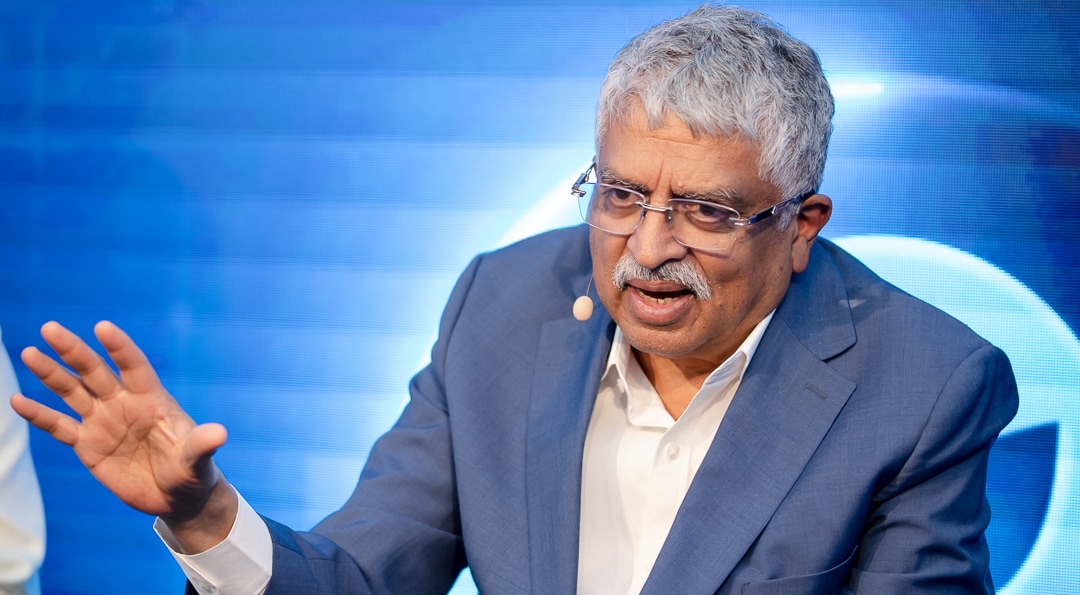
Nandan Nilekani at the WEF Annual Meeting 2026

Nandan Nilekani, Chairman, Infosys, spoke at the session titled 'A Coming Jobs Challenge in Emerging Markets' at the WEF.

Nandan Nilekani, Co-Founder and Chairman of the Board at Infosys, participated in the WEF session titled 'A Coming Jobs Challenge in Emerging Markets'. With 1.2 billion new workers expected to compete for 400 million jobs in emerging economies over the next decade, closing this gap will require not only expanding skills training but also developing alternative employment models and supporting entrepreneurship. What does it take to reimagine how we adapt to a changing workforce and address the upcoming jobs crisis? This session was organized in collaboration with Bloomberg.

Nandan participated in this session with Saadia Zahidi, Managing Director, World Economic Forum; Tharman Shanmugaratnam, President of the Republic of Singapore, Office of the President of the Republic of Singapore; Tengku Muhammad Taufiky, President and Group Chief Executive Officer, PETRONAS (Petroliam Nasional); Ajay S. Banga, President, World Bank Group; Harini Amarasuriya, Prime Minister of Sri Lanka; Stephanie Flanders, Head, Economics and Government, Bloomberg LP and Wale Edun, Minister of Finance and Coordinating Minister for the Economy, Federal Ministry of Finance of Nigeria.

Salil Parekh, CEO & MD, Infosys, participated in a session titled 'Can We Save the Middle Class?' Globally, the middle class has been growing by about 54 million people each year since 2011. However, with the pandemic in 2020, that growth slowed down, and concerns about long-term job security are increasing. How will AI impact middle-class economics, and where are economies focusing on growth from the middle out despite the odds?

Salil participated in this session with Andy Beshear, Governor of Kentucky, State of Kentucky; Stacey Vanek Smith, Senior Story Editor, Bloomberg Audio, Bloomberg Media; Christy Hoffman, General Secretary, UNI Global Union; Oren Cass, Founder and Chief Economist, American Compass.

Salil Parekh at the WEF Annual Meeting 2026

Salil Parekh, CEO&MD, Infosys, spoke on how AI was likely to impact the middle class.

Carbon-neutral presence

Infosys has once again demonstrated its unwavering commitment to sustainability by ensuring a completely carbon-neutral presence at the event.

This impressive feat was accomplished through the adoption of sustainable methods and materials, which helped to significantly minimize emissions. For any unavoidable emissions, Infosys took a proactive approach by investing in certified Gold Standard carbon offsets. This not only highlights our dedication to environmental responsibility but also sets a precedent for other organizations to follow.

Panel discussion at Davos

At Davos, Infosys hosted a significant panel discussion on the critical issue of 'Building the Digital Backbone: Skills and Infrastructure for Inclusive Growth'.

The global economy is undergoing rapid digital transformation driven by AI, cloud computing, and advanced connectivity. Yet, the benefits of this transformation remain unevenly distributed. While some areas see exponential growth, others face obstacles due to inadequate infrastructure and limited digital skills. To promote inclusive and sustainable growth, we need to expand digital infrastructure and provide people with future-ready skills. This balanced approach helps ensure that technology becomes a source of opportunity, not inequality.

Infosys contributed to the global thought leadership at WEF 2026 through the participation of its key executives in strategic panel discussions while our industry delegation shared insights on their respective sectors. The Infosys delegation included Jayesh Sanghrajka, Chief Financial Officer; Inderpreet Sawhney, Chief Legal Officer & Chief Compliance Officer; Anand Swaminathan, Global Head - Communications, Media & Technology; Ashiss Kumar Dash, Global Head - Services, Utilities, Resources, Energy and Enterprise Sustainability; Dennis Gada, Global Head - Banking and Financial Services; Dinesh Rao, Chief Delivery Officer; Jasmeet Singh, Global Head - Manufacturing; Karmesh Vaswani, Global Head - Consumer, Retail and Logistics; Rafee Tarafdar, Chief Technology Officer; Satish H.C., Chief Delivery Officer; Shaji Mathew, Chief Human Resources Officer and Sumit Virmani, Chief Marketing Officer.

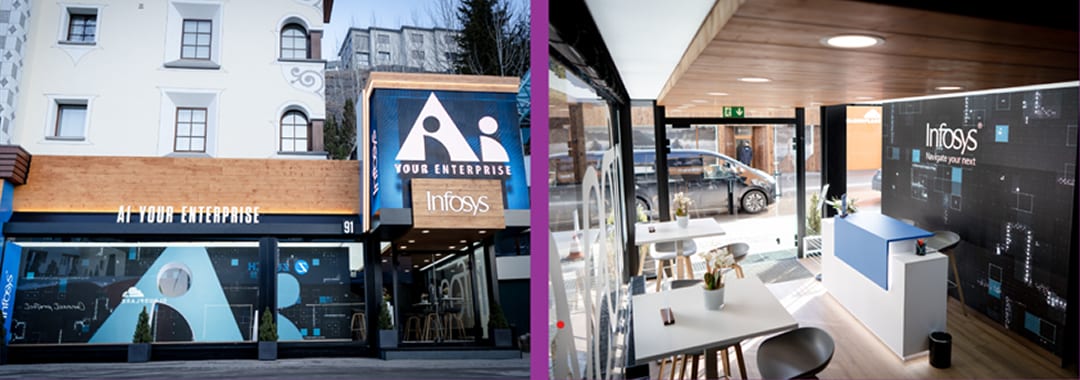
The Infosys Lounge hosted leaders to define the road ahead with conversations on how to AI Your Enterprise.

The Infosys Lounge hosted leaders to define the road ahead with conversations on how to AI Your Enterprise.

Investor AI Day 2026

Infosys held the Investor AI Day 2026 in Bengaluru on February 17, 2026. We unveiled our AI-first value framework to help global enterprises unlock AI value at scale, harnessing the power of our industry-leading generative and agentic AI suite, Infosys Topaz at the meet. Our leadership team, led by Nandan Nilekani, Chairman of the Board, and Salil Parekh, CEO & MD, detailed the various facets of the framework for the investors.

Investor AI Day 2026

Our AI-first value framework was introduced at the Investor AI Day held in February in Bengaluru.

#ESGIsAnOpportunity

Most companies know that being socially conscious and responsible is non negotiable today. Not only is it a matter of compliance, but it is also mandated by partners and investors. It, of course, makes for good branding too.

But we ask ourselves every day if we might look at it differently. We ask ourselves if it is an opportunity to save more, so we can share more. If it is an opportunity to proactively move us all forward. If it is an opportunity to position not just us for sustained growth and development, but also the generations to come. We are convinced that ESG is an Opportunity. Know more here.

With a multi-channel approach to ESG communication, we aim to create transparency through awareness and measurable action.

#StillWalking: Pride Month 2025

Progress isn’t always straight or steady, but it moves forward, one step at a time.

The LGBTQ+ community’s progress has never been a straight line. While visibility and rights have advanced over decades, the journey remains unpredictable – laws shift, freedoms fluctuate, and public sentiment oscillates. This uncertainty is exhausting, yet the community persists with resilience and hope. Despite remarkable progress, the lack of consistency in acceptance and rights creates emotional fatigue and instability for the LGBTQ+ community. Every step forward can feel fragile, making the fight for equality an ongoing challenge rather than a settled reality.

Our campaign, #StillWalking represents the essence of resilience, hope, love and progress despite setbacks. It acknowledges the non-linear nature of progress while fostering optimism and perseverance.

Building momentum, beyond the moment

Every year, International Women’s Day is marked with visibility and intent, yet its impact often fades as quickly as the moment passes. We challenge this pattern by shifting the narrative from a single-day celebration to a sustained movement for change.

Anchored in the theme #CelebrateChange, the campaign reimagines this occasion as a starting point, a catalyst for continuous progress built through consistent action, accountability, and collective commitment.

By spotlighting women as key pillars of innovation, we reinforce our commitment to enabling their growth, leadership, and meaningful participation across technology and business, ensuring that the spirit of the day translates into lasting impact within the organization and beyond.

Digital-first ESG report

Infosys’ ESG disclosures have always been informing and engaging audiences worldwide and leading the ways in adhering to best practices. This year, we have decided to take the bold step of having a digital-first, immersive and interactive report that aligns with modern content consumption habits, enhances engagement, provides easy navigation and allows multimedia integration.

Through a year-long, digital-first campaign, we track the progress made towards our ESG Vision goals across the financial year. Leveraging AI, we simplify technical terminology to make complex subject matter accessible and engaging for our diverse audiences.

Engaging global clients

We have engaged with clients to showcase all our success stories of how the Infosys Sustainability Cloud has delivered real impact for them.

These case studies offer transparency and insights into the deployment of our sustainability solutions for clients in various sectors.

Read more here.

Memberships and engagements

Infosys participates in a range of trade associations and industry bodies across key markets, including organizations such as NASSCOM, CII, WEF, ASSOCHAM, and FICCI.

Through these memberships, Infosys contributes to collective policy discussions, participates in industry forums, and supports thought leadership initiatives aligned with its ESG priorities, while enabling collaboration with stakeholders, supporting knowledge sharing, and advancing policy outcomes consistent with the Company’s sustainability goals. In FY26, Infosys has contributed about INR 1.5 crore towards these memberships, in India

National Association of Software and Services Companies (NASSCOM)

As a founding member of NASSCOM, Infosys plays an influential role in shaping India’s technology sector agenda, including policy advocacy, responsible AI, talent skilling, and future of work initiatives. Established in 1988, the central body maintains deep, multi-stakeholder relationships with the government, industry leaders, academia and international bodies.

Confederation of Indian Industry (CII)

Infosys is a longstanding member of CII and actively contributes to its role as a key interface between industry and government. Through policy consultations, leadership forums, and focused initiatives, Infosys supports competitiveness, digital transformation, sustainability, and talent development across India’s industrial ecosystem.

Data Security Council of India (DSCI)

Infosys is a corporate member of DSCI and contributes to strengthening India’s cybersecurity and data protection ecosystem. Through collaboration on policy advocacy, standards development, and capability building initiatives, Infosys supports trusted, resilient, and secure digital practices.

World Economic Forum (WEF)

Infosys is a strategic partner and active member of the World Economic Forum (WEF), consistently participating in the annual Davos meetings to discuss AI, sustainability, and digital transformation. At Davos 2026, Infosys focused on scaling AI for enterprise, aiming to move from experimentation to tangible impact for businesses, people and communities.

U.S.–India Strategic Partnership Forum (USISPF)

Infosys, as an active member of USISPF, plays a strategic role in advancing US–India economic and technology. The Company contributes industry perspectives on digital trade, technology services, talent mobility, and innovation, supporting constructive public–private dialogue and strengthening bilateral ties.

Indo-Canadian Business Chamber (ICBC)

Infosys’ engagement with the Indo Canadian Business Chamber reflects its commitment to strengthening India–Canada economic collaboration and supports bilateral trade, digital innovation, and technology partnerships.

Indo-Australian Chamber of Commerce (IACC)

Infosys’ membership in IACC underscores its commitment to advancing India–Australia economic and technology collaboration. With continued participation in sector-specific forums and bilateral engagements, Infosys supports trade facilitation, innovation partnerships, and policy dialogue in IT, digital services, and AI.

AdvanceCT

As a board-level member of AdvanceCT, Infosys and our leaders support Connecticut’s economic development through investments in technology, innovation, and workforce development. This engagement aligns with Infosys’ long-term US growth strategy and its commitment to strengthening local ecosystem in collaboration with state and academic institutions.

Associated Chambers of Commerce and Industry of India (ASSOCHAM)

Infosys engages with ASSOCHAM to foster industry–government collaboration on policy, economic development, and technology-led transformation. Infosys aligns with ASSOCHAM’s focus areas, particularly around sustainability, digitization, and ESG (environmental, social, and governance) goals.

Sweden–India Business Council (SIBC)

Infosys is a recognized member and partner with the Sweden–India Business Council. The SIBC serves as a bridge for strengthening the relationship between Swedish and Indian businesses with focus on promoting innovation and collaboration in technology.

The Business Council, Inc. (US)

Infosys is an active member of The Business Council to engage with senior global business leaders on issues shaping the international business environment. This engagement supports dialogues on business policies, economic research, international trade missions, industry specific initiatives, sustainability and ethical standards.

Royal Danish Embassy

Infosys is a key strategic partner collaborating with the Royal Danish Embassy to support India–Denmark engagement on technology, sustainability, and innovation.

Federation of Indian Chambers of Commerce and Industry (FICCI)

As a member of FICCI, Infosys contributes to policy advocacy and industry initiatives focused on economic growth, digital transformation, sustainability, and skill development. Infosys’ participation supports FICCI’s role as a key platform for collaboration between industry, government, and stakeholders.

Infosys is among the early signatories (since 2001) to the United Nations Global Compact (UNGC) and continues to report its Communication on Practice (CoP) each year.

Sustainability taxonomies

Our ESG reporting adheres to leading frameworks including GRI 2021 Standards, IIRC, TCFD, SASB, and the mandatory BRSR (SEBI) guidelines.

In 2025, we undertook a double materiality assessment in advance of our reporting commitment to the Corporate Sustainability Reporting Directive (CSRD). We leveraged our Global Reporting Initiative (GRI)-based material topics to identify material sustainability-related matters using the double materiality framework guided by recommendations of the European Financial Reporting Advisory Group (EFRAG), marking a key milestone in the advancement of our readiness towards compliance with EU CSRD.

ESG assessments in FY26 *

The Company has been recognized for its efforts to consistently demonstrate commitment to sustainability, ethical leadership, and responsible business practices.

  • In the latest ESG assessment by CRISIL, Infosys has been placed in the Leader category, reflecting its strong ESG performance and governance standards.
  • In the NSE ESG ratings 2025, Infosys has been categorized as a Leader, demonstrating robust performance across environmental, social, and governance parameters.
  • Infosys was conferred A rating in the MSCI ESG ratings. The MSCI ESG ratings measure ESG performance, including the management of financially relevant ESG risks and opportunities, of companies worldwide.
  • Sustainalytics recognized Infosys as both an industry-wide and regional top-rated ESG performer, assigning it a Low-Risk rating – reflecting the Company’s strong management of environmental, social, and governance risks. Sustainalytics is a globally renowned independent firm specializing in ESG and corporate governance research, ratings, and analytics.
  • EcoVadis, a globally acclaimed ratings platform for corporate social responsibility and sustainable procurement, recognized Infosys with a Silver medal for CSR practices.
  • Infosys continues to be S&P Sustainability Yearbook Member in 2026.

* Publication and use of scores: For entities based in India, these scores must not be used for decision making, investment analysis, compliance or research purposes related to ESG investment, performance and practices ('Restricted Use').