
Insights
- Container terminals still rely fully on legacy terminal operating systems (TOS) and rule-based planning tools that struggle to manage today’s high variability and constant operational disruptions.
- These traditional systems were built for predictable environments and depend heavily on predefined rules and manual intervention.
- AI-powered capabilities can address these challenges by enabling smarter, adaptive decision-making.
- Adding an intelligent AI layer on top of existing TOS can enhance operations without replacing current infrastructure or workflows.
Modern container terminals are operating in an environment defined by scale, variability, and constant disruption. Rising global trade volumes, increasingly complex vessel rotations, and growing expectations for speed and reliability are placing unprecedented pressure on port infrastructure and operations. Terminal operators are expected to move more containers, faster, with fewer resources, while maintaining strict safety and compliance standards.
At the same time, the operating environment has become more dynamic. Vessel schedules shift frequently due to weather, port congestion, and downstream delays. Cargo volumes fluctuate based on market demand, trade flows, and geopolitical factors, most recently the tensions surrounding the Strait of Hormuz. Equipment availability is constrained by maintenance cycles, workforce limitations, and operational inefficiencies. External disruptions from labor shortages to weather events add further unpredictability.

Terminal operators therefore face a dual challenge: managing increasing complexity while continuing to deliver higher throughput, shorter turn times, and improved asset utilization. Traditional approaches struggle to keep pace with these demands, leaving significant value locked within operational data and decision-making processes. AI technologies can help businesses solve some of these issues.
Why traditional planning falls short
Every operational decision carries cascading consequences. A delayed berth allocation impacts crane productivity. Poor yard planning increases rehandles and slows vessel turnaround. Inefficient truck flows lead to congestion at gates and longer dwell times. The system is an interconnected network where local inefficiencies quickly translate into systemwide delays.
Most container terminals continue to rely on legacy terminal operating systems (TOS) and rule-based planning tools. These systems were designed for a more predictable environment, where operational variability could be handled through predefined rules and manual adjustments. As conditions have evolved, their limitations have become increasingly evident.
Rule-based systems depend on static logic — fixed stacking rules, predefined yard allocation strategies, and heuristics built on past experience. While effective in stable conditions, these approaches struggle when multiple variables change simultaneously. For example, a last-minute vessel delay combined with yard congestion and equipment downtime creates a level of complexity that exceeds what static rules can resolve efficiently.
Manual intervention remains a critical component of planning. Experienced planners continuously adjust berth schedules, crane assignments, and yard layouts based on their judgment and familiarity with terminal operations. While this expertise is valuable, it introduces scalability constraints. Human decision-making cannot consistently evaluate thousands of variables and constraints in real time across interconnected systems.
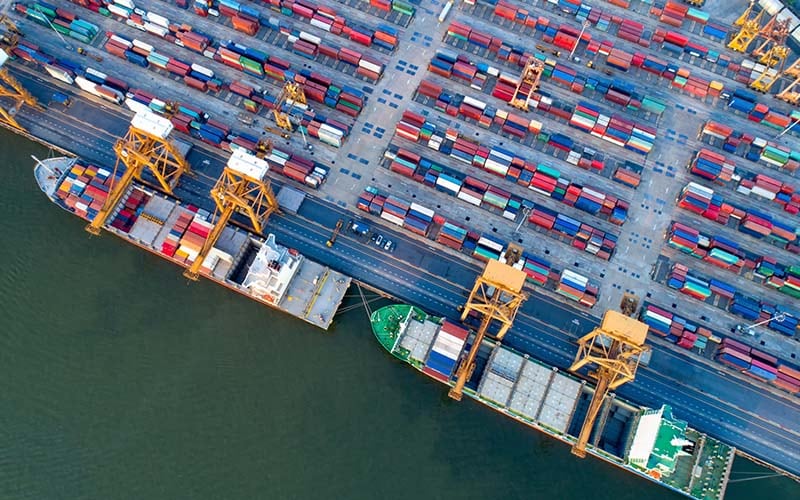
The result is suboptimal performance across key operational areas. Berth clashes and inefficient crane allocation reduce vessel productivity. Yard congestion increases rehandles and equipment travel distances. Gate operations become bottlenecks during peak periods. Maintenance is often reactive rather than predictive, leading to avoidable downtime.
These limitations stem from the inherent mismatch between the complexity of modern terminal operations and the capabilities of traditional systems. As operational variability increases, the gap between what needs to be optimized and what current tools can handle continues to widen.
Smarter terminal operations through AI
AI and advanced optimization technologies provide a path to address this growing complexity. Unlike rule-based systems, AI-driven solutions can learn from historical patterns, adapt to changing conditions, and continuously improve decision-making over time.
At the core of this capability is the ability to model and optimize across thousands of constraints simultaneously. Machine learning models can use historical data plus real-time signals to predict future states such as vessel arrival times, yard congestion, or equipment failures. Optimization engines can then evaluate multiple scenarios and recommend actions that maximize overall system performance. Adani Ports has partnered with US-based Kaleris to implement an AI-powered terminal operating platform across its 15 container terminals spanning nine ports.
AI-led terminal optimization remains an emerging technology, with most deployments still in early pilots or limited scopes. AI tools have yet to achieve widespread adoption across terminal ecosystems, particularly in real-time decisioning layers. However, its ability to learn, adapt, and optimize complex operations positions it as a high-potential capability for next-generation port performance.
Berth and vessel planning
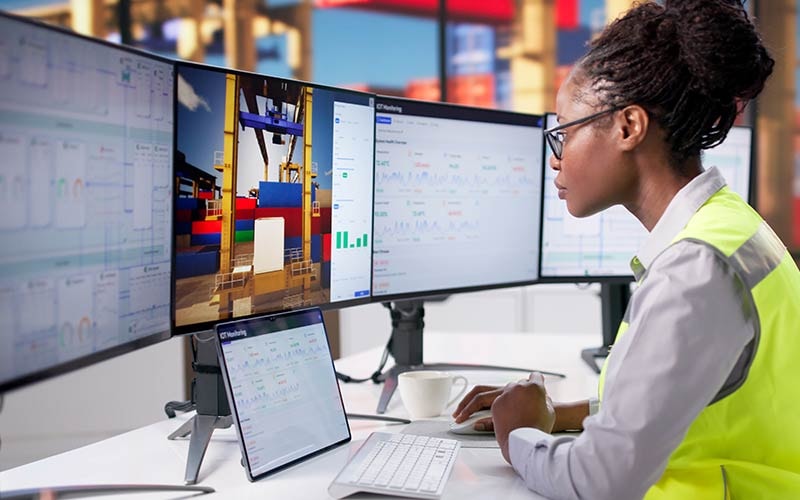
Terminals face frequent berth clashes, inefficient window allocation, and suboptimal crane utilization in berth and vessel planning, due to shifting ETAs and last-minute changes in bookings, tidal constraints, and manual planning approaches. These can lead to missed productivity targets. AI addresses this through berth optimization models that simulate multiple allocation scenarios to dynamically schedule and assign berths for cargo. This planning helps maximize quay crane productivity and minimize waiting time. AI-assisted stowage planning generates near-optimal load and discharge plans, which then let human planners adjust. These capabilities help the terminal decide the best order in which ships should be handled, increasing the number of containers moved each hour while ensuring safety and operational rules are followed.
Yard planning and inventory
Yard planning and inventory management are often constrained by several factors that lead to congestion. These include fixed rules for where containers are stored in the yard, and excessive rehandles, where a container has to be moved more than once before it can be loaded onto a truck, train, or vessel, and poor space utilization. Visibility gaps further complicate container tracking and positioning.
AI and ML models support dynamic yard allocation by predicting dwell times and forecasting yard congestion to anticipate and mitigate bottlenecks. They can predict hotspots in blocks a few hours or days ahead given vessel schedule, truck appointments, and rail plans, and suggest proactive reshuffles or change of stacking strategy.
This allows terminals to position short-dwell containers closer to exit points while distributing long-dwell cargo across low-density areas, reducing both rehandles and truck delays.
Computer vision-enabled systems help maintain real-time inventory accuracy. Cameras on ship-to-shore cranes, rubber-tyred gantry cranes (yard cranes), gates, and drones, combined with optical character recognition (OCR) and object detection, help reconcile location and ID, detect mis-stows, and maintain a near-real-time, high-accuracy yard map. ABB uses AI to strengthen its OCR systems. This improves container identification accuracy, increases operational efficiency, and reduces exceptions requiring human oversight.
Gate and truck operations
Gate and truck operations frequently experience peak-time congestion, inconsistent processing times, and heavy reliance on manual document handling. These inefficiencies disrupt the overall movement of cargo, equipment, and vehicles throughout the port terminal. AI capabilities such as predictive traffic forecasting, appointment optimization, and automated gate processing using OCR and license plate recognition help smooth truck arrivals and streamline throughput. Dynamic allocation of lanes and resources further ensures that capacity is aligned with real-time demand, reducing queues and improving turnaround times.
Equipment dispatching
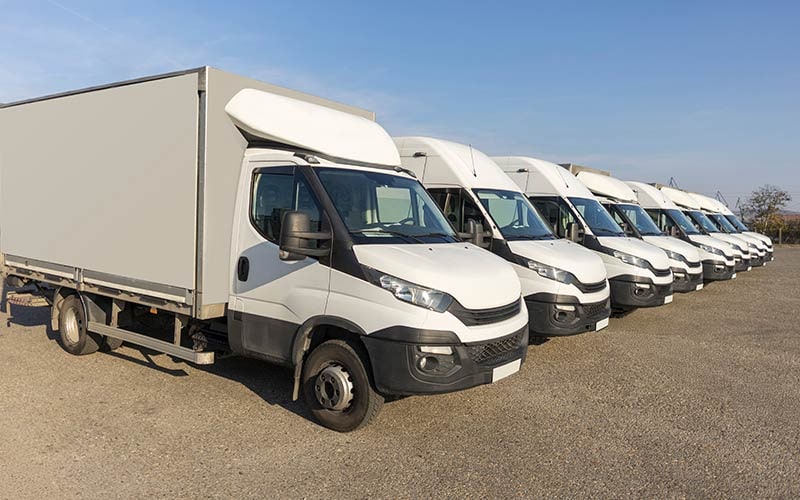
Across equipment dispatching, terminals struggle with inefficient routing, idle asset time, and poor coordination between yard, quay, gate, and rail operations. Safety risks also increase in environments with mixed manual and automated operations. AI-driven dispatching systems optimize routing and task assignment in real time, reducing empty travel and avoiding downstream bottlenecks. Digital twins enable scenario testing before execution, while vision-based safety analytics enhance monitoring and risk detection. These capabilities allow terminals to make more informed, forward-looking dispatch decisions rather than reacting to immediate conditions.
Rail operations
Rail operations introduce an additional layer of complexity, with intricate wagon planning requirements, weak integration with vessel discharge processes, and limited visibility into demand patterns. AI solutions address these challenges through optimized wagon loading, integrated quay–yard–rail planning, and demand forecasting that aligns weekly rail volume per corridor and customer, giving rail operators and the terminal early warning to plan train lengths and paths. This enables prepositioning of rail-bound containers during vessel discharge, reducing reshuffles and significantly improving rail turnaround efficiency.
Maintenance and asset health
Maintenance and asset health management are often reactive, driven by fixed schedules that fail to reflect actual equipment condition. This leads to unplanned failures, operational disruption, and inefficient spare parts management. AI enables predictive maintenance by analyzing sensor and log data (vibration, temperature, motor current, and cycle counts) to predict the probability of failure and remaining useful life, enabling maintenance just before failure. Optimization models help schedule maintenance activities at the least disruptive times. Time-series and classification models predict spare parts consumption and recommend stock levels aligned with lead times and failure risk. This lets terminals shift from reactive interventions to planned, data-driven maintenance cycles.
Commercial and documentation
In commercial, booking, and documentation processes, heavy reliance on manual validation increases the risk of errors, compliance issues, and revenue leakage. Forecasting for capacity planning and investment decisions is also often limited. AI tools combine large language models and OCR for document understanding, and natural language processing to automate validation of bookings and regulatory documents, compare them with TOS data, and help detect inconsistencies early in the process. Automated tariff extraction and advanced forecasting models further improve revenue accuracy and planning precision, enabling more informed operational and commercial decisions.
Decision support and AI copilot
Control room operations are characterized by constant disruptions due to delayed vessels, equipment breakdowns, and fluctuating demand, placing heavy reliance on individual planner expertise. Traditional dashboards provide visibility but limited actionability. AI enhances decision-making through real-time anomaly detection, prescriptive recommendations, and natural-language copilots that allow planners to query scenarios and simulate outcomes. This shifts operations from reactive firefighting to guided, data-driven decision support.
Safety, compliance, and quality
Finally, safety, compliance, and quality management remain critical yet difficult to enforce consistently in real time. Around 2,400 maritime incidents were recorded at ports and terminals worldwide in 2022. Almost half took place during berthing, loading, and unloading, and more than 800 involved vessels at berth or maneuvering in harbor areas, illustrating the safety challenges of high-traffic operations. Underreported incidents, manual rule enforcement, and limited visibility into unsafe behavior create gaps in risk mitigation. AI addresses these challenges through camera analytics and advanced analytics of incident patterns to detect unsafe proximity between people and equipment, speeding, or rule violations, feeding health, safety, and environment dashboards. These capabilities enable earlier detection of risks and more proactive enforcement of safety and compliance standards.
Together, these AI-driven capabilities create a more adaptive, responsive, and efficient terminal operating environment, where decision-making is continuously informed by data, optimized across constraints, and aligned to overall system performance. Crucially, deploying these capabilities as an intelligent layer on top of existing terminal systems, rather than requiring a complete replacement of the TOS, allows terminals to augment current operations with advanced intelligence while preserving existing infrastructure and workflows.
Blueprint for making AI work
That said, successfully adopting AI in container terminal operations requires a disciplined, pragmatic approach. The following principles help ensure that AI initiatives deliver measurable and sustainable value.
Start with data quality
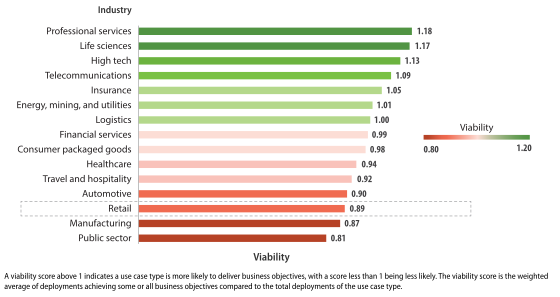
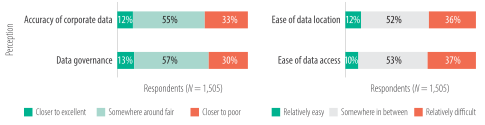
Infosys’ AI Business Value Radar research indicates that the logistics sector scores at the midpoint on AI viability, which is the likelihood that AI deployments will achieve their intended business objectives (Figure 1). AI systems depend on accurate, consistent, and timely data. And according to our Enterprise AI Radar research, only 10% of the companies surveyed said that data is readily accessible for AI projects, while over 30% assessed their data accuracy and data governance processes used for AI projects as poor (Figure 2), increasing AI risks.
Terminals should therefore prioritize the integrity of core data sources, including clean, timestamped TOS event streams, equipment telemetry, and gate transaction records, before deploying AI models. Such data enables more reliable predictions and optimization outcomes. In many cases, Infosys experience shows that focused efforts to improve data quality unlock operational benefits such as greater visibility across assets, cargo, and workflows, as well as better planning and scheduling — even before advanced models are deployed.
Figure 1. AI is creating value in the logistics sector
Source: Infosys Knowledge Institute
Figure 2. Data discovery and accessibility are challenges for most companies
Source: Infosys Knowledge Institute
Layer over existing systems
Replacing legacy TOS platforms is complex, costly, and disruptive. A more effective approach — and often the highest return on investment path — is to deploy AI as a decision-support and optimization layer that sits on top of the current TOS. This allows terminals to avoid costly migrations, enhance capabilities incrementally, validate outcomes before full automation, preserve operational continuity, and avoid operational risk. Over time, this layered architecture creates a flexible foundation for continuous improvement.
Keep humans in the loop
Operational expertise remains critical, especially in complex and unpredictable scenarios. AI should be introduced in advisory mode, where recommendations should augment planner judgment, not override it. Starting in advisory mode builds trust, surfaces edge cases the model hasn't seen, enables validation of model outputs, and ensures that tribal knowledge is captured and incorporated into the system rather than bypassed. Over time, human feedback helps refine models and improve accuracy.
Prioritize high-impact use cases
Not all processes deliver equal value when automated. Terminals should focus first on areas with high complexity, high frequency, and significant operational impact. Infosys research has found that prioritizing high-impact, transformational use cases can increase a company's likelihood of achieving its AI business objectives by up to three percentage points. Equipment dispatching, yard allocation, and gate traffic management are examples where AI can deliver immediate results because of the high volume of daily micro-decisions and operational uncertainty involved. Businesses should target these before tackling lower-frequency, high-judgment tasks like commercial negotiations. Addressing these areas creates momentum and demonstrates tangible benefits early in the AI adoption journey.
Track systemwide impact
AI-driven value often compounds across container terminal operations. For example, better yard planning reduces rehandles and unnecessary equipment travel, improving equipment availability, which in turn enhances vessel turnaround times and ultimately enhances berth utilization. Establishing baseline metrics or key performance indicators, such as crane utilization, truck turn time, and rehandle rates, before deployment enables terminals to track progress and quantify value. Monitoring the interconnected impact of improvements provides a clearer view of system-level impact and overall performance gains.
These emerging AI-driven approaches can transform container terminals from reactive, rule-based environments into adaptive, data-driven ecosystems. By embedding intelligence into decision-making processes, terminals can better navigate complexity, improve operational efficiency, and position themselves for sustained growth in an increasingly dynamic global trade landscape.

Regulatory change is accelerating and breach costs are rising, yet most institutions still rely on periodic, manual risk assurance. Three structural gaps, spanning visibility, third-party oversight, and governance, leave institutions unable to keep pace. Building risk assurance as a continuous, AI-augmented capability closes these gaps. A four-phase roadmap helps institutions get there.
- 11 Sep, 2026
- 15 min read

The difference between AI work and AI that works lies in the discipline to scale adoption, governance, and value realization
- 10 Sep, 2026

Learn how automated integrity checks and human oversight can help enterprises control AI agent sprawl, reduce duplication, and manage risk at scale.
- 08 Sep, 2026
