

Insights
- Enterprise AI success depends on execution readiness, not just experimentation.
- Fragmented processes and inconsistent data prevent AI from scaling.
- A stable digital core enables AI to move into day-to-day operations.
- Organizations using integrated platforms like Oracle embed AI more effectively into core workflows.
- Workforce readiness and change management ultimately determine AI impact.
Enterprise AI is no longer a question of possibility, but of execution. While many organizations are testing artificial intelligence (AI), only few have scaled it to meaningfully change day-to-day operations.
This article examines what it takes to move beyond pilots. Insights shared by leaders from onsemi, CSG, and an American gas and electric utility holding company the Solution Keynote session at Oracle AI World in Las Vegas highlight that successful AI adoption depends on strong fundamentals: clear processes, reliable data, integrated platforms, and a workforce ready for change.
Their stories highlight why AI progress largely depends on building the conditions that allow AI to work in practice, and less on new tools.
AI momentum is real
AI investment is rising across industries, a trend reflected in the keynote. Raghu Boddupally, vice president and global delivery head, enterprise applications at Infosys, referenced findings from the Infosys AI Business Value Radar to illustrate this shift. Nearly half of all AI use-case types studied are already delivering measurable value, 19% generating expected value while 32% delivering some of the expected value.
He also highlighted one of the study’s most important insights — organizations that invest in workforce skilling and structured change management significantly improve their AI success rates by as much as 18 percentage points. The message is clear: those who prepare their people amplify the return on AI investments.
These shifts are being felt across sectors. Companies are using AI to improve forecasting accuracy, enhance customer service, accelerate testing cycles, and streamline planning and operations. A recent Harvard Business Review analysis also reported a notable increase in enterprise AI spending as organizations move from experimentation to integrating AI into core business processes.
But even with this momentum, many enterprises encounter barriers that slow or stall their progress.

Readiness remains the defining challenge
Infosys research shows that AI use cases delivering meaningful value are strongly associated with changes to operating models, business processes, and data foundations. Workforce readiness presents another barrier, with the report finding that only a small proportion of organizations have effectively prepared their workforce for AI adoption.
The experiences shared by an American gas and electric utility holding company, onsemi, and CSG made this readiness gap tangible. Despite operating in very different industries, their early AI efforts surfaced similar challenges.
CSG encountered comparable issues. Its financial structures, procurement workflows, and master data had evolved in silos, making it difficult to operationalize early AI use cases in forecasting and spend analytics. As Saikat Pattadar, chief information officer at CSG, noted during the session, AI’s effectiveness ultimately depends on the quality and consistency of the data it works with.
onsemi faced an even more fragmented environment, shaped by years of acquisitions and global expansion across 18 manufacturing sites. While the company recognized the potential to build AI-enabled digital threads that connect and optimize data across design, manufacturing, and supply chain functions, fragmented systems and processes constrained what was achievable. Reflecting on their approach, Neeraj Vijay, senior vice president and chief information officer, onsemi, emphasized the importance of sequencing transformation around people, process, technology, and data — starting deliberately with people.
At the American gas and electric utility holding company, years of customization had led to multiple interpretations of core processes across its utility businesses. Early AI initiatives in areas such as outage prediction and testing automation showed promise but struggled to scale because workflows and data were inconsistent. As explained by the executive vice president for strategic transformation programs during the discussion, the organization has spent several years rebuilding trust internally by focusing on stabilization, end-to-end processes, and data consistency.
Across all three organizations, adoption challenges were rarely about resistance to AI itself. Instead, employees lacked clarity, trust, and confidence in how AI would change their work. These experiences align closely with the Business Value Radar’s finding that workforce maturity remains one of the biggest barriers to scaling AI.
Get the digital core right
Meaningful progress only accelerated once each organization addressed these foundational issues directly. onsemi, CSG, and, the American gas and electric utility holding company all recognized that scaling AI required a stronger digital core that is built on consistent processes, trusted data, and a unified operating model.
Each organization turned to Oracle’s cloud platform to modernize systems, reduce fragmentation, and establish a foundation AI could reliably operate on. As workflows became standardized and data became more trustworthy, AI shifted from experimentation to execution.
CSG: From financial complexity to intelligent automation
CSG restructured its financial and procurement processes on Oracle Fusion, replacing fragmented workflows with a unified platform. This created a level of data continuity and process alignment that had not previously existed.
With this foundation in place, AI became operational. The company used automated purchase-order-to-invoice matching to reduce manual effort. In addition, agentic AI enabled spend analysis and anomaly detection. Digital agents supported procurement teams and supplier interactions, while forecasting became faster and more reliable.
onsemi: From order to global manufacturing operations
onsemi standardized processes and data flows across its global manufacturing footprint using Oracle as a unified backbone. With this platform, AI could be applied more effectively to planning, manufacturing quality, and supply chain optimization.
Neeraj Vijay described AI as the layer that sits on top of a well-constructed platform, reinforcing that long-term value depends on strong data strategy and foundational architecture beneath it.
American gas and electric utility holding company: From complexity to clarity
The American gas and electric utility holding company used Oracle to bring finance, HR, supply chain, and operations onto one shared system, with a more modern and consistent user experience that made everyday work easier for employees. By reducing differences in how teams worked, AI initiatives that had previously been stuck were able to move forward.
Executive vice president at the company noted that this helped the organization to adopt emerging capabilities because it has done the hard work of stabilizing data and aligning end-to-end processes. AI is applied to improve outage prediction, accelerate test execution, and support employees through digital assistants embedded directly into daily workflows.

Why Oracle enabled these advancements
The experiences of all three organizations point to the fact that AI delivers sustained value only when it is deployed on top of a stable, standardized, and well-governed digital core. Oracle enabled this by providing an integrated cloud platform that addressed process, data, and AI requirements holistically rather than in isolation.
At a practical level, this meant several things.
- First, business processes were standardized across functions like finance, supply chain, HR, and operations. When everyone follows the same core processes, AI has a clear and predictable environment to work in. This reduces confusion and prevents AI systems from producing different answers depending on which team or system they interact with.
- Second, data was unified into a single, trusted source. Instead of each department working from its own version of the truth, transactional and master data were consistent across the organization. This matters because AI is only as good as the data it uses. When data is fragmented or requires constant reconciliation, AI outputs quickly lose credibility.
- Third, AI capabilities were embedded directly into everyday work. Rather than asking employees to leave their normal systems to use AI tools, AI insights and recommendations appeared inside the same applications where decisions and transactions already happen. This made AI easier to use and ensured it supported real work, not parallel processes.
- Fourth, the user experience was simplified and consistent. A modern, role‑based interface reduced the effort required to find tasks, understand recommendations, and act on them. This simplified the learning experience and made employees more comfortable using AI‑assisted features as part of their daily routines.
- Finally, governance and controls were built in from the start. Security, access controls, audit trails, and data traceability were part of the platform itself, not added later. This allowed organizations to use AI responsibly without creating new risks or separate oversight structures.
Rather than introducing AI as an external layer that compounds architectural complexity, Oracle’s platform approach simplified the underlying landscape. By reducing fragmentation across systems, data, and user experiences, it created conditions under which AI could be operationalized, scaled, and governed as part of everyday enterprise execution.
What other enterprises can learn: four practical recommendations
The journeys of the American gas and electric utility holding company, onsemi, and CSG highlight four actions enterprises can take to scale AI more effectively.
- Simplify and standardize the core: Reducing customizations, standardizing processes, and simplifying user experiences create predictability that can be leveraged by AI. As seen at CSG, running finance, planning, and back-office systems on a single Oracle-based foundation enabled consistency that fragmented landscapes cannot deliver.
- Build a unified, governed data foundation: AI depends on trusted data. Fixing data at the source rather than cleaning it downstream unlocks scale. The American gas and electric utility holding company’s experience shows that once data definitions and structures were stabilized and aligned across its Oracle environment, AI initiatives that had previously stalled were able to move forward with confidence.
- Embed AI into everyday work: AI delivers the most value when it supports people in the flow of their existing work. Rather than introducing separate tools or dashboards, organizations see stronger adoption when AI capabilities are embedded directly into core business systems. In these examples, Oracle’s approach allowed AI insights, recommendations, and automation to surface within the same applications employees already used to run the business.
- Invest in workforce readiness: Technology alone is not enough. Employees need clarity on how AI affects their roles, confidence in using it, and trust in its outputs. Training, guided experiences, and structured change management are critical. As noted by one of the leaders during the discussion, the goal is a workforce that eventually feels it cannot do its job without AI, a state that only comes through sustained investment in people, not tooling alone.
How to bring it all together
The future of enterprise AI will be shaped less by advances in models and more by organizational readiness. The experiences of onsemi, CSG, and the American gas and electric utility holding company demonstrate that once processes are aligned, data is trusted, and the digital core is stabilized, AI can move beyond pilots and begin influencing real decisions and daily work.
With strong fundamentals, AI shifts from potential to performance supporting employees, improving operational flow, and enabling faster, more informed actions. Their journeys offer a clear preview of what becomes possible when enterprise foundations meet a platform designed for AI-driven operations.

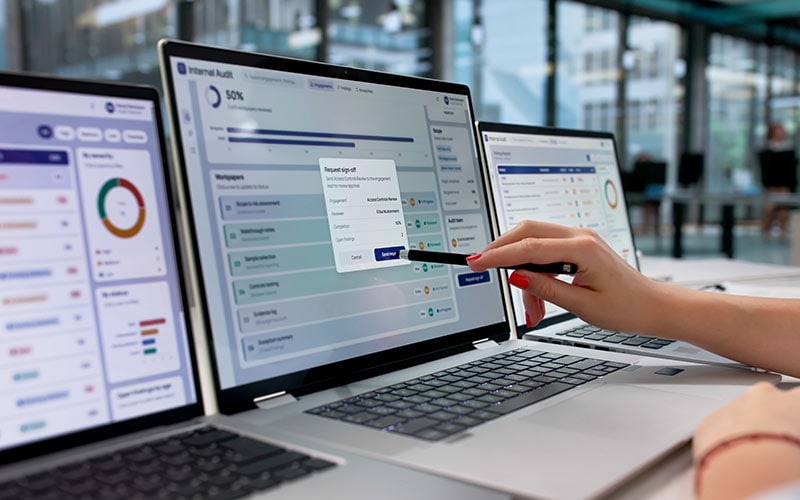
Regulatory change is accelerating and breach costs are rising, yet most institutions still rely on periodic, manual risk assurance. Three structural gaps, spanning visibility, third-party oversight, and governance, leave institutions unable to keep pace. Building risk assurance as a continuous, AI-augmented capability closes these gaps. A four-phase roadmap helps institutions get there.
- 11 Sep, 2026
- 15 min read

The difference between AI work and AI that works lies in the discipline to scale adoption, governance, and value realization
- 10 Sep, 2026
Learn how automated integrity checks and human oversight can help enterprises control AI agent sprawl, reduce duplication, and manage risk at scale.
- 08 Sep, 2026
