

Insights
- LSPs are becoming supply chain orchestrators amid strong market growth.
- Yet visibility gaps, rising costs, labor shortages, and legacy systems limit performance.
- Digital-first operating models powered by AI, automation, and control towers are critical.
- Businesses that modernize can drive resilience, efficiency, and superior customer outcomes.
Logistics service providers (LSPs) have evolved from being execution-focused transport partners into orchestrators of end-to-end supply chain performance across business-to-business, business-to-consumer, and direct-to-consumer ecosystems that span warehousing, inventory management, transportation, fulfilment, returns, and customer service.
Integrated supply chains, the continued expansion of commerce, enterprise cost optimization initiatives, and the increasing demand from customers for faster, more reliable deliveries are all industry growth drivers. The global third-party logistics (3PL) market size, is currently estimated at $1.2 trillion and is expected to grow to $1.5 trillion in 2031 at a compound annual growth rate of 5.2%. However, LSPs are under mounting structural pressure from fragmented legacy systems, labor and capacity shortages, rising operating costs, and intensifying sustainability demands. Addressing these challenges requires a coordinated transformation across key operating model levers to build a more connected, agile, and resilient logistics enterprise.
Persistent headwinds to growth
Despite favorable growth, most LSPs still operate with structural inefficiencies that cap scalability and differentiation. Visibility is the headline gap: many providers can’t centralize logistics data or track shipments in real time. Around 69% of companies report they lack complete and real-time supply chain visibility, which undermines exception management and customer confidence.
Meanwhile, capacity constraints persist across fleet, equipment, and labor, with 3.6 million truck-driver positions unfilled globally. Costs are equally stubborn, where last-mile delivery alone can reach 53% of shipping cost. Layered on top are demands for narrow delivery windows, customization, and sustainability. Freight already accounts for over 7% of global emissions, while many LSPs still run on fragmented systems and manual workflows.

Why a modern operating model
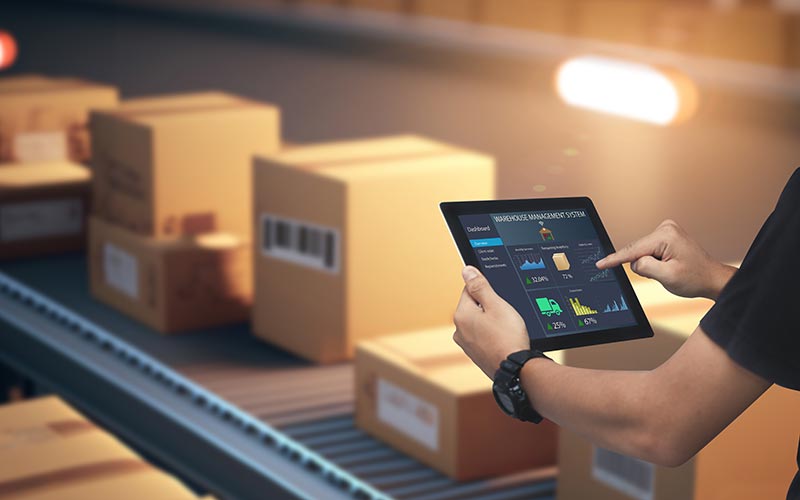
LSPs need to evolve toward a digital-first, data-enabled operating model that brings real-time information flow and analytics-driven decision-making to operations. This operating model should connect warehousing, inventory management, transportation, shipment management, customer service, and returns to a single, coordinated ecosystem.
Elements of a digital-first operating model:
- Process integration across warehouses, transportation, shipment, and returns functions to reduce fragmentation and improve coordination.
- Centralized visibility and monitoring through shared data flows, integrated platforms, and real-time operational tracking.
- A digital control tower capability to orchestrate planning, execution, exception handling, alerts, and performance management across the logistics network.
- Advanced analytics and predictive intelligence to support expected time of arrival prediction, route optimization, demand planning, and proactive issue resolution.
- Automation-led execution to reduce manual effort, improve service consistency, and increase scalability across day-to-day logistics operations.
- Integrated enterprise architecture connecting enterprise resource planning, finance, warehouse systems, transportation systems, workforce systems, and customer touchpoints.
Organizations should evolve toward a connected, proactive, and digitally orchestrated logistics operating model capable of supporting growth, resilience, and customer-centric service delivery.

Blueprint for the future-state 3PL
To realize this operating model, LSPs should focus on a set of integrated priorities that improve visibility, automation, service responsiveness, and network resilience across the logistics value chain.
Adopt a digital-first model
To enhance operational agility and decision-making, LSPs should deploy AI, machine learning (ML), and agentic AI across core logistics processes. AI and ML can improve demand forecasting, inventory planning, route optimization, predictive expected time of arrival calculations, and exception management. Agentic AI tools work autonomously to achieve goals and carry out tasks that can detect disruptions, make decisions within predefined guardrails, and execute corrective actions in real time. This shifts logistics operations from passive monitoring and reporting toward intelligent orchestration and proactive exception resolution.
Additionally, LSPs should establish a strong digital foundation by gathering data from internet of things (IoT) and global positioning system (GPS) sensors, telematics, and deploying a cloud-based data lake or analytics platform. This helps consolidate real-time data from shipments, vehicles, warehouse assets, equipment, orders, inventory, carriers, and customers into a single source of truth, providing visibility across the logistics network. This unified data ecosystem enables real-time dashboards, alerts, predictive insights, and actionable recommendations, helping operations teams anticipate delays, optimize resources, replan activities, reprioritize shipments, and resolve exceptions before they impact service levels.
Deploy a control tower
Businesses should set up an integrated logistics control tower that aggregates carrier, warehouse, transport, and order data into a single orchestration layer. This enables real-time visibility through live dashboards, cross-network coordination, exception management, and proactive decision-making across logistics operations. Infosys Consulting supported a global brewer in implementing a control tower that enhanced visibility across inventory, demand, supply, and order flows across the network, and strengthened planning efficiency. This enabled higher planning service levels, improved on-time in-full (OTIF) performance, and reduced excessive inventory buffer.
Businesses should also use the control tower to connect planning and execution across order receipt, dispatch, transport planning, shipment tracking, returns, and billing events.
Integrate core systems
Organizations can connect warehouse management systems, transportation management systems (TMS), and order management systems through application programming interfaces to enable real-time data on exchange of order, inventory, shipment, dispatch, proof-of-delivery, and returns. Infosys Consulting enabled a TMS implementation for a global supply chain management organization to improve the speed, consistency, and transparency of both material and information flow related to its inbound transportation, inter-facility transfers, and outbound distribution operations. The implementation improved visibility and execution control for the client, and lowered process variability.
For a US retail corporation, Infosys Consulting enabled a program for continuous support and process upgrades across distributor operations, integrating owned and 3PL fleets into a more controlled TMS environment. The program helped with OTIF improvement, planning-execution control across mixed fleets, and logistics cost optimization, with 75% to 80% predictive accuracy, over 90% OTIF, and reduction in cost-to-serve.
Extending integration to enterprise resource planning, finance, master data management, workforce, and partner systems can help create a synchronized logistics environment. Businesses can reduce manual handoffs and reconciliation efforts by eliminating spreadsheet-based workflows and disconnected process steps. They can improve data accuracy and responsiveness through real-time information flow across warehousing, transportation, fulfillment, and customer service.
For a US retail corporation, Infosys Consulting enabled a program for continuous support and process upgrades across distributor operations, integrating owned and 3PL fleets into a more controlled TMS environment.

Modernize legacy systems
Businesses should replace legacy and spreadsheet-heavy workflows with modern digital platforms that support faster and rule-based execution. A US-based independent distributor of heavy-duty truck and trailer parts was looking to improve its planning responsiveness and cost control. Infosys Consulting supported the client with modernizing its applications and migrating from its legacy platforms. This led to cost and time savings and reduction in total cost of ownership for the client.
Automating order capture, validation, prioritization, allocation, and shipment status updates can improve order processing speed and consistency. Using optical character recognition, intelligent document processing and electronic data interchange reduces manual entry and streamlines document-driven processes. Organizations should also digitize returns management across the whole process, from initiation, authorization, and claims handling, to refunds, exchanges, and customer communication. This can improve customer experience, reduce processing costs, increase visibility, and accelerate resolution of returns-related issues.
Scale warehouse automation
To improve warehouse efficiency and operational performance, logistics providers should expand the use of robotics and automated storage and retrieval systems across key warehouse activities such as put-away, storage, picking, packing, and replenishment. Barcode and radio-frequency identification-based scanning technologies should be deployed to enhance inventory accuracy, asset visibility, and traceability. In parallel, warehouse management systems should be strengthened by integrating with IoT sensors to enable warehouse control, equipment monitoring, and continuous layout optimization. Additionally, AI- and ML-driven warehouse planning capabilities can dynamically optimize slotting, replenishment strategies, workflow sequencing, and labor deployment based on real-time demand, inventory levels, and operational conditions, thereby improving throughput, storage utilization, and workforce productivity.

Elevate customer experience: Real-time tracking alerts and self-serve
Logistics providers should also seek to improve customer satisfaction by offering real-time shipment tracking, milestone-based alerts, and proactive notifications throughout the order lifecycle. Self-service customer portals mean customers can see inventory availability, and then the status of their orders and where their shipments are at any time. Furthermore, chatbots and digital communication channels, including customer portals, mobile applications, WhatsApp, email, and SMS, can be used to handle inquiries from customers and reduce dependence on service desks.
Embed sustainability: Route optimization and shipment-level carbon tracking
Businesses should embed responsible sourcing, waste reduction, and carbon-aware planning into day-to-day logistics decisions. They can use route optimization and better load planning to reduce empty miles, fuel consumption, and delivery inefficiencies. Infosys Consulting supported a major parcel operator in public services that handles 15 million pickups and deliveries annually to implement a dynamic planning, scheduling, and routing optimization solution. The program helped the operator resolve time-sensitive and dynamic constraints such as traffic congestion, staffing issues, and machinery failure, which reduced empty miles, enabled near 100% on-time pickups, and improved asset utilization.
Tracking emissions at shipment level helps improve carbon visibility across transport and fulfillment operations. Integrating circularity into reverse logistics through repair, restock, recycle, and disposal workflows helps maintain sustainable operations and ensure compliance with sustainability regulations. For example, once a returned item arrives, it is scanned, inspected, and classified based on its condition, resale potential, and recovery economics. The item is then routed to restocking, repair or refurbishment, recycling, or compliant disposal, with each step tracked to maximize value recovery and minimize waste.
Govern KPIs and performance analytics
Businesses must establish a key performance indicator (KPI) framework across order, customer, inventory, transportation, and quality dimensions. Key metrics include order cycle time, on-time delivery, order accuracy, complaint rate, customer satisfaction, net promoter score, inventory turnover, transport cost, vehicle utilization, fuel efficiency, damage rate, return rate, and carbon footprint.
Infosys Consulting supported a US-based food service distribution company with a fleet management, routing, and analytics program. This supplied drivers with a mobile app on handheld devices for GPS, route guidance, and scheduling. The program improved fleet planning, route adherence, driver scheduling, and utilization visibility, with gains in fuel efficiency and progress toward 80% to 90% fleet utilization.
Infosys Consulting supported a US-based food service distribution company with a fleet management, routing, and analytics program.
Dashboards and control tower reporting enable continuous improvement, faster issue escalation, and corrective action. A performance governance layer with standardized KPIs, decision-making, review routines, accountability structures, and escalation mechanisms across transport, warehousing, customer service, and partner operations, allows the logistics network to monitor performance, identify root causes, respond quickly to disruptions, and drive ongoing improvement.
This lets businesses scale an agile and resilient logistics network, with improvement measures that are systemic rather than reactive. Retooling the operating model as a connected, digital-first ecosystem enables better visibility, faster decisions, and superior customer outcomes. Organizations that embed automation, data, and control tower capabilities can enhance resilience, efficiency, and sustainable growth.

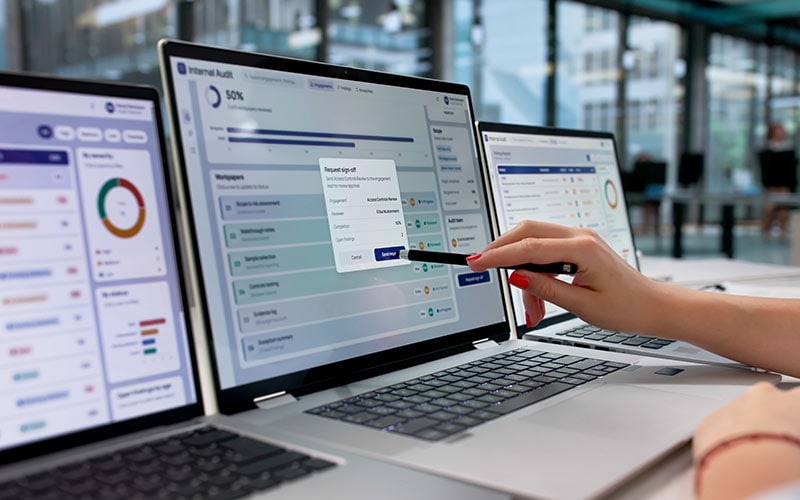
Regulatory change is accelerating and breach costs are rising, yet most institutions still rely on periodic, manual risk assurance. Three structural gaps, spanning visibility, third-party oversight, and governance, leave institutions unable to keep pace. Building risk assurance as a continuous, AI-augmented capability closes these gaps. A four-phase roadmap helps institutions get there.
- 11 Sep, 2026
- 15 min read

The difference between AI work and AI that works lies in the discipline to scale adoption, governance, and value realization
- 10 Sep, 2026

Learn how automated integrity checks and human oversight can help enterprises control AI agent sprawl, reduce duplication, and manage risk at scale.
- 08 Sep, 2026
