Reduce: Institutional climate action

Advancing sustainable infrastructure

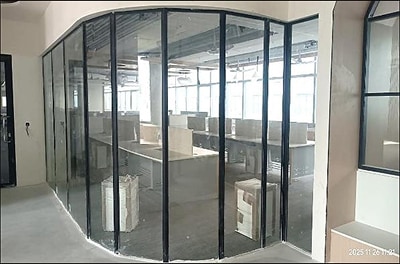
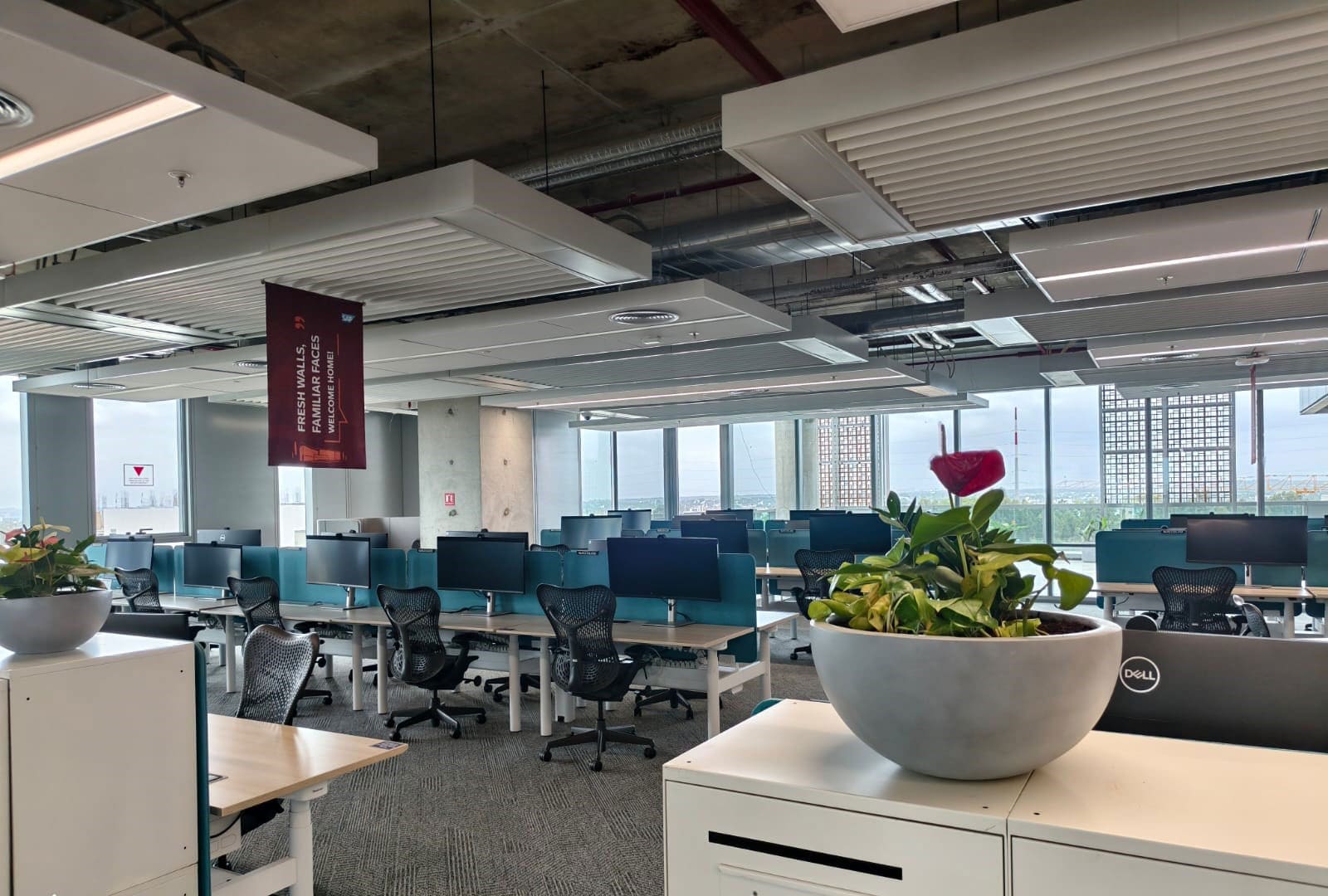
Infosys continues to lead in advancing high-performance buildings by embedding sustainability at every stage of infrastructure development. Our campuses are designed to deliver superior energy and resource efficiency while fostering healthy, employee-centric environments.

By integrating Life Cycle Assessment (LCA) into design and procurement decisions, we actively reduce embodied carbon and drive more responsible material choices.

Sustainability is integrated into workplace retrofits, embedding energy efficiency, resource optimization, and occupant well-being into the modernization of existing infrastructure. This forward-looking approach ensures our built environment remains resilient, future-ready, and aligned to our long-term climate commitments.

Free cooling through climate-smart design

Hyderabad’s moderate climate enables the use of climate-responsive cooling strategies that significantly reduce reliance on energy-intensive mechanical systems. The new building at our Hyderabad campus leverages naturally cool ambient conditions by incorporating cooling tower-based free cooling, lowering energy consumption during winter and moderate climates, and easing cooling loads in the summer.

This approach has contributed to approximately 15% reduction and is expected to lower annual cooling energy use.

Radiant heating – The new norm

Infosys has pioneered the adoption of radiant cooling across more than 5 mn sq.ft. of office space through its patented Radiflux radiant baffle system. Designed to address diverse climatic needs, the system efficiently supports both cooling and heating requirements using the same infrastructure.

While cooling remains the primary need in Indian office environments, certain locations require heating during select months. By leveraging the same radiant panels for both functions in our upcoming campus in Noida, we have eliminated the need for separate, conventional heating systems. This integrated approach significantly improves energy efficiency and operational simplicity.

The radiant heating capability offers the potential to reduce energy consumption by approximately 70% compared to traditional resistance‑based heating systems. This innovation exemplifies Infosys’ commitment to design‑led efficiency while enhancing occupant comfort.

Recycled steel

Infosys integrates Life Cycle Assessment (LCA) into the design and construction of its campuses to address embodied carbon (associated with materials and construction), long before a building becomes operational. This approach is critical because embodied carbon can account for a significant share of a building’s total lifetime emissions. Steel alone contributes over one-third of embodied carbon in commercial buildings. Conventional primary steel manufacturing emits around 2.5 tCO₂e per tonne of steel, whereas recycled, secondary steel emits significantly less— typically 1 to 1.5 tCO₂e per tonne.

Guided by LCA insights, Infosys prioritized low‑carbon and circular material choices for its new building in Hyderabad, substituting 38% of primary steel with recycled secondary steel, while ensuring quality, safety, and structural performance standards. By embedding these considerations into procurement and design decisions, Infosys demonstrates how LCA‑led infrastructure development reduces upfront emissions.

Path to RE100

Renewable electricity forms the backbone of Infosys’ operational decarbonization strategy, enabling significant reductions in Scope 1 and Scope 2 emissions and reinforcing the Company’s leadership in sustainable operations.

As of FY26, 81.8% of the electricity powering Infosys’ India operations is sourced from renewable energy — a milestone that underscores the scale and pace of the Company’s transition.

This achievement positions us strongly on our journey toward our RE100 commitment to source 100% renewable electricity by 2030.

Infosys has built one of the most robust corporate renewable energy portfolios in the country, with 62.42 MWp of installed solar PV capacity.

Every new infrastructure development at Infosys now integrates solar rooftops as a design mandate, ensuring renewable energy expansion is embedded into future growth rather than added retrospectively.

Additionally, we are securing clean electricity through long-term renewable energy purchase agreements and grid‑connected green power programs.

K.P. Rudrappaiah

K.P. Rudrappaiah,
Managing Director, Karnataka Renewable Energy Development Limited

“India today stands among the world’s leading nations in renewable energy capacity, driven by progressive policy support at both central and state levels, and the proactive participation of forward-looking corporates like Infosys. Infosys’ commitment to becoming climate positive, along with its adoption of next-generation solar technologies and sustained investments in energy efficiency and clean energy, sets a compelling benchmark for corporate climate leadership in India.”

Metro connectivity to reduce Scope 3 emissions at scale

Employee commuting is a significant contributor to Scope 3 emissions, particularly in large urban centers where private vehicle usage dominates. Public transportation systems, such as metro rail offer a structurally lower‑emission alternative, moving large volumes of people with significantly lower energy use and emissions per passenger.

Metro connectivity

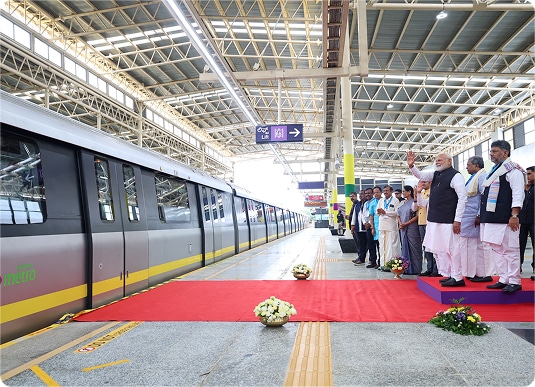
Prime Minister Narendra Modi flags off the Bangalore Metro's new line on August 10, 2025.

Metro‑based commuting has the potential to avoid approximately 72% of emissions compared to equivalent two‑ and four‑wheeler travel, making this initiative a material contributor to reducing Scope 3 emissions.

At its Bengaluru headquarters, Infosys has gone beyond encouraging adoption of public transport by investing directly in enabling low‑carbon mobility. Infosys partnered with local authorities to create a dedicated, seamless access pathway from the station into the campus. This initiative helps in reducing the use of privately-owned vehicles, thereby reducing emissions.

Importantly, the impact extends beyond Infosys. The metro station and access infrastructure benefit a large section of the workforce in Electronic City, improving equitable access to public transport at scale. Infosys continues to promote sustainable urban mobility by supporting the adoption of public transportation systems, including metro rail networks, across cities in India.

By enabling access and encouraging behavioral change, we strive to reduce commuting-related emissions while advancing cleaner, more efficient urban ecosystems.

Energy management system

As a demonstration of our commitment to environmental stewardship and to driving positive outcomes, we implemented an Energy Management System and achieved ISO 50001:2018 certification for our Bengaluru and Mysuru campuses during the year. We plan to continue improving our sustainability initiatives by including other locations in the certification process in a phased manner. This has enabled us to focus our efforts on improving energy efficiency, energy performance, and energy consumption.

We have established objectives and implemented energy-efficient projects through management programs for continual improvement of our energy management system, which includes, but is not limited to:

  • Retrofits in HVAC – Chiller efficiency improvements
  • Augmentation of water heating with solar water heaters
  • Lighting
  • Transition of remote desktops to VDI interface to automatically shut down desktops which are on
  • Replacement of conventional UPS with Modular UPS
  • UPS Retrofits and optimization
  • High efficiency data centers
  • Design of energy-efficient infrastructure

Decarbonizing the supply chain

At Infosys, we actively strive to align suppliers' climate ambitions with our Net Zero commitments, recognizing that meaningful decarbonization requires action across the value chain. By working closely with our suppliers, we are driving consistent, measurable emissions reduction beyond our direct operations.

During the year, we focused on engaging high‑emission IT hardware suppliers through on‑site assessments and senior‑level dialogues. These interactions enabled clearer alignment on decarbonization roadmaps and strengthened the measurement and management of Scope 1, Scope 2, and Scope 3 emissions. We also supported suppliers in improving greenhouse gas accounting practices, establishing robust emissions baselines, adopting verified Environmental Product Declarations (EPDs), and strengthening resource efficiency and governance frameworks.

Beyond engagement, we continue to provide sustained handholding and performance tracking to help suppliers embed climate action into their core business operations. This collaborative approach ensures that our supplier ecosystem remains resilient, future‑ready, and aligned with shared sustainability objectives, reinforcing Infosys’ commitment to responsible value‑chain transformation.

Case study visual

Case Study

Driving climate responsible IT procurement

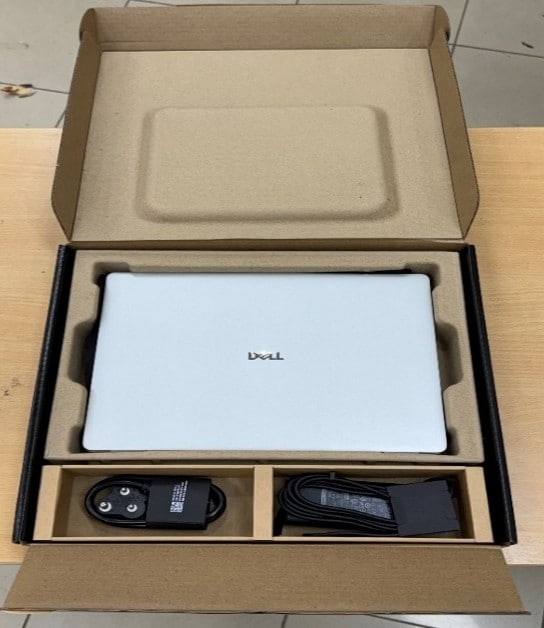
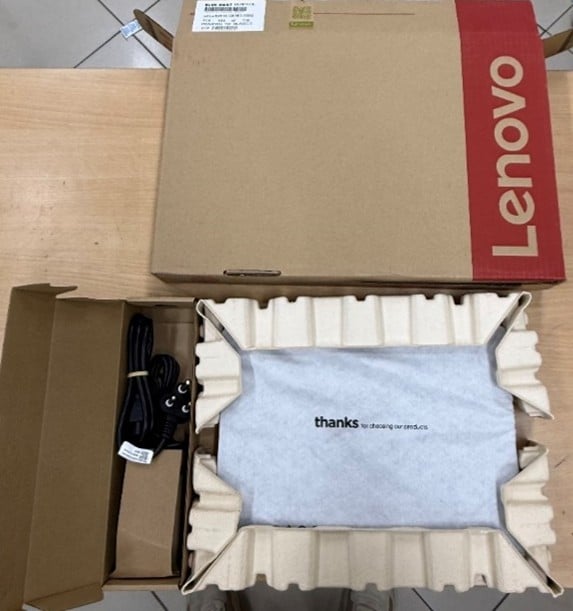
As digital infrastructure expands, Scope 3 emissions and packaging‑related waste increasingly originate from the deployment of IT hardware.

Case Study

Embedding sustainability into procurement by design

Infosys has launched a comprehensive initiative to embed sustainability into the specification and procurement of construction and IT materials across all new projects, aligned with ISO 20400 (Sustainable Procurement).

Fostering energy-conscious behavior among employees

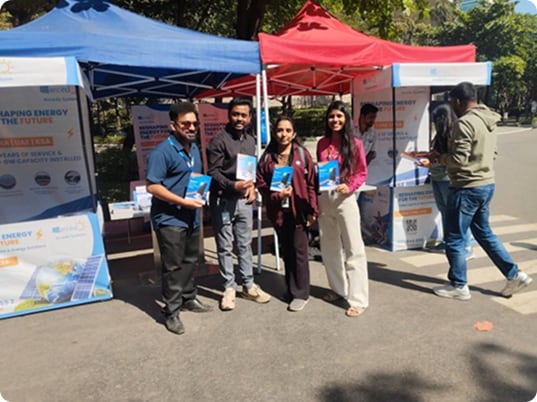
Infosys continues to strengthen climate awareness beyond operations by empowering employees to adopt energy‑efficient behavior at work and at home. The ‘Watts Up? Save It!’ campaign was designed to build a climate‑conscious workforce by translating awareness into everyday action, and reinforcing responsible electricity use as a shared responsibility.

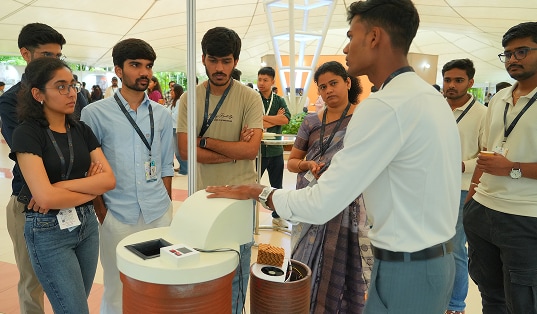
Watts Up campaign

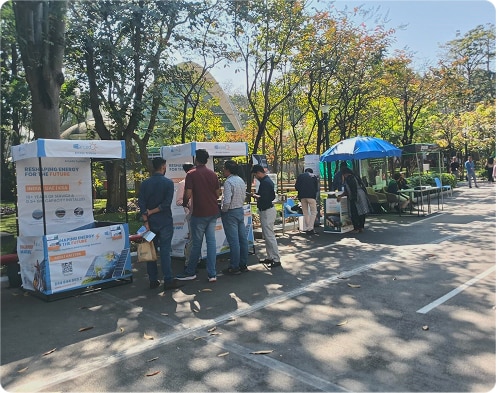
For the Watts Up? Save It! campaign, stalls set up in Infosys campuses demonstrated energy-efficient appliances and solutions.

Timed around National Energy Conservation Day (December 14th), the initiative connected individual behavior with a broader national movement for energy efficiency. Across multiple campuses, employees engaged with practical, real-world solutions through expert interactions, demonstrations, and shared learning – covering energy-efficient appliances, renewable-energy options for homes, and smart workplace automation.

To enable sustained impact, Infosys introduced an Energy Conservation and Efficiency Toolkit, that provides simple, actionable guidance on reducing household and workplace energy use without compromising comfort or productivity. By combining awareness, engagement, and practical tools, the initiative encourages long-term habit formation, supporting lower energy consumption, and contributing to broader climate-action goals through informed, everyday choices.

Strengthening transparency in Work From Home emissions

Infosys has been an early leader in recognizing and reporting emissions associated with remote work. In FY21, we were among the first organizations globally to estimate and disclose Work From Home (WFH) emissions, acknowledging the growing climate impact of hybrid work models. As remote and hybrid work became embedded in our operating model, Infosys undertook a refreshed, data‑driven assessment to enhance the accuracy and relevance of these estimates.

Work-From-Home emissions

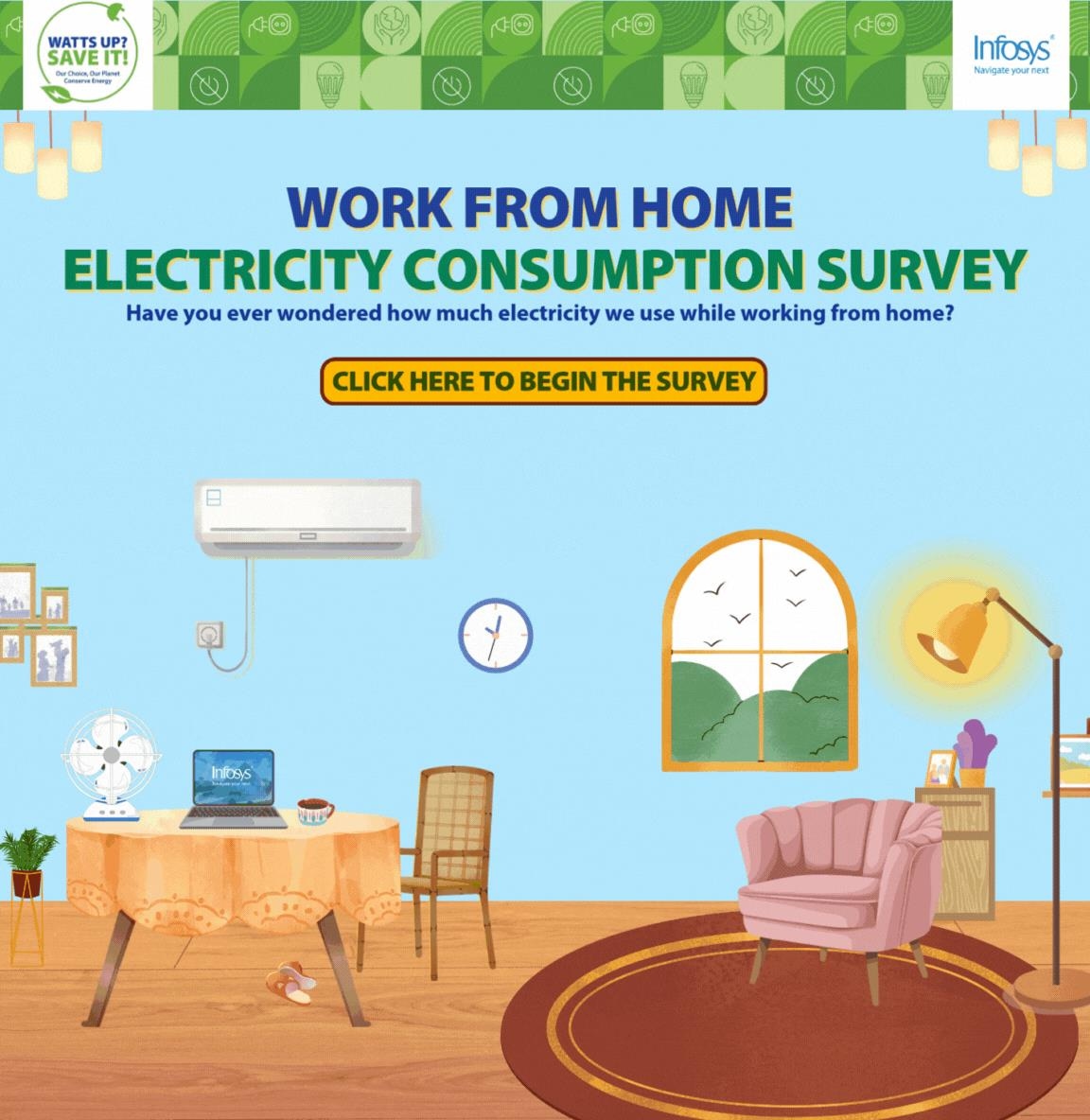
The WFH Electricity Consumption Survey was designed to capture electricity usage during work hours, by laptops, lighting, fans, air conditioners, and seasonal heating or cooling systems, among others.

The WFH Electricity Consumption Survey was designed to capture real‑world electricity usage during work hours, by laptops, lighting, fans, air conditioners, and seasonal heating or cooling systems, among others. The survey also gathered insights into renewable energy adoption by households, enabling a more nuanced understanding of distributed clean‑energy use across our workforce.

By incorporating equipment‑specific data, usage patterns, seasonal variations, and renewable‑energy uptake, this initiative significantly improves the accuracy, transparency, and robustness of Infosys’ Scope 3 emissions reporting. It ensures alignment with evolving global standards and stakeholder expectations, while equipping Infosys with a dynamic, data‑backed framework to guide future interventions and responsible climate action in a hybrid‑work environment.

Building climate awareness through capability and culture

Infosys recognizes that delivering meaningful climate outcomes requires not only strong sustainability initiatives but also an informed and empowered workforce. We therefore invest significantly in building climate awareness and capability among employees, partners, and key functions – creating a culture that extends beyond the workplace into everyday choices.

Infosys is investing in building a culture of climate action through various initiatives

Infosys is investing in building a culture of climate action through various initiatives.

Complementing organization‑wide awareness, Infosys also delivered specialized training on LEED and ISO 20400 for the Infrastructure, Procurement, and Sustainability teams. These programs strengthened technical understanding of green building principles, energy‑efficient operations, sustainable site and resource management, indoor environmental quality, and responsible procurement practices – directly enabling the effective implementation of our infrastructure and sourcing initiatives.

By combining targeted training with enterprise‑level sustainability programs, Infosys ensures that climate action is embedded not only in systems and policies, but also in capabilities and culture, supporting the consistent execution of our ESG commitments and long‑term climate ambitions.

Agroforestry

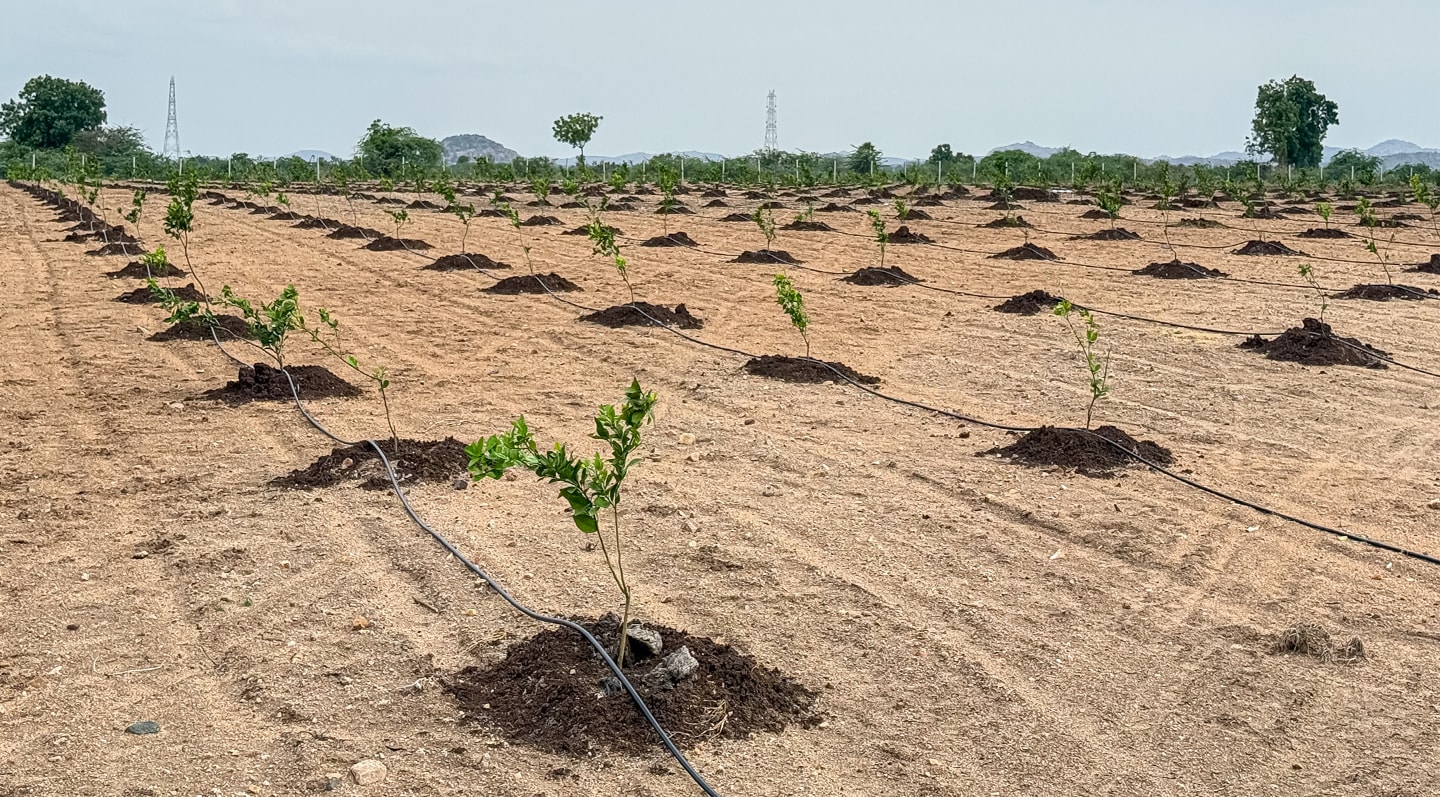
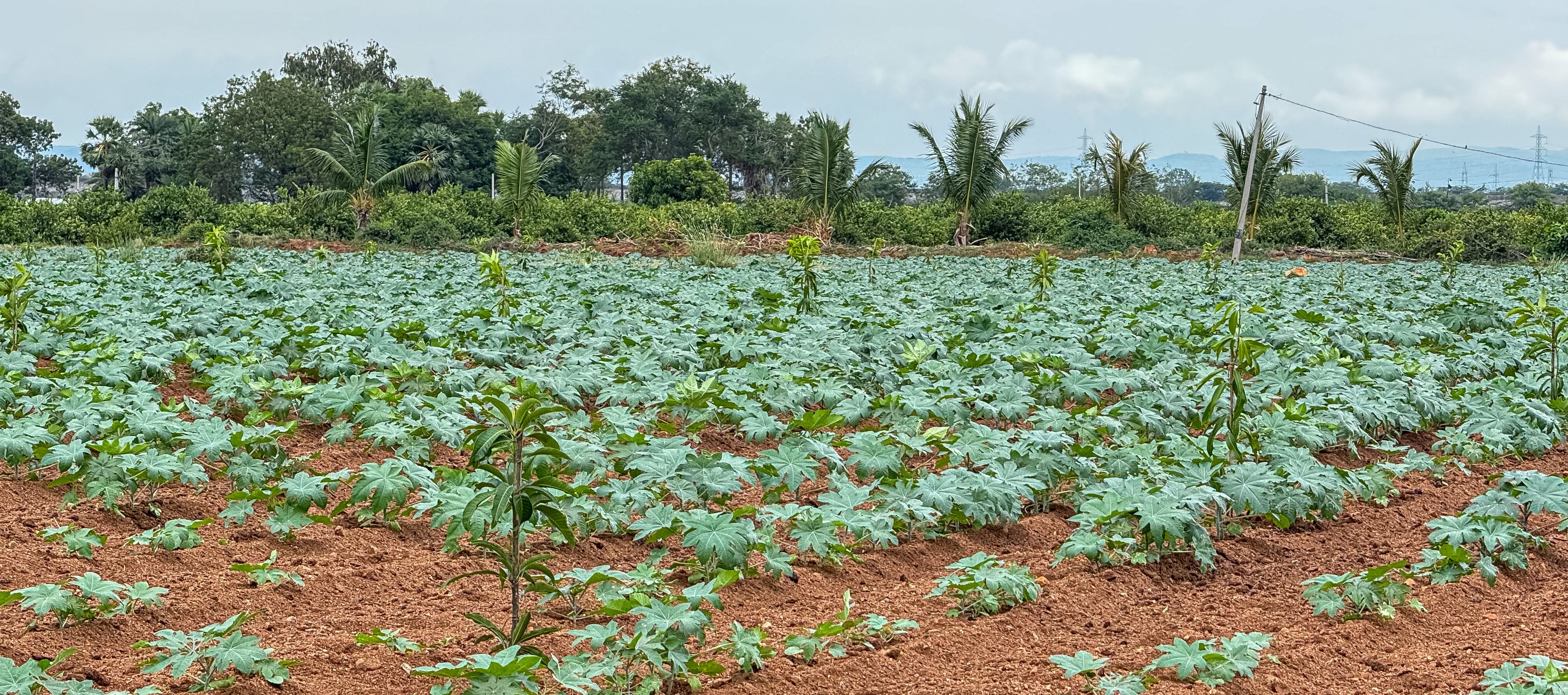
Last year, we embarked on a bold journey to reimagine our role in restoring nature by launching large-scale agroforestry initiatives across India. Guided by the belief that enduring progress must be rooted in ecological balance, the Infosys Agroforestry Program seeks to regenerate landscapes and empower farming communities to become stewards of natural capital.

By nurturing soil health, revitalizing biodiversity, and creating resilient livelihoods, this initiative reflects our long-term vision of climate-positive growth – where economic success, community well-being, and environmental regeneration advance together to create lasting impact for generations to come.

Across

30,000

hectares

In

8 States

75 districts

(including 17 aspirational districts*)

*Aspirational districts are underdeveloped districts identified by the Indian government for rapid socio-economic transformation through targeted development initiatives.

Implemented with

5 NGO

partners

Agroforestry Program

Tree species for the Agroforestry program were finalized using a scientifically designed selection process.

Benefits of the Agroforestry Program

Creates a sustainable livelihood model Eradicates systemic rural poverty Improves soil health Increase women’s participation leading to social equity  Leads to carbon Sequestration Improves groundwater recharge Provides food security

How were farmers chosen?

  • Socioeconomic vulnerability
  • Small and marginal landholding patterns
  • Willingness and commitment to participate
  • Water requirements
  • Inclusion of women farmers

30,000+

farmers

How were trees chosen?

  • Soil and climate compatibility
  • Climate resilience
  • Multilayer canopy structure
  • Farmer preference

~14 mn

saplings planted

Plant the change: A bold community-driven climate action initiative

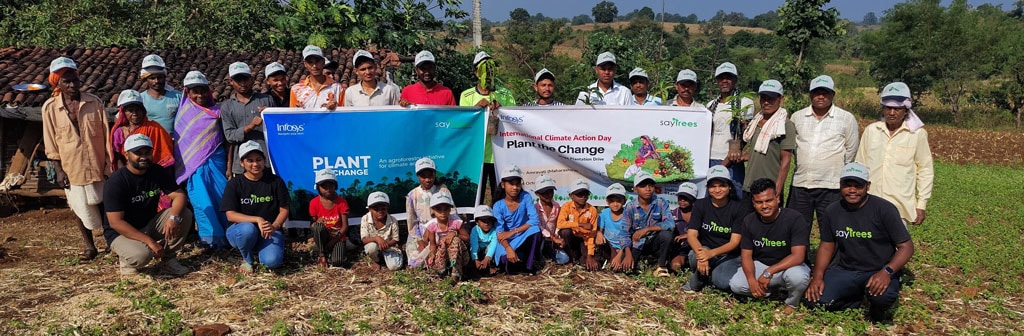
On October 24, 2025, the International Day of Climate Action, through our implementing partners, we planted 4.7 lakh saplings in a single day to demonstrate the power of collective action.

Plant the change initiative

The Plant the Change initiative was held on the International Day of Climate Action on October 24, 2025.

Our objective

To address interconnected challenges by increasing green cover for climate mitigation and by planting economically valuable species that would provide farmers with long-term, sustainable income. In alignment with the Paris Agreement, such actions are indispensable to keeping global warming below 1.5°C and ensuring climate equity.

Achievement

The determination of communities and field partners enabled us to plant 4.7 lakh saplings through 994 farmers across 1,496 hectares in five states.

Our message

Climate action must be bold, ambitious, and rooted in collaboration. It shows that large-scale, community-centered climate solutions are feasible, and that corporates have a critical role in pioneering replicable models. It is not merely a campaign; it is a movement designed to inspire, educate, and enable tangible climate action at scale. On the International Day of Climate Action, we did more than plant saplings; we planted hope, resilience, and a shared commitment to a secure climate.

Carbon offset programs

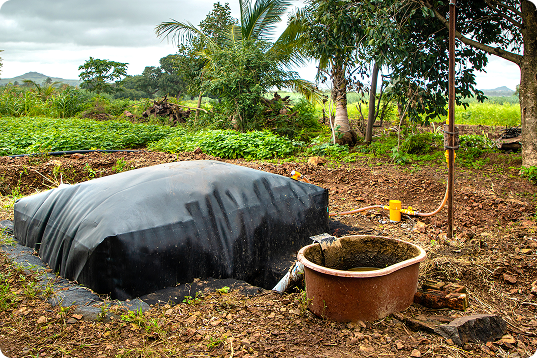
Our long-running cookstove and biogas initiatives deliver continuous benefits to over 2.72 lakh families.

Our carbon offset program surpassed 10 years of continuous operation

Our carbon offset program surpassed 10 years of continuous operation.

We continue to closely monitor and support our cookstove and biogas programs across 6,846 villages, ensuring continued benefits for the families who rely on them. This sustained on‑ground engagement has enabled us to sustain programs that began in 2016, with many now surpassing 10 years of continuous operation – demonstrating both the durability of our interventions and the trust we have built within the communities.

These programs expand access to clean energy, avoiding over 1.95 million tCO2e in emissions, while reducing health risks associated traditional cooking and supporting long‑term community well‑being.

Monitoring

Our field teams continue to actively engage with the community, strengthening relationships. Their regular interactions ensure timely repairs, quick resolution of challenges, and encourage the community.

To ensure beneficiaries always receive timely support, we operate a structured, multi-level grievance and service response system:

  1. Direct access to every beneficiary to customer care contacts or local field staff, ensuring prompt communication for any issue.
  2. Field coordinators and technology partners capable of conducting routine troubleshooting and repairs during onsite visits. Units requiring extensive service are systematically collected and transported to nearby service centers for repairs.

We use a digital dashboard to stay connected to what is happening on the ground. It allows us to:

  • Track real-time performance and identify units that may need attention.
  • Ensure quick action through our implementing partner

By combining real-time digital oversight with a highly responsive on-ground network, we ensure that our carbon neutrality goals deliver long-term, meaningful value to the communities we work with.

BioConserve Summit and Platform

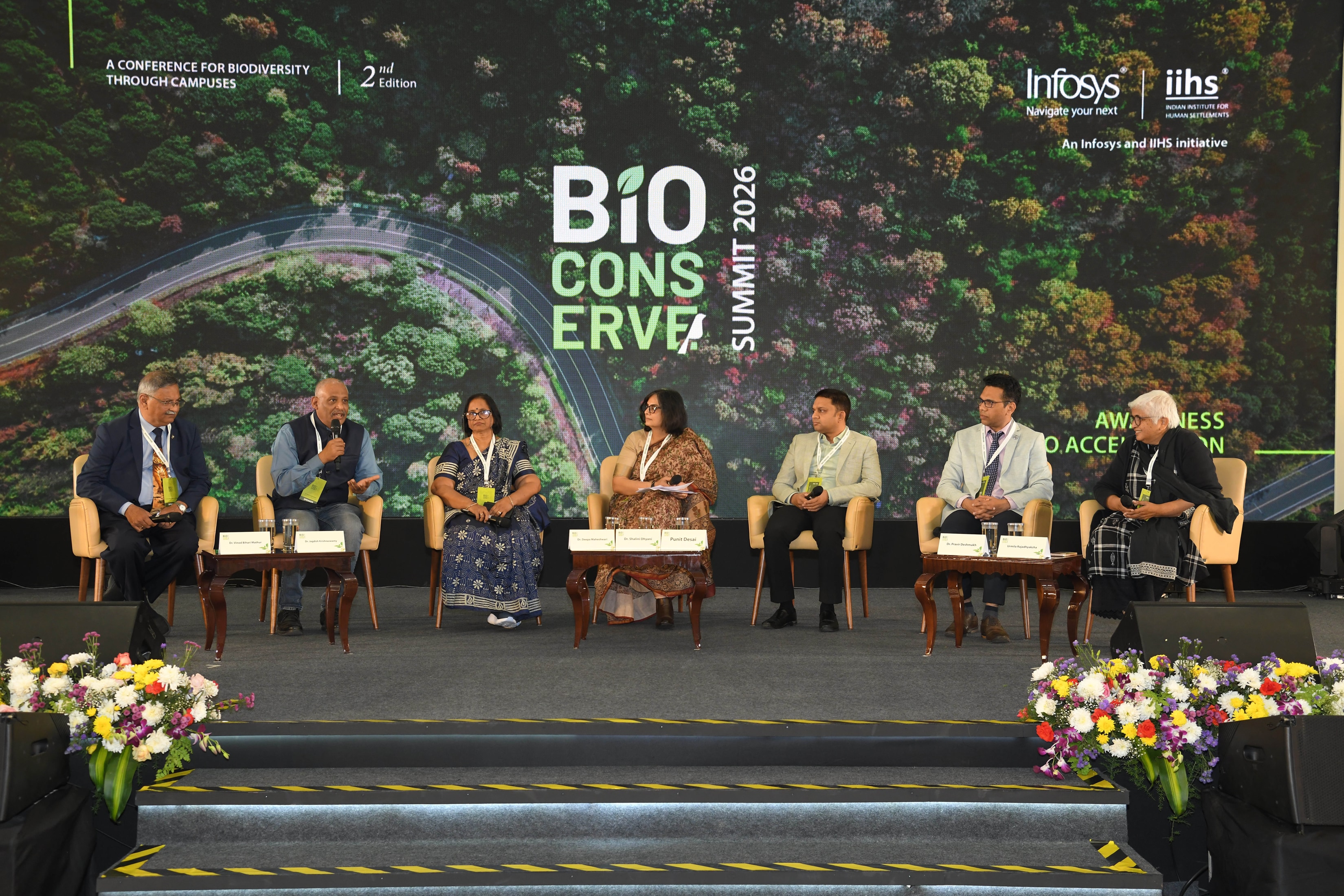
The second edition of the BioConserve Summit was held on January 30, 2026, in collaboration with the Indian Institute for Human Settlements (IIHS).

BioConserve initiative

The theme of the second edition of the BioConserve Summit, was 'From Awareness to Acceleration'.

Summit 2026 highlights:

  • 200+ participants, including corporate representatives, conservationists, experts, and other stakeholders.
  • 21 interactive sessions covering a wide range of biodiversity topics.
  • 12 kiosks showcasing biodiversity possibilities for campuses.
  • All badges, lanyards, and stationery were produced using recycled materials.
  • The BioConserve platform was launched.

BioConserve platform – Awareness to Acceleration

The BioConserve platform is a digital forum that allows collaboration and knowledge-sharing to catalyze the transformation of urban campuses into biodiversity hubs. It enables researchers, sustainability experts, and institutions to share data, insights, and solutions for ecological resilience. By fostering partnerships and knowledge exchange, it drives meaningful outcomes for urban biodiversity and sustainable development.

Visit the platform

ASSURE

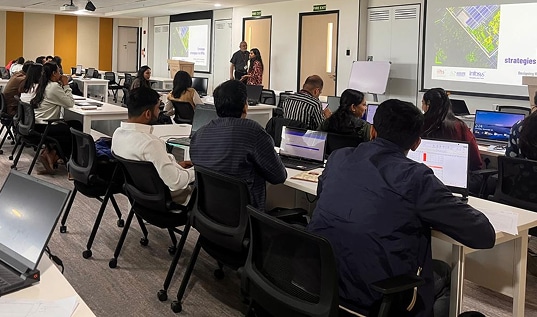
Building on its 2024 launch, ASSURE (Accelerating Sustainable Super-Efficient Real Estate), a joint initiative between Infosys and the Indian Institute for Human Settlements, has transitioned from vision to implementation at scale.

An ASSURE workshop at Infosys Bangalore

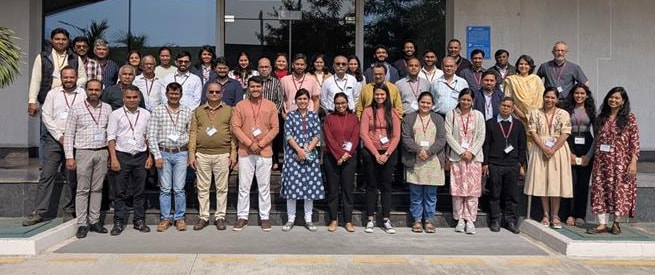
An ASSURE workshop was held at Infosys Bangalore.

Conceived as a multi-stakeholder platform to accelerate high-performance buildings (HPBs) in India, ASSURE continues to position Infosys' campuses as living laboratories while enabling sector-wide transformation across energy- and carbon-intensive real estate.

Visit ASSURE

An ASSURE workshop at Infosys Bangalore

Immersion workshops for ASSURE were held across locations.

In FY26

  • ASSURE expanded its Lighthouse portfolio to 15 million sq. ft. across leading commercial hubs, with 84% new construction and 16% retrofits, in collaboration with major developers. These projects demonstrate measurable pathways to reduce operational energy intensity, avoid long-term carbon lock-ins, and enhance occupant comfort and resilience.
  • Extending beyond commercial real estate, the program has supported 1.73 million sq. ft. of public infrastructure, including government hospitals and green schools, benefiting more than 2,900 students from low- and moderate-income communities.
  • Over 1,250 practitioners and students participated in blended learning modules and immersion workshops across Bengaluru, Noida, Pune, Nagpur, and Bhubaneswar, with over 50% female participation and strong representation from non-metro cities. By strengthening technical capabilities across urban tiers, ASSURE is enabling a distributed ecosystem of HPB expertise.

Through technical assistance, market engagement, and policy advocacy, ASSURE continues to catalyze a shift toward performance-driven design, innovative financing, and measurable outcomes - advancing India's transition to climate-aligned, resource-efficient built environments while reinforcing Infosys' leadership in sustainable infrastructure.

15 million sq. ft.
Lighthouse projects onboarded
1.73 million sq. ft
public infrastructure onboarded
1,250+
practitioners and students upskilled

Solar Decathlon India (SDI)

Infosys has been proud to host Solar Decathlon India (SDI) since 2020, nurturing it as a platform for collaboration, innovation, and knowledge exchange to accelerate climate action in the built environment. Continuing this long‑standing commitment, Infosys hosted the SDI Finals 2025 at our Mysuru campus, reaffirming our role in supporting solutions that advance India’s transition to a net‑zero future.

Vision and Ambition 2030

Administered jointly by the Alliance for an Energy Efficient Economy (AEEE) and the Indian Institute for Human Settlements (IIHS), the Solar Decathlon India (SDI) Challenge addresses one of India’s most urgent priorities – accelerating the transition to a net‑zero built environment in the world’s fastest‑urbanizing economy. Anchored in India’s Nationally Determined Contributions, including a 45% reduction in emissions intensity and the vision of achieving net zero by 2070, SDI challenges undergraduate and postgraduate students to develop innovative, real‑world solutions for the buildings sector.

Since its inception in 2020, and with Infosys’ continued stewardship as host, SDI has grown into the world’s largest net‑zero building challenge— engaging over 8,000 students from 300+ institutions and partnering with more than 300 industry stakeholders to influence practice at scale.

Infosys hosted the SDI Finals 2025 pro bono at our Mysuru campus, welcoming over 850 attendees across four days and providing venues for presentations, exhibitions, and a career fair. In line with our climate commitments, the event was  carbon‑neutral, leveraging the campus’s carbon‑neutral operations and offsetting travel‑related emissions for all participants. The event also featured a Climate‑Smart Innovation Award, adjudicated by a jury that included Infosys employees, reinforcing industry‑academia collaboration. The participants also took a guided sustainability tour of the campus, offering a first‑hand view of sustainable practices embedded across Infosys operations.

By hosting SDI Finals annually since 2020, Infosys continues to champion innovation‑led climate solutions and empower the next generation of leaders to shape a resilient, net‑zero future for India and the world.

SDI students at Infosys Bangalore

At SDI, students work to develop innovative, real‑world solutions for the buildings sector.

SDI Finals 2025

  • 850 attendees, including 420 finalist students and faculty
  • 40 net-zero energy and water building/product solutions were showcased
  • 35 climate-focused industry innovations were exhibited
  • Over 50 organizations offered employment opportunities accessed by students

Engaging clients on climate action through our solutions

At the heart of our vision is a steadfast commitment to embedding climate change solutions into every engagement, enhancing our holistic value proposition for clients. By leveraging our own practices and experiences, we collaborate with clients to create sustainable, impactful, and transformative solutions.

As key partners in our clients’ supply chains, we aim to reduce their Scope 3 emissions through our operational eco-efficiencies and climate action solutions.

Engaging clients on climate action through our solutions

Infosys Sustainability offerings – Accelerating net zero

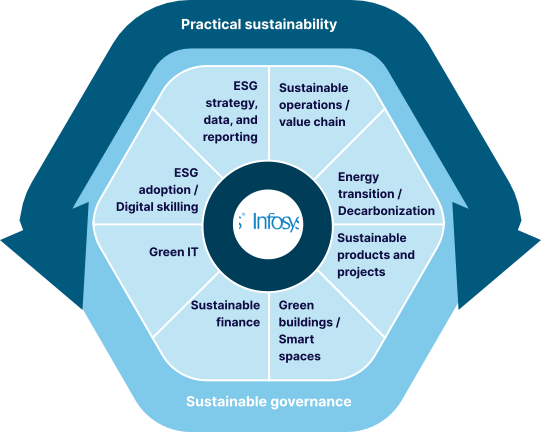
Infosys delivers an end-to-end, transversal sustainability consulting and technology services portfolio designed to help organizations embed ESG across strategy, operations, technology, and value chains. Anchored in sustainable governance and enterprise-wide advisory, the Infosys Sustainability offerings span ESG strategy, data management, and reporting; sustainable operations and responsible value chains; Green IT; smart and green buildings; energy transition and decarbonization; sustainable finance; and sustainability adoption through digital skills.

Practical Sustainability

15+

CoEs

300+

experts

120+

certifications

Energy transition

We believe that sustainability and energy transition is a team sport and it takes an entire ecosystem to work together to achieve the desired outcomes. Infosys has been working to curate and orchestrate an ecosystem of partners who bring in relevant multi-disciplinary capabilities to energy transition – ranging from energy providers, OEMs, and manufacturers of energy equipment, mining and resources providers, providers of EPC, and other services.

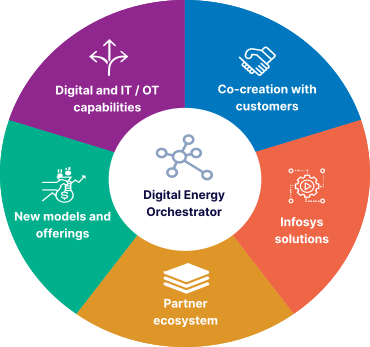
AI and digital capabilities play an essential role in enabling and orchestrating sustainability and energy transition outcomes. Specifically for energy transition, our vision is to be a Digital Energy Orchestrator.

Smart energy solutions

Energy as a Service (EaaS)

EaaS is an AI-driven energy management platform that is targeted at energy efficiency and the decarbonization of the built-up environment (buildings and campuses). It delivers an integrated energy dashboard, that provids a consolidated view of energy performance, cost, and emissions to aid review and decision-making.

The EaaS platform expanded beyond traditional systems to support a wider range of energy assets. Metadata-driven configuration, real-time monitoring, consumption visualization, and asset-level performance tracking provide a scalable foundation for diversified energy portfolios. Advanced AI-driven optimization for asset sequencing was also deployed, including predictive chiller sequencing and scheduling based on weather forecasts and historical load patterns.

Distributed-Computational Optimization-driven Monitoring for Energy Transition (D-COMET)

D-COMET provides visibility into the grid-edge assets, which is currently a blind spot for DSOs (Distribution System Operators). D-COMET is a physical AI-based solution for real-time DER (Distributed Energy Resources) management in power distribution networks. It leverages an agentic AI framework powered by distributed computing to evaluate the impacts of DER integration on the network conditions before real-time dispatch.

This pre-dispatch integration assessment is carried out locally from the grid edge via agents at the DER aggregator side that coordinate with a central DSO agent. The solution thus acts as a decision-support system for DSO operations to optimize network operation based on commands issued by the DSO. Thus, based on anticipated outcomes of DER integration, the DSO can issue commands in real-time to either control the export of DER generation, divert the excess energy in a local energy storage unit, or curtail the generation at an individual DER unit. Furthermore, the agents also support optimization of energy selling/buying bids to enable P2P energy trading among DER owners (prosumers) and consumers on the distribution network via the Beckn Protocol, which enables platform-agnostic discovery of energy peers.

CEMP (Cloud-based Energy Management Platform)

CEMP targets the optimization of microgrids through increased renewable penetration, reduction in curtailment, and opportunities to participate in flexibility markets when energy demand is the highest. It is a cloud-based platform that enables intelligent management and coordination of distributed energy resources (DERs) such as solar, battery storage, and electric loads within microgrids. Designed for scalability and hosted on AWS, CEMP provides real-time monitoring, predictive insights, and automated control of energy systems. It also enables microgrids to participate in energy and flexibility markets through Virtual Power Plant (VPP) capabilities.

The platform leverages AI/ML-based short-term forecasting of renewable generation and site demand to identify peak demand periods and market participation opportunities. Using predictive insights, CEMP performs intelligent battery dispatch and asset orchestration, optimizing self-consumption while enabling surplus power and flexible capacity to be aggregated and offered into flexibility markets. Through VPP functionality, distributed assets are coordinated to respond to market signals while respecting site-level operational constraints.

Sustainable digital infrastructure

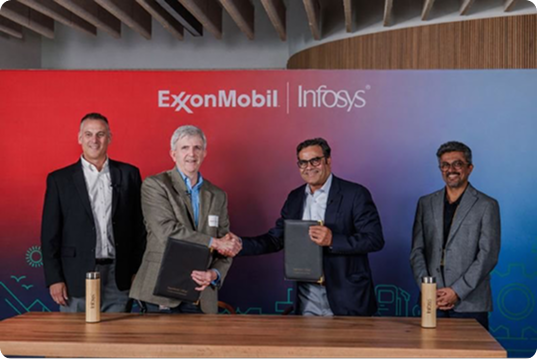
Infosys strengthened its commitment to sustainable digital infrastructure by expanding its collaboration with ExxonMobil to deploy advanced data center immersion cooling solutions. By integrating ExxonMobil™ Data Center Immersion Fluids with Infosys Topaz (AI-led platforms) and Infosys Cobalt (cloud capabilities), the initiative enables energy-efficient, scalable cooling systems for AI and high-performance computing workloads. It delivers measurable sustainability outcomes, including reduced energy consumption, lower water usage, simplified infrastructure, and improved equipment reliability, supporting the transition to low-carbon, future-ready data centers.

Read more about the Infosys-ExxonMobil collaboration.

Infosys solution leverages Infosys Topaz and Infosys Cobalt to help transform ExxonMobil’s digital infrastructure

Through our solutions, we helped transform ExxonMobil’s digital infrastructure.

Advocacy

Thought Leadership

Ashiss Kumar Dash, EVP & Segment Head – Services, Utilities, Resources, Energy and Enterprise Sustainability – Infosys, serves as a key member of the World Economic Forum’s AI Energy Impact Community.

We regularly publish thought leadership articles and feature our solutions on global media and publications.

Partnership with academia:

  • IIT Madras – Energy Consortium
  • Stanford University
Speaking sessions

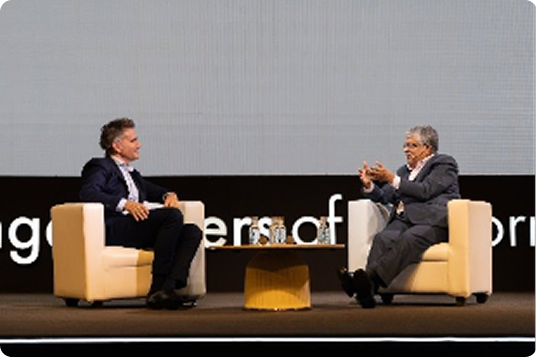
Nandan Nilekani and Robbert van Rutten, EVP Information and Digital Technology at Shell, participated in a fireside chat on “How Technology is Reshaping the Energy Landscape: Scaling Ideas That Matter.” at Shell Changemakers of Tomorrow.

Nandan Nilekani and Robbert van Rutten engage in a fireside chat.

Nandan Nilekani and Robbert van Rutten engage in a fireside chat.

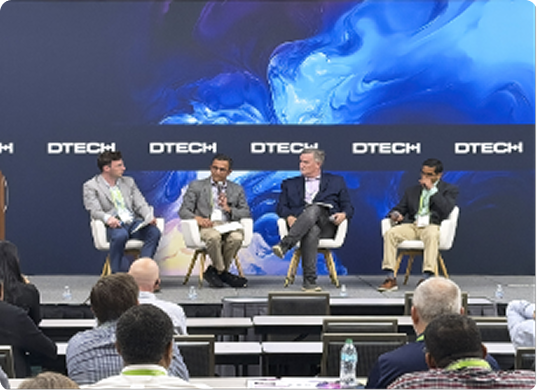
Scaling AI for Impact with Bidgely, Arizona Public Service, and AWS highlighted Infosys’ expanding ecosystem partnerships and real-world AI adoption.

Scaling AI for Impact with Bidgely, Arizona Public Service, and AWS highlighted Infosys’ expanding ecosystem partnerships and real-world AI adoption.

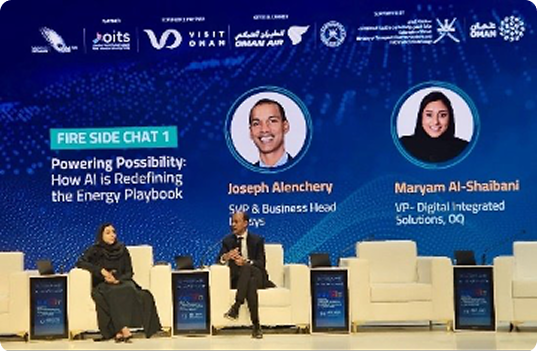
We participated in a fireside chat on ‘How AI is Redefining the Energy Playbook’.

We participated in a fireside chat on ‘How AI is Redefining the Energy Playbook’.

Decarbonization

Streamlining distribution system planning for a major utility

We created the digital capabilities that enabled the utility to shift from periodic, single-peak forecasting to continuous, granular, scenario-rich planning. The platform combines AI/ML, Digital Twin, and Generative AI with physics-based grid models to deliver this capability. This resulted in a measurable impact across capital planning, operational efficiency, and forecasting precision. Forecasting accuracy improved from 10% to 95% (a 9.5x improvement), sharply reducing variance in long-term planning estimates and giving planners far greater confidence in scenario outputs.

Onboard grid-scale renewable sites for a utility firm

A leading utility company and one of the world’s largest operators of solar and wind energy assets has engaged Infosys to support the client’s renewable site onboarding initiatives for over five years, enabling the onboarding of an average of 50 renewable sites annually.

To date, Infosys has  helped onboard 13.8 GW of renewable capacity (solar, wind, and storage).

Grid resilience – Reducing the impact of extreme weather events

Over the past four years, we have supported one of our clients in transforming their operating model by consolidating vegetation management onto a single, standardized, risk-based work management solution. Since the introduction of this vegetation program, no major wildfire incidents have been reported on vegetation managed assets covered under the program. The solution has helped the utility to prioritize mitigation in high fire risk zones, reduce unplanned outages and PSPS events, and better protect critical transmission and distribution infrastructure.

Enabling more efficient, digital energy management

Infosys collaborated with a large utility on an energy transition initiative to enable more efficient, digital energy management and support enterprise sustainability outcomes. This included a pilot with a Major European Airport Authority that assessed potential annual savings of 20.9% of baseline energy costs without capital investment and 28.9% with targeted investments, spanning energy efficiency, digitally enabled optimization, and flexibility value levers. This work contributed to the utility’s broader sustainability and innovation agenda and created a replicable partnering model for expanding digital energy management approaches to additional end clients.

Place-based decarbonized strategy for cities

Infosys supported a large utility provider to advance a place-based decarbonization strategy for cities, helping shape and align a Digital Cities strategy. In parallel, we helped define and incubate a new venture – Energy Spine – a local energy integration and orchestration platform intended to connect place-based assets and data, simplify and automate energy market participation, and support more efficient local flexibility and dispatch. Together, the Digital Cities strategy work and the Symphony Energy Spine proposition strengthen the client’s ability to tailor city propositions to local needs and deliver improved resident-centric experiences, while creating auditable pathways for places and communities to progress toward net zero.

Infosys Sustainability Cloud

Infosys Sustainability Cloud equips businesses to simplify ESG processes and achieve auditable sustainability goals.

Leveraging AI-powered analytics, it enables ESG data integration, ensures compliance, and delivers actionable insights for better decision-making, helping enterprises align with global standards and drive long-term value with precision and transparency.

Visit the site

Solutions

ESG strategy, data and reporting

Infosys enables organizations to move from fragmented ESG reporting to integrated, enterprise-grade ESG data platforms. Across multiple engagements, including food distribution, manufacturing, aerospace, and electronics sectors, Infosys has acted as the primary system integrator, harmonizing ESG data across core enterprise systems and specialized ESG platforms. Infosys enabled clients to establish a single source of truth for ESG data, significantly reducing manual reconciliation and reporting effort, and enhanced the availability of actionable data and insights.

Responsible, sustainable and transparent value chains

Infosys designed and implemented digitally enabled, traceable, and auditable value chain solutions, including:

  • Scope 3 emissions platforms capturing supplier and product level transaction data
  • Blockchain-based solutions for carbon and water footprint traceability across agricultural and manufacturing supply chains
  • Supplier ESG governance dashboards covering emissions, ethical compliance, and modern slavery controls
  • Digital Product Carbon Footprint (PCF) surveys and supplier engagement mechanisms

These solutions were deployed across food, beverage, manufacturing, and energy technology sectors at a global scale, dramatically improving Scope 3 data coverage and quality.

Transforming the built environment with smart and sustainable spaces

Infosys delivered end-to-end digital transformations for real estate portfolios, campuses, and large facilities. Solutions included:

  • Enterprise-wide centralized building management systems (BMS)
  • IoT-enabled monitoring across energy, water, air quality, and occupancy
  • Predictive analytics, AI-driven optimization, and digital command centers
  • Tenant and occupant engagement platforms aligned to ESG reporting frameworks

Clients achieved improved energy efficiency, reduced environmental impact, and enhanced user experience at scale. Real-time insights enabled data-driven operations, while digital twins and analytics unlocked long-term sustainability and cost savings across global portfolios.

Delivering measurable social value through sustainable workforce transformation

Infosys partnered with a large public sector transformation program to modernize workforce systems while embedding measurable social value across environmental sustainability, employment & skills, and ethical supply chains. Addressing gaps such as the absence of a unified Scope 1–3 carbon baseline, fragmented sustainability efforts, digital skills shortages and exclusion, and limited supplier ESG transparency, Infosys implemented a governance-led Social Value Delivery Framework to integrate sustainability, workforce transformation, and compliance into one scalable model.

The program established a GHG-aligned emissions baseline and introduced GreenOps to enable real-time tracking, reduction planning, and energy-efficiency improvements through optimized infrastructure and behavior change initiatives. In parallel, Infosys accelerated inclusive workforce outcomes through apprenticeships, digital learning platforms, and large-scale upskilling, complemented by digital inclusion efforts providing devices, connectivity, and digital literacy support to underserved communities.

To strengthen governance and ethics, Infosys introduced supplier ESG controls, enhanced modern slavery risk management, and deployed a centralized dashboard for end-to-end monitoring and reporting creating a transparent foundation for ongoing carbon reduction, inclusive employment pathways, and data-driven ESG oversight.

Smart spaces, smart facilities – Leveraging Internet of Everything (IoE)

Digital workplace experiences

Infosys partnered with a leading global software solutions provider to drive enterprise-wide digital transformation initiatives focused on cloud systems, intelligent automation, and next -generation business applications. Leveraging its proven smart spaces and campus digitalization expertise, Infosys supported the implementation of advanced digital workplace experiences, including wayfinding, frictionless access, and smart space management. The solution ensured seamless integration between digital transformation platforms and non-digital legacy systems across multiple campus buildings. This enabled improved employee experience, higher operational efficiency, reduced manual intervention, and access to real time analytics and predictive insights for informed decision-making.

Driving sustainable energy transition with Radiflux

Infosys enabled a leading global software development enterprise to accelerate its energy transition by addressing inefficiencies in conventional HVAC systems that led to high energy use, emissions, and poor indoor comfort. Through deployment of the proprietary Radiflux radiant cooling solution, Infosys delivered a water-based, high-efficiency system integrated with digital monitoring and existing infrastructure. The solution improved cooling performance while reducing operational complexity and downtime.

As a result, the client achieved up to 40% energy savings, significant Scope 2 emissions reduction, enhanced indoor air quality, and a payback period of under two years, establishing a scalable blueprint for sustainable, net-zero-ready buildings.

Driving sustainable energy transition with Radiflux

Infosys’ Radiflux radiant cooling solution integrates digital monitoring with existing infrastructure.

Smart facility management

This project delivered a cloud-based smart facility management platform for a leading global real estate management organization. Infosys designed and implemented an end-to-end Azure architecture using microservices, data pipelines, and low-code/no-code integration platforms. The solution ingests data from BMS, sensors, occupants, and third-party systems, performs data cleansing and alarm de-duplication, and applies AI-driven analytics to identify root causes, predict asset health, and enable condition-based maintenance. It integrates seamlessly with enterprise ticketing systems, SSO, and security and compliance tools, while ensuring high availability and scalability across regions. The platform became the client’s flagship offering, delivering rapid adoption, operational efficiency, and over USD 15 million in savings across facilities in the US and Europe.

Inspection System for Transport Department

Managing vehicle inspections across large and diverse fleets is increasingly complex due to rising safety, compliance, and efficiency expectations. A Transport Department in APAC partnered with Infosys to modernize its fragmented, manual inspection landscape. Infosys implemented a unified, AI-powered Vehicle Inspection System integrating legacy modules and IoT-enabled devices to improve data visibility and inspection consistency. The solution delivered 40-50% improvements in cost and velocity, higher-quality defect resolution, enhanced operational transparency, and improved engineering productivity, enabling a shift to a proactive, data-driven inspection model and strengthening public trust.

Smart solution for water

Infosys Smart Solution for Water empowers organizations to achieve measurable sustainability outcomes through AI-driven, enterprise-wide water intelligence. The solution proactively identifies hidden water losses, enabling faster corrective action and reducing operational waste. Intelligent dashboards track sustainability KPIs such as water intensity, recycling ratio, per-capita consumption, and cost-to-usage efficiency, supporting informed decisionmaking and regulatory reporting. With predictive insights, automated alerts, and continuous optimization, Infosys helps enterprises transition from reactive monitoring to proactive water stewardship—driving resilience, operational efficiency, and long-term water positivity. We have proposed this solution to a Utility Company in the Middle East.

Oil and Gas sector impact

Infosys advances ESG outcomes in the Oil and Gas sector by modernizing the IT/ OT, data, and operating backbone that governs day-to-day execution across drilling, well engineering, well operations, production surveillance, optimization, and refining operations, shifting improvement from isolated initiatives to repeatable, enterprise-scale operating change. By embedding AI into workflow -centric, governed execution, Infosys helps standardize safe and compliant decisions across rigs, wells, production assets, and downstream operations— making actions more explainable, auditable, and controlled, and strengthening operational governance beyond ESG monitoring and reporting. Infosys' transformation and run services reduce decision latency, rework, and operational variability in core processes (planning, interventions, control-ofwork, and operational reconciliation), translating reliability and efficiency gains into sustained sustainability benefits as a by-product of better execution. In parallel, Green IT practices (technology efficiency, cloud transformation, and circularity) help lower the footprint of the digital estate that underpins upstream-to-downstream operations while improving ESG readiness through stronger data foundations.

Utility sector impact

The increasing proportion of electricity in the energy mix is a major driver of global decarbonization when paired with cleaner power generation. Infosys works with 14 of the Top 20 IoUs (Investor-Owned Utilities) in the US that serve nearly half the electric customers in the US. We also serve some of the largest utilities in Europe and across the globe. Our work with leading utilities helps them address new demand growth and greater electrification while driving energy efficiency and customer affordability.

Infosys supports the Utilities sector in advancing energy transition and sustainability outcomes by modernizing the core operational backbone and associated processes that underpin electricity grid planning, grid operations, asset management, and customer engagement, enabling a shift from isolated digital initiatives to enterprise-scale, repeatable transformation. Leveraging deep domain expertise and AI-driven execution, Infosys helps utilities manage the complexity of renewable integration, distributed energy resources, and electrification while ensuring reliable and compliant operations.

Infosys Digital Energy Orchestrator framework integrates grid modernization, renewables and storage, and carbon management, enabling utilities to evolve into more data-driven, low-carbon energy ecosystems. By embedding intelligence into core operational processes, Infosys improves decision quality, reduces operational variability, and enhances grid resilience and efficiency, supporting sustainability benefits.

Infosys strengthens its leadership position through a collaborative ecosystem spanning academia, hyperscalers, OEMs, startups, and industry platforms, helping co-create innovative solutions and scalable operating models that support decarbonization and new energy business models. This ecosystem-driven approach enhances innovation velocity, enables rapid adoption of emerging technologies, and supports utilities in unlocking new value streams in an increasingly decentralized energy landscape.

Sustainability revenues

Our sustainability revenues are driven by a portfolio of solutions and services that contribute directly to climate action, resource efficiency, and the transition to a low‑carbon economy. These offerings align with globally recognized sustainability frameworks and focus on delivering measurable environmental impact alongside long‑term business value.