
Insights
- CPG employees are highly positive about AI, with nearly 90% using it at work.
- A generational divide persists, with Gen X and baby boomers using AI across fewer task types than younger employees.
- Organizational support is lagging, particularly around strategic clarity, role-specific training, experimentation, and data security.
- Closing the gap requires targeted enablement, stronger trust, and continuous training to turn enthusiasm into enterprisewide AI value.
Executive summary
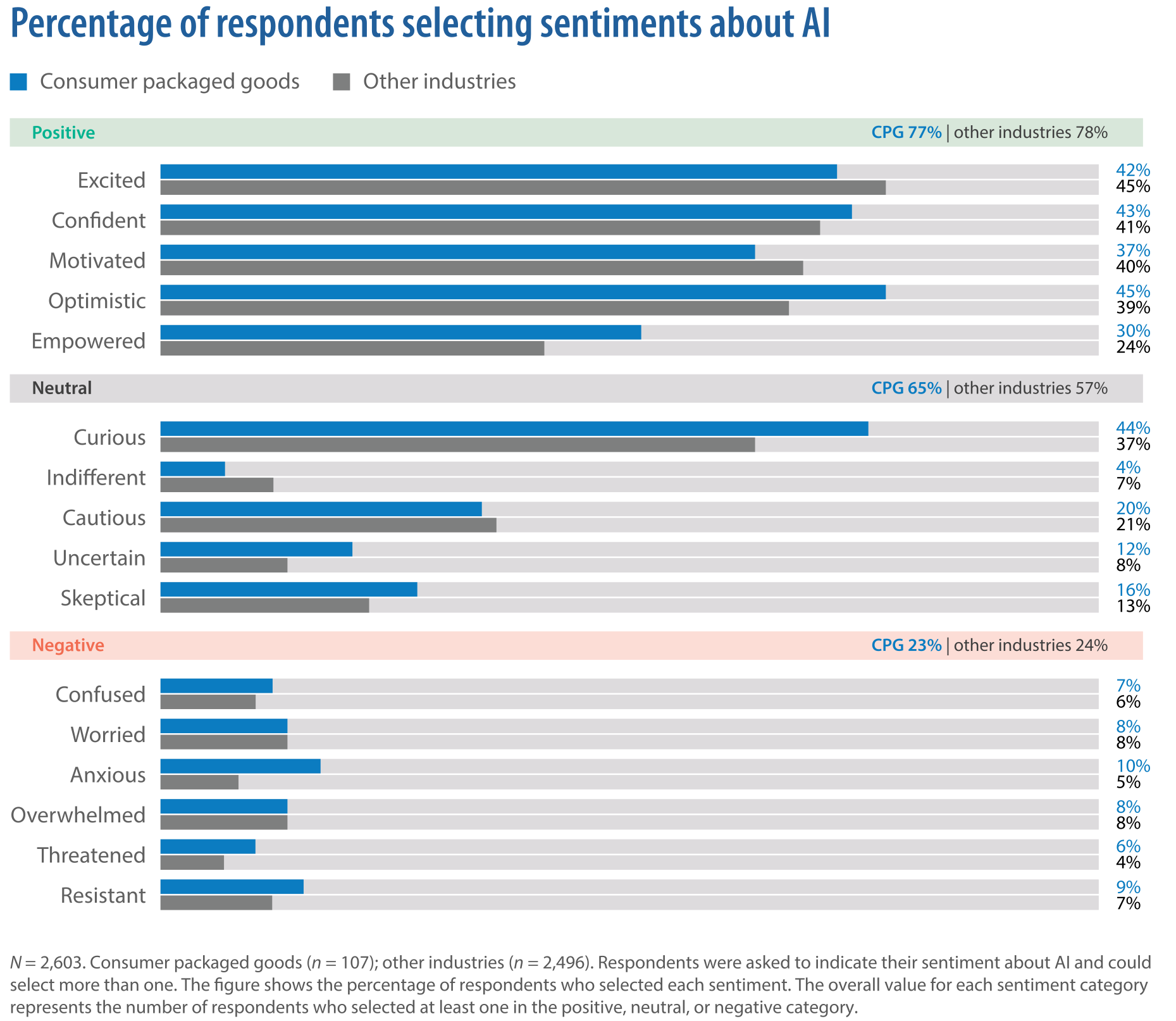
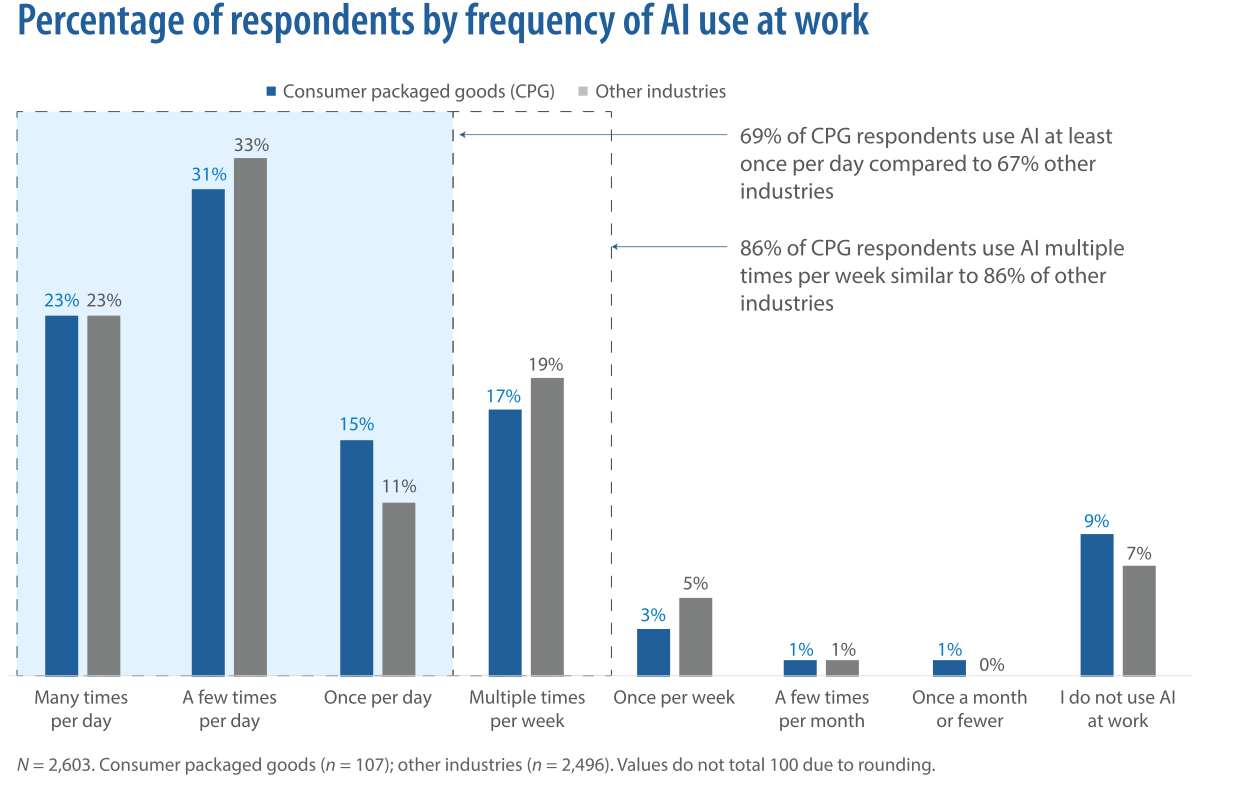
Across the consumer packaged goods (CPG) industry, AI is becoming part of daily work, showing up in areas such as cybersecurity, customer service, marketing, and sales and revenue. Infosys’ AI and the Future of Work research found that CPG employees are likely to report higher levels of optimism, empowerment, and curiosity about AI than their peers in most other industries (Figure 1). CPG employees’ AI usage is also high: Nearly 90% use AI at work, and 86% use it multiple times a week (Figure 2).
While CPG wasn't a first-wave adopter historically, trailing financial services and telecom, it has caught up and is now one of the leading industries in the current AI and agentic AI wave.
Figure 1. CPG employees feel overwhelmingly positive about AI
Source: Infosys Knowledge Institute
Figure 2. AI use is high among CPG employees
Source: Infosys Knowledge Institute
Yet this headline enthusiasm masks a more complicated picture. On closer inspection, a generational divide emerges. Gen X and baby boomer employees adopt AI more slowly and use it for fewer task types than their younger colleagues. At the same time, CPG organizations are falling short on the fundamentals such as strategic clarity, regular training, permission to experiment, and reassurance about data safety that turn curiosity into sustained, confident use.
With the older workforce growing and retirement ages rising across several major markets, closing these gaps will be central to how CPG companies capture value from AI across their entire workforce.

The generational divide
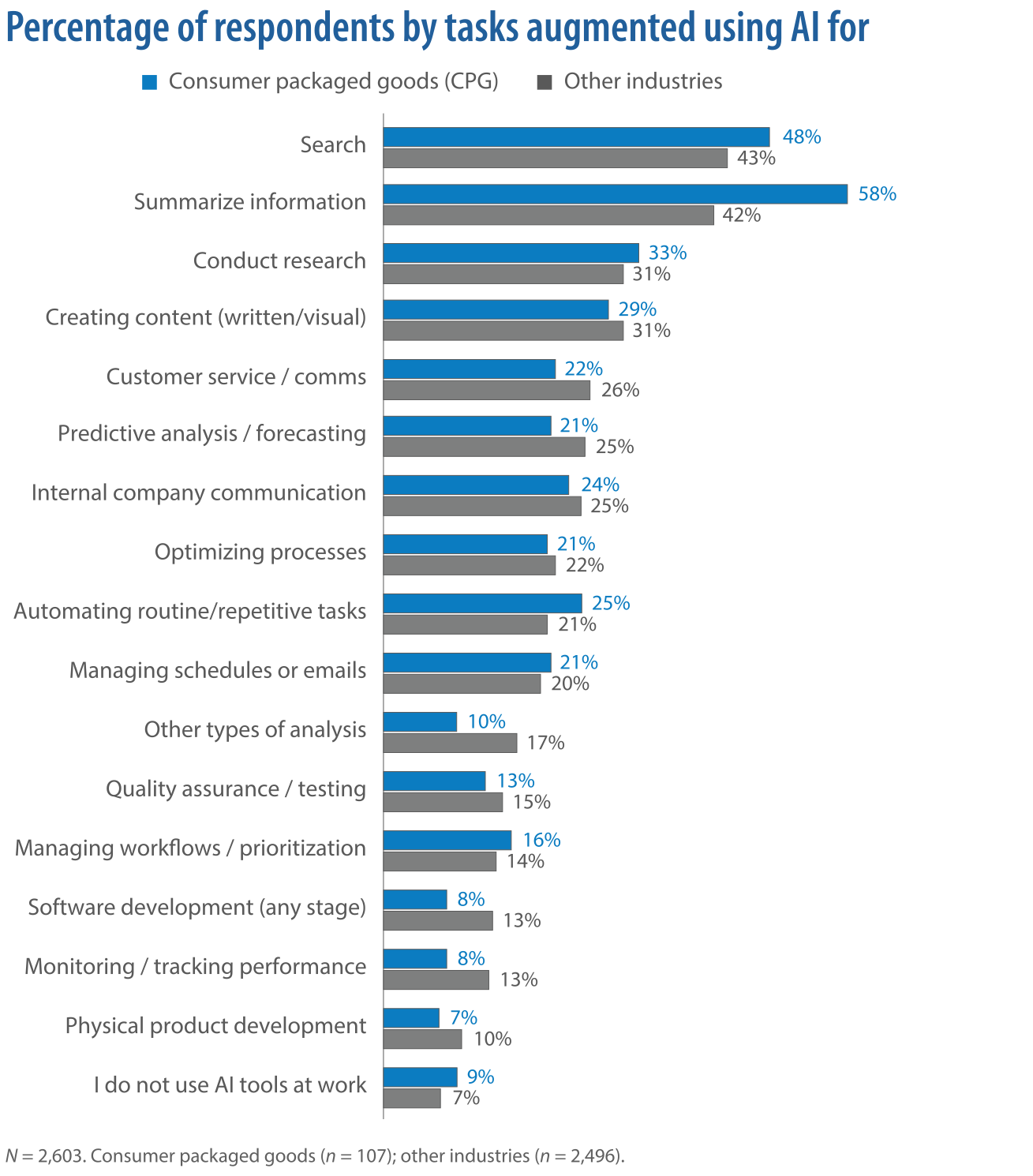
While CPG stands out for how positively its workforce views AI, and this sentiment is translating into real usage (Figure 3), when adoption is broken down by age, a clear pattern is seen. The Infosys research found that Gen X and baby boomer CPG employees are least likely to complete most task types using AI compared to their younger colleagues – 3.2 task types on average in Gen X and baby boomers, versus 4 among millennials and 3.4 in Gen Z employees.
“Many experienced employees have built highly effective ways of working over decades, supported by deep domain knowledge and judgment. If a task is already familiar, they may not immediately see why AI adds value. AI can also feel like a black box, creating concerns about accuracy, reliability, and making mistakes, particularly in areas such as pricing, quality, regulatory compliance, customer communication, or supply-chain decisions,” says Rakesh Pissay, AI architect, Infosys strategic technology group. He adds: “There can also be a psychological dimension. Employees may worry that AI will diminish the value of expertise they have spent years developing, change their role expectations, or expose a lack of familiarity with new technology. Generic AI training can reinforce this problem if it teaches the technology rather than showing how AI solves problems in their specific job. Resistance to AI is not necessarily the issue. It is often a combination of lack of relevance, confidence, trust, and hands-on experience.”
This generational adoption divide means that even in an industry with strong overall enthusiasm for AI, a meaningful share of the workforce risks being left behind as AI becomes more central to how work gets done.
Figure 3. Search, information summary, and research are top tasks CPG employees use AI for
Source: Infosys Knowledge Institute
Why the stakes are rising
An aging workforce that isn't going anywhere
This divide matters more than it might have a decade ago, because the older segment of the workforce is both larger and staying employed longer. In the US, the number of workers aged 65 and older has grown roughly fourfold since the 1980s, driven by longer lifespans, healthier aging, the decline of traditional pensions, and the rising costs of living that make continued work a financial necessity for many. Meanwhile, several major markets are moving in the same direction from the policy side: the UK, France, and some Nordic countries are both set to raise their state pension ages in the years ahead. Taken together, these trends mean Gen X and baby boomer employees will remain a substantial and growing part of the CPG workforce for years, if not decades, to come, making it critical for employers to bring them along on the AI journey rather than treating AI adoption as a young worker's initiative.
Organizational support hasn't kept pace with employee enthusiasm
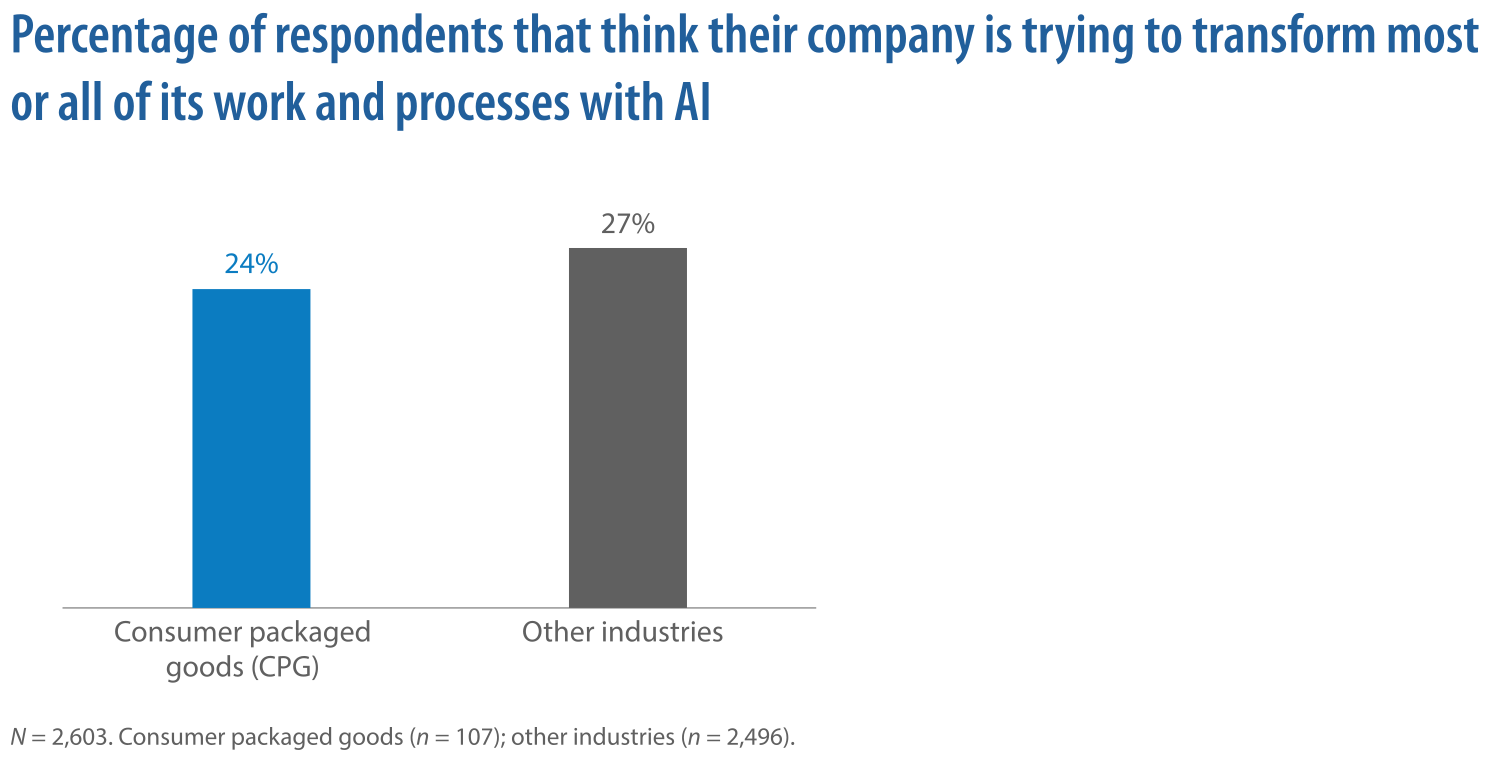
Age, however, is not the only barrier. Even accounting for the generational gap, only 24% of CPG employees believe their organization is trying to transform their processes using AI (Figure 4). This could suggest that a majority of employees are skeptical there's real intent behind the AI push, even if they've heard messaging about it.
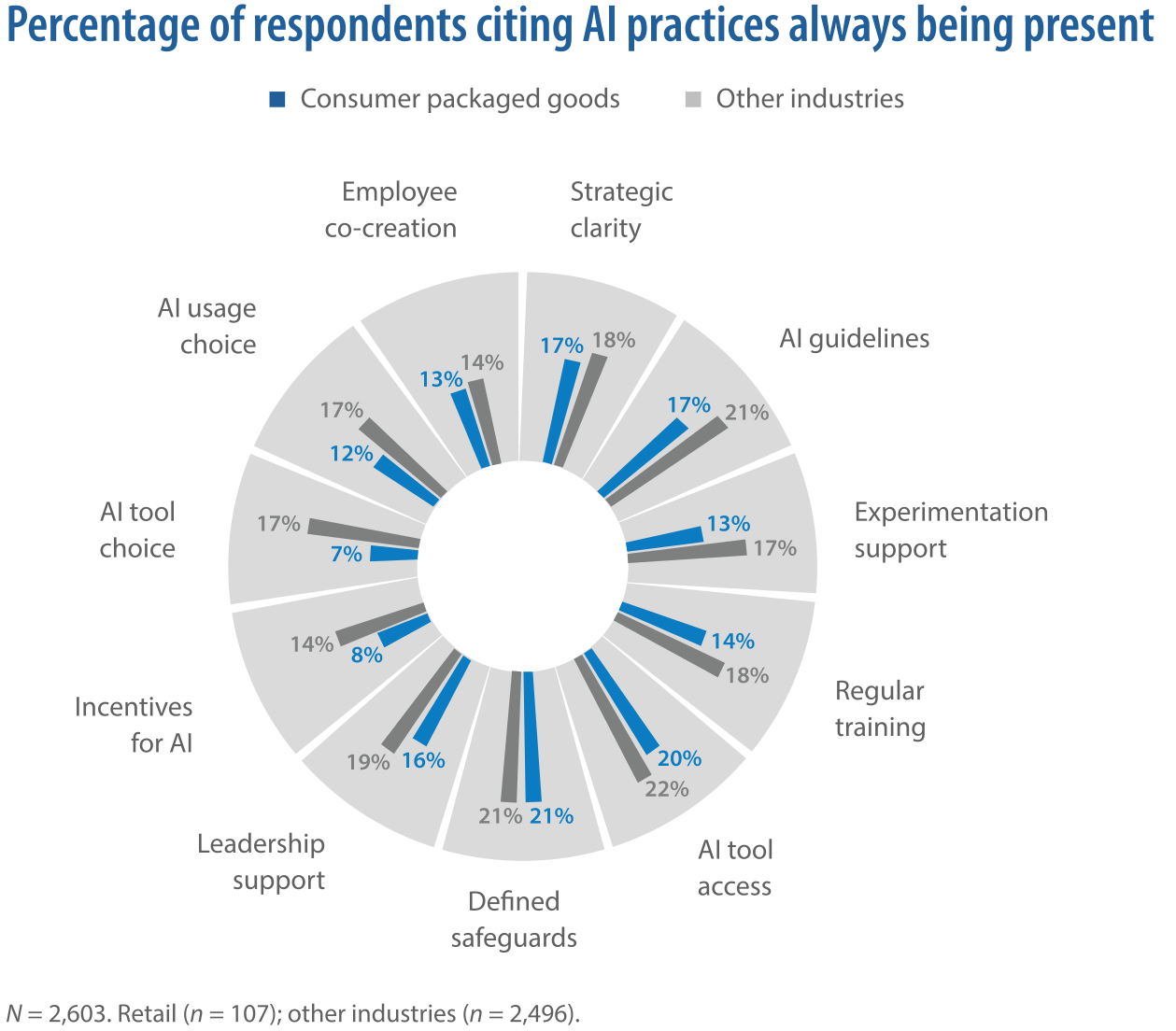
CPG employees broadly say their organizations are not giving them what they need to use AI with confidence. Only 17% are likely to say their organization always provides strategic clarity about AI, only 14% are likely to say they always receive regular training, and only 13% say they always feel supported to experiment with AI (Figure 5). In other words, employees are curious and willing, but employers have not built the scaffolding in the form of clear direction, consistent skill-building, and psychological safety to try things and fail that turns interest into habitual, effective use.
Figure 4. Gap in transformation perception among CPG employees
Source: Infosys Knowledge Institute
Figure 5. Foundational factors for AI adoption are lagging in the CPG industry
Source: Infosys Knowledge Institute
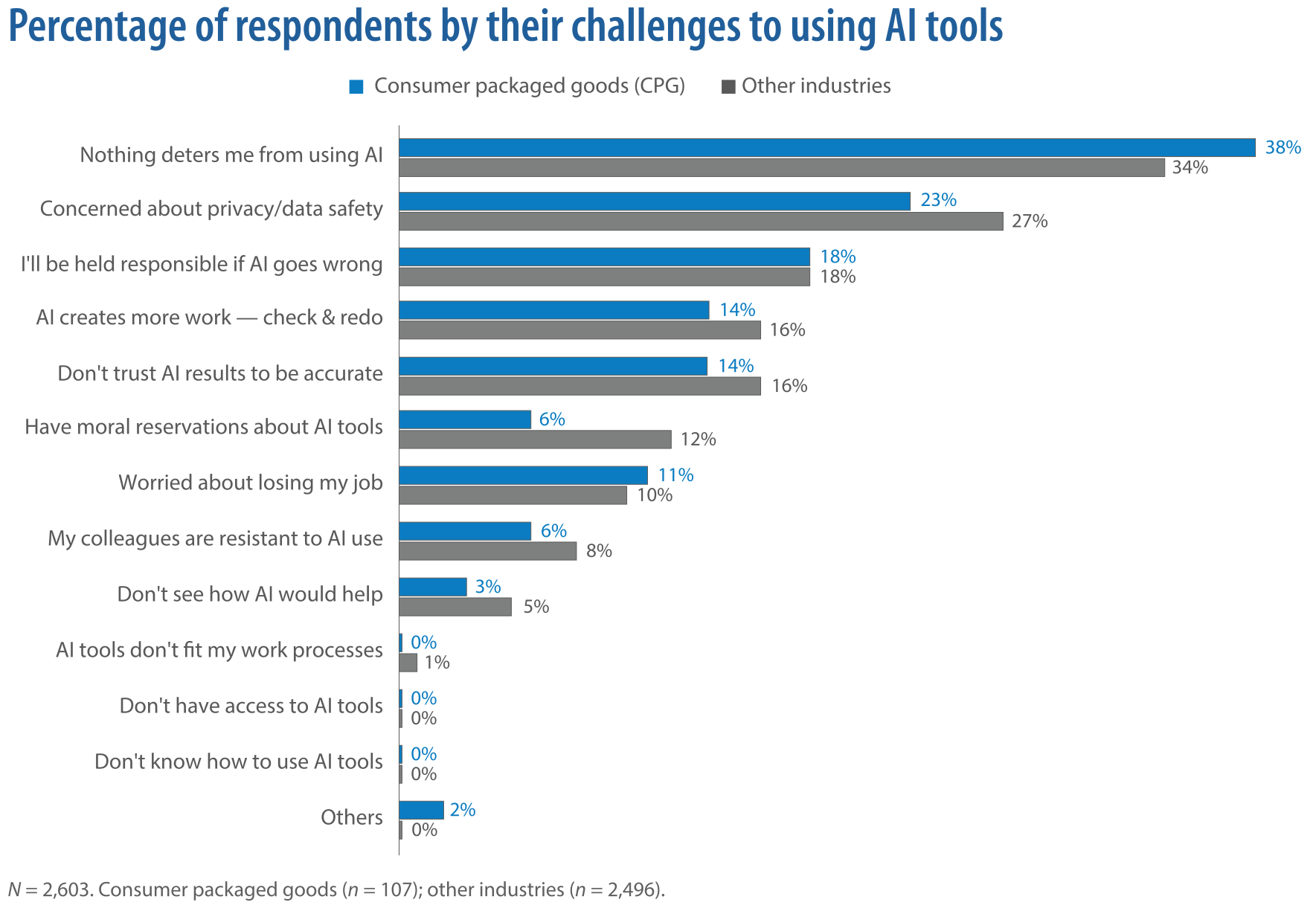
Data safety compounds the problem. While 38% of the CPG employees surveyed said nothing deters them from using AI, CPG employees are more likely than employees in other industries to express concern about the safety of their data when using AI (Figure 6). This could stem from CPG employees working with data related to proprietary formulation, pricing, and supplier information, not to mention their own personal information. Left unaddressed, this concern can further hinder adoption, particularly for employees who are already cautious about new technology. Together, thin organizational support and unresolved data concerns risk stalling AI adoption just as it is gathering momentum, and risk widening the generational gap already present.
Figure 6. CPG employees face barriers to AI adoption
Source: Infosys Knowledge Institute

Turning enthusiasm into enterprisewide adoption
CPG organizations have a genuine advantage to build on: a workforce that already feels positive about AI and is using it more than most. The task now is to convert that goodwill into durable, enterprisewide adoption that delivers measurable business value. That means addressing both halves of the problem at once.
On one side, that means treating older employees as a priority audience for AI enablement. As older employees will make up a growing share of the workforce that needs to work confidently and productively with AI, closing the generational adoption gap moves from being a nice-to-have diversity consideration to a necessity in workforce planning to ensure balanced AI adoption.
On the other side, CPG organizations need to strengthen and communicate the basics that any employee, regardless of age, needs to adopt AI with confidence, be it a clear strategic narrative for why AI matters for the organization and where it is headed; consistent and role-relevant training, support to experiment, and credible answers to data-security concerns.

The formula for success
CPG organizations should take measures to close the generational divide, strengthen organizational support, and capitalize on employees' existing enthusiasm for AI:
- Target the generational gap directly: Create regular feedback channels specifically for Gen X and baby boomer employees to surface their barriers to AI adoption — whether that's confidence, relevance, or access — and design targeted interventions, such as peer mentoring or age-appropriate onboarding, to bridge the generational usage gap.
- Make experimentation safe: Leadership should actively encourage employees at every level, from brand managers testing AI-generated campaign concepts to supply chain planners running AI-assisted demand scenarios, to experiment with AI in their day-to-day work. They should pair that encouragement with clear guardrails on issues like proprietary formulation data, consumer data, and retailer-sensitive pricing information. This helps employees know what responsible experimentation looks like and feel confident trying without fear of getting it wrong. Rakesh Pissay advises: “Trust needs to be designed into the AI experience. Employees should have very clear answers to three questions: What can I put into AI? What must I never put into AI? Which AI tools am I authorized to use? Employees need simple and clear guidance on what data can be used with AI, what must remain protected, and which tools are approved by the organization. CPG companies should provide secure enterprise AI platforms with appropriate access controls, monitoring and audit capabilities, supported by practical training using real examples of safe and unsafe usage. Early involvement of security, legal and compliance teams can help establish clear guardrails without slowing innovation. When employees understand that their data, business information and professional responsibilities are protected, they are more likely to adopt AI with confidence. Ultimately, AI adoption is a trust equation. Employees need to trust the technology, trust the organization’s safeguards, and trust that using AI will enhance rather than threaten their professional value. When relevance, confidence and governance are addressed together, the generational divide becomes much easier to close.”
- Make privacy protections visible: Proactively explain in plain language how the organization protects sensitive data, including employee, consumer, supplier, and proprietary company information, when employees use AI tools. Visible, specific reassurance can do more to reduce anxiety than a generic policy statement buried in an intranet page.

- Provide continuous, role-specific training: Move beyond one-off training sessions to ongoing, role-specific AI education that evolves alongside emerging CPG use cases from formulation and demand forecasting in R&D and supply chain, to trade promotion optimization in sales, generative content in marketing, and AI guidance in shelf display, so employees feel genuinely supported rather than left to figure things out on their own. Says Pissay: “The focus should shift from ‘teaching AI’ to ‘teaching using AI to do the job better.’ CPG organizations should make AI adoption practical, role-based and collaborative. Instead of teaching AI as a technology, they should demonstrate how it can improve everyday tasks and start with simple, low-risk use cases that deliver visible benefits. Younger, digitally confident employees can work alongside experienced colleagues, creating two-way learning where technology skills and business expertise are shared. Leaders should actively use AI and reinforce that it is designed to augment experience and judgment, not replace them. Continuous coaching, easy access to support and recognition of successful adoption can further build confidence. The objective should be to combine the experience of older employees with the digital confidence of younger employees. They should not be treated as competing capabilities.”
- Curate tools by role and workflow: Offer employees a curated choice of AI tools aligned with their specific roles and workflows. This gives employees flexibility and choice while directing AI investment toward the use cases where it can add the most value.
AI adoption in CPG is on a strong trajectory, buoyed by a workforce that is unusually open to it. But sustaining that momentum and extending it across every generation of employees will depend on how deliberately CPG organizations invest in the strategic clarity, training, and trust that turn curiosity into lasting capability.

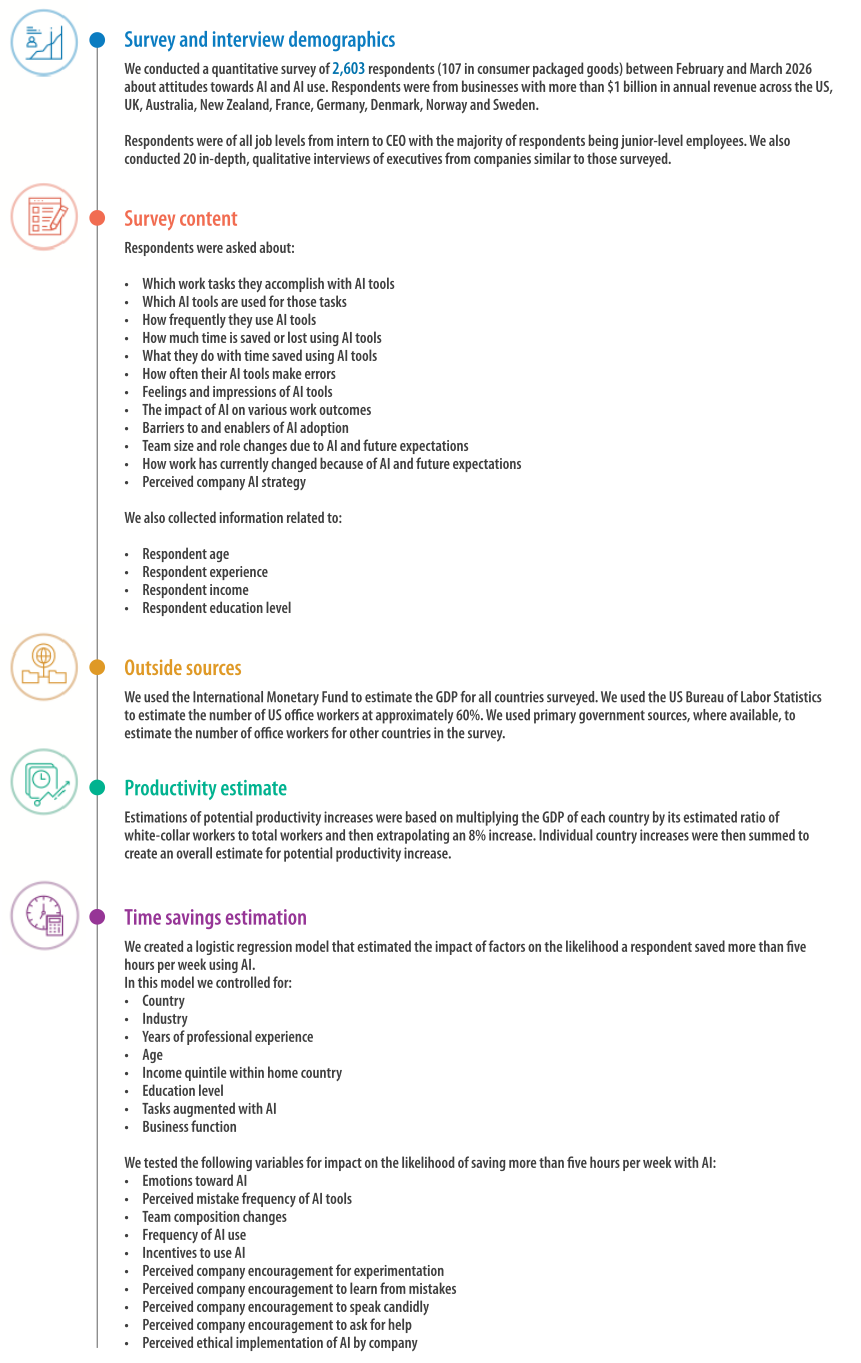
Appendix: Research approach

The technology for business resilience already exists. The advantage lies in how effectively logistics companies embed it into daily operations.
- 17 Sep, 2026

For retailers, the AI advantage will come from building the organizational muscle that lets employees use AI confidently.
- 09 Sep, 2026
- 6 min read

Retailers must prioritize AI-powered supply chain intelligence, seamless omnichannel experiences, and personalization to drive growth and resilience.
- 08 Sep, 2026
- 15 min read
