

Insights
- Although retailers have begun adopting AI, they lag their industry peers in getting business value from it.
- Disconnected omnichannel data and limited operating model change continue to hold value back.
- Achieving AI at scale will require treating AI use cases as long-term products rather than short-term experiments, alongside a fundamental redesign of enterprise architecture.
Executive summary
Retail is one of the most AI-active industries today. Competitive intensity, omnichannel complexity, and margin pressures are pushing retailers to experiment actively with AI across customer experience, operations, cybersecurity, and sustainability.
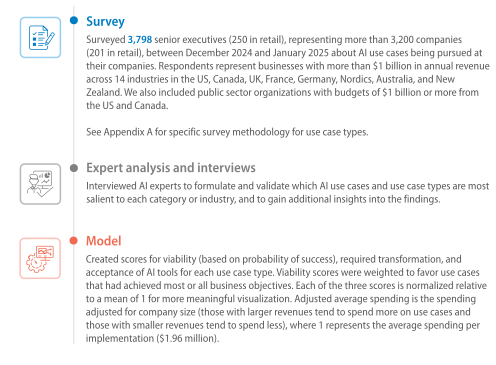
For its AI Business Value Radar, Infosys surveyed 3,798 business leaders globally. Of these, 250 were from the retail industry. The research shows that retail features a higher proportion of AI trailblazers compared to the cross-industry average. Close to 15% of retail organizations are in the planning stage of AI implementation and 10% are in the pilot stage — both above the average across industries. The retailers surveyed demonstrate particularly strong AI viability — the likelihood that their AI deployments will achieve all business objectives — especially in cybersecurity, sustainability, IT, operations, and facilities management.
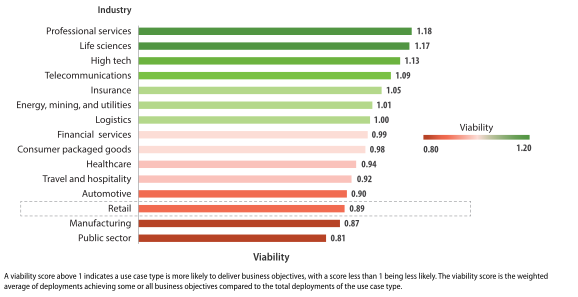
Yet retail underperforms in converting AI ambition into financial impact, compared to other industries (Figure 1). Despite strong experimentation, value realization remains uneven. The root causes include fragmented omnichannel data, misaligned use case prioritization, short-term ROI pressures, and insufficient operating model redesign. To realize better business value, retailers must transition from isolated AI projects to an AI-centered operating model, supported by unified data, modern architecture, and disciplined value tracking of their AI use cases.
Figure 1. Retail is below average in delivering business value
Source: Infosys Knowledge Institute

Ahead in AI experimentation
Retail’s operating environment makes it particularly fertile ground for AI adoption: the industry operates on thin margins that are highly sensitive to forecasting accuracy, meaning even small improvements in demand prediction, inventory planning, or pricing can significantly impact profitability. At the same time, customer expectations for highly personalized experiences continue to rise, pushing retailers to use AI to analyze consumer behavior and tailor recommendations, promotions, and engagement in real time.
Adding to this complexity are volatile, globally interconnected supply chains, and rapidly expanding omnichannel ecosystems. Retailers today manage data flowing from physical stores, e-commerce platforms, marketplaces, and logistics networks, creating massive volumes of information that are difficult to process manually. AI helps retailers turn this data into actionable insights, enabling faster decisions, more resilient supply chains, and more seamless customer experiences across channels. These structural pressures explain why retail organizations are accelerating their AI adoption.
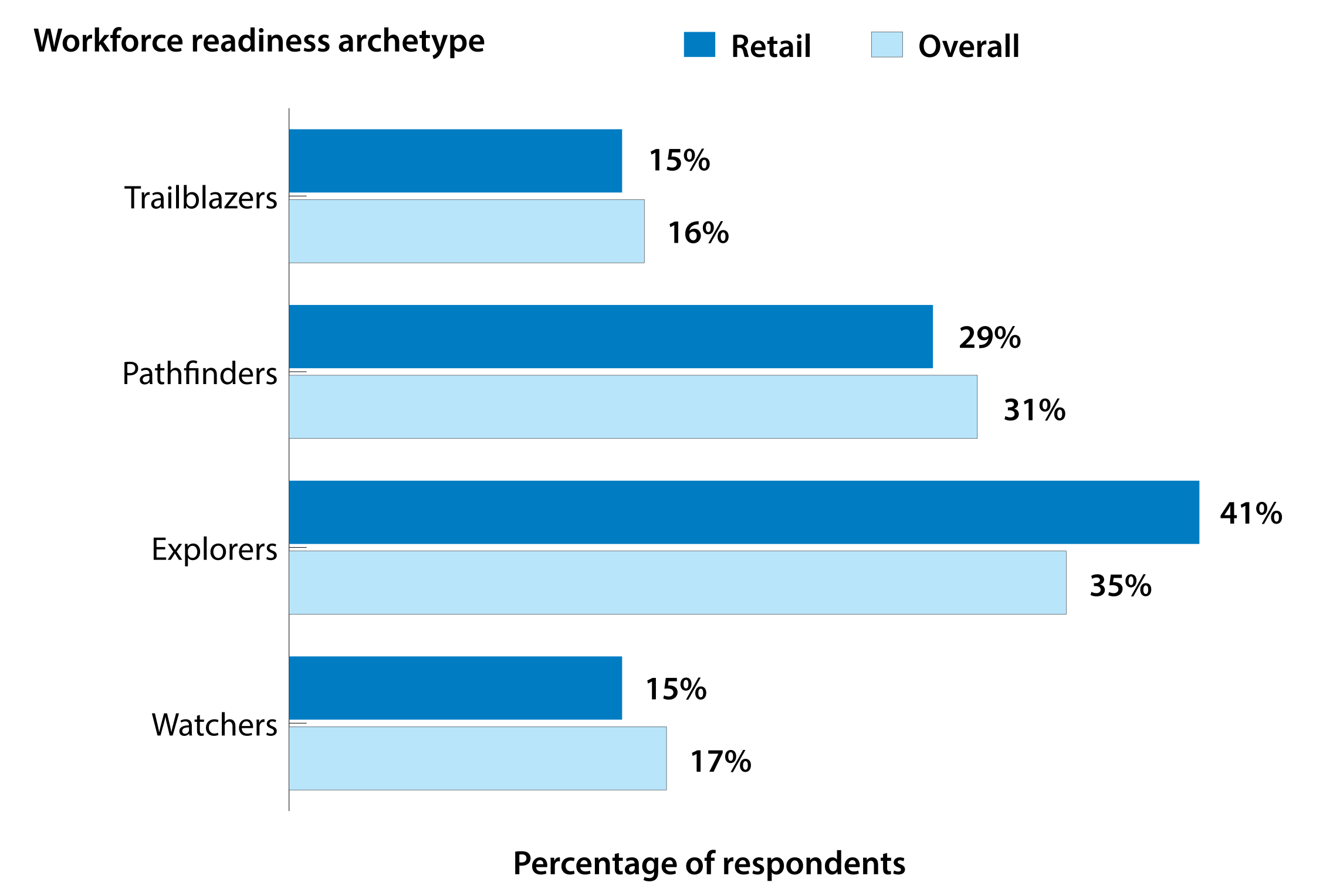
The Infosys research indicates that retail companies are moving quickly to explore and operationalize AI. Nearly 15% of retail businesses are in the planning stage of AI implementation, above the cross-industry average, while around 10% are already running pilot deployments, again outperforming peers in other sectors. This suggests many retailers are actively experimenting with AI and assessing where it can deliver the most value across operations.
In the research, respondents were grouped into four archetypes based on which of the following definitions matched their employee engagement with AI:
- Watchers: Organizations with minimal engagement with employees on AI, and limited or no training, education, or change management initiatives.
- Explorers: Companies taking initial steps to address AI with limited change management practices; employees have minimal involvement or support in understanding AI’s role.
- Pathfinders: Organizations with regular training and educational programs on AI and growing employee engagement.
- Trailblazers: Companies fully engaged in continuous AI training, education, and change management, with employees fully supported in understanding and adapting to AI.
A high share of retail companies qualifies as AI trailblazers (Figure 2), signaling strong leadership in experimentation and strategic intent. These organizations are not only testing AI but also integrating it more deeply into business processes, positioning themselves to have competitive advantages in areas such as customer engagement, merchandising, and supply chain management.
Figure 2. High number of trailblazers in the retail sector
Source: Infosys Knowledge Institute
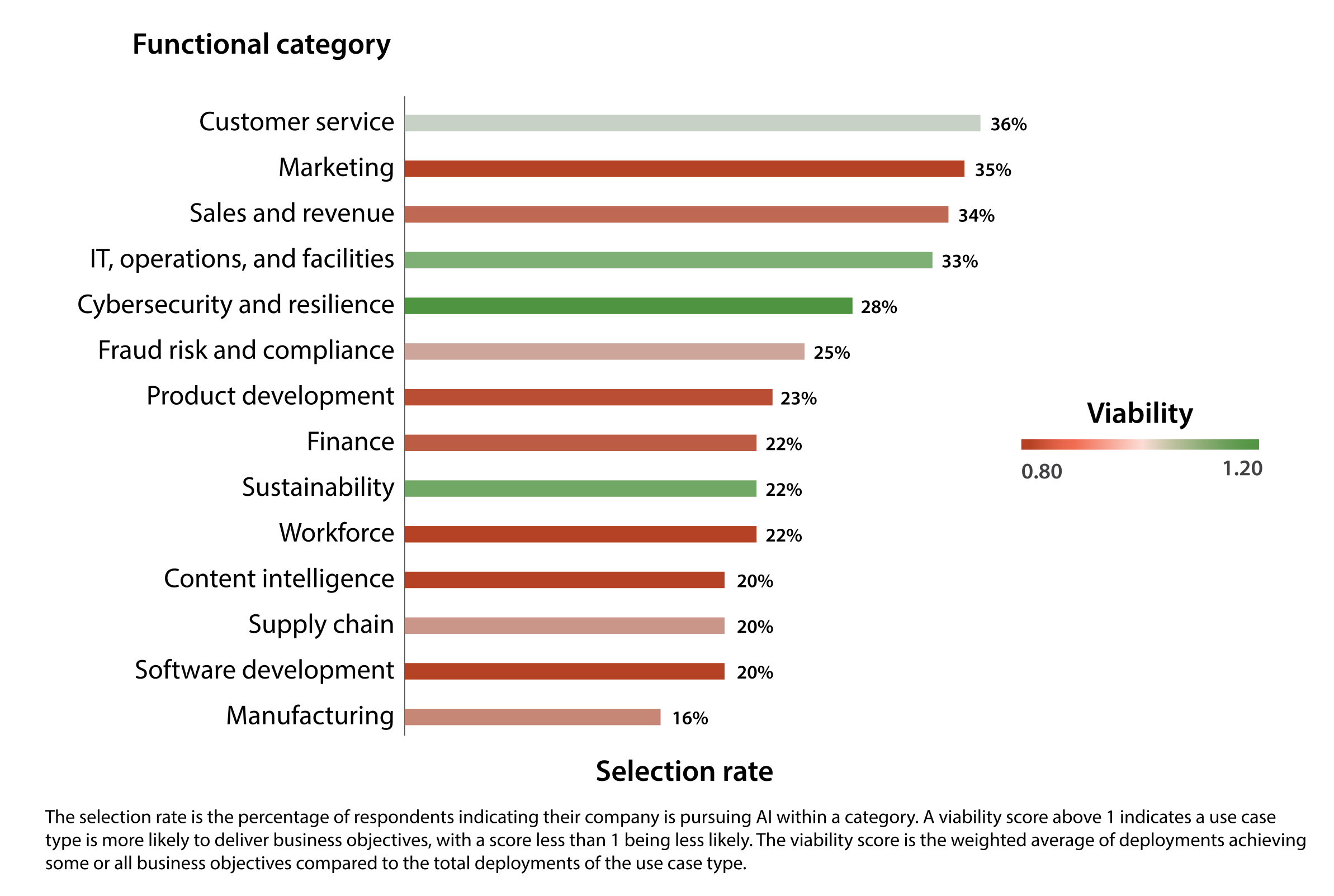
When it comes to retail’s strongest AI viability areas, cybersecurity dominates in viability, followed by sustainability, and IT, operations, and facilities (Figure 3).
Figure 3. Popularity and viability of functional use case categories
Source: Infosys Knowledge Institute
Cybersecurity
As retailers digitize, the attack surface expands. This is particularly evident during peak shopping periods, when cyberattack and payment fraud risks increase significantly. AI is increasingly deployed for anomaly detection, fraud prevention, and transaction monitoring across point-of-sale (POS) and e-commerce systems.
Sustainability
AI-driven analytics support waste reduction, optimized logistics, energy efficiency in stores, and improved demand forecasting to reduce overproduction. Germany-based hypermarket retailer Kaufland uses AI to analyze around 800 days of sales data for each of its nearly 30,000 products across 1,200 stores. Using this data, the company runs a 100-day rolling forecast to fine-tune inventory levels and order the right quantities at the right time and apply discounts to products that must sell quickly or risk spoilage.

IT, operations, and facilities
Retailers are leveraging AI to automate service management, monitor store performance, optimize workforce scheduling, and improve infrastructure uptime.
Agentic commerce is gaining momentum in the US retail market and gradually expanding into Europe and Asia-Pacific. This involves highly autonomous AI agents interacting with software systems and digital platforms to execute defined tasks and achieve specific objectives on behalf of users. These include applying consumer preferences and analyzing products, pricing, and availability across platforms to recommend purchase-ready options, allowing customers to complete their shopping journey without leaving the chat session. “For retailers, agentic commerce is a strategic opportunity to integrate intelligence directly into the consumer interface, enabling context-aware purchasing experiences on a large scale,” says Ravindar Vanam, Infosys senior director of consumer, retail, and logistics.
In short, retail is not lagging in AI adoption. It is investing broadly and testing aggressively. However, experimentation alone does not equal getting business value.
Trails in business value realization
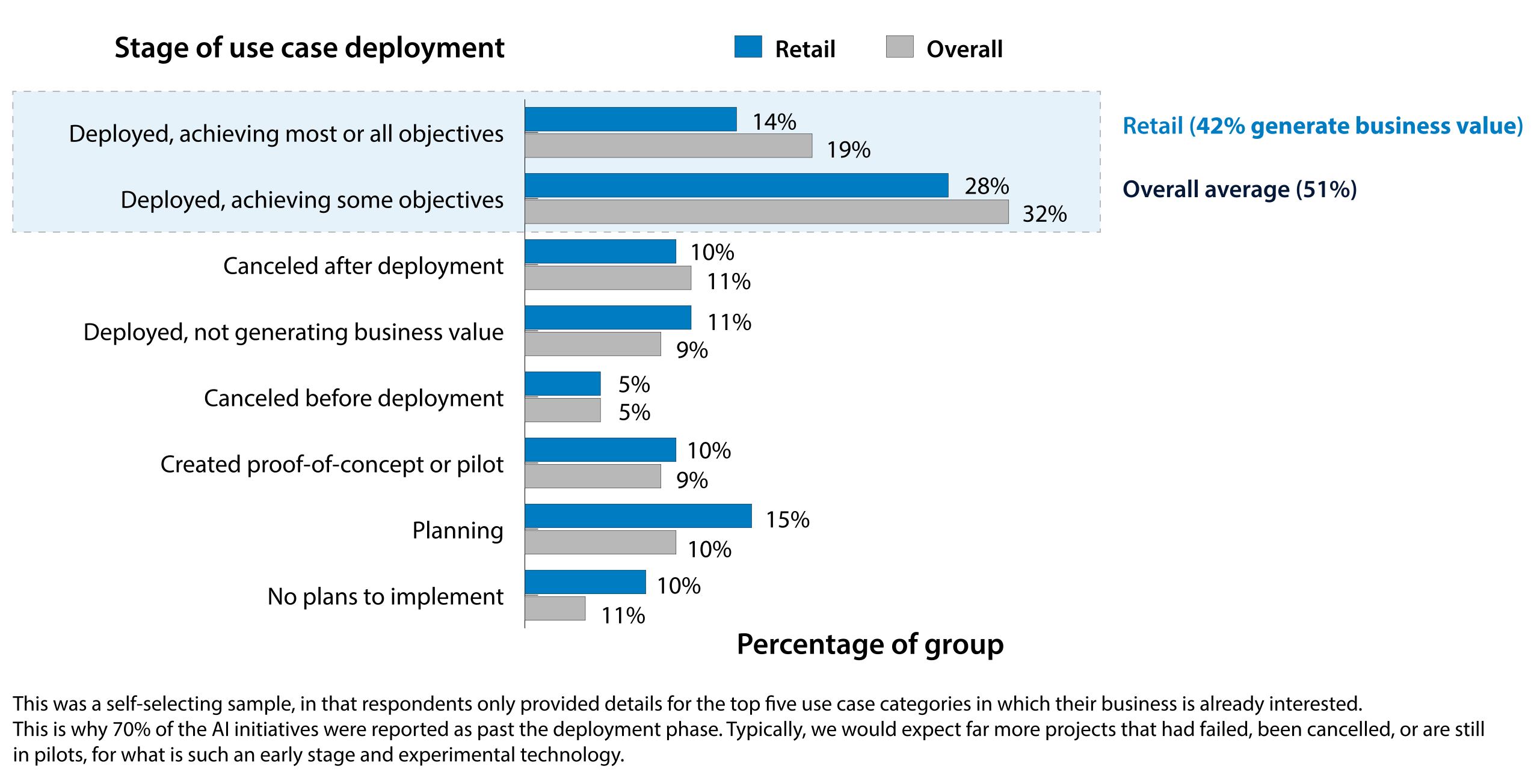
Retail’s use of AI falls short in delivering measurable outcomes, as per the Infosys study. It is relatively below average in delivering business outcomes using AI initiatives in its use cases, compared to other industries. Only 42% of AI use cases in retail generate business value, compared to 51% across industries (Figure 4). This gap signals a structural issue: retail is deploying AI, but not consistently converting it into higher margins, better working capital, or sustained cost savings.
Figure 4. Less than half of AI use cases generate business value
Source: Infosys Knowledge Institute
Four major constraints explain this underperformance.
Fragmented omnichannel data weakens AI performance
Retail data environments are inherently complex and fragmented, weakening AI performance. Customer data is spread across in-store POS systems, e-commerce platforms, mobile apps, loyalty programs, and customer relationship management systems, while operational data resides in warehouse and transportation management systems, supplier platforms, and assortment planning tools. Many of these systems were built at different times and operate in silos with inconsistent data standards. Without a unified data foundation, AI models lack complete context and struggle to capture the full picture accurately. This can cause inventory optimization models to misfire and personalization engines to rely on incomplete customer views. Data fragmentation reduces model accuracy, explainability, and trust, making it difficult for retailers to scale AI effectively.
Overemphasis on visible use cases
Retailers often prioritize highly visible customer-facing AI initiatives such as chatbots, conversational commerce, recommendation engines, and personalized marketing campaigns. While these tools can improve engagement and customer experience, they typically deliver incremental gains rather than meaningful structural financial impact. In contrast, high-impact use cases, such as promotion effectiveness modeling, assortment rationalization, inventory and replenishment optimization, and markdown optimization, receive less consistent investment. Although these use cases can improve margins, they require deeper system integration and stronger cross-functional coordination. Many retailers’ AI portfolios remain skewed toward quick wins rather than such long-term structural transformation.
Short-term ROI pressures constrain scaling
Retailers operate under intense quarterly margin scrutiny, which often constrains the scaling of AI initiatives. As a result, AI pilots are frequently judged on immediate performance uplift rather than long-term, multicycle impact, and funding is tied to short-term cost reduction targets. In many cases, pilots are evaluated before they have been tested across full seasonal cycles. However, AI-driven demand forecasting, pricing, and inventory optimization models typically require one to two seasonal cycles to stabilize and demonstrate consistent earnings before interest and taxes (EBIT) impact. When ROI expectations are compressed, promising pilots often stall in experimentation and fail to scale across the enterprise.
Limited operating model redesign
In many retailers, AI initiatives remain confined to IT or analytics teams rather than embedded within core business functions. This creates structural challenges, such as a lack of clear business product ownership, limited alignment across merchandising, supply chain, and data teams, and insufficient action to support continuous deployment. Governance models are often fragmented, further slowing progress. Without redesigning the operating model to integrate AI into day-to-day decision-making, organizations struggle to move beyond experimentation and turn AI into an institutionalized capability.
Redesign around AI-driven decision-making
To close the value gap, retailers must move beyond isolated use case experimentation and redesign their enterprise architecture and governance to support AI at scale. This requires three structural shifts: moving from siloed data environments for each retail channel such as physical stores or the retailer’s e-commerce site to unified omnichannel intelligence; transitioning from one-off AI projects to scalable AI products, and shifting from pilot-level success metrics to clear accountability for long-term financial impact.
Ultimately, AI needs to be integrated as a core part of how retail operations and workflows run, from assortment planning and pricing to supply chain decisions and checkout experiences, rather than an additional layer or experiment on top of legacy systems. Achieving meaningful value will require enterprisewide transformation, not just incremental optimization.
Blueprint for scaling AI
Adopt an AI product operating model
Retailers should adopt an AI product operating model that treats AI use cases as long-term products rather than short-term experiments. This involves assigning clear business product owners for major AI initiatives, defining roadmaps and life cycle plans, and tying key performance indicators directly to EBIT drivers. Cross-functional squads that bring together merchandising, supply chain, IT, and analytics teams are also essential to ensure solutions are aligned with operational needs. This ensures the solution fits real business needs and day-to-day retail operations, not just technology-focused objectives. Combined, these measures create stronger accountability and help ensure AI initiatives deliver sustained business value over time.
Build a unified omnichannel data foundation
Retailers need to build a unified omnichannel data foundation, since AI accuracy depends on access to integrated, high-quality data. This requires consolidating data from POS systems, e-commerce platforms, inventory systems, and supply chain networks into a common environment. Establishing standardized data models, enabling real-time data streaming, and strengthening governance and data quality controls are also essential. With a unified foundation in place, retailers can significantly improve demand forecasting, pricing optimization, and inventory accuracy: capabilities that directly influence margins and operational efficiency.
Modernize technology architecture
Retailers need to modernize their technology architecture to support AI at scale. This means transitioning toward cloud-native data platforms, application programming interface (API)-first integration layers, and modular AI microservices. Such a modular architecture allows organizations to deploy AI models more rapidly, integrate them smoothly across systems without ripping out their existing systems, and continuously monitor and improve their performance. As a result, retailers can scale AI capabilities more efficiently across business units while maintaining flexibility and resilience in their technology stack. It’s imperative for retailers to also invest in upskilling their employees to effectively use the new technologies.
Institutionalize value tracking
Retailers must institutionalize value tracking to ensure AI initiatives deliver measurable business impact. Before deployment, organizations should establish clear baseline metrics such as gross margin, inventory turns, forecast accuracy, sell-through rates, and shrink. These benchmarks create a reference point for evaluating the real contribution of AI models once they are implemented.
After deployment, retailers should track incremental uplift against control groups and evaluate performance over at least one to two seasonal cycles to capture true demand variability. Funding and further scaling should be tied to validated financial impact rather than early pilot signals. This disciplined measurement approach helps convert AI from a series of experiments into a strategic, enterprise asset.
Rebalance toward high-impact use cases
Retailers should rebalance their AI investment portfolios toward high-impact use cases that directly influence EBIT and structural margin performance, such as demand forecasting, dynamic pricing, promotion optimization, inventory and replenishment optimization, and assortment rationalization. These use cases have helped retailers, such as Walmart, The Home Depot, and Target reduce stockouts and excess inventory, improve sell-through rates, enhance gross margins, and free up working capital across the business. Zara has also used AI to predict demand and reduce stockouts. While customer-facing AI initiatives remain important for engagement and experience, they should complement rather than dominate the overall AI portfolio.
The turning point
Retail is not behind in AI ambition. It is ahead in experimentation and early-stage adoption. However, to outperform other sectors and close the value realization gap, retailers must shift from fragmented initiatives to enterprise-scale transformation. They must unify data, modernize architecture, align AI portfolios with EBIT drivers, and institutionalize operating model change to move from AI-enabled pilots to AI-powered enterprises. The next phase of retail AI will be defined by moving from experimentation to execution at scale. Retailers that embed AI into core operations will be the ones that translate innovation into measurable business value.
Appendix A: Use cases
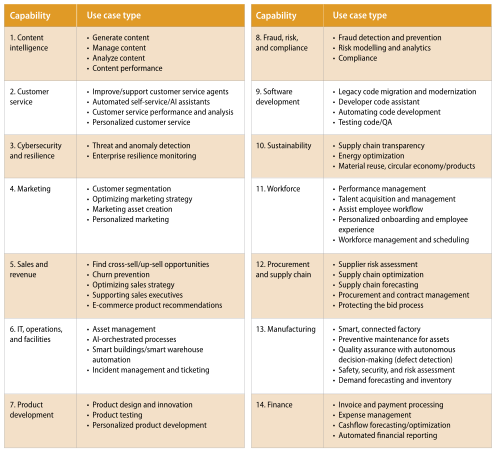
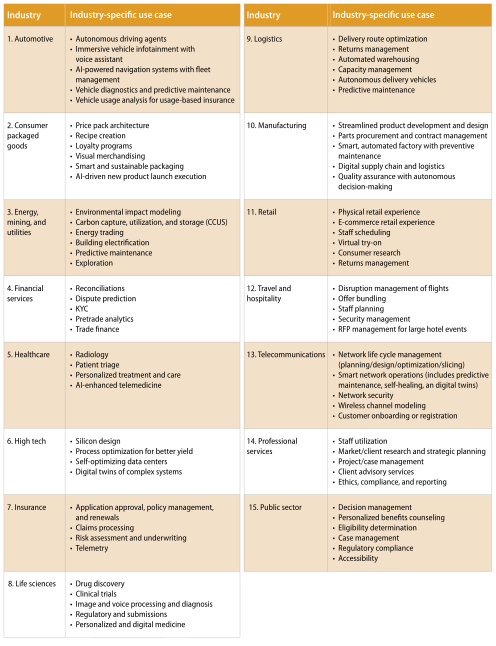
Based on interviews with subject matter experts and desk research, we collated 55 use case types across 14 categories (Figure A1). We similarly collated 77 industry-specific use case types across 15 industry sectors (Figure A2). All these use case types are themselves at a level of abstraction higher than a specific use case to make the survey manageable, but they are also relevant for all respondents. The survey asked respondents to select up to five functional categories out of 14 (Figure A1), where their companies are pursuing AI.
Figure A1. Functional categories and their use case types
Source: Infosys Knowledge Institute
Respondents provided details on these categories, which were the top five that their company is already interested in. As such, this is a self-selecting sample. In Figure 1, for example, we would typically expect far more projects that had failed, been canceled, or been in pilots for what is an early stage and experimental technology. Each category had between two and six common use case types (for example, product recommendation use cases in the sales and retail category). For each use case type within a category, respondents were asked about the stage of implementation of their initiative(s). Options for this question were: No plans to implement; planning; created POC or pilot; canceled before deployment; deployed, not generating business value; canceled after deployment; deployed, generating some business value; deployed, achieving most or all objectives. Respondents were then asked about the amount of spending for that use case type to date (from any start date). This was followed by questions about the amount of operational or business model change as well as the amount of change in data structures and technical architecture needed for each use case type.
Finally, respondents were asked about the proportion of their user base that accepted and used the AI tool deployed (if any) for each use case type. The same series of questions was asked for industry-specific use case types for the industry of the respondent (Figure A2).
Figure A2. Industry-specific use case types
Source: Infosys Knowledge Institute
Appendix B: Research approach
Source: Infosys Knowledge Institute



For retailers, the AI advantage will come from building the organizational muscle that lets employees use AI confidently.
- 09 Sep, 2026
- 6 min read

Retailers must prioritize AI-powered supply chain intelligence, seamless omnichannel experiences, and personalization to drive growth and resilience.
- 08 Sep, 2026
- 15 min read

Companies that tailor their offerings and messaging to evolving consumer priorities will be better equipped to sustain demand as spending becomes more selective.
- 30 Jul, 2026
- 12 min read
