



Press Releases
Six Promising Researchers Win the Infosys Prize 2026 Awarded by the Infosys Science Foundation
Laureates include researchers working at the frontiers of quantum technology, wireless networks, constitutional law, human health, macro-economics, and mathematics
Bengaluru, India – November 12, 2026
Six rising stars of research were announced as winners of the Infosys Prize 2026 by the Infosys Science Foundation (ISF) today. The Prize is awarded in six categories - Economics, Engineering and Computer Science, Humanities and Social Sciences, Life Sciences, Mathematical Sciences, and Physical Sciences. Since it was established in 2009, the Infosys Prize has honored the remarkable accomplishments of individuals whose research and scholarship significantly advances knowledge and contributes to the progress of India and the world. The prize for each category comprises a gold medal, a citation, and a prize purse of USD 100,000 (or its equivalent in INR).
The laureates of Infosys Prize 2026 were selected by an international panel of jurors comprising renowned scholars and experts. From 2024, the prize has shifted focus to honor researchers under the age of 40, emphasizing the need for early recognition of exceptional talent. This encouragement of early career researchers will serve as an inspiration for the next generation of scholars and future innovators.
The winners of the Infosys Prize 2026 were announced by the trustees of ISF - Mr. Srinath Batni (President, Board of Trustees), Mr. K. Dinesh, Mr. Kris Gopalakrishnan, Dr. Pratima Murthy, and Mr. S. D. Shibulal. Mr. Narayana Murthy addressed the audience in a recorded message. The other trustees of ISF - Mr. Mohandas Pai, Mr. Nandan Nilekani, and Mr. Salil Parekh - also extended their congratulations to this year’s recipients.
The Infosys Prize remains the largest award in India that acknowledges excellence in science and research. Laureates of the Infosys Prize have gone on to receive several prestigious international awards, including the Nobel Prize (Abhijit Banerjee and Esther Duflo), the Fields Medal (Manjul Bhargava and Akshay Venkatesh), the Dan David Prize (Sanjay Subrahmanyam), the MacArthur ‘genius’ Grant and British Academy Book Prize (Sunil Amrith), the Breakthrough Prize in Fundamental Physics and Oskar Kline Medal (Ashoke Sen), the Marconi Prize (Hari Balakrishnan), the Leverhulme Prize (Mahmood Kooria), and the Ramanujan Prize (Mahesh Kakde). Several laureates have also been elected fellows of the Royal Society, among them Gagandeep Kang, who became the first Indian woman to be elected Fellow of the Royal Society.
Srinath Batni, President, Infosys Science Foundation, said, “I extend my warmest congratulations to the winners of the Infosys Prize 2026. Their work demonstrates how rigorous research and the pursuit of new knowledge can deepen our understanding of the world and help address some of humanity’s most complex challenges. Recognizing exceptional researchers early in their careers is particularly important, as it gives them the encouragement and opportunity to pursue bold questions, challenge established thinking and make lasting contributions to their fields. At the Infosys Science Foundation, we believe that nurturing scientific talent and fostering a strong research culture are essential to advancing knowledge and shaping a better future for humanity. I hope this recognition inspires more young minds to embrace research and push the boundaries of discovery.”
Meet the winners of the Infosys Prize 2026 whose pioneering research is helping shape a better future:
Economics
The Infosys Prize 2026 in Economics is awarded to Karthik Sastry, Associate Professor of Economics and Public Affairs at Princeton University, for his pioneering contributions to the field of climate change, and technological innovation, and to the study of business cycle fluctuations. His work provides deep insights into how societies adapt to climate change through technological innovations and is likely to have far-reaching policy implications.
Engineering and Computer Science
The Infosys Prize 2026 in Engineering and Computer Science is awarded to Swarun Kumar, Assistant Professor of Electrical and Computer Engineering at Carnegie Mellon University. Prof. Kumar’s pioneering work extends low-power wireless networks beyond information delivery to perception and action in the physical world. He combines insights on the physics of wireless technology with novel architectures and algorithms to obtain innovative designs in connectivity, sensing, control, and actuation.
Humanities and Social Sciences
The Infosys Prize 2026 in Humanities and Social Sciences is awarded to Gautam Bhatia, Adjunct Professor at Jindal Global Law School and Green Fellow at the University of New South Wales in Sydney. Prof. Bhatia is an outstanding young legal scholar, prodigiously productive, tremendously wide in his range of knowledge and interests, with a real gift for marshalling arguments rigorously towards conclusions that seek to make the law an instrument for constructing a fair, equal, and humane society. His five books and many academic articles amount to a formidable corpus of important work. His mastery of the scholarly literature goes beyond the law in to neighboring disciplines that have an impact on the law, such as macro-economics, sociology, political theory, and moral philosophy.
Life Sciences
The Infosys Prize 2026 in Life Sciences is awarded to Isha Jain, Associate Investigator at the Gladstone Institutes and Assistant Professor at the Department of Biochemistry at the University of California, San Francisco. Prof. Jain has been awarded for her pioneering discoveries in oxygen biology, which showed that tissue damage in some mitochondrial diseases arises from excess oxygen rather than energy failure, and for turning fundamental biochemical insights into new therapeutic strategies, including designing a small-molecule to reduce oxygen levels and vitamin-based treatments for inherited metabolic disorders.
Mathematical Sciences
The Infosys Prize 2026 in Mathematical Sciences is awarded to Riddhipratim Basu, Associate Professor at the International Centre for Theoretical Sciences of the Tata Institute of Fundamental Research (ICTS-TIFR) in Bangalore. Prof. Basu is being awarded for his outstanding contributions to probability theory and statistical physics. His work resolved the longstanding slow-bond problem and established new large deviations asymptotics. He has settled conjectures on fluctuations for percolation models including those that are not exactly solvable. He also developed explicit combinatorial descriptions of Wilson loop expectations in two-dimensional lattice Yang–Mills theory in an asymptotic strong-coupling regime.
Physical Sciences
The Infosys Prize 2026 in Physical Sciences is awarded to Manoj Kumar Joshi, an experimental physicist and Assistant Professor at Singapore University of Technology and Design (SUTD). Prof. Joshi’s pioneering work with trapped ions, creating programmable quantum machines that reveal how complex quantum systems behave, and turning the promise of quantum simulation into experimental reality. Quantum computers and simulators promise to unlock discoveries beyond the reach of classical computers, transforming our understanding of matter and opening new possibilities in materials science and chemistry.
About Infosys Science Foundation
The Infosys Prize is awarded by the Infosys Science Foundation, a not-for-profit trust set up in 2009. The award is given annually to honor outstanding achievements of contemporary researchers and scientists in six categories: Economics, Engineering and Computer Science, Humanities and Social Sciences, Life Sciences, Mathematical Sciences, and Physical Sciences. Each prize consists of a gold medal, a citation and a purse of USD 100,000. The award intends to celebrate success in research and stand as a marker of excellence in these fields.
Jury Chairs
Prof. Kaushik Basu | Prof. Jayathi Murthy | Prof. Akeel Bilgrami | Prof. Mriganka Sur | Prof. Chandrashekhar Khare | Prof. Shrinivas Kulkarni
Trustees
K. Dinesh | Srinath Batni | S. Gopalakrishnan | Narayana Murthy | Pratima Murthy | Nandan Nilekani | T. V. Mohandas Pai | Salil Parekh | Shibulal S.D.
About Infosys
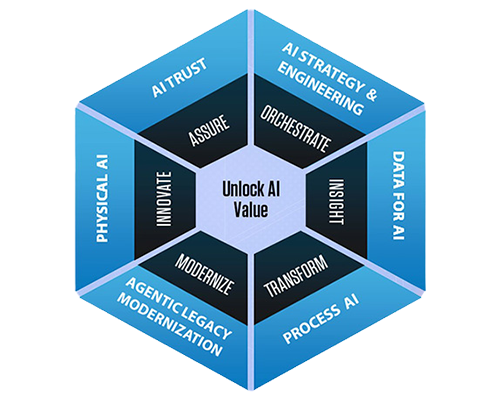
Infosys (NSE, BSE, NYSE: INFY) is a global leader in AI first business consulting and technology services. Over 325,000 of our people work to amplify human potential and create the next opportunity for people, businesses, and communities. As navigators of enterprise transformation, we enable businesses in 59 countries to unlock AI value at scale. With over four decades of experience in managing the systems and workings of global enterprises, we accelerate business transformation through our AI-first value framework, deep domain expertise, and our unique ability to orchestrate innovations from our AI-native partner ecosystem. Infosys is recognized as the fastest growing IT services brand globally, committed to being a well-governed, environmentally sustainable partner for our clients where deep talent expertise, in an inclusive workplace, help them navigate their next.
Safe Harbor
Certain statements in this release, including those concerning our future events, future growth prospects, our future financial or operating performance and our offerings and collaborations are “forward looking statements” intended to qualify for the 'safe harbor' under the Private Securities Litigation Reform Act of 1995. Such forward-looking statements are based on our current expectations, assumptions, estimates and projections about the Company, our industry, economic conditions in the markets in which we operate, and certain other matters. These forward-looking statements are subject to substantial known and unknown risks, uncertainties and other factors, that could cause actual results or outcomes to differ materially from those implied by such forward-looking statements. Important factors that may cause actual results or outcomes to differ from those implied by the forward-looking statements include, but are not limited to, risks and uncertainties regarding the execution of our business strategy, increased competition for talent, our ability to attract and retain personnel, increase in wages, investments to reskill our employees, our ability to effectively implement a hybrid work model, economic uncertainties and geo-political situations, technological disruptions and innovations such as artificial intelligence, the complex and evolving regulatory landscape including immigration regulation changes, particularly in the United States, our Environmental, Social, Governance (“ESG”) vision, our capital allocation policy and expectations concerning our market position, future operations, margins, profitability, liquidity and capital resources, our corporate actions including acquisitions, cybersecurity matters, the outcome of pending litigation and the US government investigation, and the effect of current and future tariffs. These and additional factors that may cause actual results or outcomes to differ from those implied by the forward-looking statements are discussed in more detail in our US Securities and Exchange Commission filings including our Annual Report on Form 20-F for the fiscal year ended March 31, 2026. These filings are available at www.sec.gov. In light of these and other uncertainties, you should not conclude that the results or outcomes referred to in any of the forward-looking statements will be achieved. Infosys may, from time to time, make additional written and oral forward-looking statements, including statements contained in the Company's filings with the Securities and Exchange Commission and our reports to shareholders. The Company does not undertake to update any forward-looking statements that may be made from time to time by or on behalf of the Company unless it is required by law.
Media contact
For more information, please contact: PR_India@Infosys.com
