
Vikram Mahidhar on AI, Value Creation & the Reinvention of Private Equity


-
 00:05
00:05
Subhro Mallik
We are starting to see in the world of private equity that the investment periods are getting longer, return on investment is under question as it stands currently.
-
 00:14
00:14
Vikram Mahidhar
There are three forces that are really driving many of the thesis that we underwrite in private equity. Number one, there is war for talent.
-
00:23
Vikram Mahidhar
The second is obviously geopolitical landscape, but the third piece is technology. If I am looking to hire for a CEO, I want technologists as a CEO, not just a commercial leader. What I am not a huge fan of is creating a whole bunch of use cases. It has to change fundamentally either your operating model, business model, products and offerings that creates material value.
-
00:46
Subhro Mallik
You can derive a whole different value when you look at the entire business.
-
00:49
Vikram Mahidhar
The cost of intelligence is going down to zero. I think AI transformation is going to become the third piece that is going to help portfolio companies create disproportionate amount of value.
-
01:05
Subhro Mallik
Good morning, good afternoon and good evening. I am Subhro Mallik and welcome to the next episode of Talking Breakthroughs.
-
01:11
Subhro Mallik
In the last couple of episodes, we have talked to various stakeholders who have shared their deep experiences in the industry and how technology is reshaping their industries. Today, it is my privilege to welcome Vikram Mahidhar to our show. He is a partner at Griffin Investors. Welcome, Vikram.
-
01:29
Vikram Mahidhar
Thank you.
-
01:30
Subhro Mallik
So, Vikram, let us get started with our conversation here. You have had decades of experience working with various private equity firms. However, if you look at the current private equity environment that we are in, we have a lot of forces pulling us in different directions. The macroeconomic situation is pretty bad or rather challenging if you want to say. Technology is playing its own role.
-
01:52
Subhro Mallik
And what we are starting to see in the world of private equity is that the investment periods are getting longer, return on investment is under question as it stands currently. So, if you look at the overall private equity world, can you share your perspectives about how the current situation is reshaping what you are thinking about from a private equity perspective? And second, how do you see this world of private equity evolving as we navigate ourselves through these changes that are coming?
-
02:19
Vikram Mahidhar
Yeah, look, thanks again for having me. This dialogue is always kind of enjoyable because every six months, every 12 months, the backdrop changes. But currently as we speak, obviously, there are three forces that are really driving many of the thesis that we underwrite in private equity. Number one, there is war for talent.
-
02:43
Vikram Mahidhar
Constantly, we look at how talent is being acquired, how talent is making our portfolio companies successful. So, that is one of the big macros. The second is obviously geopolitical landscape and how it is changing.
-
03:01
Vikram Mahidhar
But the third piece is technology. There is no question that technology and particularly all the AI investments are reshaping, at least forcing every dealmaker to rethink if the technology is going to impact investment. Is it going to impact over the whole period? And if yes, how should we underwrite? And how should we transform the companies that we hold so that we can get an outcome that we are underwriting?
-
03:34
Subhro Mallik
So, I think there is a great perspective, like the war for talent, the macroeconomics, and as you rightly said, technology and AI. So, if you double down a little bit on the last one, if I look at the current challenge of how tight it is from an exit perspective, from a PE perspective, how do you see AI helping you on that journey? Do you see AI as helping you? How do you want to incorporate AI into your investment thesis that you are doing? So, what are your thoughts on that?
-
04:01
Vikram Mahidhar
So, look, let me break this into two parts. Number one, we invest in multiple verticals. The vertical that I focus on is investing in services software or AI services businesses. And the second piece is I am going to call it companies that can be transformed using AI, where we can create disproportionate advantage in terms of value creation. And in both areas, there is tremendous amount of demand, if you may, for value creation. There is also tremendous amount of opportunity for value creation.
-
04:44
Vikram Mahidhar
And what we are doing is we are underwriting the thesis right up front with clear understanding of how things are going to unfold with regard to AI value creation. Now, as you know, the pace at which the technology is moving, it is very hard to predict over a five year hold period, give or take, what will we be able to produce or not. And because of that, we tend to build a lot of optionality in our thesis to make sure that we are able to pivot the thesis appropriately. But based on where we sit and what we do today, it is very apparent that there are several industries where we see dislocation in the industry because of AI, because of technology, and we are getting better at underwriting that thesis as we go along.
-
05:37
Subhro Mallik
So Vikram, you made a very interesting point, right? You are incorporating AI up front in your thesis and you are getting better at it. So there are two parts to it, right? The first part is, how are you going to make sure that you can stay steady for the next five years? So what guardrails are you bringing? And then going back to the point you made earlier about war for talent, right? How are you going to build it into this? Where are you going to find the talent and how are you thinking about in the world of private equity, that how is this talent going to get injected back into your portfolio company so that you do realize the thesis that you have?
-
06:08
Vikram Mahidhar
Yeah. So Subhro, I spend 20 percent of my time every week interviewing people, connecting with people, hire executives for my management team. And the big shift that I am seeing is now if I am looking to hire for a CEO, I want technologist as a CEO, not just a commercial leader. In fact, if I were to prioritize, I would say that technologist first, commercial second.
-
06:35
Vikram Mahidhar
It is fundamentally because the products and offerings of a company, any given company that is changing, right? And a technologist has a better shot at leading the company, defining that vision and also convincing the customers as to why customers should work with them. So that is sort of number one, is this talent readily available? In some cases, if you look out, you do find unicorns, but if not, we tend to work with some of the CEOs to shape them, even if they are a technologist.
-
07:11
Vikram Mahidhar
We will work with them to surround them with the right commercial team to make them fully effective in the marketplace. So that is sort of the executive level talent, if you may. The second piece is also how do we build more and more depth, particularly domain expertise, subject matter expertise at the second level and the third level. That has become uber critical because with AI, there are lots of tasks now can be executed pretty much automatically better than what humans can do. But AI is not able to bring in the context. It is not able to bring in the interaction and the judgment piece that is necessary.
-
07:58
Vikram Mahidhar
So I look at work that is being automated on a spectrum of four pieces. It starts with interaction, which is interaction with the customer. When you are selling something, making a judgment before you propose something to the customer, then gathering intelligence, processing information. The intelligence and the information piece is getting automated, but judgment is not going to get automated. So you are going to have a lot more information and that judgment requires a significant contextual filter. You can build all kinds of context graphs, but as a leader yourself, I am sure your team puts out all kinds of AI output in front of you. You are still using your context, knowing that which client stands where and basis that you kind of make a judgment, what is good for the client. And then finally, I believe that humans buy from humans.
-
08:54
Vikram Mahidhar
So that interaction is not going to go away. The value of that interaction is not going to go away. So I believe that the talent needs to be built around this continuum and that is where we are doubling down. I can come down to technology now, which is as we think about technology in our thesis building, right up front, we do a proper evaluation of how AI is going to really create value in our deal thesis. We create a value creation plan. Let us say there are four key levers of value creation. If AI is going to create value, there is a very clear number that is assigned to it. And then we work backwards from that number. One thing that I am not a huge fan of is creating a whole bunch of use cases and going after those use cases because they are going to deliver small incremental value, which is fine.
-
09:58
Vikram Mahidhar
Which you have to do as part of the continuous improvement as well, but it is hard to underwrite anything meaningful at the back of use cases. It has to change fundamentally, either your operating model, business model, products and offerings that creates material value as we think about a deal thesis. And I think we are having great success with it.
-
10:22
Subhro Mallik
Very well put, Vikram. So I think you rightly said it, as you said it, it is interesting to see how you are thinking about it. I will start with the technology, like you are underpinning it with some real thinking. And as you rightly said, MVPs, use cases are very micro in their ability to make an impact, whereas the impact of AI, if it truly did it, will be at a much bigger level. And you can derive a whole different value when you look at the entire business chain.
-
10:47
Subhro Mallik
But I think we have to go back to the talent piece. The talent piece is where fundamentally, as you look at judgment, as you look at these becoming the more important part, finding that talent is not going to be easy. So there is a lot of thesis in the market, and we have always come out saying we need more people, better talented people, we upskilled our people. And we have, we are where we are today. So my question to you, Vikram, is this a cry wolf situation that this time is going to be real, this time, you are really going to have a deeper impact on the services business, you will actually not need so many people. And then we are looking at some huge social issue, which we have no answers for possibly at this point. So what is your view on this as you look at the future?
-
11:33
Vikram Mahidhar
Yeah, so first of all, obviously, I am betting my career on investing in AI services businesses. So I believe that services business is going to actually grow multifold, pick your number, five times, 10 times, whatever your number is, I believe it is going to grow multifold. And here is the reason why. Software, if you look at fundamentally, or technology, fundamentally, it did two things. It automated work, and workflow. In the past, we wrote software. And then we arranged people around it to automate the workflow, and to execute the workflow. Now that whole thing is being rewritten.
-
12:18
Vikram Mahidhar
I think the old formula of for every dollar of software bought, there will be three to six dollars worth of services that will be consumed, I think that whole formula is being rewritten. As I talked about the continuum of interaction, judgment, intelligence and information, we right now are comparing the investment that has gone into frontier models, and all the infrastructure around it, to investment in software. So then we are saying, do I need services around it? Well, it is not equivalent to software, you invested in hardware. A lot of people compare it to energy infrastructure, or railroad infrastructure back in the days in the industrial era, you invested in infrastructure, the software and services are being rewritten. That is going to require deep context.
-
13:13
Vikram Mahidhar
And that deep context is going to come from both intelligence, as well as judgment. So it is going to require people, there is no question about it. It is going to be a different kind of people, different kind of skill sets. And as an industry, whether it is IT services industry or professional services industry, we did not set up the industry with software as its backbone to deliver services.
-
13:46
Vikram Mahidhar
So it is going to go through resetting. But if you really think about Jevons paradox, anything that becomes cheap, or the cost of it goes down to zero, the demand for it is going to go up dramatically. For example, I speak to some of my closest radiologist friends. And for the past 10 years, given that I have been in the AI field since 2008, I have been telling them that your job will be gone. Radiology will not exist. And when I talk to them, they tell me that their demand has never been this big ever before.
-
14:27
Vikram Mahidhar
Demand is just growing exponentially for radiology. Why? Because the cost of scanning, the cost of analyzing has just gone down so much that every doctor wants to get a scan done before they want to do a diagnosis. And now think about it, if the cost of intelligence is going down to zero, you would want that intelligence very quickly before you make a judgment on that particular decision. So to me, it is going to grow exponentially, the need for services is going to grow exponentially, the need for people engagement is going to grow exponentially, the shape is going to be different.
-
15:05
Subhro Mallik
Vikram, that was a fantastic point on how the talent pool will reemerge and we will rebuild on the talent pool. But now, let us talk a little bit differently as we end this conversation.
-
15:15
Subhro Mallik
You know, if you look at 10 years from now, or even 10 to 20 years and this evolution will happen. And if you had a crystal ball, what do you think the world is going to look like, especially as it pertains to the private equity business?
-
15:30
Vikram Mahidhar
Yeah, I know it is like my kids asking what career should I pick in the future? And it is very hard to predict. However, if I just put a private equity perspective on it, there is no question that we are going to see dislocation of value in pretty much every industry. There is no question. And private equity has been very good at identifying the dislocation and sizing the value and then going and executing on it. 40 years ago, as I understand, the industry started with financial engineering.
-
16:12
Vikram Mahidhar
Then a couple of decades into it, operations became an additional piece to it in terms of creating value. And as I roll forward for the next 10 years, I have to say that I think AI transformation is going to become the third piece that is going to help portfolio companies create disproportionate amount of value. And I am living it, just to give you an example.
-
16:44
Vikram Mahidhar
There is a company that we acquired and we are partnering with them to take the services that are delivered manually, now putting an AI into it and delivering the services using AI. And our thesis is that the gross margins are going to double. As soon as we acquired a technology company to tuck it under, we asked the technologists to go look at what we are doing today and how we should reimagine those services. And the technologists came back and said, here is a process that takes 17 and a half weeks for you to deliver. Actually, we can deliver in two weeks.
-
17:28
Vikram Mahidhar
And it is not all technology. It requires human interaction. It requires the trust between the client and the auditor. But outside of that, a lot of work got completely automated. That is a perfect example of dislocation. And I will have to say that we will see more and more of these as we go forward.
-
17:52
Subhro Mallik
Thank you, Vikram. That is a wonderful perspective. I think our kids will all have bright futures. They are just worried about it like all of us were. So thank you for coming on the show.
-
18:00
Vikram Mahidhar
Thank you. Thanks for having me.
-
18:01
Subhro Mallik
And thank you all for joining me on Talking Breakthroughs.
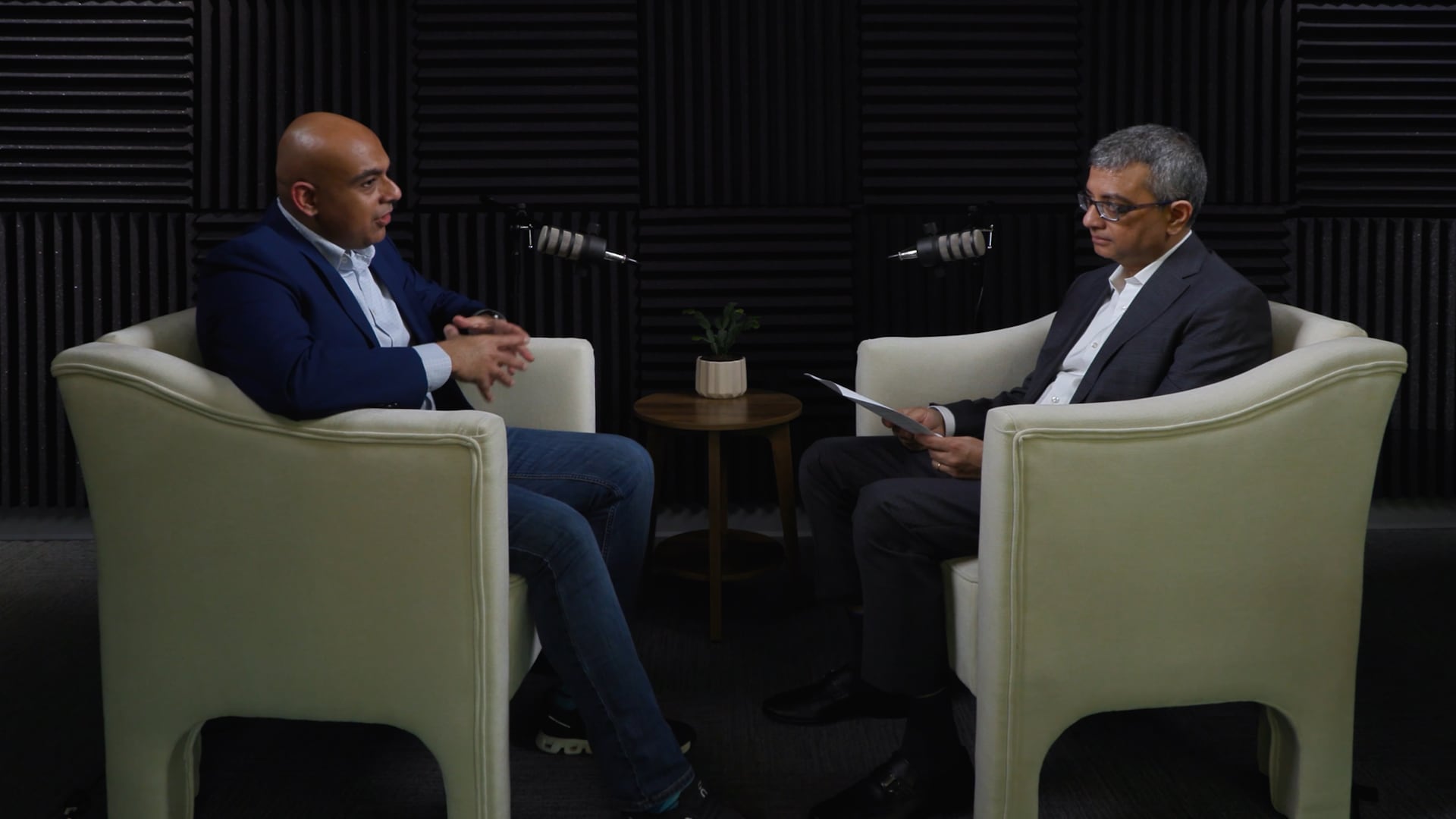
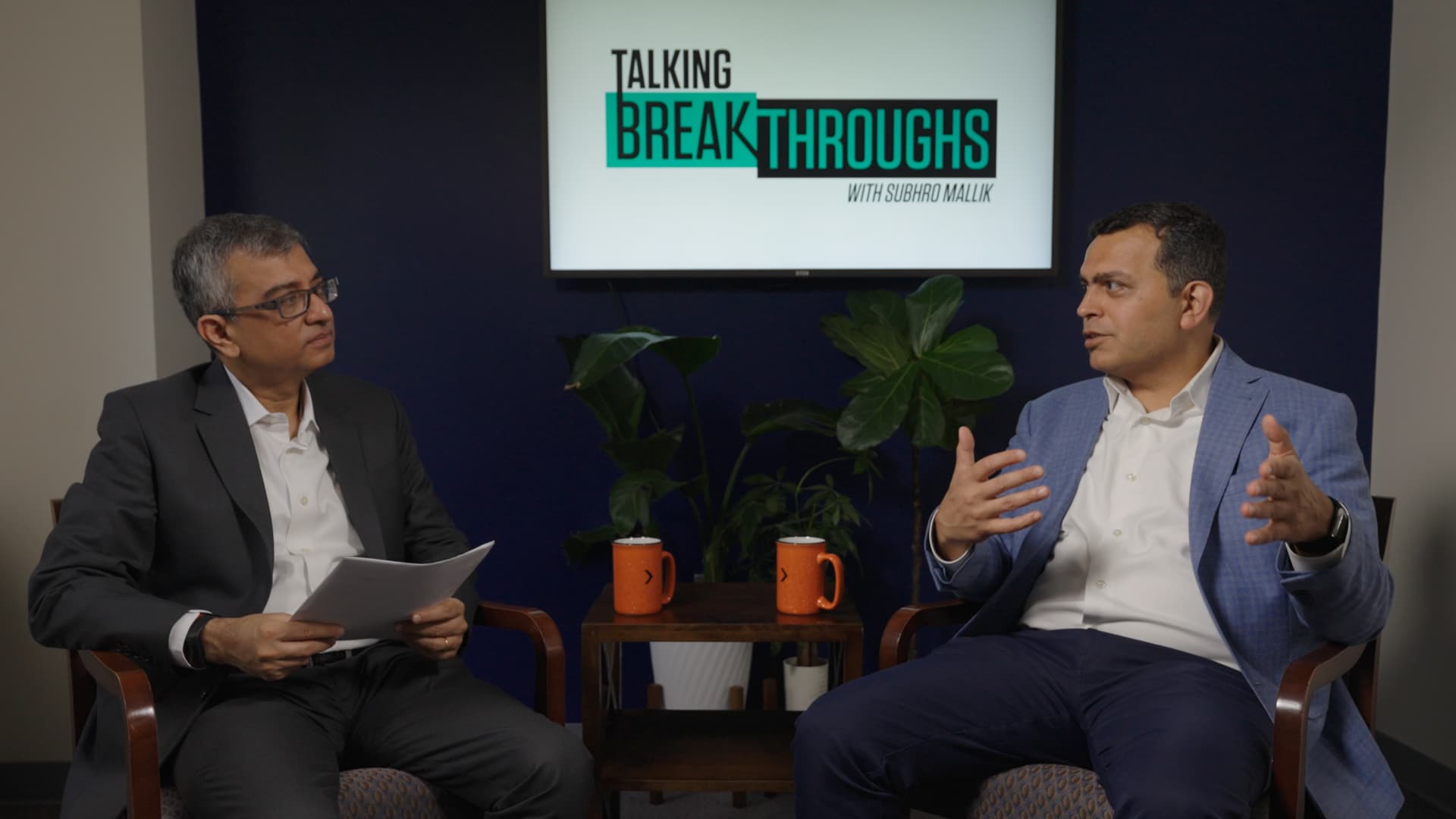
In Episode 2 of Talking Breakthroughs, Subhro Mallik speaks with Vikram Mahidhar, Partner – Co-Head of Tech Solutions and Services, Gryphon Investors about the next chapter of private equity in the age of AI. They examine how technology is reshaping investment strategies, transforming portfolio companies, and unlocking new pathways for growth, efficiency, and competitive advantage.
Speakers
-
Subhro Mallik
EVP, Infosys
-
Vikram Mahidhar
Partner – Co-Head of Tech Solutions and Services, Gryphon Investors