



Waste
Waste Management
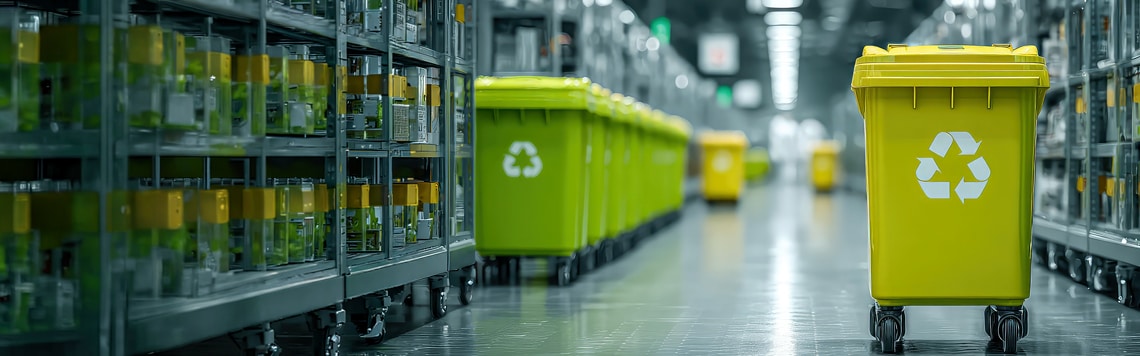
Infosys values responsible waste management to protect the environment. Our waste strategy encompasses the principles of Reduce, Reuse, Refurbish, Repurpose, and Recycle. By actively minimizing waste, investing in recycling equipment, and optimizing systems and procedures, we hope to achieve our goal of zero waste to landfills. We contribute to a circular economy through our efforts on converting waste into resources and working with suppliers who support achieving the same. Infosys has implemented comprehensive waste management procedures, emphasizing the collection, sorting, and elimination of waste. Infosys' waste management practices include source segregation, secondary segregation, effective waste processing and collection, recycling, and efficient disposal of all wastes in compliance with relevant laws. This makes it possible to lessen adverse environmental effects. Our environmental ambitions to be carbon neutral each year focuses on making abstemious use of fresh water and recycling 100% of wastewater, while ensuring zero waste to landfill. The basic categories into which we classify waste are hazardous and non-hazardous. Based on the generation at the campus, the waste is monitored and managed. It is a common practice to store different types of waste separately. Bins are color coded / labeled according to the different categories of waste to aid segregation at source. We ensure adherence to legal requirements for storage, transportation as applicable in instances like hazardous waste.
-
Segregation at source
Waste segregation at source refers to the process of identifying and segregating various types of solid wastes at the place or location of their generation. We segregate waste mainly into two categories - hazardous and non-hazardous waste. Separate storage of various components of solid waste such as biodegradable wastes including landscape / garden waste and food waste and nonbiodegradable wastes including sanitary waste and non-recyclable inert waste, various categories of e-waste, and construction and demolition wastes are practiced. A color code for bins has been implemented for different types of waste. The Infosys waste management practice involves segregation of waste at source, secondary segregation, efficient collection and handling, recycling, and effective disposal of all wastes while adhering to applicable legislations. This enables reduction of negative environmental impacts. We also insist on ecofriendly packaging for all our purchases.
-
Material recovery from waste – Recycle
-
Biogas
Our campuses have been equipped with biogas plants, which is based on the bio-methanation process to manage food waste and landscaping waste. The resultant biogas generated serves as a substitute for LPG in our food courts. The by-product slurry is dried through sludge drying beds near our biogas facilities and is used as manure for landscaping within our campus. The bio-methanation plants / bioreactors in Infosys are high-rate digesters where the organic loading rate is significantly higher even when it is loaded close to its rated capacity.
-
Composting
Composting practices comprising manual vermicomposting beds and organic waste converters are used to convert landscape / garden waste into compost, which is then used as organic manure in our landscaping applications.
-
-
Material recovery from waste
-
Reuse
We pursue a waste hierarchy, and we prefer reuse over recycling. Waste generated at source gets segregated and evaluated for reuse. Construction and demolition waste is sent to government authorized landfill sites, which is reused for land levelling and other purposes by the municipal corporation. Used oil from kitchens is utilized in biogas plants as it has high codigestion COD (Chemical Oxygen Demand) levels, which in turn generates increased biogas. Dried section sludge from STP and biogas slurry are reused as manure within campus. During the year, 804.99 tons of manure was generated and used in our campuses.
-
Waste to energy
Co-processing achieves a superior environmental performance as compared to landfill and incineration, which can be demonstrated through lifecycle assessment of waste. The process involves use of waste as a raw material or source of energy in place of natural mineral resources and fossil fuels. Waste with a high calorific value that cannot be recycled or repurposed is typically chosen for co-processing. Some waste materials collected by Infosys are sent to be co-processed, including tetra packs, tea bags, rubber waste, paper packaging, low-value plastic, plastic gunny bags, thermocol, foam, carpets, discarded mop refills, ceramic waste, flex banners, artificial grass mats, floor mats, glass waste, etc.
-
-
Waste disposal options
The stringent laws regulated by the Central Pollution Control Board (CPCB) and the State Pollution Control Board (SPCB) guidelines for hazardous waste such as bio-medical waste, oil-soaked cotton, oil filters from DG sets, and other wastes are disposed of through authorized agencies. These agencies incinerate the waste as per prescribed guidelines. The resultant ash is sent to Treatment, Storage, Disposal Facility (TSDF) landfills for safe disposal and in a few locations, it is diverted for cement manufacturing. We focused our efforts over the years on diversion of municipal solid waste generated on our facilities, which we address as mixed waste. We have dedicated authorized vendor partners who support us on collection, sorting and disposal of this waste to ensure minimal waste to landfills and maximize recycling.
-
E-waste management
As we are an IT company, e-waste generation is inevitable. We have been persistent in our efforts to ensure that we reduce, reuse, recycle and dispose of e-waste responsibly. Our e-waste includes IT equipment, mobile phones, printers, cartridges, electrical and electronic equipment like refrigerators, microwaves, air conditioners, lithium-ion batteries, and cables, among others. We send e-waste to certified recyclers and refurbishers who issue certificates confirming that the materials have been recycled and recovered properly. The authorized recyclers / refurbishers are evaluated based on adherence to applicable legal requirements and extent of resource circularity in their process.
-
TRUE Zero Waste Certification
Infosys has an ambition of zero waste to landfill and one of the steps we have undertaken to achieve this is the TRUE certification program. This program measures, improves and recognizes zero waste performance by encouraging the adoption of sustainable resource management and waste reduction practices that contribute to positive environmental, health and economic outcomes. It enables us to divert all solid waste from the landfill and incineration from going into landfills.
