



Employee Wellness
Occupational health and safety
Providing a safe, healthy, and environmentally friendly workplace is one of the prerequisites for conducting business responsibly.
Ozone -Health, Safety and Environmental Management System (HSEMS)
At Infosys HSE is integrated into our ESG framework. The Health, Safety and Environmental Management System (HSEMS) at Infosys termed ‘Ozone’ is driven by Management commitment, legal requirements, and expectations of our stakeholders. Ozone has not only enabled us to obtain assurance on the processes instituted through certifications but has also fostered a culture of safety and wellbeing across the organization as well as environmental stewardship. We ensure adherence to all applicable regulations in all the regions we operate across the globe. The robust HSEMS at Infosys has enabled us achieve certification to ISO 45001:2018 and ISO 14001:2015 standards and across all India locations and Australia offices, including Infosys Limited and its subsidiaries, in line with our HSE strategy. The management system is implemented across locations globally based on applicable legal requirements and internal benchmarks and are a part of our internal audit coverage.
At the helm of our Health, Safety, Environment Management System (HSEMS) is our Chief Risk Officer. The effectiveness and adequacy of the HSE framework, its execution and HSE performance are evaluated through periodic management reviews. The internal-external issues and opportunities for the organizational context are identified. Interested parties (including all our stakeholders), their needs and expectations, our expectations, legal requirements, owners, and mode of communication are also documented.
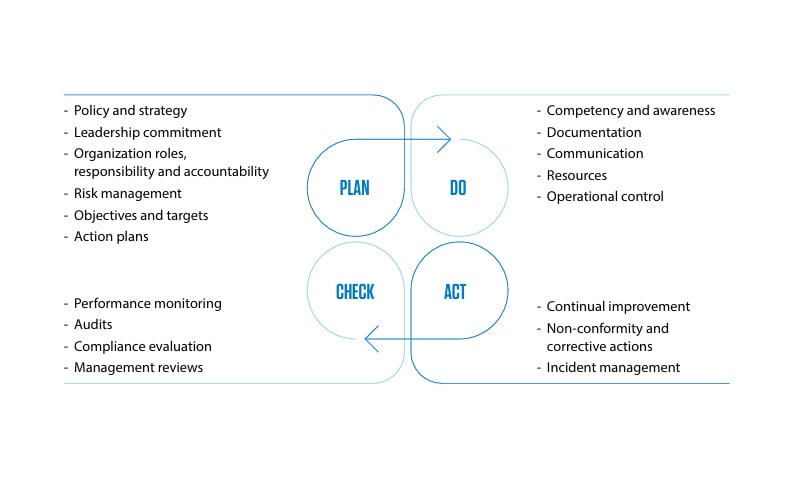
Some of the elements of the management system are listed below:
ELEMENTS OF HSEMS
-
HSE POLICY
Our Health, Safety and Environmental (HSE) Policy enunciates our philosophy and commitment towards management of key HSE aspects.
-
Risk Management
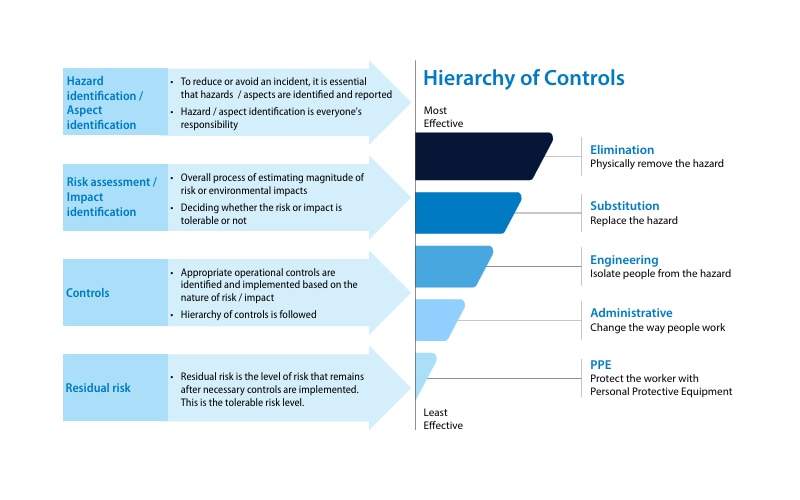
Ozone is based on the Demings cycle and has a focused risk-based approach in identification and implementation of operational controls in line with hierarchy and effective mitigation of hazards. Risk assessment is proactively conducted to identify hazards for all existing / new / modified activities, processes, products or services and the implementation of measures to minimize or control impacts and monitor them in a structured manner. Risk assessment is proactively conducted on a yearly basis or at the beginning of a new process or activity. Reactive risk assessments are also carried out at least once every quarter. Hazardous conditions present are identified and prioritized for elimination and control. Once the identified hierarchy of controls are implemented, the document is revisited to assess the residual risks. A ranking is done based on the severity and probability of the risk. The Occupational Health and Safety (OH&S) hazards and aspects resulting in environmental impacts are communicated to all concerned stakeholders who are also consulted when there are changes in operations. Relevant hazards / impacts are identified, and appropriate operational controls are implemented. During training, these are shared along with directions on ways to reduce the risk. Employees are also consulted during development and review of policies and procedures to manage risks. Emergency response procedures for different scenarios are established, and mock drills are conducted to evaluate our preparedness, response, and learnings.
-
Incident Management
A process for Incident management exists including Incident reporting, investigation and implementation of appropriate correction and corrective measures. Employees, contractual staff, and visitors are all expected to report incidents. Incidents which include near misses / potential hazards / accidents are reported through internal applications, supervisors, or mail. Root causes of incidents are identified, analyzed and appropriate corrective actions are taken to avoid recurrence or occurrence of incidents leading to injuries / losses.
-
OH&S Committees
OH&S Committees comprising cross-functional teams are established at each of our campuses and offices. The committees are chaired by respective center heads with representations from employees, senior management and cross-functional teams. In our overseas offices, these committees are formed based on local legislation. The representation from employees in safety committees is 100%. The committee brings employees and management together in a non-adversarial, cooperative effort to promote OH&S within the entire workplace. The committee ensures the establishment, implementation, maintenance, and continual improvement of processes needed for the elimination of hazards and minimization of risks. Contract workers are also an intrinsic part of the committee, which is one of the ways to ensure participation and consultation.
The OH&S committees are responsible for conducting investigation of reported incidents, assisting in the development and implementation of the OH&S best practices to minimize risks, and providing an opportunity to raise concerns and recommend solutions for various OH&S-related issues.
-
Training and Awareness
At Infosys, the embedding of HSE culture in the organization is ensured through competency development. Training needs are identified based on the nature of jobs, which may have a significant impact on the environment or may pose occupational health and safety risks. Training includes awareness building, mock drills, classroom sessions and periodic demonstrations. HSEMS training is also a part of our employee induction program. To enable continuous learning, a HSE awareness module is available on Lex, our internal learning platform. Job-specific and generic trainings are conducted for contractual staff during induction and later through refresher training. ESG frameworks also highlight the importance of employee engagement and stakeholder communication. Companies should actively engage with employees, involve them in decision-making processes, and provide channels for them to voice their concerns and feedback. This includes regular communication on OHS policies, procedures, and performance, as well as providing avenues for workers to report incidents, near-misses, and suggestions for improvement. Training is conducted either in physical or virtual modes.
-
Participation and consultation
The engagement of employees in ensuring safe and healthy workplace is essential and this is enabled through the process of participation and consultation which includes employee / contract staff involvement in:
- Development and review of policies and procedures for risk management.
- Change management where this might affect workplace health and safety through management of change procedure.
- Representation in health and safety matters through the Safety Committee.
- Understanding the OH&S hazards in the workplace which are communicated to all concerned including contractors and visitors.
- Health promotion programs including Safety Week and Health Week are conducted annually.
- Incident reporting includes potential hazards and participation in the process of identification and implementation of controls based on root cause analysis, avoiding the recurrence of incidents, and aiding in elimination of unsafe behavior and conditions.
- Emergency mock drills and reporting or identifying learnings which need to be addressed
-
Employee Engagement
In an endeavor to continually enhance HSE awareness and sensitize manpower, we organize various promotional activities across the year. Through these initiatives, we focus on
-
Knowledge enhancement: Recognizing the limited effectiveness of theoretical learning, we have transitioned to experiential learning. These models facilitate practical, example-based instruction for our contract workmen.
-
Active participation: This will improve safety and health outcomes, create a more engaged and productive workforce, and a safer and healthier workplace for everyone. Employees are educated on the adoption of safe and healthy work practices through regular communication, training and interventions on key issues related to HSE. We conduct interventions at locations based on National and International days including and not limited to World Day for Safety and Health at Work (Global), World Water Day, Earth Day, National Safety Week, World Environment Day, World Waste Day, Zero Waste Day, World Ergonomics Day, and World Ozone Day amongst others.
The interventions include:
- Awareness sessions by external experts or in-house experts
- Employee engagements programs such as Spot the Hazard Contest, Poster with Slogan Contest, Quiz Contest
- Creation and display of posters within the work premises.
- Communication through mailers to spread awareness.
- Medical camps covering general health checkups, eye checks, blood sugar monitoring etc., to promote physical well-being of employees.
- Online training modules on our in-house portal LEX for continuous learning
- Stalls or exhibition of environmentally friendly products or services.
-
-
Safety interventions
We have always focused on building a culture of safety at Infosys. Workplace safety is treated as a top priority, and employees are consistently reminded to take personal responsibility for maintaining it. The safety systems that are in place include work permits, training, Lock Out Tag Out (LOTO), safety inspections, audits, operational controls, and monitoring. Processes, guidelines, and work instructions are established at various levels addressing various aspects of safety involved in routine / non-routine activities of our operations. Policies have been established focusing on specific areas like women’s safety, lone work, transport, travel, construction, among others. Inspections, audits, observations from mock drills, risk assessments etc., enable identification of gaps, learnings, deviations, which depict hazards and risks and to address the same effectively appropriate operational controls are identified, implemented, and tracked. Safety promotions.
-
Health
Occupational health We focus on the holistic well-being of our employees, which is ensured through safe and healthy work environment.
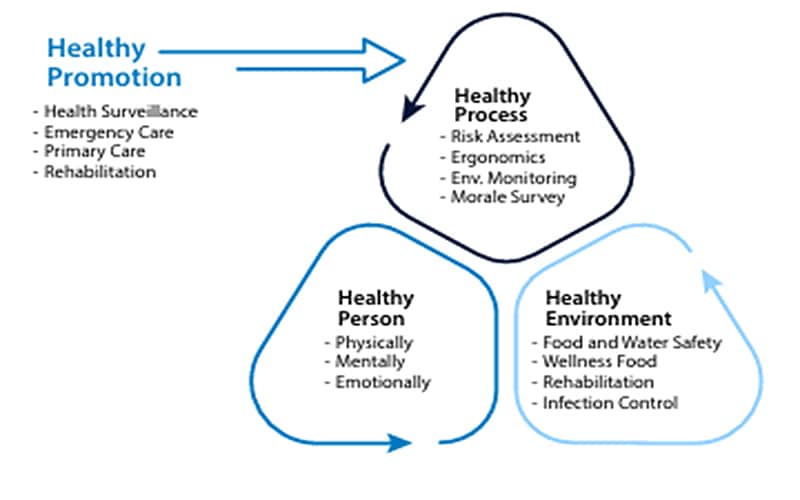
We have established first aid centers on our campuses in India. Some of the first aid facilities operate on a 24*7-hour basis. The intent is to provide immediate attention to employees during emergencies and guide them to hospitals as may be required. Our telemedicine portal continues to operate enabling employees to consult our occupational health center doctors online, in India. We also have tied up with various hospitals to attend to emergencies. Large campuses have fully equipped ambulances ready for use and where required we may call upon the generic ambulance services. We provided wheelchairs and stretchers across campuses for emergency use. In overseas locations, we work with local service providers for enabling health services and with the local authorities as regulated by the law of land. Trained first aid representatives are available across campuses as well. There are also benefits provided to employees with options of health checks, interventions through our extended tie up with hospitals to benefit employees and dependents for addressal of non-occupational related illness too. Insurance coverage is ensured for employees and contractual staff. Specific programs for contractual staff like mandatory health checks are conducted, along with interventions based on analysis of the risks or hazards.
Health-Risk Assessment (HRA) is carried out annually based on inputs from the Occupational Health Centre (OHC). Hazard identification and risk assessment is also reviewed to identify hazards and work on elimination of any such factor that may affect employees’ overall health. Being an IT / ITES company, there are no product risks at Infosys, but the risks which are prevalent include ergonomics related conditions, Musculo skeletal disorders (MSDs), emotional well-being, etc., associated with workplace, operation of utilities, commute. Numerous initiatives, interventions, engagements, virtual sessions, and process controls are in place to address these risks. Identified employees who are eligible as per the local regulations will undergo medical check-up before joining. Annual periodic check-ups ensure good health and wellbeing of our employees. An annual health checkup covering lifestyle risks and hazards due to occupation is mandatorily conducted for all identified employees.
Programs on ergonomics We make continuous ergonomic improvements to our work environment to ensure the wellness and comfort of our employees. Onsite physiotherapy centers: We have physiotherapy centers in our large campuses in India to consult, treat, provide rehabilitation services, establish exercise regimens to our employees through physiotherapists covering ergonomics / MSDs.
-
Interventions by ergonomic experts: The physiotherapists conduct virtual awareness sessions focusing on issues like back care, Repetitive Strain Injuries (RSI), postures at work etc. In India, physiotherapists have scheduled huddles with employees on the floor to give them tips on adjustments they can make in their workstations to match ergonomically right requirements.
-
Ergonomic infrastructure: Workstations and furniture are designed and procured after considering their ergonomic advantages. We have also taken care to procure systems which have inbuilt features that help avoid glare and hence reduce such instances. Workstation assessments are conducted to identify and provide aid to employees to improve the ergonomics of their workspace.
-
Physical and emotional wellbeing: Various interventions on physical and emotional well-being were enabled under the aegis of our Health Assessment and Lifestyle Enrichment (HALE) / Secure Affirmative Fun Environment (SAFE) initiatives. The various interventions include:
Physical wellness: Includes Expert talks, web chats, myth buster awareness, budge programs for physical exercises, wellness podcasts, Campaign of Healthy Eating & its importance, yoga day programs, how to make home fitness studio etc.
Emotional wellness: Programs includes initiates to encourage employees to connect with their emotional buddies, expert education series on quarantine, leader stories on emotional well-being, emotional wellness podcasts, peer counselling support, formal psychological counselling support, positive stories, mindful Mondays which is a meditation program etc.
Safety: These programs included constant communication on continuing need for safety precautions during different situations, Work from Office Etiquettes etc.,
Leisure: Programs included fitness events, Workshops by various employee’s clubs on Healthy Cooking/Dance Fitness/Photography & Guitar/Quiz Contests/E story telling contests etc.
- Healthy Eating and Active Living (HEAL): Considering the low average age of employees at Infosys and to ensure they are healthy and devoid of lifestyle illnesses, there are focused interventions. In our campuses in India, we have deployed dieticians who provide Consultation, Counselling, Menu engineering for food being supplied in food courts covering options and portions. We urge employees to develop healthy eating habits through enhanced communication. We have enabled vendors to supply healthy food options on our food courts. We have created state-of-the-art gymnasiums to enable workouts. Yoga, aerobics, and swimming are available too. Recreation facilities on our campus include badminton, tennis, snooker, cricket, basketball, bowling etc., to enable employees to engage in physical activities and keep themselves fit. Programs for mothers Infosys provides an inclusive environment and expectant mothers are also taken care of. As most campuses are huge, we enable transportation of such personnel to their buildings from the bus bay. During evacuations, care is taken that expectant mothers are separately evacuated to identified safe assembly points and are always escorted to ensure their safety. “Pregna Care”, a professional healthcare program is designed especially for expectant mothers and aims to provide maximum comfort to the mother. To ensure the health and wellbeing of the mothers and to avoid discomfort during this time, it is essential that proper exercises are part of their everyday routine. This program is implemented across a few locations in India and comprises of Lifestyle suggestions during pregnancy, Nutrition, Discussion on common discomfort, Problems during pregnancy, Exercises designed for pregnant women, post-natal advice etc.,
-
-
Work Environmental improvement
We are committed to providing our employees with the best IAQ, and we are confident that our efforts will ensure a safe, healthy, and comfortable working environment for everyone. All working locations monitor indoor air quality to provide clean, hygienic air. This helps boost cognitive performance and productivity, lowers the risk of airborne illnesses, and shields workers from outdoor pollutants. Monitoring is done in two ways: 1. Real-time monitoring – Key parameters such as carbon dioxide (CO2 ), PM2.5, PM10 are continuously monitored and connected to the building management system (BMS) in most buildings. 2. Third-party monitoring – Around 12 parameters are monitored at defined frequencies annually as per ASHRAE / OSHA requirements. b. Lux levels and noise levels These levels are maintained as per the standards for every work location and monitored annually to ensure that workplaces are made comfortable for employees, reducing eyestrain, headaches, hearing loss, and drowsiness. These lead to employee satisfaction and wellbeing.
-
Promoting green seal chemicals
We are mindful of ensuring safety in the use of chemicals in our housekeeping and utilities processes. We conduct assessments of the impact of legal regulations and pre-inspections of chemical substances prior to procurement of chemicals. All tasks are assessed in advance for any potential risks and attempts to explore safer alternatives with applied hierarchy of onsite safety management levels.
-
Environment
-
Climate change and its ramifications like rising global temperatures, deteriorating air quality and contamination of our waterbodies are among the largest crises looming over the planet in recent times. At Infosys, we recognized the gravity of this issue early on and began focusing on climate action since 2008, through energy efficiency, renewable energy, and carbon offset programs. Our aim to adopt, invent and spread smarter ways to mitigate GHG emission, reduce energy consumption and manage water and waste. To make our planet stronger by consistently embracing clean tech in our operations and client solutions, thereby minimizing the impact on nature. We achieved Carbon Neutrality in fiscal 2020, 30 years ahead of the 2050 timeline set by the Paris Agreement, as a culmination of our decade long efforts in environment stewardship and have been consistently achieving the same for the past 6 years. In the past decade, we've used technology to create and operate highly efficient buildings and campuses worldwide. Campuses that conserve energy, save water and treat waste responsibly. Our campuses are ‘living labs’ for clean technology. Our sustainability philosophy is about ensuring that our business, our clients’ businesses, and our ecosystems are all sustainable. Now, we are bringing our net carbon neutral success to sustainable offerings for our clients’ businesses, throughout the market.
-
Waste Management
Infosys values responsible waste management to protect the environment. Our waste strategy encompasses the principles of Reduce, Reuse, Refurbish, Repurpose, and Recycle. By actively minimizing waste, investing in recycling equipment, and optimizing systems and procedures, we hope to achieve our goal of zero waste to landfills. We contribute to a circular economy through our efforts on converting waste into resources and working with suppliers who support achieving the same. Infosys has implemented comprehensive waste management procedures, emphasizing the collection, sorting, and elimination of waste. Infosys' waste management practices include source segregation, secondary segregation, effective waste processing and collection, recycling, and efficient disposal of all wastes in compliance with relevant laws. This makes it possible to lessen adverse environmental effects. Our environmental ambitions to be carbon neutral each year focuses on making abstemious use of fresh water and recycling 100% of wastewater, while ensuring zero waste to landfill. The basic categories into which we classify waste are hazardous and non-hazardous. Based on the generation at the campus, the waste is monitored and managed. It is a common practice to store different types of waste separately. Bins are color coded / labeled according to the different categories of waste to aid segregation at source. We ensure adherence to legal requirements for storage, transportation as applicable in instances like hazardous waste.
-
Segregation at source
Waste segregation at source refers to the process of identifying and segregating various types of solid wastes at the place or location of their generation. We segregate waste mainly into two categories - hazardous and non-hazardous waste. Separate storage of various components of solid waste such as biodegradable wastes including landscape / garden waste and food waste and nonbiodegradable wastes including sanitary waste and non-recyclable inert waste, various categories of e-waste, and construction and demolition wastes are practiced. A color code for bins has been implemented for different types of waste. The Infosys waste management practice involves segregation of waste at source, secondary segregation, efficient collection and handling, recycling, and effective disposal of all wastes while adhering to applicable legislations. This enables reduction of negative environmental impacts. We also insist on ecofriendly packaging for all our purchases.
-
Material recovery from waste – Recycle
-
Biogas
Our campuses have been equipped with biogas plants, which is based on the bio-methanation process to manage food waste and landscaping waste. The resultant biogas generated serves as a substitute for LPG in our food courts. The by-product slurry is dried through sludge drying beds near our biogas facilities and is used as manure for landscaping within our campus. The bio-methanation plants / bioreactors in Infosys are high-rate digesters where the organic loading rate is significantly higher even when it is loaded close to its rated capacity.
-
Composting
Composting practices comprising manual vermicomposting beds and organic waste converters are used to convert landscape / garden waste into compost, which is then used as organic manure in our landscaping applications.
-
-
Material recovery from waste
-
Reuse
We pursue a waste hierarchy, and we prefer reuse over recycling. Waste generated at source gets segregated and evaluated for reuse. Construction and demolition waste is sent to government authorized landfill sites, which is reused for land levelling and other purposes by the municipal corporation. Used oil from kitchens is utilized in biogas plants as it has high codigestion COD (Chemical Oxygen Demand) levels, which in turn generates increased biogas. Dried section sludge from STP and biogas slurry are reused as manure within campus. During the year, 804.99 tons of manure was generated and used in our campuses.
-
Waste to energy
Co-processing achieves a superior environmental performance as compared to landfill and incineration, which can be demonstrated through lifecycle assessment of waste. The process involves use of waste as a raw material or source of energy in place of natural mineral resources and fossil fuels. Waste with a high calorific value that cannot be recycled or repurposed is typically chosen for co-processing. Some waste materials collected by Infosys are sent to be co-processed, including tetra packs, tea bags, rubber waste, paper packaging, low-value plastic, plastic gunny bags, thermocol, foam, carpets, discarded mop refills, ceramic waste, flex banners, artificial grass mats, floor mats, glass waste, etc.
-
-
Waste disposal options
The stringent laws regulated by the Central Pollution Control Board (CPCB) and the State Pollution Control Board (SPCB) guidelines for hazardous waste such as bio-medical waste, oil-soaked cotton, oil filters from DG sets, and other wastes are disposed of through authorized agencies. These agencies incinerate the waste as per prescribed guidelines. The resultant ash is sent to Treatment, Storage, Disposal Facility (TSDF) landfills for safe disposal and in a few locations, it is diverted for cement manufacturing. We focused our efforts over the years on diversion of municipal solid waste generated on our facilities, which we address as mixed waste. We have dedicated authorized vendor partners who support us on collection, sorting and disposal of this waste to ensure minimal waste to landfills and maximize recycling.
-
E-waste management
As we are an IT company, e-waste generation is inevitable. We have been persistent in our efforts to ensure that we reduce, reuse, recycle and dispose of e-waste responsibly. Our e-waste includes IT equipment, mobile phones, printers, cartridges, electrical and electronic equipment like refrigerators, microwaves, air conditioners, lithium-ion batteries, and cables, among others. We send e-waste to certified recyclers and refurbishers who issue certificates confirming that the materials have been recycled and recovered properly. The authorized recyclers / refurbishers are evaluated based on adherence to applicable legal requirements and extent of resource circularity in their process.
-
TRUE Zero Waste Certification
Infosys has an ambition of zero waste to landfill and one of the steps we have undertaken to achieve this is the TRUE certification program. This program measures, improves and recognizes zero waste performance by encouraging the adoption of sustainable resource management and waste reduction practices that contribute to positive environmental, health and economic outcomes. It enables us to divert all solid waste from the landfill and incineration from going into landfills.
Energy Management System
As part of our commitment to environmental stewardship and delivering measurable outcomes, we have implemented an Energy Management System (EnMS) and achieved ISO 50001:2018 certification. EnMS provides a structured approach to systematically improve energy efficiency, enhance energy performance, and optimize energy consumption. Through comprehensive energy reviews and energy audits, we have identified and implemented targeted initiatives that have resulted in tangible energy and cost savings, improved operational efficiency, and a reduced environmental footprint—contributing meaningfully to climate change mitigation.
Over the years we have implemented energy efficient projects that include:
- Retrofits in HVAC – Chiller efficiency improvements
- Augmentation of water heating with solar water heaters
- Lighting
- Transition of remote desktops to VDI interface to automatically shut down desktops which are on
- Replacement of conventional UPS with Modular UPS
- UPS Retrofits and optimization
- High efficiency data centers
- Design of energy efficient infrastructure
Water Management
Recognizing the need for Water conservation, Infosys has chosen to move beyond mere compliance, embedding water conservation and restoration into our water strategy. Aligning with our climate-positive goals, Infosys has turned this challenge into an opportunity by transforming our campuses into hubs of water regeneration. Through large-scale recharge initiatives, we have sequestered billions of liters of water, revitalized local ecosystems, and enhanced water availability for surrounding communities.
As a signatory to the UN Global Compact’s CEO Water Mandate in 2014, we recognize that responsible water stewardship is both an operational need and a societal responsibility. To this effect, we have enhanced our initiatives around water conservation, efficient water use, rainwater harvesting, and maintaining zero wastewater discharge across our owned campuses in India. Wastewater from international locations and leased sites in India is responsibly discharged into municipal sewer systems, in compliance with local regulations.
Risk Response
Risk assessment enables Infosys to understand its water related vulnerabilities while shaping a comprehensive response strategy that considers location specific challenges with a long term perspective. Our assessment framework includes hydrological and hydrogeological studies, climate-variability analysis, infrastructure resilience, and community impact. Using tools such as the WRI Aqueduct, we assess water risk across all locations and implement actions that are socially equitable, environmentally sustainable, and operationally efficient. By adopting a risk to response approach, we gain a more nuanced understanding of water risks and identify opportunities for value creation. We manage water in ways that are fair for people, protect the environment, and make good economic sense.
We aim to make the campuses water sustainable. We continue our focused efforts to reduce freshwater sourcing and aim to achieve water positivity through our 3M and 7R approach. 3M (Map, Monitor, Measure), 7R (Reduce, Recycle, Recover, Recharge, Rejuvenate, Recognize/Respect)
Water is managed in the following ways:
-
Rainwater harvesting at scale.
Rainwater harvesting is an important part of our water stewardship goal, and rooftop rainwater harvesting, harvesting tanks, recharge wells, and artificial lakes are built on India campuses to reduce external freshwater dependency and help replenish the groundwater table in the communities we operate. We continue our efforts to extend this initiative across locations to optimize freshwater consumption. Roof-top rainwater harvesting systems have been installed on most campuses, helping us reduce freshwater consumption. Roof rainwater harvesting has been highly beneficial for offsetting freshwater consumption from external sources. This is an initiative we have as a long-term target to achieve water positivity.
Our campuses function as groundwater recharge zones, channeling millions of liters back into depleted aquifers.
- 405 deep injection wells strategically installed across India campuses with a combined recharge capacity exceeding 20 million liters
- 40 artificial lakes created with a 430 million-liter holding capacity, designed not just for storage but as active recharge systems
- Surface runoff harvesting during monsoons directs rainwater into underground aquifers through engineered infiltration systems
Treated wastewater from STPs is channeled to recharge wells, ensuring every drop serves dual purposes. We ensure seamless and efficient operations through maintenance, installation, or upgradation of water treatment systems across locations to treat water to the necessary levels (e.g., Softener, reverse osmosis) and repurposing the same.
-
Smart infrastructure and technology
We leverage technology to monitor and manage our water consumption efficiently. Smart water metering systems across most of our campuses enable early detection of issues such as leaks and blockages, reduce unaccounted water, identify conservation opportunities, and generate insights that inform future facility designs. These meters are integrated into our central monitoring platform, allowing us to track water flow and real time consumption patterns with greater accuracy and control.
-
Smart irrigation systems
Smart irrigation systems are piloted at a few of our campuses. We are evaluating this project and plan to expand it gradually across other campuses. Additionally, we are working to reduce lawn cover and increase tree cover to lower irrigation water demand. Our other initiatives include using native species and continuing to develop irrigation infrastructure, such as automated and drip systems.
-
Integrated water management through building design
At Infosys, we ensure design reviews and infrastructure development that take water sustainability into account.We have also installed retrofits in our plumbing systems, such as low-flow fixtures, pressure-compensating aerators, waterless urinals, and sensor-based taps in high-usage areas, enabling us to meet our water conservation goals.
-
Re-engineering and retrofit projects
To conserve fresh water in existing buildings, various measures have been undertaken to minimize water demand. Water distribution and treatment strategies have been enhanced with re-engineering and modifications. This includes upgrading existing plants with high-recovery treatment systems, energy-efficient electromechanical equipment, and automated monitoring of flow and levels, as well as specific water-quality parameters.
-
Wastewater recycling
We remain committed to the long-term goal of zero wastewater discharge and to 100% wastewater recycling across our campuses. All wastewater generated – entirely domestic – is routed to the state-of-the-art Sewage Treatment Plants (STPs), where it undergoes tertiary treatment using advanced membrane bioreactor technology, producing output that meets environmental/legislative requirements. Older plants have been retrofitted to improve recovery, efficiency, and treated water quality. Treated water is then fully reused for secondary applications such as landscaping, flushing, and cooling towers, supported by dual-piping systems and continuous quality monitoring to ensure full compliance with environmental norms. This process significantly reduces our dependence on freshwater sourcing and enhances operational resilience across locations, including leased sites where wastewater is directed to centralized treatment facilities.
-
Greywater procurement
With a view to further reducing the need for water sourcing, we also procure secondary-quality water through authorized agencies/authorities to meet our water demand for non-potable applications, thereby reducing our freshwater dependency to the extent of grey water procured and enabling more effective freshwater consumption optimization.
-
Restore: Replenishing water-stressed ecosystems
Infosys recognizes that true water stewardship extends beyond our campus boundaries. In regions where groundwater depletion threatens communities, we are investing in large-scale restoration initiatives that actively replenish aquifers and revive degraded water bodies.
-
Water Positive Certification
In continuation of our efforts on achieving water positive / neutral status based on NITI AAYOG guidelines in our campuses. We are water positive at our Bangalore campus and have recently achieved Scope 1 certification at nine of our campuses in India – Chennai Mahindra City, Chennai Sholinganallur, Trivandrum, Mysore, Hyderabad SEZ, Hyderabad STPI, Chandigarh, Bhubaneshwar SEZ, and Bhubaneshwar STPI this year. Scope 1 covers operational efficiency and focuses on direct water resource offsets, considering both quantity and quality and evaluation of site-level water use and impact at the watershed level.
-
